


While domestic horses rely on humans for shelter, food, and care during winter months, wild horses have developed remarkable adaptations and behaviors that enable them to survive even the harshest winter conditions independently. From physiological changes to strategic migration patterns, these magnificent creatures demonstrate nature’s incredible resilience. Their winter survival strategies have evolved over thousands of years, allowing them to thrive in environments ranging from windswept plains to snowy mountains. This article explores the fascinating ways wild horses endure winter’s challenges without human intervention, revealing the impressive capabilities these animals possess to overcome freezing temperatures, food scarcity, and extreme weather events.
Natural Physical Adaptations

Wild horses undergo significant physical changes as winter approaches. Unlike their domestic counterparts who may receive blankets for warmth, wild horses grow thick, insulating winter coats that can be up to twice as dense as their summer pelage. This winter coat develops in two distinct layers: a dense, woolly undercoat that traps body heat and a longer, oilier outer layer that repels moisture and wind. The transformation typically begins in response to decreasing daylight hours rather than dropping temperatures, ensuring the protective coat is in place before severe weather arrives. Additionally, wild horses develop extra fat reserves during autumn months, providing both insulation and energy reserves for the challenging winter ahead. These natural adaptations allow them to withstand temperatures as low as -40°F in some regions without artificial protection.
Strategic Shelter Seeking Behaviors

Wild horses display remarkable intelligence in finding natural shelter during harsh weather conditions. They utilize landscape features to their advantage, seeking lee sides of hills, dense stands of trees, rock formations, and gullies that offer protection from biting winds and heavy snowfall. Unlike domestic horses that might panic during storms, wild horses have an innate ability to position themselves optimally relative to weather patterns. During blizzards, they typically turn their rumps toward the wind, allowing snow to slide off their hindquarters while protecting their more vulnerable facial areas. Observations of feral horse populations in Montana’s Pryor Mountains show herds consistently seeking the same sheltered locations during winter storms, demonstrating a collective memory of effective survival strategies passed down through generations. This shelter-seeking behavior significantly reduces heat loss and energy expenditure during critical winter months.
Seasonal Migration Patterns

Many wild horse populations undertake strategic seasonal migrations to improve their winter survival odds. In mountainous regions such as Nevada’s Great Basin, wild horses often move from higher elevations to lower valleys as winter approaches, sometimes traveling 15-30 miles to reach more favorable conditions. These migrations aren’t random wanderings but purposeful journeys to areas with less snowfall, more available forage, and better protection from elements. Studies of mustang herds in Wyoming have documented consistent annual migration routes, with horses navigating to specific wintering grounds with remarkable precision. These migration patterns are taught by experienced mares to younger generations, creating a cultural knowledge base that enhances survival rates. In some regions, wild horses may lose up to 200 pounds during winter months but survive through this combination of migration and physiological adaptations, regaining weight when spring vegetation returns.
Winter Feeding Strategies

Finding adequate nutrition represents one of winter’s greatest challenges for wild horses. Unlike domestic horses that receive measured rations of hay and grain, wild horses must locate and access natural forage buried under snow and ice. They’ve developed specialized feeding behaviors to meet this challenge, including pawing through snow with their hooves to access dormant vegetation beneath—a behavior called “cratering.” Wild horses can dig through up to 18 inches of snow to reach forage, expending considerable energy in the process. They adapt their diets seasonally, consuming coarser, more fibrous plant material during winter that domestic horses might reject. Their digestive systems adjust to extract maximum nutrition from these lower-quality food sources through longer retention times in their hindgut. Research in Alberta’s Rocky Mountain foothills found wild horses spending up to 16 hours daily foraging in winter compared to 10-12 hours in summer, demonstrating their remarkable determination and adaptability in meeting nutritional needs.
Social Structure and Group Dynamics

The social organization of wild horse herds plays a crucial role in winter survival. Horses maintain tight-knit family groups called bands, typically consisting of a dominant stallion, several mares, and their offspring. This social structure offers significant winter survival advantages through collective vigilance, shared weather knowledge, and cooperative shelter-seeking. During severe weather, bands often cluster together more closely, creating shared body heat that benefits all members. The most vulnerable individuals—young foals and elderly horses—are frequently positioned at the center of these grouped formations, receiving maximum protection from the elements. Dominant individuals with previous winter survival experience guide the band to protective areas and optimal feeding grounds. Studies of Przewalski’s horses in Mongolia have shown that bands with stable social structures and experienced leaders have significantly higher winter survival rates than disrupted groups, highlighting the critical importance of social knowledge transfer in harsh conditions.
Physiological Cold-Weather Adaptations

Wild horses possess remarkable physiological mechanisms that help them cope with extreme cold. Their circulatory systems include specialized heat-exchange networks called rete mirabile in their limbs, which allow them to maintain core body temperature while minimizing heat loss through extremities. This adaptation permits them to stand in deep snow for extended periods without tissue damage. Their metabolic rates adjust seasonally, slowing during winter months to conserve energy while still maintaining critical functions. Wild horses also develop thicker skin during winter, offering additional insulation protection. Their respiratory systems adapt to cold air intake, pre-warming inhaled air before it reaches the lungs through elongated nasal passages. Notably, wild horses can reduce blood flow to peripheral areas during extreme cold, focusing circulation on vital organs—a capability domestic horses possess but rarely need to utilize. These physiological adaptations work in concert with behavioral strategies to create a comprehensive cold-weather survival system.
Water Access Strategies
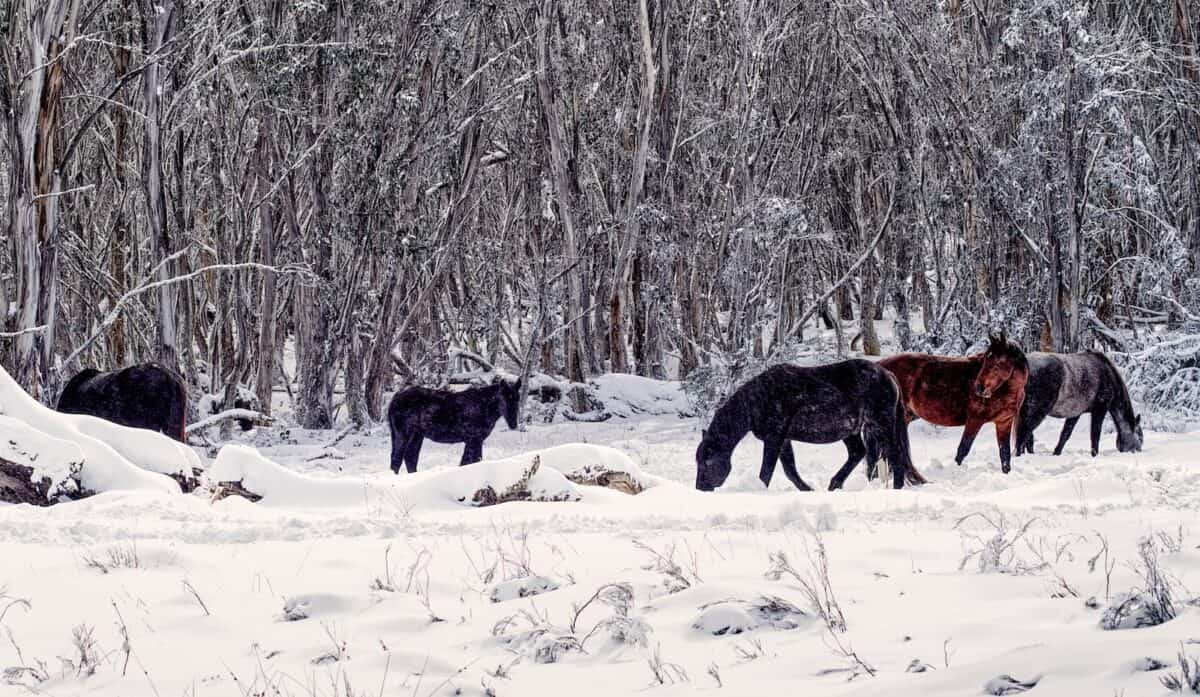
Securing adequate water presents a major challenge for wild horses when natural water sources freeze over. Unlike domestic horses receiving warmed water from tanks, wild horses have developed various methods to meet hydration needs in freezing conditions. They consume snow directly, though this requires additional energy to warm and melt the snow in their bodies. They break ice on partially frozen water sources using their hooves, creating access points for drinking. Wild horses may travel significantly greater distances between feeding and watering areas during winter, sometimes journeying 10-15 miles daily between grazing grounds and reliable water sources. Interestingly, wild horses can reduce their water requirements during winter by as much as 30% through physiological adaptations that improve water conservation and recycling within their bodies. Some populations, particularly in desert regions transitioning to cold winters, have developed enhanced abilities to extract moisture from what appears to be dry vegetation, allowing them to go longer between direct water consumption.
Winter Birth Adaptations

Wild horse populations typically time their breeding cycles to avoid winter births, as foals born during harsh conditions face significantly reduced survival chances. Through natural selection, most wild horse mares come into estrus during spring and early summer, resulting in foaling approximately 11 months later when conditions are more favorable. However, when winter births do occur, wild horses display remarkable adaptations to improve survival odds. Mares will seek the most sheltered locations available for foaling, often separating temporarily from the band for this purpose. Newborn foals in wild populations stand and nurse much faster than their domestic counterparts—sometimes within 30 minutes of birth—minimizing the critical vulnerable period. The band provides protection for new mothers and foals, often forming a windbreak with their bodies during storms. Despite these adaptations, winter-born foals experience significantly higher mortality rates, reinforcing the evolutionary pressure that has aligned breeding cycles with more favorable seasons in most wild horse populations.
Hoof Adaptations for Snow and Ice

The hooves of wild horses exhibit specialized adaptations for navigating winter terrain that domestic horses often lack. Without human-provided horseshoes or hoof boots, wild horses’ hooves naturally harden during winter months in response to environmental conditions. Their soles develop thicker calluses that provide insulation against frozen ground. When walking on snow and ice, wild horses adopt a more flexible, splayed hoof position that increases surface area contact, improving stability much like natural snowshoes. The concave sole of the wild horse’s hoof can compact snow, creating temporary traction, while the sharp edges of unworn hooves can cut into ice surfaces for better grip. Wild horses also grow longer hoof walls in winter that extend slightly beyond the sole, providing additional edge support on slippery terrain. These adaptations enable them to navigate steep, snow-covered slopes and icy conditions that would prove treacherous for domestic horses without specialized footwear.
Behavioral Temperature Regulation

Wild horses employ sophisticated behavioral strategies to regulate their body temperature during winter extremes. They position themselves strategically relative to the sun, turning broadside to maximize solar heat absorption during daylight hours. During nighttime or stormy conditions, they typically stand with their heads lowered and backs to the wind, minimizing exposure of sensitive areas and reducing heat loss. Wild horses also adjust their movement patterns seasonally, becoming more active during the warmer daylight hours in winter and finding sheltered locations to rest during the coldest overnight periods. They utilize micro-climates within their range, seeking south-facing slopes that receive more sunlight and offer warmer resting areas. During extreme cold snaps, wild horses have been observed spending more time in dense forest areas where ambient temperatures can be several degrees warmer than exposed plains, even when food availability might be greater in the open areas. These behavioral adaptations complement their physiological mechanisms to maintain critical body temperature with minimal energy expenditure.
Regional Adaptation Differences

Wild horse populations in different geographical regions have developed specialized adaptations specific to their local winter challenges. Mustangs in Nevada’s high desert regions develop exceptionally thick winter coats with longer guard hairs that effectively shed freezing rain, while those in mountainous Wyoming show more compact body proportions that reduce surface area relative to body mass, minimizing heat loss. Horses in coastal regions typically grow waterproof outer coats that excel at repelling moisture in humid winter conditions. Przewalski’s horses in Mongolia have evolved shorter limbs and stockier builds compared to other wild horse populations, reducing heat loss in their extreme continental climate where temperatures routinely drop below -40°F. These regional adaptations demonstrate the remarkable plasticity of the species, with natural selection favoring traits most beneficial for specific winter challenges. Genetic studies suggest some cold-weather adaptations become fixed in isolated populations within 15-20 generations, representing remarkably rapid evolutionary adaptation to local conditions compared to many other large mammals.
Population Management Through Winter

Winter serves as a natural population control mechanism for wild horse herds. Unlike domestic horses that receive intervention during harsh conditions, wild populations experience natural selection pressures during winter months. The most vulnerable individuals—typically the very young, elderly, or weakened—have lower survival rates during severe winters, maintaining genetic health in the population by favoring the most robust individuals. Studies of mustang populations in Wyoming’s Red Desert found mortality rates averaging 5-8% during typical winters but spiking to 15-20% during unusually harsh winters. This natural culling process, while sometimes appearing harsh from a human perspective, maintains population balance relative to available resources and prevents overgrazing that would ultimately harm the entire herd and their ecosystem. Horses with beneficial cold-adaptations pass these traits to offspring, creating populations increasingly well-suited to local winter conditions. This natural management contrasts sharply with domestic horse populations where human intervention often preserves individuals regardless of their natural adaptive capabilities.
The ability of wild horses to survive winter without human intervention represents one of nature’s most impressive displays of evolutionary adaptation and behavioral intelligence. Through a combination of physiological changes, strategic behavior, social cooperation, and learned survival strategies, these animals demonstrate remarkable resilience in the face of conditions that would threaten domesticated horses. Their success in harsh winter environments results from thousands of years of natural selection reinforcing beneficial traits while eliminating those less suited to cold-weather survival. As climate patterns shift and habitat pressures increase, the adaptive capabilities of wild horses face new tests, yet their evolutionary history suggests continued resilience. Understanding these natural survival mechanisms not only deepens our appreciation for these magnificent animals but also provides valuable insights that might inform more natural approaches to domestic horse management during winter months.

- These Animals Call U.S. Marine Sanctuaries Home - July 31, 2026
- The Smartest Animals With Astonishing Language Skills - July 31, 2026
- 15 Reasons Turtles Keep Our Rivers Clean (and Why They Need Our Help) - July 31, 2026