


The ocean remains one of Earth’s greatest mysteries. Despite centuries of exploration, scientists estimate that over 80% of our ocean is unmapped, unobserved, and unexplored. The crushing depths and vast expanse of our seas continue to harbor creatures that defy imagination—behemoths that have evolved to thrive in environments hostile to human life. From the twilight zone to the abyssal plains, these ocean giants represent some of the most remarkable adaptations in the animal kingdom. In this article, we’ll dive into the fascinating world of 15 enormous marine creatures that continue to lurk in the deep, many of which remain poorly understood and rarely seen by human eyes.
The Colossal Squid Antarctic Leviathan

The colossal squid (Mesonychoteuthis hamiltoni) stands as one of the ocean’s most enigmatic giants. Unlike its more famous cousin, the giant squid, the colossal squid has a shorter but more massive body, potentially reaching weights of up to 750 kg (1,650 pounds). Native to the Antarctic waters, this creature possesses the largest eyes in the animal kingdom—up to 25 cm (10 inches) in diameter—an adaptation for detecting predators in the dim, deep waters. What makes the colossal squid particularly fearsome are its unique swivelling hooks on its tentacles, a feature not found in other squids. Scientists have only examined a handful of specimens, with most of our knowledge coming from partially digested remains found in sperm whale stomachs, suggesting these behemoths serve as important prey for the ocean’s largest predators.
The Megamouth Shark Filter-Feeding Mystery

The megamouth shark (Megachasma pelagios) represents one of the most elusive shark species on Earth. First discovered in 1976 when one became entangled in a U.S. Navy ship’s anchor off Hawaii, fewer than 100 specimens have been documented since. Growing up to 5.5 meters (18 feet) in length, this deep-sea wanderer earned its name from its massive mouth, which can measure up to 1.3 meters wide. Unlike its fearsome relatives, the megamouth is a gentle filter feeder, using the bioluminescent tissue inside its mouth to attract plankton and small fish. The shark’s distinctive appearance includes a soft, flabby body and broad, rounded snout. Scientists believe megamouths migrate vertically through the water column daily, following the movement of plankton from deep waters during the day to shallower waters at night—a behavior known as diel vertical migration.
Giant Oarfish The Sea Serpent Legend

Often credited as the source of many sea serpent legends, the giant oarfish (Regalecus glesne) is the longest bony fish alive, with confirmed specimens reaching 8 meters (26 feet) and unconfirmed reports suggesting lengths of up to 11 meters (36 feet). These ribbon-like fish typically inhabit depths between 200 and 1,000 meters (656 to 3,280 feet), making sightings exceptionally rare. Their silvery, compressed bodies feature a distinctive red dorsal fin that runs the entire length of their body, resembling a flaming crest. Unlike most large fish, oarfish lack swim bladders and instead move by undulating their dorsal fin in a wave-like motion. They’re rarely seen alive, as they typically only come to the surface when dying or distressed. Japanese folklore considers oarfish sightings as harbingers of earthquakes, although scientific evidence for this connection remains inconclusive. Recent research using ROVs (Remotely Operated Vehicles) has captured rare footage of these magnificent creatures swimming vertically in their natural habitat.
The Pacific Sleeper Shark Arctic Predator

The Pacific sleeper shark (Somniosus pacificus) silently patrols the cold, deep waters of the North Pacific, potentially reaching lengths of up to 7 meters (23 feet)—though most documented specimens are considerably smaller. Related to the Greenland shark, these slow-moving predators compensate for their sluggish speed with specialized adaptations. Their teeth in the lower jaw are designed to slice, while upper teeth grasp prey—creating an efficient cutting mechanism. Despite their ponderous appearance, analysis of their stomach contents reveals they consume fast-swimming prey such as salmon and squid, suggesting they may employ ambush tactics or scavenge. Their flesh contains high levels of trimethylamine N-oxide (TMAO), making it toxic to most consumers. Researchers believe these sharks may live for centuries, similar to their Arctic relatives, though confirming age in this species remains challenging. Capable of dwelling at depths exceeding 2,000 meters (6,600 feet), much of their life history and behaviour remains a mystery.
The Japanese Spider Crab Spanning Giant

With a leg span that can exceed 3.7 meters (12 feet) from claw to claw, the Japanese spider crab (Macrocheira kaempferi) holds the title of largest arthropod on Earth. Native to the waters off Japan, these crustacean giants inhabit depths ranging from 50 to 600 meters (164 to 1,970 feet). Their orange-red bodies can weigh up to 19 kg (42 pounds) and may live for over 100 years, according to some estimates. Unlike the threatening appearance suggested by their massive size, spider crabs are primarily scavengers, using their long, spindly legs to traverse the ocean floor in search of dead and decaying organic matter. They also demonstrate remarkable defensive adaptations, often decorating their shells with sponges and other marine organisms for camouflage—a behaviour called decorating. The population of these magnificent creatures has declined due to overfishing, leading to protective measures in parts of their range. Their impressive size developed as an adaptation to the high-pressure environment of the deep sea, allowing for efficient oxygen absorption through increased surface area.
The Giant Squid Legendary Sea Monster

The giant squid (genus Architeuthis) has captured the human imagination for centuries, inspiring tales of the Kraken and other sea monsters. These deep-dwelling cephalopods can reach lengths of up to 13 meters (43 feet), including their tentacles, making them among the largest invertebrates on Earth. Their enormous eyes—up to 25 cm (10 inches) in diameter—are the largest in the animal kingdom, allowing them to detect the faint bioluminescence of prey and predators in the darkness of the deep. Despite their legendary status, the first photographs of a living giant squid weren’t captured until 2004, and the first video footage wasn’t recorded until 2012 by Japanese researchers. Giant squids possess a sophisticated nervous system and the largest brain among invertebrates. They engage in epic battles with sperm whales, their primary predator, as evidenced by the circular scars left by the squids’ suction cups on whale skin. Recent genetic studies suggest there may be only one species of giant squid worldwide rather than several as previously thought, indicating these creatures may travel enormous distances through the world’s oceans.
The Bluntnose Sixgill Shark Living Fossil

The bluntnose sixgill shark (Hexanchus griseus) represents one of the most primitive shark lineages still swimming in our oceans. Unlike most modern sharks that have five gill slits, the sixgill—as its name suggests—retains six gill slits, a characteristic of ancient sharks that swam the seas over 200 million years ago. These living fossils can grow to impressive lengths of up to 4.8 meters (16 feet) and weigh over 600 kg (1,300 pounds). Preferring deep, cold waters between 200 and 2,500 meters (650 to 8,200 feet), sixgills ascend to shallower waters during the night to feed. Their diet includes a variety of marine creatures from fish and rays to seals and even whale carcasses. The sixgill’s teeth reflect its ancient lineage, with lower teeth featuring comb-like structures specialized for slicing through flesh, while the upper teeth are more pointed for grasping. Recent research has revealed complex social structures among sixgills, with multiple sharks sometimes feeding cooperatively on large carcasses. Their slow growth, late maturity, and low reproductive rate make them particularly vulnerable to overfishing and habitat disturbance.
The Lion’s Mane Jellyfish Arctic Tentacle Giant

The lion’s mane jellyfish (Cyanea capillata) earns its place among ocean giants as the largest known jellyfish species. The bell of this spectacular cnidarian can reach diameters of 2.5 meters (8 feet), while its tentacles may extend a staggering 36.5 meters (120 feet)—longer than a blue whale. Native to the cold waters of the Arctic, North Atlantic, and North Pacific Oceans, these gelatinous giants develop their most impressive size in the frigid northernmost waters. Their distinctive reddish-orange colouration and mass of tentacles resembling a lion’s mane give the species its common name. The tentacles contain thousands of nematocysts—specialized stinging cells used to capture prey such as fish, smaller jellyfish, and zooplankton. Though their sting is painful to humans, it rarely proves fatal. Unlike many deep-dwelling giants, lion’s mane jellyfish often appear in coastal waters, particularly during summer months. They lack specialized respiratory, excretory, or circulatory systems, instead relying on simple diffusion across their thin body wall for gas exchange and waste removal—a remarkable adaptation that has allowed these simple yet massive creatures to thrive for millions of years.
The Giant Isopod Deep-Sea Scavenger

Resembling a massive roly-poly or pillbug, the giant isopod (Bathynomus giganteus) represents one of the most striking examples of deep-sea gigantism—the tendency for certain marine crustaceans and other invertebrates to grow far larger in the deep sea than their shallow-water relatives. These remarkable creatures can reach lengths of up to 50 cm (19.7 inches) and weights of 1.7 kg (3.7 pounds), dwarfing their terrestrial cousins that typically measure less than a centimeter. Native to the cold, dark waters of the deep Atlantic, Pacific, and Indian Oceans at depths between 170 and 2,140 meters (550 to 7,020 feet), giant isopods have evolved to withstand the crushing pressure of the deep sea. Their bodies are covered in a hard exoskeleton composed of overlapping segments that protect their internal organs. As opportunistic scavengers, they can go for years without food, dramatically slowing their metabolism between meals. When food becomes available—typically in the form of fallen fish, whales, or squid—they can consume so much that they temporarily lose the ability to move. Their compound eyes contain reflective structures that maximize the use of what little light penetrates to their habitat, while their antennae serve as both sensory organs and potential prey detectors.
The Giant Manta Ray Graceful Ocean Glider

The giant manta ray (Mobula birostris) combines enormous size with remarkable grace, possessing a wingspan that can reach up to 7 meters (23 feet) and a weight of up to 1,350 kg (3,000 pounds). These gentle giants are filter feeders, swimming with their mouths open to strain plankton and small fish from the water using specialized gill plates. Unlike many deep-sea giants, mantas regularly inhabit both offshore environments and coastal regions, sometimes venturing to depths of 1,000 meters (3,280 feet). Recent research has revealed that giant mantas possess among the largest brain-to-body mass ratios of any fish, suggesting high intelligence. They demonstrate complex social behaviors and even self-awareness, with evidence indicating they can recognize themselves in mirrors—a rare ability in the animal kingdom. Each manta possesses a unique pattern of spots on its underside, allowing researchers to identify individuals and track their movements. Despite their size, mantas are graceful acrobats, sometimes breaching completely out of the water and performing barrel rolls while feeding. Conservation efforts have increased as these magnificent creatures face threats from fishing pressure, with giant mantas now protected in many international waters.
The Big Red Jellyfish Crimson Deep-Sea Mystery
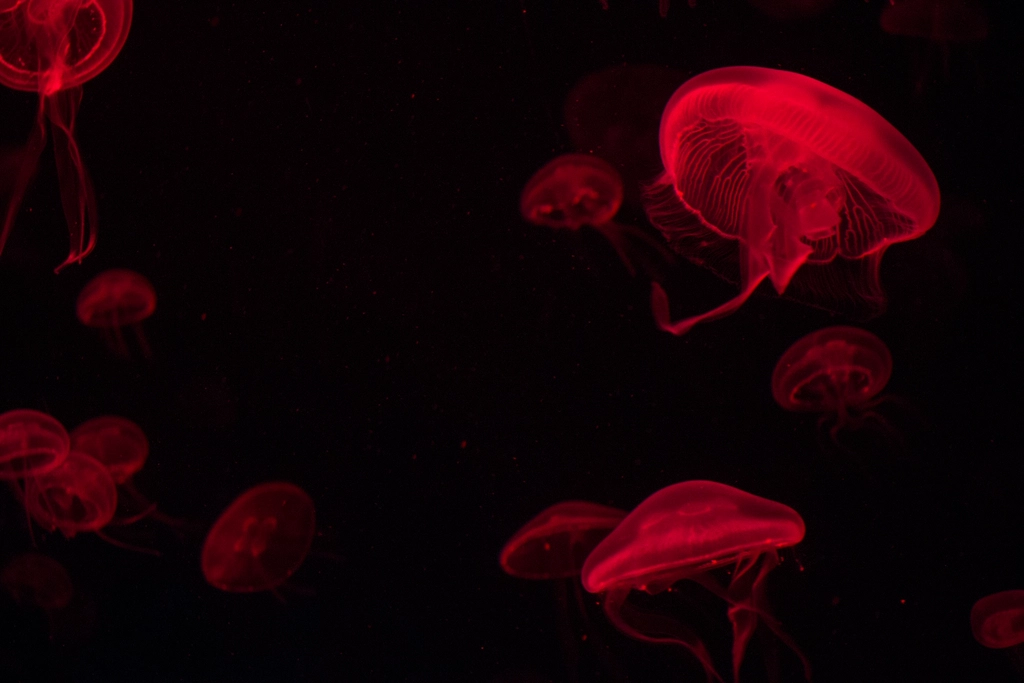
The big red jellyfish (Tiburonia granrojo), also known as the “big red,” represents one of the most remarkable deep-sea discoveries of recent decades. First observed in 1993 by researchers using ROVs in the Monterey Bay submarine canyon, this distinctive jellyfish wasn’t formally described until 2003. Unlike typical jellyfish with numerous tentacles, the big red possesses only four to seven thick, fleshy feeding arms that can extend up to 1 meter (3.3 feet) from a bell diameter of up to 1 meter. Its striking deep red colouration serves as effective camouflage in the deep ocean, where red light is the first to be filtered out by seawater, rendering red objects virtually invisible. These mysterious creatures inhabit the mesopelagic and bathypelagic zones at depths between 650 and 1,500 meters (2,130 to 4,920 feet) throughout the Pacific Ocean. Scientists believe they may be ambush predators, using their substantial arms to capture prey rather than trailing tentacles. Research on these jellyfish remains challenging due to their deep habitat and fragile structure, which makes collection difficult. The discovery of such a large, previously unknown animal in relatively well-studied waters highlights how much remains to be discovered in our oceans.
The Southern Elephant Seal Extreme Diving Champion
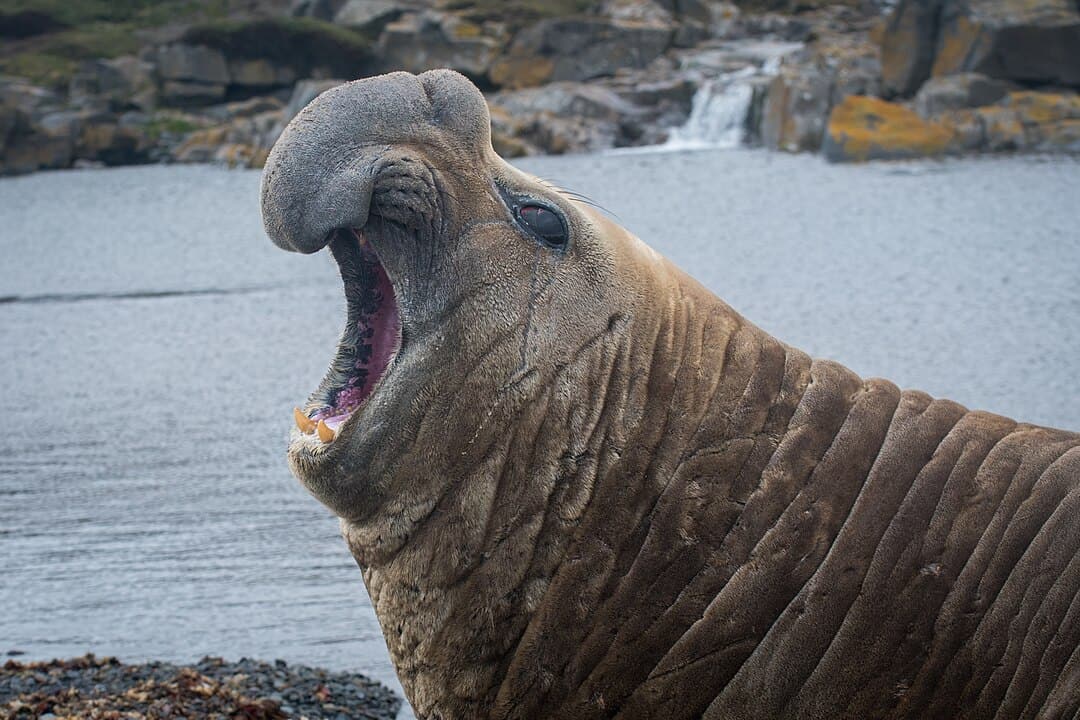
The southern elephant seal (Mirounga leonina) earns its place among ocean giants not only for its impressive size—males can reach lengths of 5.8 meters (19 feet) and weigh up to 4,000 kg (8,800 pounds)—but also for its extraordinary diving capabilities that reveal the deeper realms of our oceans. Named for the large, trunk-like proboscis of adult males, these massive pinnipeds hold multiple extreme diving records among mammals. They routinely reach depths of 1,500 meters (4,920 feet), with recorded dives exceeding 2,100 meters (6,900 feet), and can remain submerged for up to two hours. These remarkable abilities allow them to hunt deep-water squid and fish that few other predators can access. Their bodies have evolved specialized adaptations for deep diving, including blood with enhanced oxygen-carrying capacity, the ability to collapse their lungs to withstand pressure, and metabolic adjustments that conserve oxygen. Research tracking these animals has provided scientists with valuable oceanographic data from remote Antarctic waters that are too difficult for traditional research vessels to access. Despite spending much of their lives in the ocean depths, elephant seals must return to land for breeding and moulting, where males engage in spectacular battles for dominance using their massive bodies and proboscises as weapons.
The Greenland Shark Ancient Arctic Wanderer
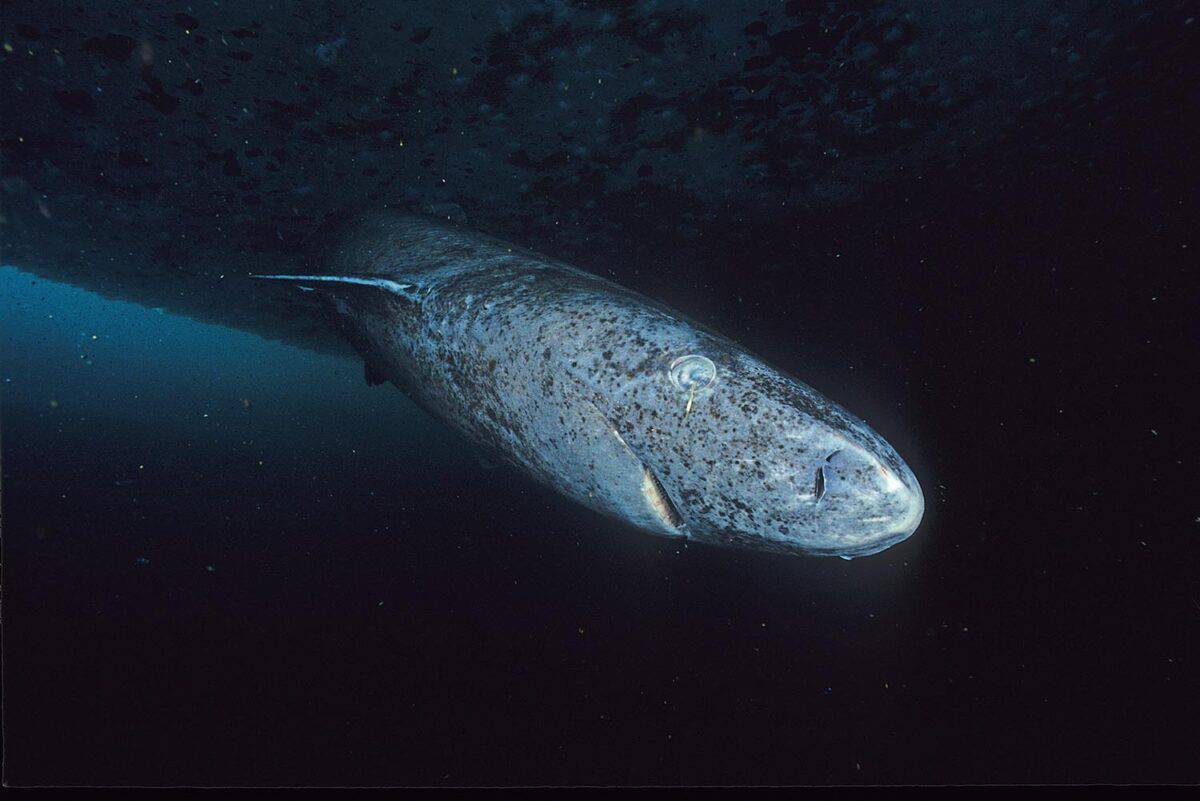
The Greenland shark (Somniosus microcephalus) holds the distinction of being the longest-lived vertebrate known to science, with individuals estimated to reach ages exceeding 400 years. These slow-growing behemoths can reach lengths of 7.3 meters (24 feet) and weights of 1,400 kg (3,100 pounds), though they grow at a glacial pace of less than 1 cm per year. Native to the frigid waters of the North Atlantic and Arctic Oceans, these sharks have been documented at astonishing depths of 2,200 meters (7,200 feet). Their extreme longevity and deep-dwelling nature have made them living witnesses to centuries of Earth’s history. Perhaps their most bizarre characteristic is that most Greenland sharks host parasitic copepods that attach to their corneas, rendering them partially blind—yet they’ve adapted to hunt successfully despite this handicap, using their other highly developed senses. Their flesh contains high levels of trimethylamine N-oxide (TMAO), making it toxic unless properly processed through traditional fermentation methods used in Iceland to produce hákarl, a notorious delicacy. Recent research using radiocarbon dating of eye lens nuclei revolutionized our understanding of their lifespan, revealing that sexual maturity might not occur until about 150 years of age.
Conclusion

From the eerie glow of the big red jellyfish to the ancient wanderings of the Greenland shark, the deep ocean remains a realm of staggering mystery and wonder. These 13 ocean giants offer just a glimpse into the vast biodiversity hidden beneath the waves—creatures shaped by extreme pressure, perpetual darkness, and evolutionary forces we are only beginning to understand. As technology improves and deep-sea exploration advances, we may uncover even more awe-inspiring species still lurking in the depths. Until then, these marine titans remind us how little we truly know about our own planet and the life it harbors far below the surface.

As a little kid, I fell in love with nature, wildlife, and animals. Living in the USA, South Africa, Italy, China and Germany gave me the opportunity to discover the world's Wildlife. My favorite animals are Mountain Gorillas, Siberian Tigers, and Great White Sharks.
I'm a certified PADI Open Water Diver, went to Everest Base Camp and Trekked Gorillas in Uganda. I hold a Master of Science in Economics and Finance.
Please send any feedback to feedback@animalsaroundtheglobe.com
- 13 Stunning Bird Migrations Threatened by Global Warming - August 14, 2026
- 15 Animals That Do Not Need Oxygen Like We Do - August 14, 2026
- 12 Dogs That Can Sense Human Illness - August 14, 2026