

The animal kingdom is filled with remarkable examples of maternal devotion that often rival or even surpass human parenting in terms of sacrifice, dedication, and ingenuity. From the tiniest insects to the largest mammals, mother animals employ extraordinary strategies to ensure their offspring’s survival in harsh and unforgiving environments. These maternal behaviors range from extended pregnancies and dangerous births to years of teaching and protection. While parental investment varies widely across species, certain animal mothers stand out for their exceptional commitment. This article explores some of the most impressive examples of maternal dedication in the animal world, showcasing the lengths to which these mothers will go to give their young the best possible start in life.
Elephant Matriarchs: The Ultimate Nurturers

African elephant mothers are perhaps the animal kingdom’s most dedicated maternal figures, investing nearly 22 months in pregnancy—the longest gestation period of any land mammal. This extraordinary commitment begins before birth and extends for decades afterward. Female elephants live in tight-knit matriarchal societies where mothers, grandmothers, aunts, and sisters all contribute to raising calves. The mother-calf bond typically lasts 50 years or more, creating one of nature’s most enduring family relationships.
Elephant calves are vulnerable for years, requiring constant supervision and protection from predators. Mother elephants produce up to 50 gallons of milk daily for their hungry calves, who gain about 2-3 pounds every day during their first year. Beyond physical care, elephant mothers serve as teachers, using their trunks to guide calves in essential skills like using their trunks effectively and finding food and water. During droughts, older matriarchs draw on decades of experience to lead their families to hidden water sources, often remembered from previous dry periods. This knowledge transfer represents one of nature’s most sophisticated examples of non-human teaching.
Octopus Mothers: The Ultimate Sacrifice
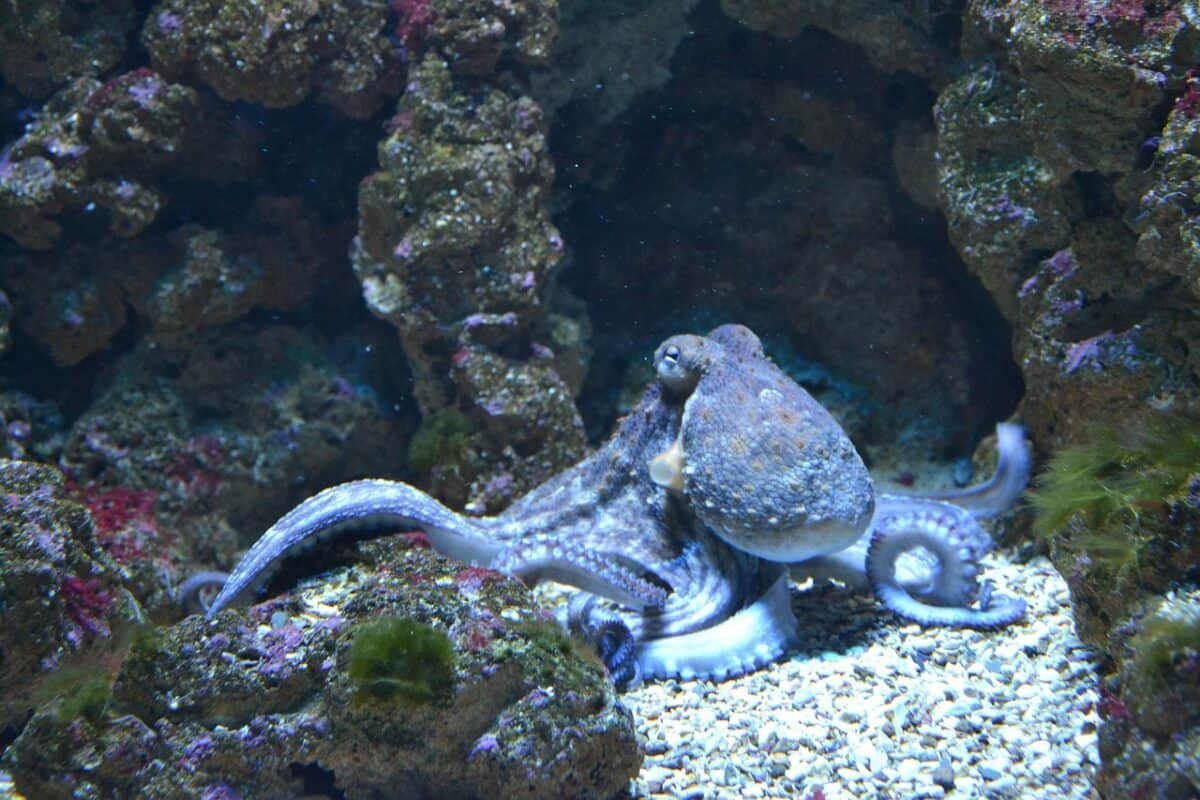
The deep-sea mother octopus demonstrates perhaps the most extreme example of maternal sacrifice in the animal kingdom. After mating, a female giant Pacific octopus will find a protected den where she lays up to 100,000 eggs, attaching each one carefully to the ceiling of her cave. For the next 4-7 months, she remains with her eggs constantly, never leaving even to feed. Instead, she directs all her energy toward protecting her future offspring, using her arms to waft fresh, oxygen-rich water over the eggs and keeping them clean from algae and potential predators.
This extraordinary commitment comes at the ultimate cost. By the time her eggs hatch, the mother octopus has essentially starved herself to death. Her body begins to break down as she metabolizes her own tissues for energy, and she typically dies shortly after her young emerge. This supreme sacrifice ensures that her thousands of tiny offspring have the best possible chance at survival in the challenging ocean environment. Scientists believe this programmed death is driven by hormonal changes that occur after breeding, making it one of nature’s most poignant examples of maternal sacrifice.
Polar Bear Mothers: Survival Against All Odds
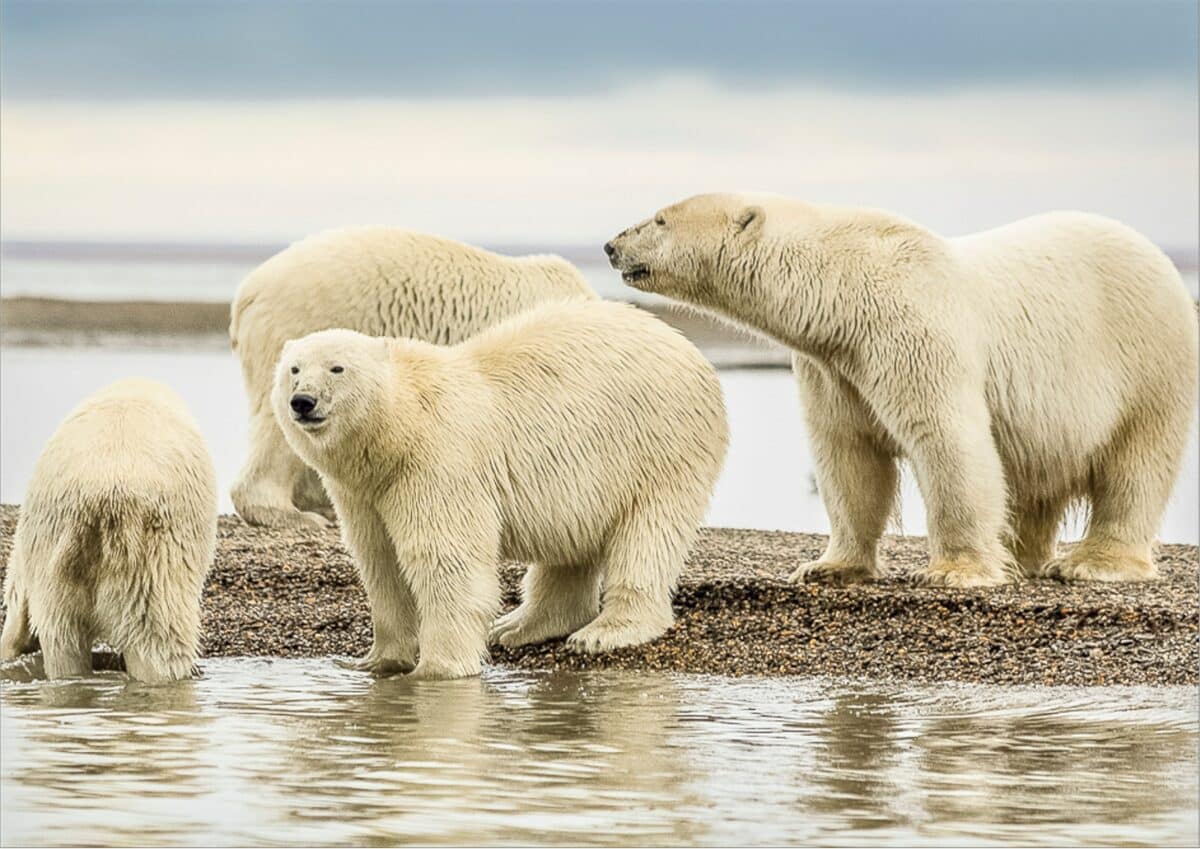
Polar bear mothers face some of the harshest conditions on Earth while raising their cubs. After mating in spring, female polar bears engage in “delayed implantation,” where the fertilized egg doesn’t implant in the uterus until the fall, allowing the mother to build up sufficient fat reserves. As winter approaches, pregnant females dig elaborate maternity dens in snowdrifts, where they’ll remain without eating or drinking for up to eight months—through pregnancy, birth, and the early nursing period.
During this time, the mother loses up to 43% of her body weight while producing rich milk with 31% fat content (compared to human milk’s 3-5%). When cubs finally emerge from the den in spring, weighing around 25 pounds, the mother faces the critical challenge of hunting seals while protecting her vulnerable offspring. The cubs will remain with her for 2-3 years, learning essential hunting skills before becoming independent. With Arctic sea ice diminishing due to climate change, polar bear mothers now face even greater challenges, often having to swim longer distances with cubs in tow, making their maternal dedication all the more remarkable.
Orangutan Mothers: Eight Years of Constant Care

Orangutan mothers establish one of the longest-lasting mother-offspring bonds of any animal species outside of humans and elephants. A mother orangutan will carry, feed, and protect her single infant continuously for the first two years of life. The young orangutan maintains near-constant physical contact with its mother, clinging to her as she travels through the forest canopy. This intimate connection continues as the mother teaches her offspring about hundreds of food sources, appropriate nest-building techniques, and social behaviors.
This intensive education continues for 6-8 years, representing one of the longest dependency periods in the animal kingdom. The extended learning period is crucial for young orangutans to master the complex skills needed to survive in their rainforest habitat. Female orangutans typically have only 3-4 offspring throughout their entire lifetime, spacing births about 8 years apart—the longest birth interval of any mammal. This extraordinary parental investment ensures each offspring receives the full benefit of maternal knowledge. Scientists have observed that orphaned orangutans typically struggle to master the survival skills that mothers would normally teach, highlighting the critical importance of this extended maternal relationship.
Wolf Spider Mothers: Carrying the Family on Her Back

Wolf spiders demonstrate remarkable maternal care that defies the common perception of spiders as solitary creatures. Unlike most spider species, the female wolf spider carries her egg sac everywhere, attached to specialized spinnerets at the rear of her abdomen. This precious cargo contains up to 100 eggs and can weigh nearly as much as the mother herself, significantly hampering her mobility and hunting abilities. Despite this burden, she continues to hunt and defend herself while keeping the eggs at an optimal temperature by exposing them to sunlight or shade as needed.
After approximately two weeks, the eggs hatch, but the mother’s work is far from over. The newly hatched spiderlings immediately climb onto their mother’s abdomen, completely covering her back in a wriggling mass of tiny bodies. She will carry these offspring for up to two weeks, protecting them from predators and helping them travel distances they couldn’t manage alone. When threatened, the spiderlings scatter but quickly return to their mother’s back once danger passes. This dedicated transport service continues until the young spiders have molted at least once and grown large enough to survive independently—an extraordinary example of maternal care in invertebrates.
Emperor Penguin Mothers: The Arctic Marathon
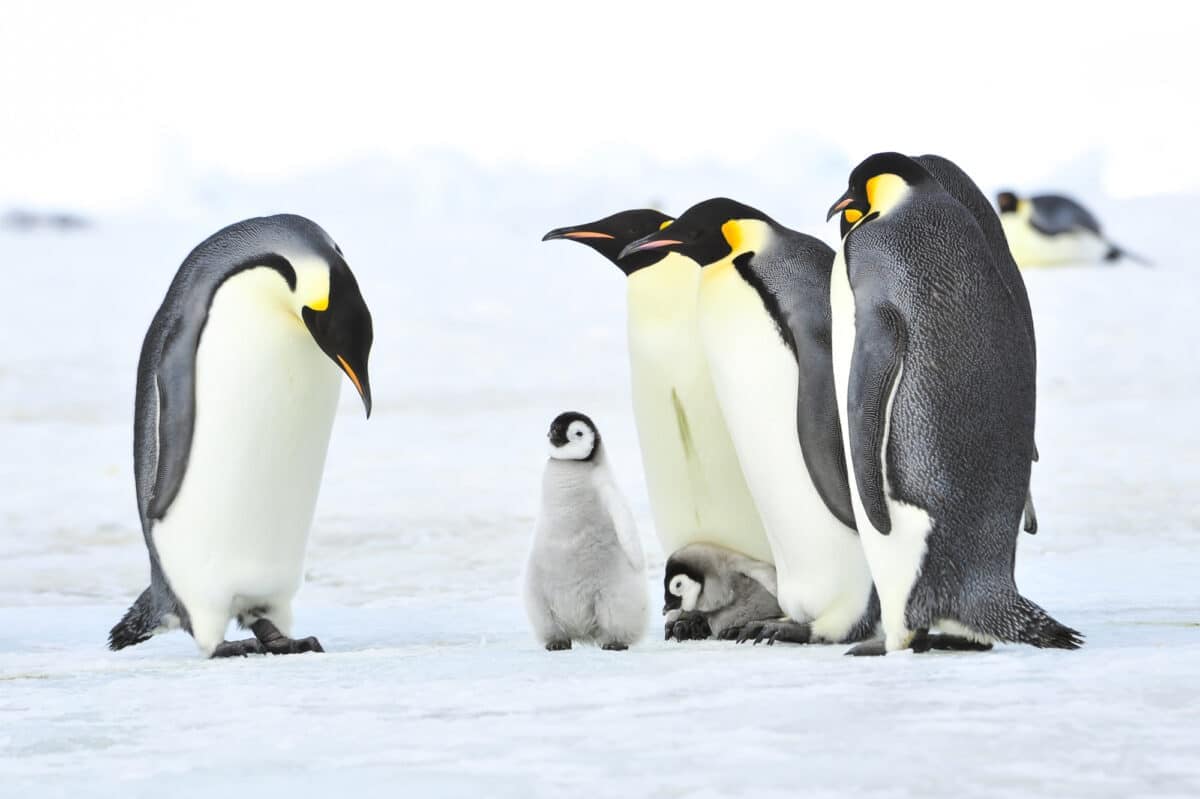
Emperor penguin mothers undergo an extraordinary series of challenges to bring new life into one of Earth’s most extreme environments. The breeding cycle begins in March when penguins trek up to 75 miles across Antarctic ice to reach breeding colonies. After mating and laying a single egg, the female performs a remarkable handoff, carefully transferring the egg to her mate’s feet where it will be incubated under a special brood pouch. Having lost up to one-third of her body weight during egg formation, the mother then makes an exhausting journey back to the ocean to feed.
This critical feeding trip spans 50-75 miles across treacherous ice in the deepening Antarctic winter, with temperatures plummeting to -40°F and winds reaching 89 mph. The mother spends about two months hunting in the ocean, storing fat and collecting food in her stomach for her future chick. She times her return to coincide with hatching, navigating back to the exact location in the colony where her mate and egg await. Upon arrival, she regurgitates the partially digested food to feed her newly hatched chick. This perfectly choreographed parenting relay, performed under some of the most extreme conditions on Earth, showcases the extraordinary lengths emperor penguin mothers go to ensure their offspring’s survival.
Alligator Mothers: Gentle Giants with Their Young

Female alligators display a surprising gentleness that contrasts sharply with their fearsome reputation. After building a nest mound of vegetation on a riverbank, a mother alligator lays 20-50 eggs and then remains nearby for the entire 65-day incubation period, protecting the nest from predators like raccoons and wild pigs. What happens next showcases one of nature’s most remarkable maternal behaviors: when the eggs are ready to hatch, the babies begin making high-pitched chirping sounds from inside their shells. These calls alert the mother that hatching time has arrived.
The mother alligator, whose jaws can exert a crushing force of 2,000 pounds per square inch, uses those same jaws with extraordinary delicacy to uncover the nest and help free her babies from their eggs. She then gently picks up the hatchlings in her mouth—sometimes carrying 8-10 at once—and transports them to the water. For the next 1-2 years, she’ll remain vigilant, responding to distress calls from her young and aggressively defending them from predators. The babies often ride on her head and back for protection. This dedicated maternal care from one of nature’s most powerful predators demonstrates the remarkable behavioral flexibility that motherhood can bring about, even in species we might consider unlikely nurturers.
Koala Mothers: Preparing the Next Generation’s Gut
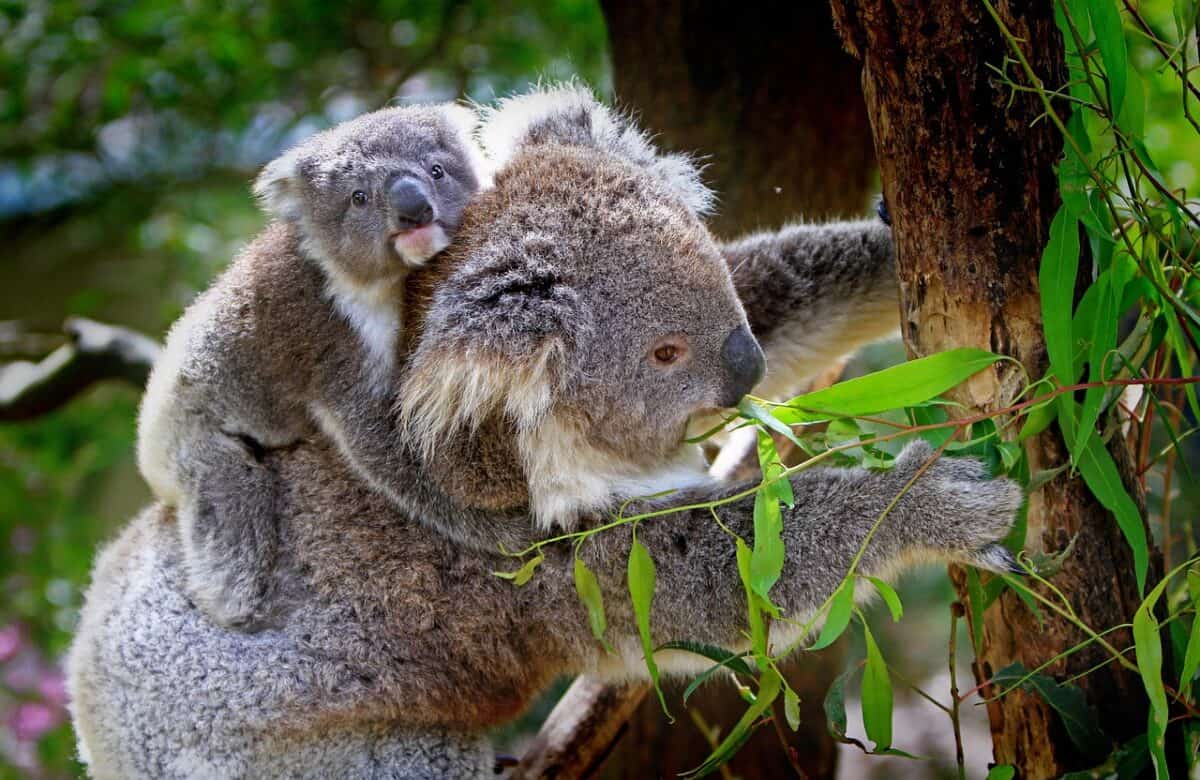
Koala mothers employ a fascinating and specialized feeding strategy to prepare their joeys for a challenging diet of toxic eucalyptus leaves. After a short 35-day gestation period, a newborn koala—just 2 centimeters long and weighing less than a gram—crawls from the birth canal into its mother’s pouch. There it attaches to a nipple, where it will remain for about six months, gradually developing from an embryo-like state into a recognizable joey. Around 6-7 months, the joey begins to peek out from the pouch, and the mother introduces it to one of the animal kingdom’s most unusual first foods: “pap.”
Pap is a specialized form of the mother’s feces, but it differs from normal koala droppings. The mother produces this special excrement specifically for her joey, containing partially digested eucalyptus leaves along with beneficial intestinal bacteria. When the joey consumes this pap, it receives a starter culture of the specialized gut microbiome needed to detoxify and digest eucalyptus leaves, which are poisonous to most other animals. Without this maternal gift, the joey would be unable to process its future diet. After this gut preparation, the joey will remain with its mother for another six months, riding on her back and learning which specific eucalyptus varieties are safe to eat in their territory. This remarkable example of maternal care highlights how some animal mothers have evolved specialized strategies to overcome unique dietary challenges.
Earwig Mothers: Insect Maternal Champions
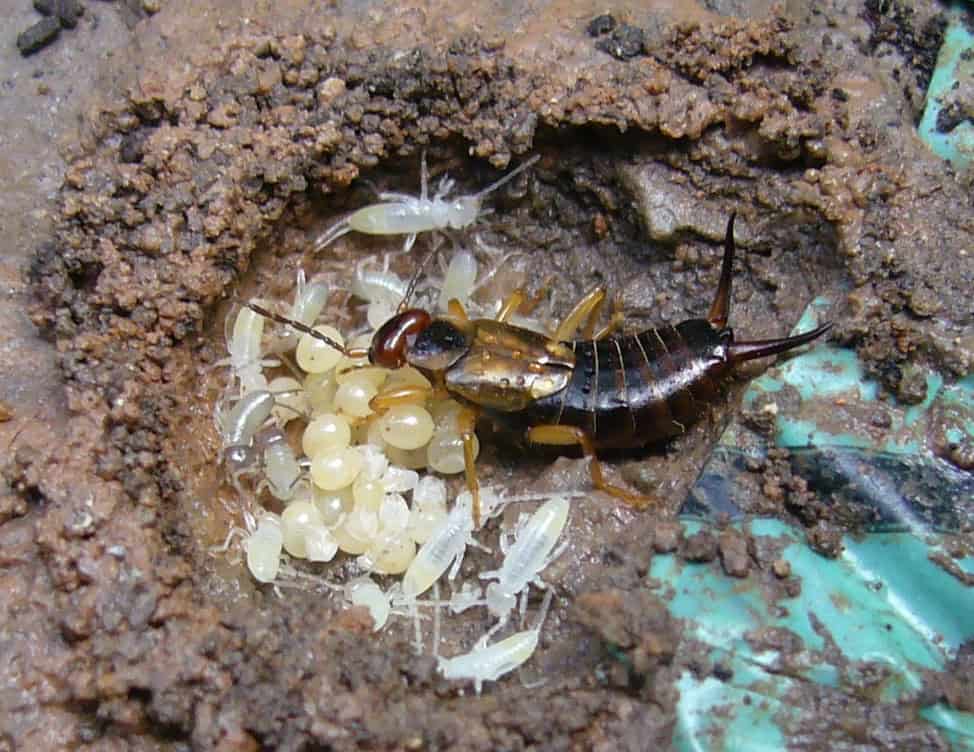
Despite their somewhat unsettling name and appearance, female earwigs demonstrate some of the most sophisticated maternal behaviors observed in insects. After mating in autumn, a female earwig digs a burrow in moist soil where she’ll lay 20-80 eggs. Unlike most insects that abandon their eggs, the earwig mother remains with her clutch throughout winter, constantly cleaning the eggs with her mouthparts to prevent deadly fungal and bacterial growth. She also rearranges the eggs frequently, moving them deeper into the soil when temperatures drop and bringing them closer to the surface when conditions warm.
When the eggs hatch in spring, the mother’s dedication continues. She forages for food, bringing it back to feed her nymphs (juvenile earwigs), and protects them from predators. Researchers have observed that if the brood becomes separated, the mother actively searches for missing nymphs, using chemical signals to identify her offspring. This care continues until the nymphs molt for the second time—approximately two weeks after hatching—at which point they become independent. While this period may seem brief compared to mammalian care, in the insect world, where most species provide no parental care whatsoever, the earwig mother’s dedication represents an evolutionary pinnacle of invertebrate maternal behavior.
Caecilian Mothers: Feeding Children with Their Own Skin
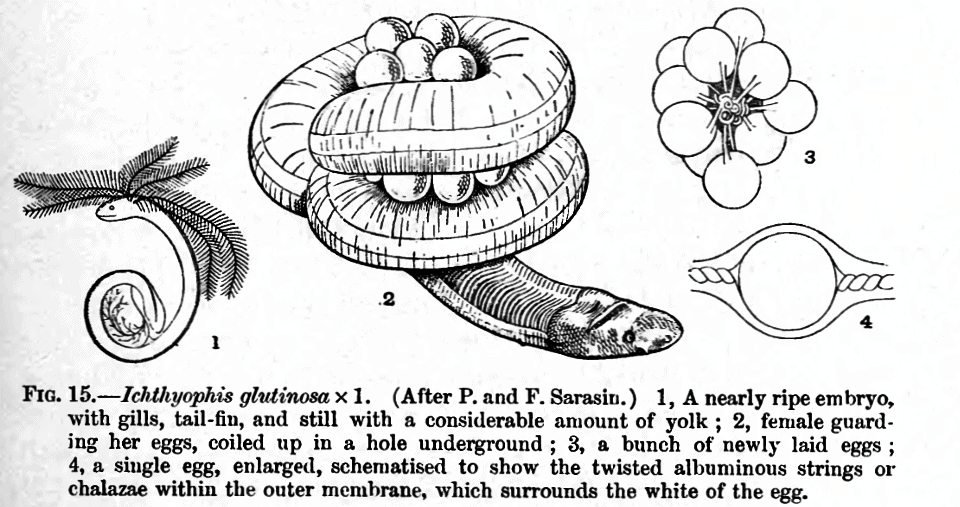
Caecilians, legless amphibians resembling large earthworms, employ one of the most physically demanding feeding strategies in the animal kingdom. After laying eggs in underground chambers, female caecilians of certain species, particularly those in the genus Boulengerula, remain coiled around their clutch until they hatch. When the young emerge, they exhibit a remarkable behavior: they begin to eat their mother’s skin. Unlike typical skin shedding in amphibians, the female caecilian develops a specialized outer skin layer that’s rich in fats and nutrients specifically for her offspring to consume.
The young caecilians use specialized teeth to scrape off and consume this nutritious outer layer of their mother’s skin, a process called maternal dermatophagy. The mother remains still during this feeding, which can last for several weeks as her skin regenerates repeatedly to provide ongoing nourishment. This extraordinary sacrifice allows the young to grow rapidly in the safety of their underground chamber before venturing out on their own. Scientists believe this unusual feeding strategy evolved as an adaptation to their subterranean lifestyle, where finding appropriate food for small offspring would be challenging. The caecilian’s method of literally giving parts of herself to nourish her young represents one of the most direct forms of maternal sacrifice observed in vertebrates.
Sea Otter Mothers: Constant Vigilance

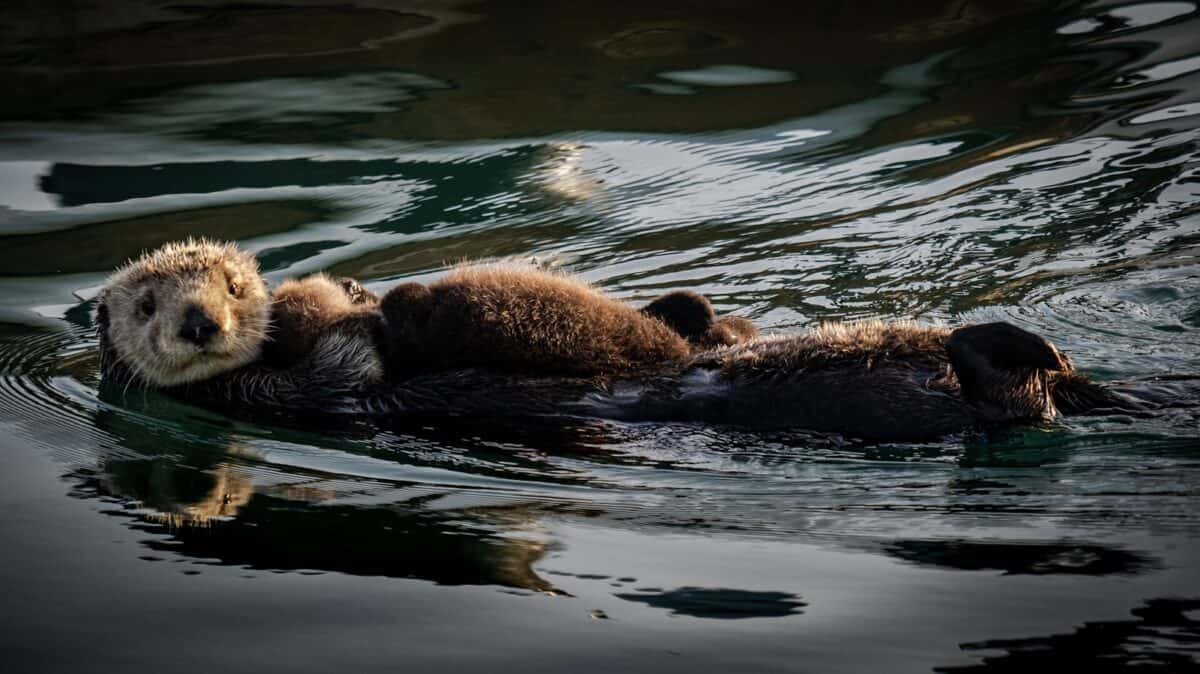
Sea otter mothers demonstrate extraordinary dedication during their pup’s first six months of life, rarely getting more than a few minutes of sleep at a time. A newborn sea otter pup is completely helpless—unable to swim, hunt, or even regulate its body temperature in the cold Pacific waters. The mother solves this through constant physical contact, floating on her back with her pup cradled on her chest. She meticulously grooms the pup’s fur several times daily, blowing air into its dense coat to maintain buoyancy and insulation, essential for survival in cold water.
While caring for her pup, the mother must consume up to 30% of her body weight daily to produce enough milk and maintain her own energy levels. She dives for food while somehow managing to leave her buoyant pup floating safely at the surface. If the water becomes rough, she’ll wrap the pup in kelp to prevent it from drifting away while she hunts. As the pup grows, the mother teaches it to dive and hunt, often bringing up easier prey for the pup to practice with before tackling more challenging shellfish. Sea otter mothers will even crack shellfish using rocks and demonstrate the technique repeatedly until their pups master this tool-using behavior. This intensive parenting represents one of the most energy-demanding maternal commitments in mammals, as the mother essentially sacrifices half a year of proper rest to ensure her offspring’s survival.
The Evolutionary Significance of Maternal Investment
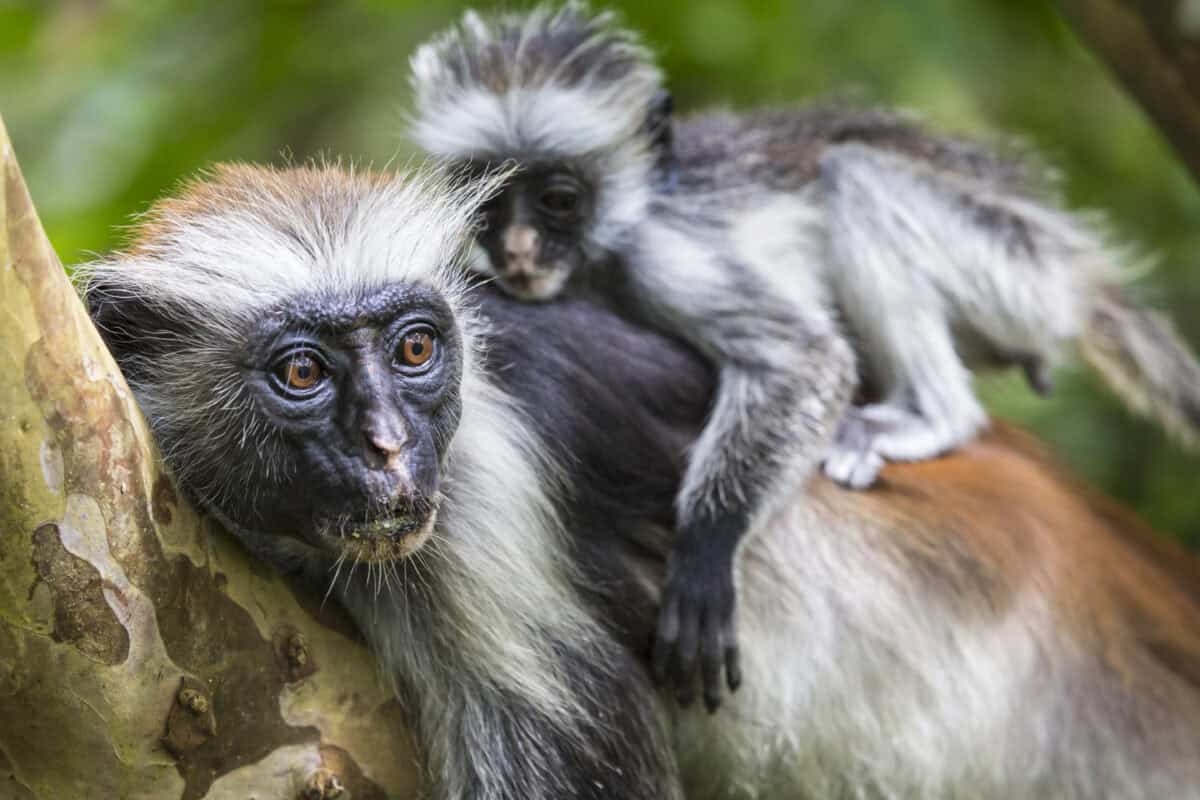
The extraordinary range of maternal behaviors across the animal kingdom represents different evolutionary strategies that balance offspring survival against the mother’s own needs and future reproductive potential. Species with high maternal investment typically produce fewer offspring but invest heavily in each one, increasing their individual chances of survival. These species, like elephants, orangutans, and humans, typically have longer lifespans, allowing for extended learning periods and knowledge transfer. Conversely, animals with minimal parental care, such as many fish and insect species, produce huge numbers of offspring with the evolutionary strategy that at least some will survive to adulthood, even without parental protection.
The degree of maternal investment generally correlates with the complexity of behaviors offspring need to learn, the harshness of the environment, and the physical vulnerability of young. Maternal investment also tends to increase with brain size across species, as larger-brained animals often rely more on learned rather than instinctual behaviors. These diverse parenting strategies highlight different evolutionary solutions to the same fundamental challenge: ensuring genes pass successfully to the next generation. From an ecological perspective, maternal behavior often represents a species’ adaptation to specific environmental pressures, balancing the metabolic costs of reproduction against the benefits of increased offspring survival. The remarkable diversity of maternal behaviors we observe today is the result of millions of years of natural selection, with each species evolving the reproductive strategy that best fits its ecological niche.
The extraordinary lengths to which animal mothers go for their offspring provide both inspiration and perspective on the universal challenges of parenthood. From the octopus mother’s ultimate sacrifice to the polar bear’s months of fasting, and from the koala’s specialized nutritional preparation to the sea otter’s sleepless vigilance, these maternal behaviors represent some of nature’s most remarkable adaptations. These diverse strategies highlight how motherhood has independently evolved across vast

- How Alligators Survive Frozen Lakes in the South - August 12, 2026
- What Happens When a Predator Refuses to Hunt? - August 12, 2026
- 12 Creepy Places in the U.S. You Can Actually Visit - August 12, 2026