

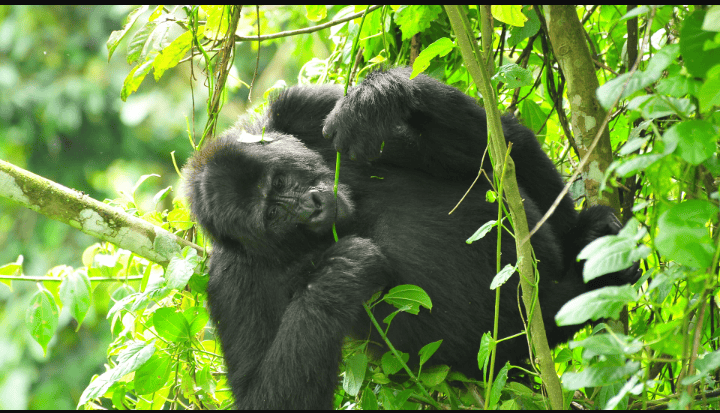
In the heart of Africa’s forests, chimpanzees are revealing a musical side that could reshape our understanding of rhythm and its roots in human evolution. A recent study has found that these primates engage in rhythmic drumming, a behavior that might trace back millions of years to a common ancestor shared with humans.
The Discovery of Chimpanzee Rhythms

Researchers observed 47 chimpanzees across six populations, noting 371 instances of drumming behavior. These weren’t random beats; the chimps displayed patterns with non-random timing, indicating a sense of rhythm. Notably, western chimpanzees produced evenly spaced beats, akin to a metronome, while eastern chimpanzees exhibited swing-like rhythms with alternating intervals.
Rhythm as a Social Tool

The study suggests that these rhythmic patterns aren’t merely for show. They may play a role in communication, especially during “pant-hoot” calls—a vocalization used by chimps. The timing of drumming during these calls varied between subspecies, hinting at complex social functions.
Implications for Human Evolution

The presence of rhythm in chimpanzees implies that the foundations of musicality predate humans. “Before humans were human—six, seven million years ago—the apes that were roaming around that eventually would evolve into chimpanzees and humans probably had some basic building blocks of rhythm,” said Professor Catherine Hobaiter, a senior author of the study.
Beyond Beats

This discovery aligns with other findings on chimpanzee communication. For instance, studies have shown that chimps use gestures in rapid turn-taking patterns, similar to human conversations.
A New Perspective on Music’s Origins
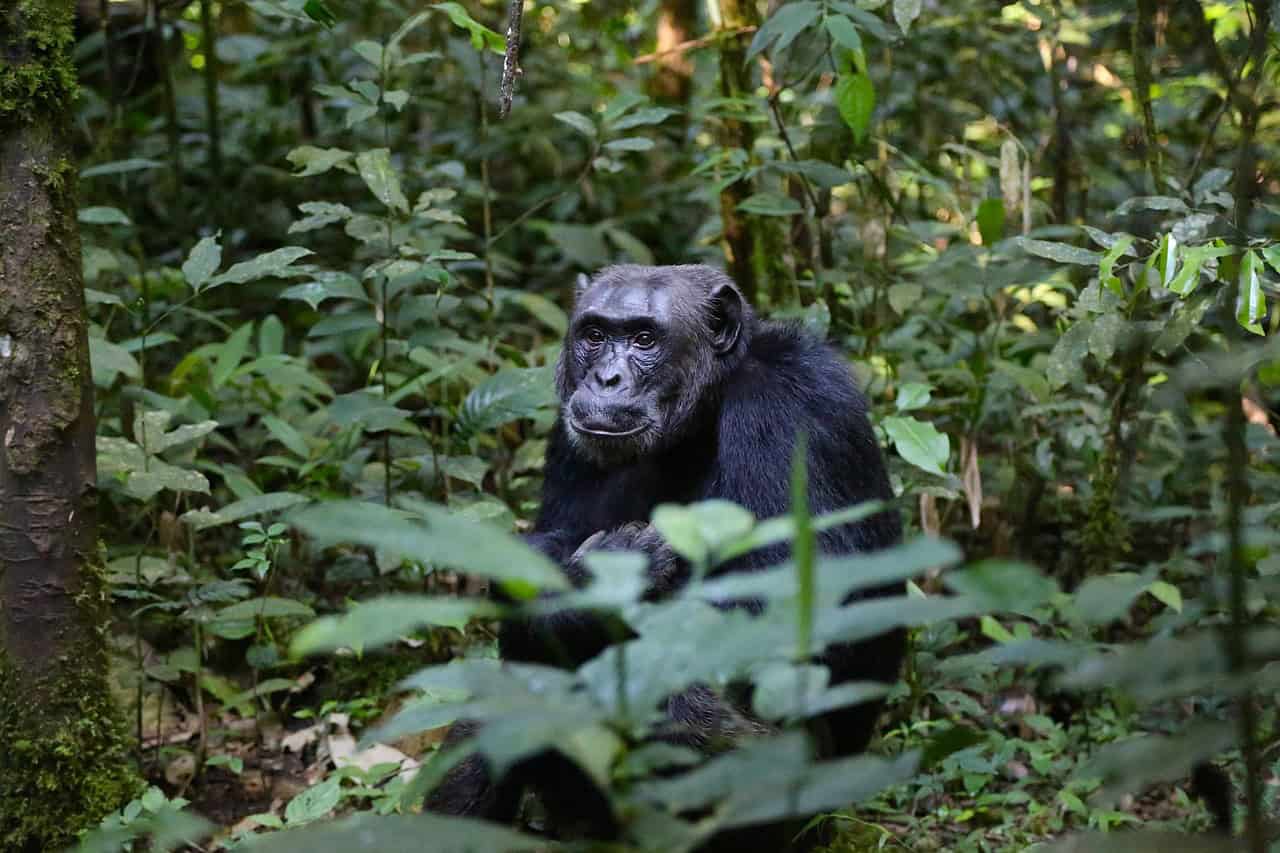
While chimpanzees won’t be forming orchestras anytime soon, their drumming offers valuable insights into the evolutionary origins of rhythm and music. These behaviors highlight the deep connections between humans and our primate relatives, reminding us that the seeds of our musical abilities were sown long before the first instruments were crafted.

adventuring, photography and videography. I am currently working towards a BSc in Biodiversity and Ecology at Stellenbosch University to go on to specialise in Marine Sciences one day.
Please send any feedback to Feedback@animalsaroundtheglobe.com
- Curious Black Bear Plays on Swingset - July 18, 2026
- Meet Deep Blue: The Largest and Oldest Living Shark Ever Recorded - July 17, 2026
- Cat Accidentally Eats Fish When Drinking Water - July 17, 2026