


The United States, with its diverse landscapes ranging from arid deserts to lush forests and sprawling wetlands, harbors a remarkable variety of endemic insect species found nowhere else on Earth. These unique arthropods have evolved specialized adaptations to thrive in specific American ecosystems, often with fascinating life cycles and behaviors that reflect their exclusive habitats. From vibrant butterflies in California to peculiar beetles in the Appalachian Mountains, these native insects represent important components of American biodiversity and offer fascinating insights into evolutionary processes shaped by geographical isolation. Join us as we explore fourteen extraordinary insects that call the United States their exclusive home.
14. American Burying Beetle (Nicrophorus americanus)
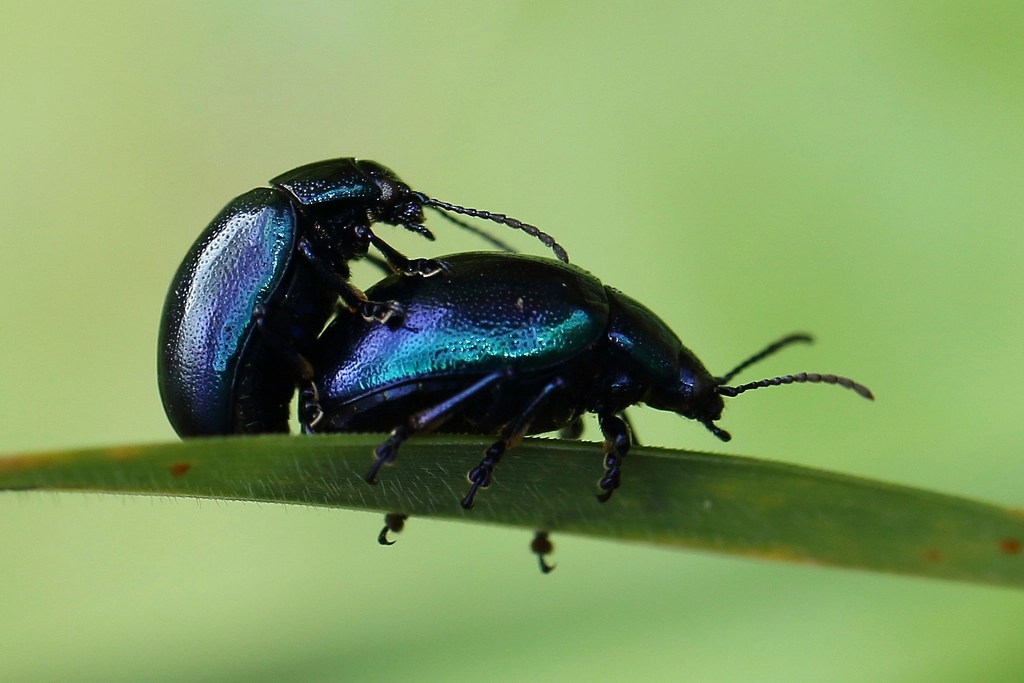
Once widespread across the eastern United States, the American burying beetle is now primarily confined to isolated populations in Nebraska, Rhode Island, Oklahoma, Arkansas, Kansas, and South Dakota. This striking insect features a glossy black body with distinctive orange-red markings on its face and wing covers. What makes this beetle truly remarkable is its complex parental care behavior—a rarity among insects. Mated pairs locate small dead vertebrates, bury them underground, and then prepare the carcass as food for their developing larvae. Both parents stay to care for their young, with females even regurgitating pre-digested food for the larvae. Unfortunately, this fascinating beetle is federally endangered, with habitat loss and the decline of appropriately sized carrion being primary threats to its survival.
13. Delta Green Ground Beetle (Elaphrus viridis)

The Delta green ground beetle represents one of the most geographically restricted endemic insects in the United States. This small, emerald-green beetle exists exclusively within a 7.5-square-mile area of California’s Solano County, specifically in the vernal pools of Jepson Prairie Preserve. These seasonal wetlands provide the unique habitat requirements this beetle needs to survive. Adults hunt small invertebrates along the muddy edges of the pools as they dry in spring, while larvae develop in the moist soil. The beetle’s entire life cycle is synchronized with the Mediterranean climate of California’s Central Valley. Listed as threatened under the Endangered Species Act in 1980, conservation efforts focus on preserving the delicate vernal pool ecosystems that sustain this living jewel of California’s endemic fauna.
12. Uncompahgre Fritillary Butterfly (Boloria acrocnema)
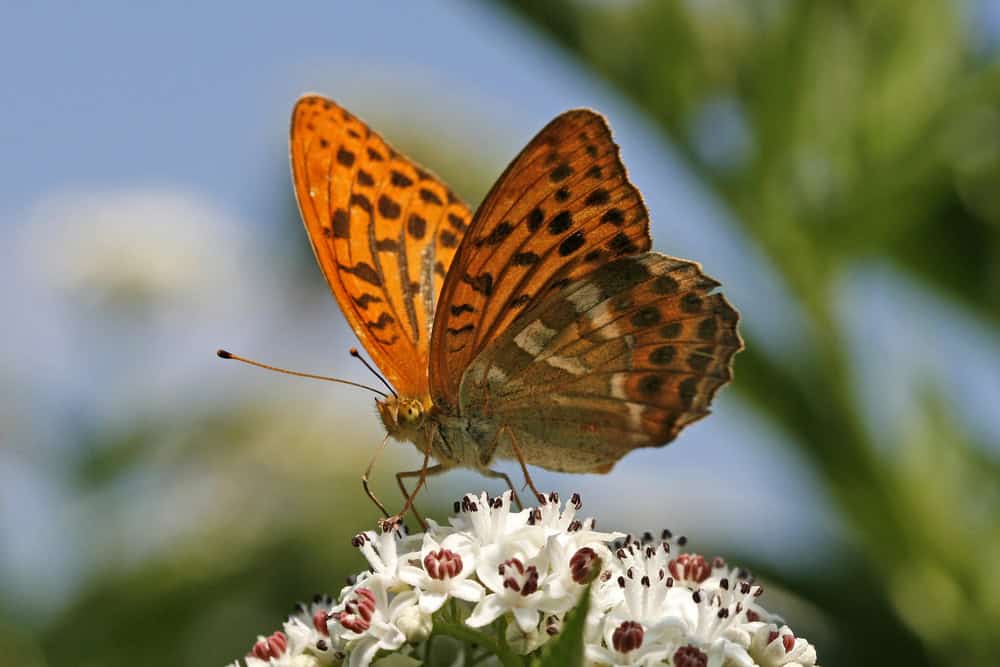
High in the San Juan Mountains of Colorado lives one of America’s most isolated butterflies—the Uncompahgre fritillary. This small, dark brown butterfly with distinctive checkered orange and black markings was only discovered by science in 1978 and is found nowhere else in the world. It inhabits alpine environments above 12,000 feet, where its caterpillars feed exclusively on snow willow. The butterfly’s entire known global distribution covers less than 100 acres across a handful of isolated patches of suitable habitat. With a one-year life cycle largely spent as caterpillars beneath the snow, adults emerge for just a few weeks in July and August to mate and lay eggs. Climate change poses an existential threat to this species, as warming temperatures may eliminate the cold alpine conditions it requires. Conservation efforts include close monitoring of the few known populations and habitat protection measures.
11 Hine’s Emerald Dragonfly (Somatochlora hineana)

With its brilliant emerald-green eyes and metallic green thorax marked with yellow stripes, the Hine’s emerald dragonfly is as beautiful as it is rare. Endemic to the United States, this endangered species is now limited to small populations in Illinois, Michigan, Missouri, and Wisconsin. What makes this dragonfly special is its extremely specific habitat requirements—calcareous spring-fed marshes and wet meadows overlying dolomite bedrock. These rare wetlands provide the clean, mineral-rich waters needed for larval development, which can take 2-4 years. Adults live for only a few weeks in summer, during which they hunt smaller insects and reproduce. The dragonfly’s limited range and specialized habitat make it particularly vulnerable to wetland destruction, groundwater contamination, and invasive species. Recovery efforts include habitat restoration, captive rearing programs, and legal protection of its remaining habitats.
10. Coachella Valley Jerusalem Cricket (Stenopelmatus cahuilaensis)

The Coachella Valley Jerusalem cricket is a large, flightless insect endemic to a small region of Southern California’s Coachella Valley. Despite its intimidating appearance—with a large, round head, robust jaws, and a bulbous abdomen—this nocturnal insect is harmless to humans. Unlike other Jerusalem crickets found in western North America, this species has evolved to live exclusively in the shifting sand dunes and sandy soils of its desert habitat. It spends most of its life underground, emerging at night to feed on decaying plant material and occasional small insects. The cricket’s specialized adaptations include powerful digging legs and a body built to conserve water in its arid environment. Urban development, off-road vehicle recreation, and invasive plants have significantly reduced its already limited habitat, making conservation of remaining sand dune ecosystems critical for its survival.
9 Miami Blue Butterfly (Cyclargus thomasi bethunebakeri)

Once common throughout coastal southern Florida, the Miami blue butterfly now claims the distinction of being one of America’s most endangered insects. This small, vibrant blue butterfly with white-fringed wings is currently restricted to a few isolated populations in the Florida Keys, particularly within the Key West National Wildlife Refuge. The butterfly has a complex life cycle dependent on specific coastal plants—adults feed on nectar from various flowers, while caterpillars develop primarily on balloon vine and nickerbean. What makes this butterfly particularly fascinating is its mutualistic relationship with certain ant species, which protect the caterpillars in exchange for sweet secretions the larvae produce. Hurricane impacts, sea-level rise, habitat development, and pesticide use have devastated populations. Conservation efforts include captive breeding programs, habitat restoration, and the establishment of protected areas specifically designed to support this uniquely American butterfly.
8. Mitchell’s Satyr Butterfly (Neonympha mitchellii)

The Mitchell’s satyr butterfly represents one of America’s most habitat-specific endemic insects. This small, brown butterfly with distinctive eyespots along its wing margins is found exclusively in specialized wetlands called fens—calcium-rich, spring-fed wetlands with low nutrient levels—in Michigan and Indiana, with a disjunct population in Virginia and the Carolinas. The butterfly’s caterpillars feed only on certain sedges growing in these rare wetlands, completing just one generation per year. Adults fly for only a few weeks in early summer, rarely straying far from their wetland habitats. The butterfly’s extreme specialization has made it exceptionally vulnerable to habitat loss, with approximately 80% of historical populations now extinct. The remaining populations are isolated and fragmented, leading to genetic concerns. Conservation efforts focus on protecting remaining fens, restoring degraded habitats, and researching captive rearing techniques to support wild populations.
7. Darwin’s Bark Beetle (Pityophthorus franklini)

Darwin’s bark beetle holds the distinction of having one of the most restricted ranges of any insect in North America, found exclusively in a small area of the Albany Pine Bush Preserve in New York State. This tiny bark beetle, less than 2mm long, lives in a specialized relationship with pitch pine trees in this rare inland pine barrens ecosystem. Unlike more destructive bark beetle species, Darwin’s bark beetle typically infests only weakened branches rather than killing entire trees. The beetle’s life cycle is synchronized with the fire-dependent ecology of the pine barrens—adults tunnel into pine branches, creating galleries where females lay eggs, and larvae develop by feeding on the inner bark. Conservation of this highly endemic species depends entirely on preserving the Albany Pine Bush ecosystem through controlled burns, invasive species management, and habitat protection measures. The beetle was only described by science in 1985, and much about its biology remains poorly understood.
6. Island Night Lizard Stick Insect (Timema tahoe)

Despite its name referencing a lizard, the Island Night Lizard stick insect is actually a fascinating endemic insect found only in small areas of the Sierra Nevada mountains in California. This cryptic insect perfectly mimics twigs and pine needles of its coniferous forest habitat, with females reaching about 1.5 inches in length. What makes this stick insect particularly special is its remarkable adaptation to high-elevation environments and its unusual reproductive strategy—females can reproduce parthenogenetically (without mating), allowing isolated individuals to establish new populations. The insect feeds primarily on conifers, particularly lodgepole and Jeffrey pines. Its specialized habitat requirements and limited dispersal ability make it vulnerable to forest management practices, climate change, and wildfire pattern alterations. Unlike many endangered insects, it has no federal protection status, largely because its cryptic nature and remote habitat have limited scientific study.
5. Zayante Band-Winged Grasshopper (Trimerotropis infantilis)

The Zayante band-winged grasshopper inhabits one of America’s most unique and threatened habitats—the Zayante sandhills of Santa Cruz County, California. This medium-sized grasshopper, displaying pale gray and brown coloration that perfectly matches its sandy environment, is found nowhere else on Earth. The insect has evolved specific adaptations for life in this unusual ecosystem, including specialized mouthparts for consuming the native plants that grow in the nutrient-poor, sandy soil. When disturbed, it reveals striking yellow-orange hindwings during short, noisy flights—a defense mechanism that momentarily confuses predators. Development, sand mining, fire suppression, and invasive plants have reduced its habitat by more than 60%, leading to its federal listing as endangered in 1997. Conservation efforts include habitat restoration projects, controlled burns to maintain open sandy areas, and management plans that balance human recreation with the grasshopper’s specific habitat needs.
4. San Joaquin Valley Tiger Beetle (Cicindela tranquebarica joaquinensis)

The San Joaquin Valley tiger beetle represents one of California’s many endemic insects, found exclusively in the alkali sink habitats of the San Joaquin Valley. This predatory beetle sports distinctive white markings on a metallic green-bronze body and possesses extraordinarily large eyes and sickle-shaped mandibles—adaptations for its hunting lifestyle. Unlike most insects, tiger beetle larvae develop in vertical burrows in the soil, remaining in the same location for up to two years while ambushing passing prey. Adults are known for their remarkable speed, capable of running so fast that they temporarily blind themselves and must stop periodically to reorient. Agricultural development has eliminated approximately 95% of the beetle’s natural habitat, making it increasingly rare. Though lacking federal protection, conservation organizations emphasize preserving remaining alkali sink habitats and restoring degraded areas to support this uniquely American predator and the ecological services it provides through controlling smaller insect populations.
3. Salt Creek Tiger Beetle (Cicindela nevadica lincolniana)
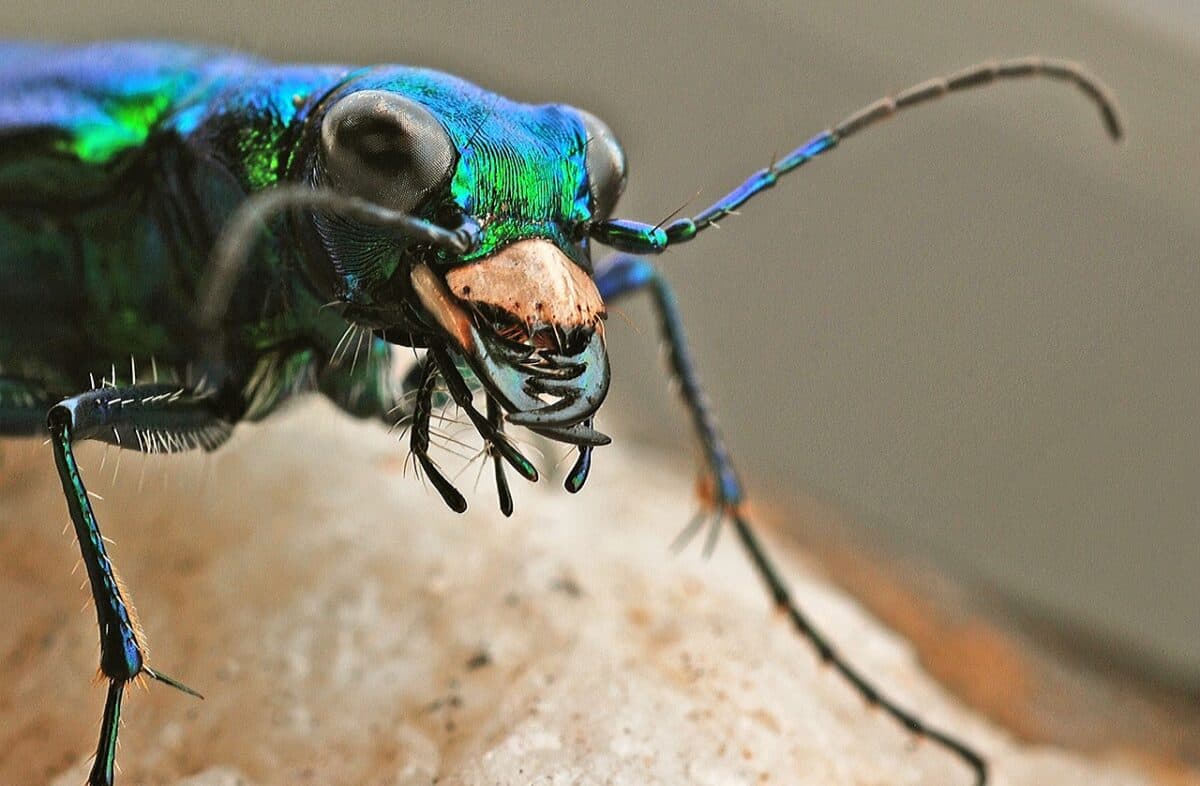
The Salt Creek tiger beetle claims the unfortunate distinction of being one of America’s most endangered insects, with fewer than 500 individuals remaining in the wild. This small but fierce predator exists only in the saline wetlands of Lancaster County, Nebraska, particularly along Little Salt Creek. The beetle’s metallic brown body with cream-colored markings provides perfect camouflage against the salt-encrusted soils of its habitat. Adults hunt by ambushing smaller arthropods on the salt flats, while larvae develop in burrows along the water’s edge, creating a “sit-and-wait” trap for passing prey. Nearly 90% of Nebraska’s eastern saline wetlands have been destroyed through urban development, agriculture, and stream channelization, confining the beetle to a mere 30 acres of remaining habitat. Intensive conservation efforts include habitat restoration, captive breeding programs, and strict protection of remaining saline wetlands, which support not only the beetle but also dozens of other salt-adapted endemic species.
2. Antioch Dunes Anthicid Beetle (Anthicus antiochensis)

Among America’s most habitat-restricted endemic insects, the Antioch Dunes anthicid beetle survives only within the Antioch Dunes National Wildlife Refuge—a mere 55 acres along the southern shore of the San Joaquin River in California. This small beetle, just a few millimeters long, has evolved to thrive in the inland sand dune ecosystem that once covered over 190 acres but has been reduced to a small fraction of its original extent. The beetle’s lifecycle is intimately connected to the dune environment, where adults and larvae live in the sand, feeding on microorganisms, fungal material, and possibly pollen. What makes this beetle particularly remarkable is its ability to survive despite dramatic habitat alteration—the dunes were extensively mined for sand during the early 20th century, drastically changing their structure. Conservation efforts focus on dune restoration, invasive plant removal, and careful monitoring of the remaining population. The beetle shares its highly restricted habitat with two other endangered species—the Lange’s metalmark butterfly and the Antioch Dunes evening primrose.
1. Ohlone Tiger Beetle (Cicindela ohlone)
The Ohlone tiger beetle represents one of coastal California’s most range-restricted endemic insects, found only in Santa Cruz County within remnant patches of native coastal prairie. This small but striking beetle displays a metallic green body with cream-colored markings and the characteristic large eyes and sickle-shaped mandibles of tiger beetles. What makes this species particularly unique is its dependence on specific soil conditions and disturbance patterns within the coastal prairie ecosystem. Adults emerge in late winter and spring, when they hunt smaller insects along bare dirt trails and exposed soil areas. Larvae develop in vertical burrows in the soil, where they remain for up to two years before pupating. Urban development, habitat fragmentation, and invasive plants have restricted the beetle to just a few protected areas. Conservation strategies include maintaining trail systems that create the bare soil the beetle requires, carefully timed cattle grazing to manage vegetation, and habitat restoration projects focusing on native prairie plants that support the beetle’s prey species.
Conclusion: The Critical Importance of America’s Endemic Insects

The fourteen insects highlighted in this article represent just a small fraction of the unique arthropod diversity found exclusively within the United States, yet they tell a powerful story about the intricate relationships between specialized species and their environments. From high mountain meadows to desert sand dunes and coastal wetlands, these endemic insects have evolved in isolation, developing remarkable adaptations to survive in their specific habitats. Their limited distributions make them particularly vulnerable to human activities and environmental changes, with many balancing precariously on the edge of extinction. Conservation of these uniquely American species requires not just protecting individual organisms but preserving entire ecosystems and the ecological processes that sustain them. By understanding and appreciating these specialized creatures, we gain valuable insights into evolutionary processes, ecological relationships, and the remarkable biodiversity that makes the American landscape so ecologically rich and diverse.

As a little kid, I fell in love with nature, wildlife, and animals. Living in the USA, South Africa, Italy, China and Germany gave me the opportunity to discover the world's Wildlife. My favorite animals are Mountain Gorillas, Siberian Tigers, and Great White Sharks.
I'm a certified PADI Open Water Diver, went to Everest Base Camp and Trekked Gorillas in Uganda. I hold a Master of Science in Economics and Finance.
Please send any feedback to feedback@animalsaroundtheglobe.com
- 15 Crocodile Facts That Prove They Have not Needed to Evolve - June 16, 2026
- 12 Signs a Koala Is Under Stress in Captivity - June 16, 2026
- 15 Ways Weather Changes Are Affecting Backyard Birds - June 16, 2026