


The natural world is filled with incredible diversity, but alongside beauty and wonder exists danger and peril. While humans often consider themselves the planet’s apex predators, numerous species possess capabilities that make them formidable threats to human life. From microscopic organisms to massive predators, these dangerous animals have evolved extraordinary methods of hunting, defending themselves, or simply existing in ways that can prove deadly to humans who encounter them. This article explores the 12 most dangerous animals on Earth, examining what makes each species particularly hazardous, their habitats, attack statistics, and survival tips should you ever face these remarkable but potentially lethal creatures.
Box Jellyfish The Ocean’s Invisible Killer

The box jellyfish (Chironex fleckeri) tops many dangerous animals lists with good reason. These nearly transparent marine creatures possess one of the most potent venoms known to science. A single box jellyfish can carry enough venom to kill up to 60 adult humans. What makes them particularly dangerous is their near invisibility in water and their complex visual system with 24 eyes that allows them to actively hunt prey rather than simply drift like most jellyfish species. Found primarily in the Indo-Pacific waters, particularly around northern Australia, these creatures cause approximately 50-100 deaths annually. Their venom attacks the heart, nervous system, and skin cells simultaneously, potentially causing death within minutes from cardiac arrest. Survivors often face excruciating pain and significant scarring. The best protection against box jellyfish is wearing protective clothing in waters where they’re known to inhabit and carrying vinegar, which can neutralize unfired stinging cells if applied immediately after contact.
Mosquitoes Tiny Terrors with Deadly Consequences

Despite their diminutive size, mosquitoes claim the title of deadliest animal to humans by a staggering margin. These tiny insects are responsible for over 725,000 human deaths annually, primarily through the transmission of diseases like malaria, dengue fever, Zika virus, West Nile virus, and yellow fever. The female Anopheles mosquito, in particular, spreads the Plasmodium parasite that causes malaria, which alone kills approximately 400,000 people each year. These insects have co-evolved with humans throughout history, adapting to our habitats and developing resistance to many control methods. Their ability to breed rapidly in small amounts of stagnant water makes them particularly difficult to eradicate. What makes mosquitoes especially dangerous is their global distribution—they exist on every continent except Antarctica—and their attraction to human scent, carbon dioxide, and body heat. Prevention methods include using insect repellents containing DEET, wearing protective clothing, sleeping under mosquito nets in endemic areas, and eliminating standing water around homes.
Saltwater Crocodiles Ancient Ambush Predators

The saltwater crocodile (Crocodylus porosus) represents one of nature’s most perfect predators, having survived virtually unchanged since the age of dinosaurs. Growing up to 23 feet long and weighing over 2,000 pounds, these massive reptiles possess the strongest bite force of any animal on Earth—measuring up to 3,700 pounds per square inch, enough to crush a human skull with ease. Saltwater crocodiles are responsible for approximately 1,000 human deaths annually, primarily in Southeast Asia, Australia, and the Pacific Islands. Their hunting strategy involves stealth and explosive speed; they can remain nearly invisible at the water’s surface before lunging at prey with bursts reaching 20 mph. Unlike many dangerous animals, saltwater crocodiles sometimes actively hunt humans, capable of remembering human patterns and behaviors. They’re also highly territorial and will attack boats that enter their domain. Their ability to travel long distances through open ocean allows them to colonize new territories, making encounters increasingly common as human populations expand into their habitats. Survival tips include staying at least 15 feet from water edges in crocodile territory, avoiding regular patterns when near water, and if attacked, focusing on gouging the eyes or striking the sensitive snout.
Inland Taipan The World’s Most Venomous Snake

The inland taipan (Oxyuranus microlepidotus), also known as the “fierce snake,” holds the title for the most potent venom of any land snake. Native to the arid regions of central east Australia, a single bite from this species contains enough venom to kill approximately 100 adult humans or 250,000 mice. Their venom is a complex cocktail of neurotoxins, hemotoxins, myotoxins, and nephrotoxins that can cause respiratory paralysis, internal bleeding, muscle damage, and kidney failure. What makes the inland taipan particularly dangerous is the efficiency of its venom delivery system—it strikes with near-perfect accuracy, often delivering multiple rapid bites, and has fangs that can inject venom deep into tissue. Fortunately for humans, these snakes inhabit remote areas with little human population and naturally shy away from human contact. There have been no recorded deaths from inland taipan bites in recent history, primarily because of their remote habitat and the development of effective antivenoms. However, without prompt medical treatment, a bite would likely prove fatal within 30-45 minutes. The snake’s ability to adapt its venom potency seasonally—producing more toxic venom during colder months when prey is more resistant—demonstrates its remarkable evolutionary adaptations.
African Cape Buffalo The Black Death

Often called “the black death” or “widowmaker” by hunters, the African Cape buffalo (Syncerus caffer) is responsible for more hunter deaths in Africa than any other large animal. These massive bovines, weighing up to 1,840 pounds, have earned a reputation for their unpredictable nature, incredible strength, and tendency to ambush perceived threats. What makes Cape buffalo particularly dangerous is their intelligence and capacity for revenge—wounded buffalo are known to circle back and ambush their pursuers, and they can remember and target specific human threats. They also demonstrate remarkable coordination during attacks, with herds collectively defending members and sometimes preemptively charging potential predators, including humans. Unlike many dangerous animals that attack primarily when threatened, Cape buffalo sometimes stalk and pursue human targets over considerable distances. They’re estimated to gore, trample, or kill approximately 200 people annually. Their horns, which can span up to five feet across, have a hard boss at the base that acts like a battering ram capable of stopping rifle bullets and flipping vehicles. When confronted, they’re known to charge without warning at speeds up to 35 mph. Wildlife experts advise immediate climbing of trees or rocks if charged, as the buffalo cannot follow upward, though they have been known to wait for hours beneath trees where humans have sought refuge.
African Elephant Giants with Deadly Potential

The African elephant (Loxodonta africana) holds the title of Earth’s largest land animal, with males weighing up to 13,000 pounds and standing up to 13 feet tall. While generally peaceful, these intelligent giants are responsible for an estimated 500 human deaths annually. What makes elephants particularly dangerous is their combination of immense strength, intelligence that allows them to hold grudges, and increasing conflict with humans due to habitat loss. A stressed or threatened elephant can flip vehicles, demolish structures, and fatally injure humans with minimal effort. Males experiencing musth—a period of heightened testosterone—become particularly aggressive, while females protecting calves represent another significant danger. The increasing encroachment of human settlements on elephant territories has led to more negative interactions, with elephants that have witnessed poaching or violence against their herds developing deep distrust of humans. Their excellent memories mean elephants can harbor animosity toward humans for years after negative encounters. These massive mammals can charge at speeds up to 25 mph, and their powerful trunks can lift objects weighing nearly 800 pounds. Conservation experts recommend maintaining distances of at least 100 yards from wild elephants and watching for warning signs like ear-spreading, head-shaking, or mock charges, which often precede actual attacks.
Hippopotamus Africa’s Unexpected Killer

Despite their cartoonish depictions in popular culture, hippopotamuses (Hippopotamus amphibius) are among Africa’s most lethal animals, responsible for approximately 500 human deaths annually. These semi-aquatic mammals, weighing up to 9,900 pounds, combine territorial aggression with surprising speed—capable of charging at 30 mph despite their bulky appearance. What makes hippos exceptionally dangerous is their unpredictability and massive jaws that can snap a human in half with powerful bites exceeding 1,800 pounds of force. Hippos are notoriously territorial in water, where they spend most daylight hours submerged with only their eyes and nostrils visible, creating a deceptive appearance of calm. They establish complex territorial boundaries in rivers and lakes that are invisible to humans but violently defended by the animals. Male hippos regularly fight for dominance using their massive canine teeth, which can grow to 20 inches long. Unlike many dangerous animals that attack primarily for food or when directly threatened, hippos will actively pursue perceived threats on both land and water, sometimes chasing boats for considerable distances. Local residents in hippo-inhabited regions of Africa know to avoid waterways at dawn and dusk when hippos typically move between water and grazing areas. Wildlife experts advise that if confronted by a hippo on land, seek immediate shelter behind substantial objects, as outrunning these surprisingly quick animals is nearly impossible for humans.
Deathstalker Scorpion Small but Lethal

The deathstalker scorpion (Leiurus quinquestriatus), native to North Africa and the Middle East, packs a devastating punch in its small frame. Measuring just 3-4 inches long, this pale yellow arachnid possesses one of the most painful and dangerous venoms of any scorpion species. Its neurotoxic venom contains a complex mixture of chlorotoxin, charybdotoxin, scyllatoxin, and agitoxins that attack the victim’s nervous system. What makes the deathstalker particularly dangerous is the multi-faceted nature of its venom, which causes excruciating pain (described as equivalent to being burned alive), followed by fever, convulsions, paralysis, and potentially cardiac failure. For healthy adults, the fatality rate is relatively low (about 2-3%), but for children, elderly, or immunocompromised individuals, this rises dramatically to 30-50% without treatment. Approximately 3,000 deaths occur annually from scorpion stings worldwide, with the deathstalker responsible for a significant portion. Paradoxically, compounds in its venom show promising medical applications, including potential treatments for brain tumors, diabetes, and cardiovascular diseases, making it one of the most expensive venoms in the world at approximately $39 million per gallon. The scorpion thrives in arid environments, hiding under rocks and in crevices during daylight hours and emerging to hunt at night. In regions where these scorpions are common, residents take precautions like shaking out shoes and clothing before wearing them, as the creatures often seek dark, confined spaces.
Cone Snail Beautiful but Deadly

The cone snail, particularly species like Conus geographus (the geography cone), represents one of the ocean’s most deceptively dangerous creatures. These seemingly harmless mollusks, prized for their beautifully patterned shells, possess a sophisticated venom delivery system that has evolved to instantly paralyze fish. What makes cone snails particularly dangerous to humans is their venom’s potency—there is no antivenom available, and a single sting contains enough toxin to kill up to 20 adults. Their hunting method involves extending a modified radula (similar to a tongue) that functions as a harpoon, capable of penetrating wetsuits and delivering venom through a hollow, needle-like tooth. The geography cone’s venom contains conotoxins that block nerve transmission, potentially causing paralysis, respiratory failure, and death within hours if untreated. Approximately 30 human fatalities have been documented from cone snail envenomation, though the actual number is likely higher due to misdiagnosis and incidents in remote locations. Ironically, compounds isolated from cone snail venom have become valuable in medical research, particularly for developing non-addictive pain medications thousands of times more potent than morphine. These snails inhabit tropical and subtropical waters, particularly around coral reefs in the Indo-Pacific region. Marine biologists advise never handling live cone snails, even empty-looking shells, as the animal may be inside and capable of stinging.
Brazilian Wandering Spider Aggressive Arachnid

The Brazilian wandering spider (Phoneutria fera and related species) has earned its place in the Guinness Book of World Records as the world’s most venomous spider. Unlike most spiders that build webs and wait for prey, these aggressive arachnids actively hunt at night, explaining their “wandering” name. Growing up to 5 inches across, they frequently enter human dwellings seeking prey, particularly during rainy seasons. What makes them especially dangerous is their defensive behavior—rather than retreating when threatened, they often raise their front legs in an aggressive display before attacking with remarkable speed. Their venom contains a potent neurotoxin called PhTx3 that can cause severe pain, breathing problems, and in male victims, painful priapism (extended unwanted erections) due to the venom’s effect on nitric oxide pathways. If untreated, their bite can lead to death from respiratory paralysis, particularly in children and elderly victims. Approximately 7-10 deaths occur annually from their bites, though this number has decreased with improved antivenom availability. The spider’s range includes tropical forests throughout Central and South America, with particular concentration in Brazil, where they’re sometimes called “banana spiders” due to their habit of hiding in banana plantations. They’ve occasionally appeared in international shipments of produce, leading to temporary supermarket closures in North America and Europe when discovered.
Pufferfish Delicacy and Danger
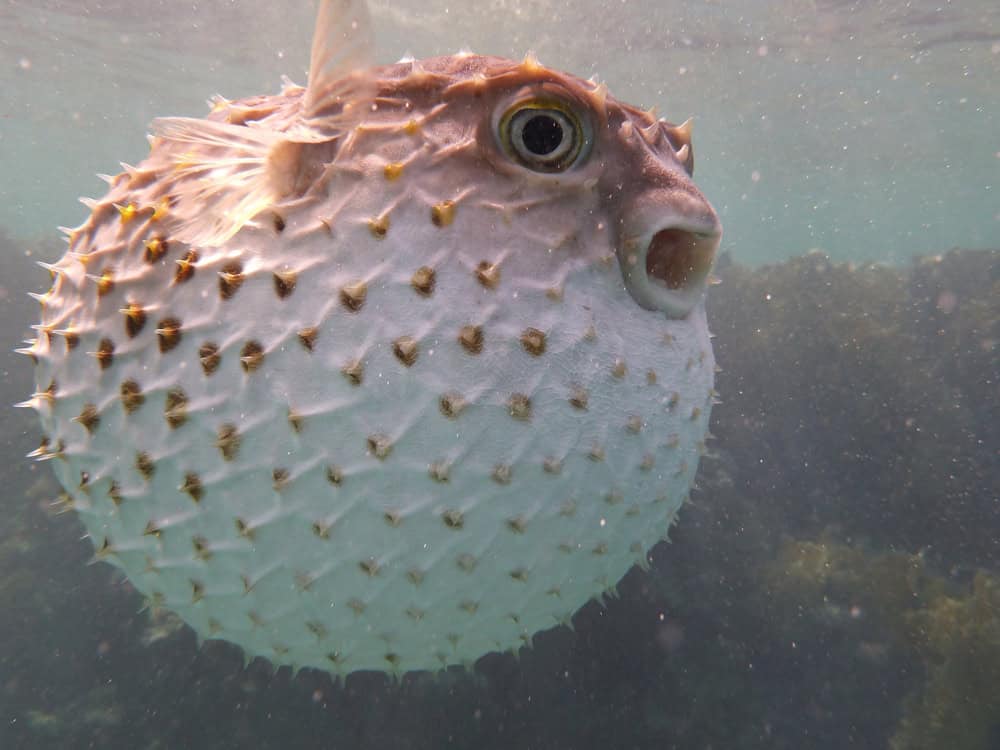
The pufferfish, or fugu, presents a unique danger among lethal animals as it’s the only one deliberately consumed by humans despite containing tetrodotoxin, a poison approximately 1,200 times more deadly than cyanide. One pufferfish contains enough toxin to kill up to 30 adults, with no known antidote once ingested. What makes pufferfish particularly dangerous is how their toxin works—it blocks sodium channels in nerve cell membranes, causing motor paralysis while the victim remains fully conscious, eventually leading to respiratory failure. In Japan, where fugu is considered a delicacy, chefs must undergo rigorous training and licensing over 2-3 years to prepare the fish safely by removing toxic organs like the liver and ovaries. Despite these precautions, pufferfish poisoning causes approximately 50 deaths annually worldwide. The fish’s defensive mechanism involves inflating its body by rapidly taking in water, making it difficult for predators to swallow while presenting its toxic spines. There are over 120 pufferfish species distributed throughout tropical and subtropical oceans worldwide, with toxicity levels varying by species, season, and geographic location. Interestingly, pufferfish don’t produce their toxin directly—it’s created by bacteria in their diet and accumulated in their bodies, making captive-raised pufferfish potentially non-toxic when fed controlled diets. Medical researchers study tetrodotoxin for potential applications in pain management, as it can block pain signals without affecting consciousness.
Great White Shark Misunderstood Ocean Predator

The great white shark (Carcharodon carcharias) occupies a unique position among dangerous animals—feared far beyond its actual threat level yet undeniably dangerous when encounters occur. Growing up to 20 feet long and weighing up to 4,500 pounds, these apex predators possess approximately 300 serrated, triangular teeth arranged in several rows. What makes great whites particularly dangerous is their hunting strategy of “bite and wait”—they typically deliver a single, powerful exploratory bite and then wait for the prey to bleed to death before feeding. This strategy, while effective for seals and sea lions, means human attacks are rarely about consumption but rather mistaken identity. Great whites are responsible for the largest number of unprovoked shark attacks on humans, averaging 5-10 attacks annually with approximately 30% proving fatal. Their exceptional sensory capabilities allow them to detect a single drop of blood in 25 gallons of water and sense the electrical impulses of a heartbeat. Despite their fearsome reputation, enhanced by films like “Jaws,” great whites kill fewer than 10 people annually worldwide—less than bee stings, lightning strikes, or falling coconuts. Conservation biologists note that humans kill approximately 100 million sharks annually.
Conclusion:

From the shadowy depths of the ocean to the sun-scorched savannas of Africa, the most dangerous animals on Earth are as diverse as they are deadly. While many of these creatures don’t actively seek out human conflict, their evolutionary adaptations—whether venomous stings, crushing jaws, or infectious bites—have made them formidable forces in their environments. What connects them all is a reminder that humans are not always at the top of the food chain and that nature’s most perilous threats often come in unexpected forms. Respect, caution, and awareness are essential when sharing space with such species, whether you’re swimming off an Australian beach, hiking through African grasslands, or simply dealing with mosquitoes in your backyard. Understanding what makes these animals dangerous not only helps us avoid deadly encounters but also deepens our appreciation for the remarkable—and sometimes ruthless—complexity of the natural world.

As a little kid, I fell in love with nature, wildlife, and animals. Living in the USA, South Africa, Italy, China and Germany gave me the opportunity to discover the world's Wildlife. My favorite animals are Mountain Gorillas, Siberian Tigers, and Great White Sharks.
I'm a certified PADI Open Water Diver, went to Everest Base Camp and Trekked Gorillas in Uganda. I hold a Master of Science in Economics and Finance.
Please send any feedback to feedback@animalsaroundtheglobe.com
- 10 Prehistoric Insects That Were the Size of Birds - July 18, 2026
- 20 Unbelievable Dinosaur Discoveries That Completely Rewrite History - July 18, 2026
- 15 Stunning Landmarks in Malaysia That Should Never be Missed - July 18, 2026