


America’s national parks serve as sanctuaries for wildlife, preserving crucial habitats where animals can thrive in their natural environments. From the towering mountains of Denali to the swampy wetlands of the Everglades, these protected lands offer visitors extraordinary opportunities to witness wild animals in their native habitats. While sightings are never guaranteed – these are wild animals, after all – knowing where and when to look dramatically increases your chances. This guide explores 15 iconic wild animals that call U.S. national parks home, including tips on where to find them, their behaviors, and how to observe them responsibly.
15. Grizzly Bears – Yellowstone and Grand Teton National Parks

Yellowstone and Grand Teton National Parks in Wyoming house some of the most impressive predators in North America: grizzly bears. These massive omnivores, distinguished by their prominent shoulder humps and dish-shaped faces, can weigh up to 700 pounds. Visitors have the best chance of spotting grizzlies in meadows and valleys during dawn and dusk hours, particularly in spring when bears emerge from hibernation and in late summer when they feed voraciously to prepare for winter. Hayden and Lamar Valleys in Yellowstone are prime viewing locations, where bears can often be seen digging for roots or hunting elk calves. Remember to maintain a minimum distance of 100 yards from bears and always carry bear spray when hiking in grizzly country.
14. Gray Wolves – Isle Royale and Voyageurs National Parks
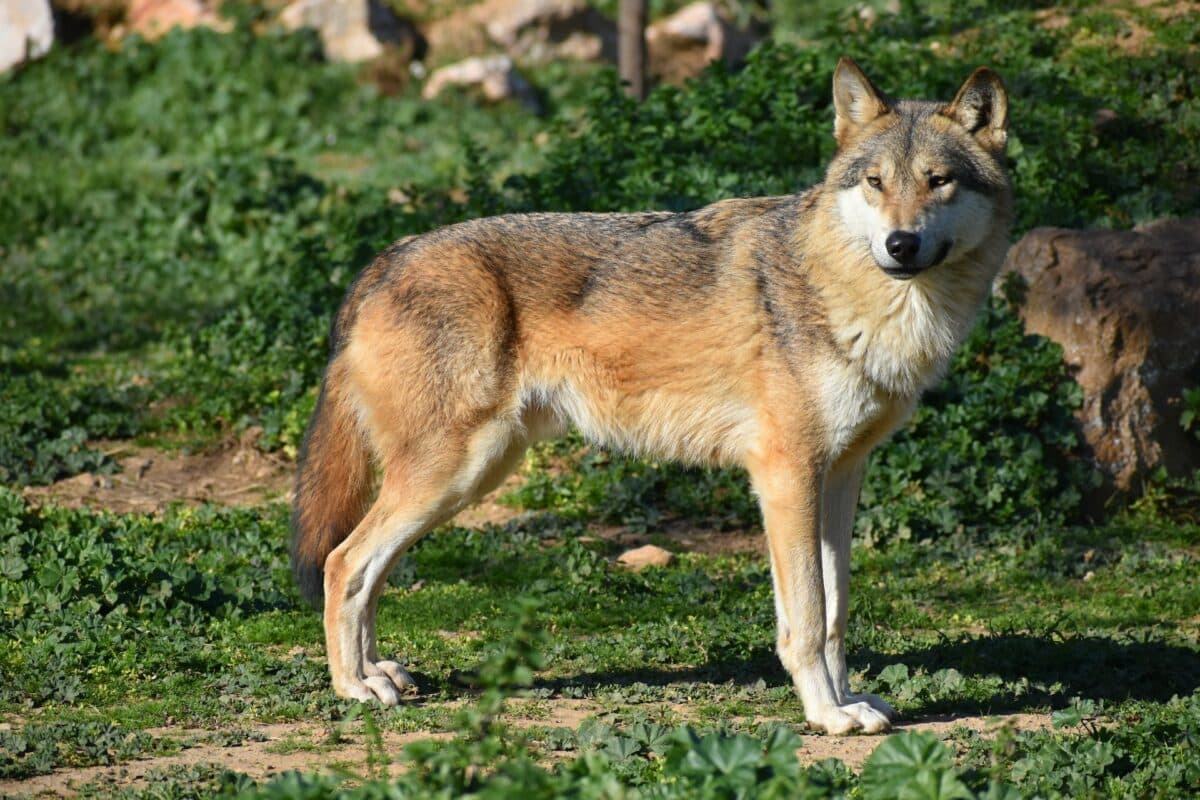
The successful reintroduction of gray wolves to several U.S. national parks represents one of America’s most significant conservation achievements. In Voyageurs National Park (Minnesota) and Isle Royale (Michigan), these apex predators play crucial roles in maintaining ecosystem health. Wolf packs are most active during early morning and evening hours, communicating through their iconic howls that can carry for miles across the landscape. Winter offers the best viewing opportunities when white wolves contrast against snowy backgrounds and their tracks are visible. Listen for howling around dusk, and scan meadow edges where wolves often hunt. The Kabetogama Peninsula in Voyageurs is particularly known for wolf activity, where packs maintain territories averaging 50-100 square miles.
13. American Bison – Badlands and Theodore Roosevelt National Parks

No symbol represents American wildlife conservation quite like the bison. Once numbering in the tens of millions across North America, these massive mammals were reduced to fewer than 1,000 animals by the late 1800s. Today, thanks to protection within national parks, approximately 30,000 bison roam protected lands. Yellowstone houses the largest population, but Theodore Roosevelt National Park in North Dakota and Badlands National Park in South Dakota offer excellent viewing opportunities with fewer crowds. Bison can weigh up to 2,000 pounds yet can run at speeds of 35 mph. Their impressive size doesn’t diminish their agility—a fact that visitors should respect by maintaining a minimum distance of 25 yards. The Sage Creek Wilderness Area in Badlands provides reliable year-round bison sightings, while the scenic loop drives in both parks frequently yield close encounters with these magnificent animals.
12. Roosevelt Elk – Olympic National Park
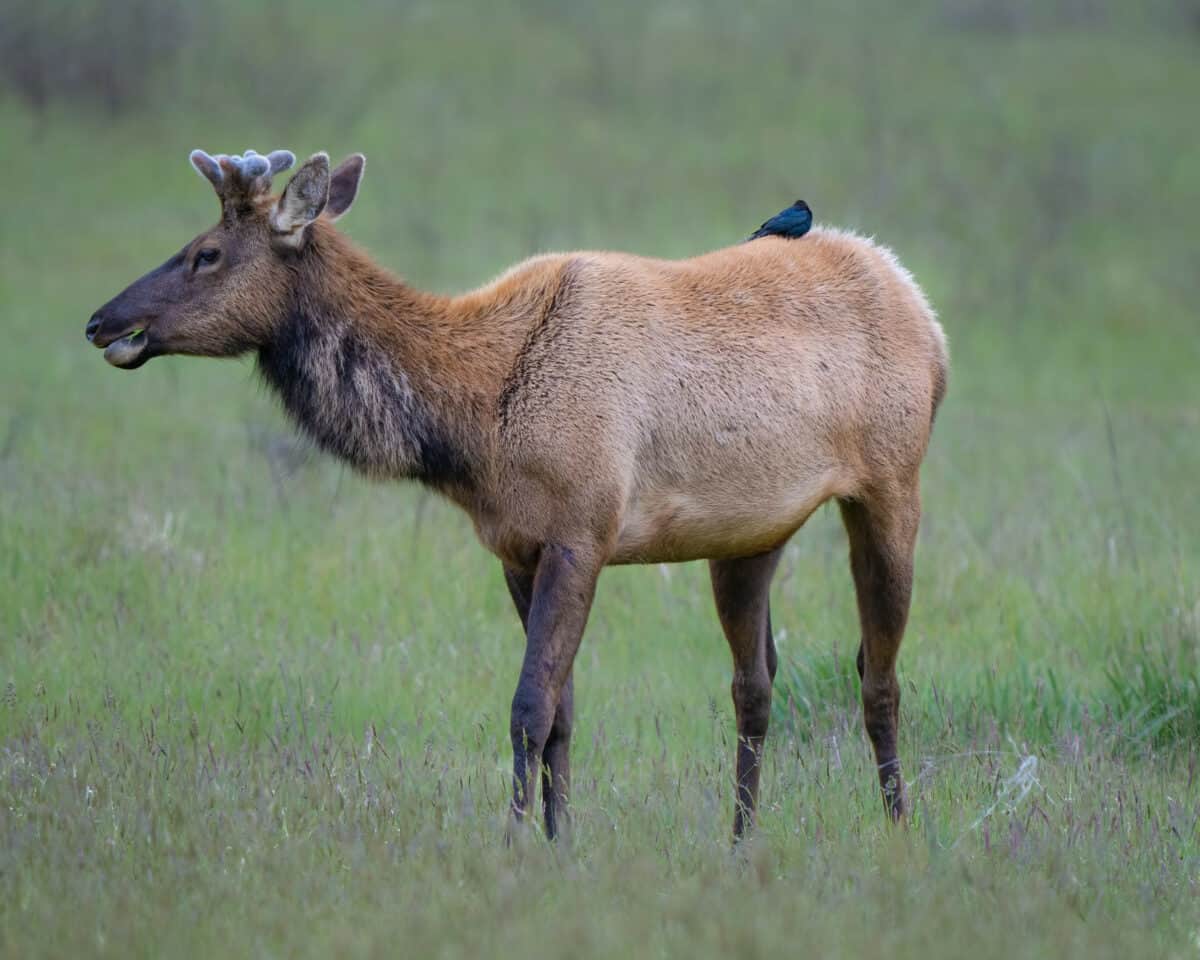
Olympic National Park in Washington state provides sanctuary for the Roosevelt elk, the largest subspecies of North American elk. Named after President Theodore Roosevelt, these magnificent creatures can weigh up to 1,100 pounds, with bulls sporting impressive antlers that can span five feet. The Hoh Rain Forest and Quinault Valley offer reliable viewing opportunities, especially during early morning or late afternoon when herds emerge from forest cover to graze in meadows. September and October mark the rutting season, when bulls bugle—a haunting sound that echoes through valleys—and engage in dramatic contests for dominance. These majestic animals played a significant role in the park’s establishment, as President Roosevelt created Mount Olympus National Monument in 1909 specifically to protect them from overhunting. Today, approximately 5,000 Roosevelt elk inhabit the park’s diverse ecosystems.
11. Mountain Lions – Zion and Saguaro National Parks
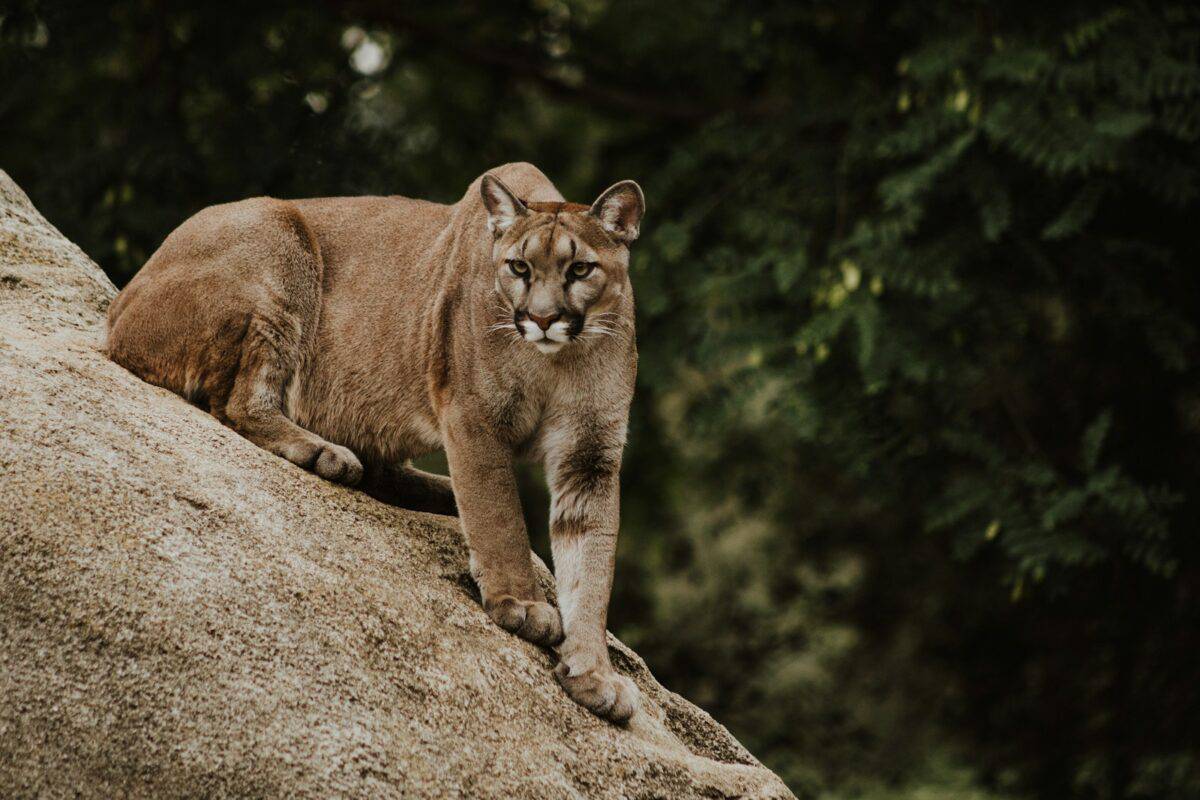
Mountain lions (also called cougars or pumas) represent one of North America’s most elusive predators. These solitary, primarily nocturnal cats inhabit many national parks, though spotting one requires exceptional luck. Zion National Park in Utah and Saguaro National Park in Arizona maintain healthy populations, with the cats preferring rugged, remote terrain with abundant deer populations. Adult males can weigh up to 150 pounds and measure over eight feet from nose to tail tip. Their remarkable adaptability allows them to thrive in diverse habitats ranging from desert canyons to mountain forests. While sightings are rare, evidence of their presence—tracks along sandy washes or scrape marks where they’ve marked territory—can be found by observant hikers. These apex predators play vital ecological roles by controlling deer and rodent populations. If you’re fortunate enough to spot one, consider it an extraordinary privilege—fewer than 1% of park visitors ever glimpse these phantom cats.
10. Alligators – Everglades National Park

The American alligator reigns as the undisputed sovereign of Everglades National Park in Florida, where an estimated 200,000 of these prehistoric-looking reptiles reside. Reaching lengths of up to 15 feet and weights exceeding 1,000 pounds, alligators have inhabited this region for millions of years, earning them the title of “ecosystem engineers” for their role in creating and maintaining wetland habitats. The Anhinga Trail offers almost guaranteed alligator sightings year-round, with animals often basking along canal banks. During winter dry season (December through April), alligators concentrate in water holes, creating spectacular viewing opportunities. These remarkable reptiles can survive for months without eating and can live up to 50 years in the wild. Despite their fearsome appearance, alligators typically avoid humans unless provoked or habituated through feeding. The successful conservation of American alligators—from endangered species status in the 1960s to abundant populations today—represents one of America’s most successful wildlife recovery stories.
9. Moose – Grand Teton and Isle Royale National Parks

As North America’s largest deer species, moose create unforgettable impressions on park visitors lucky enough to encounter them. Bulls can weigh over 1,500 pounds and stand seven feet tall at the shoulder, with antler spreads exceeding six feet. Grand Teton National Park in Wyoming and Isle Royale National Park in Michigan host significant moose populations, with the latter maintaining one of the most intensively studied predator-prey relationships in the world between moose and wolves. Prime viewing locations include wetland areas and willow thickets, particularly during early morning and evening hours. Schwabacher’s Landing in Grand Teton offers spectacular photography opportunities when moose feed in beaver ponds with mountains reflecting in still waters. While appearing awkward on land, moose move with surprising grace, capable of running at 35 mph and swimming for miles. Despite their imposing size, moose subsist primarily on aquatic vegetation and woody browse, consuming up to 60 pounds of plant material daily.
8. Desert Bighorn Sheep – Death Valley and Grand Canyon National Parks
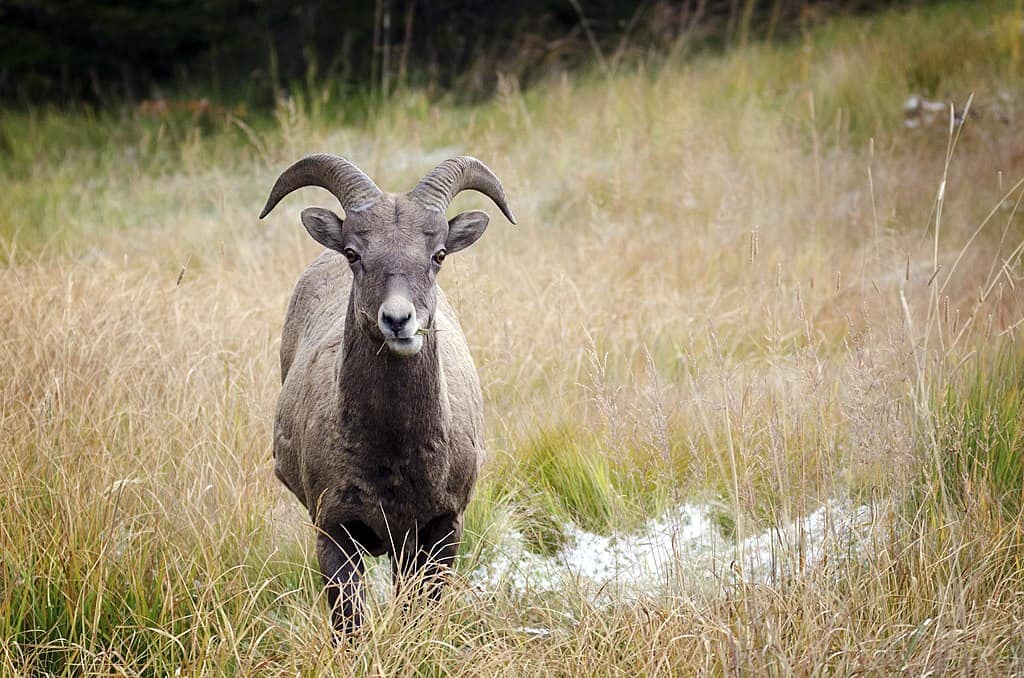
Few animals embody resilience like desert bighorn sheep, perfectly adapted to some of North America’s harshest environments. These remarkable ungulates inhabit rugged canyon country in Death Valley and Grand Canyon National Parks, where they navigate near-vertical cliff faces with astonishing agility. Males (rams) develop massive curved horns that can weigh up to 30 pounds—nearly 10% of their body weight—and are used in spectacular head-butting contests during fall mating season. These contests can be heard echoing through canyons from over a mile away. Desert bighorns have specialized concave hooves with soft inner pads that provide exceptional grip on rocky surfaces, allowing them to leap between ledges and scale seemingly impossible terrain. Their specialized digestive systems enable them to extract maximum moisture from desert vegetation, and they can go without drinking water for days. The Bright Angel Trail in Grand Canyon and Titus Canyon in Death Valley offer reliable viewing opportunities, especially during morning hours when sheep descend to lower elevations.
7. Sea Otters – Channel Islands and Olympic National Parks

Sea otters capture the hearts of visitors to Channel Islands National Park in California and the coastal sections of Olympic National Park in Washington. These charismatic marine mammals, the smallest in North America, possess the densest fur of any animal (up to one million hairs per square inch) which helps them maintain body temperature in cold Pacific waters. Unlike other marine mammals, sea otters lack blubber layers for insulation. Frequently observed floating on their backs, sea otters use their bellies as dining tables, often using stones as tools to crack open shellfish. They’re among the few animals known to use tools. Kayaking in sheltered coves offers the best viewing opportunities, particularly in Elkhorn Slough near Channel Islands. These remarkable animals consume approximately 25% of their body weight daily, primarily feeding on sea urchins, crabs, and abalone. Their ecological importance cannot be overstated—by controlling sea urchin populations, otters protect vital kelp forest ecosystems that support hundreds of marine species.
6. Black Bears – Great Smoky Mountains National Park

Great Smoky Mountains National Park, straddling Tennessee and North Carolina, hosts one of the densest black bear populations in North America, with approximately two bears per square mile. Despite their name, these bears can range in color from jet black to cinnamon brown. Smaller and more docile than their grizzly cousins, black bears still demand respect as powerful wild animals. Cades Cove and Cataloochee Valley offer reliable viewing opportunities, particularly during early morning and late afternoon hours. Spring brings mothers with cubs, while fall finds bears gorging on acorns and berries to prepare for winter dormancy. Unlike true hibernators, black bears can awaken relatively quickly during winter months. These intelligent omnivores possess remarkable memory for food locations and can smell food from over a mile away. The park’s mature hardwood forests provide ideal habitat, with hollow trees serving as denning sites and abundant oak trees producing nutritious acorn crops. Approximately 1,500 bears inhabit the park, representing one of the most important protected populations in the eastern United States.
5. Wild Horses – Assateague Island National Seashore

The wild horses of Assateague Island National Seashore along the Maryland and Virginia coast embody one of America’s most beloved wildlife legends. According to folklore, these horses descended from survivors of a Spanish galleon shipwreck, though genetic studies suggest they more likely originated from colonial settlers’ livestock released on the barrier island. Regardless of origin, these horses have adapted remarkably to their challenging island environment over centuries. Smaller than domestic horses, the “Assateague ponies” have developed thick, shaggy coats to withstand coastal winters and feed primarily on salt marsh cordgrass and beach grasses—vegetation that would make most horses ill. Their ability to consume salty vegetation and tolerate brackish water allows them to thrive where domestic horses couldn’t survive. Approximately 150 horses live on the Maryland side managed by the National Park Service, while the Virginia herd is maintained by the Chincoteague Volunteer Fire Company through the famous annual pony swim and auction. Viewing opportunities abound year-round along beach areas and salt marshes, particularly at dawn and dusk.
4. Mountain Goats – Glacier and Olympic National Parks

Despite their name, mountain goats aren’t true goats but belong to the antelope family. These alpine specialists inhabit the highest, most rugged terrain in Glacier National Park (Montana) and Olympic National Park (Washington). With specialized split hooves featuring soft inner pads for traction and hard outer edges for digging into rock, mountain goats navigate sheer cliffs with confidence that leaves observers breathless. Their dense white coats—growing up to 8 inches long in winter—provide insulation against brutal mountain conditions where temperatures can plummet below zero. Both sexes grow dagger-like black horns used for defense and establishing dominance. In Glacier National Park, the Hidden Lake Overlook and Highline Trail offer reliable viewing opportunities, especially during summer months when goats descend to mineral licks. Olympic National Park presents a more complex conservation story, as mountain goats were introduced in the 1920s before the park’s establishment and have damaged sensitive alpine environments. The National Park Service has relocated hundreds of goats from Olympic to native habitat in the North Cascades, highlighting the challenges of managing non-native species in protected areas.
3. Pronghorn – Yellowstone and Wind Cave National Parks

Often incorrectly called “antelope,” the pronghorn stands as North America’s fastest land mammal and the sole surviving member of a family that evolved on this continent millions of years ago. Capable of sustained speeds up to 35 mph and bursts reaching 60 mph, pronghorns evolved their remarkable speed to escape predators like the American cheetah, which went extinct approximately 12,000 years ago. Yellowstone and Wind Cave National Parks provide excellent viewing opportunities across their open grasslands and sagebrush plains. Pronghorns possess exceptional vision, able to detect movement up to four miles away—equivalent to humans seeing an object with 8x binoculars. Males sport distinctive black-pronged horns (thus the name) that they shed and regrow annually, unlike true antelope. The Lamar Valley in Yellowstone and the prairie dog towns in Wind Cave offer reliable viewing locations where visitors can witness these elegant creatures’ graceful movements. Each fall, pronghorns in the Greater Yellowstone Ecosystem undertake one of the longest land migrations in the continental United States, traveling nearly 200 miles between summer and winter ranges.
2. California Condors – Grand Canyon and Pinnacles National Parks

North America’s largest birds soar once again over Grand Canyon and Pinnacles National Parks, thanks to one of conservation’s greatest comeback stories. With nine-foot wingspans and weighing up to 25 pounds, California condors glide on thermal updrafts, sometimes covering 150 miles daily without a single wing flap. By 1982, only 22 condors remained in the wild due to lead poisoning, habitat loss, and poaching. An ambitious captive breeding program saved the species from extinction, with reintroductions beginning in the 1990s. Today, over 300 condors exist in the wild, with Grand Canyon’s Navajo Bridge and Pinnacles’ High Peaks Trail offering the best viewing opportunities. These remarkable birds can live up to 60 years but reproduce slowly, laying just one egg every two years. Their bald, colorful heads serve an important purpose—allowing these scavengers to feed deep inside carcasses without fouling their feathers with bacteria. Each bird wears numbered wing tags, enabling rangers to track individual condors’ movements and health. While still critically endangered, their increasing presence represents a remarkable testament to what determined conservation efforts can achieve.
1. Humpback Whales – Glacier Bay National Park

Glacier Bay National Park in Alaska provides sanctuary for one of nature’s most awe-inspiring spectacles: humpback whales breaching in pristine northern waters. These massive marine mammals, reaching 50 feet in length and weighing up to 40 tons, migrate annually between Alaskan feeding grounds and Hawaiian breeding areas—one of the longest mammal migrations on Earth at nearly 3,000 miles each way. Glacier Bay’s nutrient-rich waters support abundant krill and small fish that humpbacks consume in staggering quantities (up to 1.5 tons daily) during summer months. The park’s boat tours offer unparalleled whale-watching opportunities from May through September, when visitors might witness cooperative bubble-net feeding—a sophisticated hunting technique where whales blow rings of bubbles to concentrate prey before lunging upward with open mouths. Each humpback’s tail fluke bears unique patterns, allowing researchers to identify individual whales that return to the bay year after year. Their hauntingly complex songs can last up to 30 minutes and carry for miles underwater, though scientists still debate their exact purpose. When a humpback breaches—launching its entire body above the water’s surface—it creates an unforgettable memory that epitomizes the wonder of encountering wild animals in their natural environment.
Conclusion:

America’s national parks offer more than breathtaking landscapes—they serve as vital sanctuaries for the continent’s most iconic wildlife. From the thunderous bugles of Roosevelt elk in Olympic to the haunting songs of humpback whales in Glacier Bay, these protected lands allow animals to live, migrate, and thrive as they have for millennia. The remarkable success stories of species like the gray wolf, American alligator, and California condor highlight the power of conservation when science, public support, and policy align. Yet, these encounters are not guaranteed—they require patience, respect, and an understanding that these animals are wild and deserve space. By observing responsibly and supporting ongoing preservation efforts, visitors become part of the legacy that ensures future generations will continue to marvel at grizzly bears in Yellowstone, bison in the Badlands, and mountain goats in Glacier. America’s national parks are not just places to visit—they are living, breathing ecosystems where the story of wildlife conservation is still being written.

As a little kid, I fell in love with nature, wildlife, and animals. Living in the USA, South Africa, Italy, China and Germany gave me the opportunity to discover the world's Wildlife. My favorite animals are Mountain Gorillas, Siberian Tigers, and Great White Sharks.
I'm a certified PADI Open Water Diver, went to Everest Base Camp and Trekked Gorillas in Uganda. I hold a Master of Science in Economics and Finance.
Please send any feedback to feedback@animalsaroundtheglobe.com
- 12 Strange Mating Rituals in the Animal Kingdom - June 25, 2026
- 10 Most Dangerous Hiking Trails in the US - June 25, 2026
- 12 Insect Species That Could Swarm the U.S. This Summer - June 25, 2026