
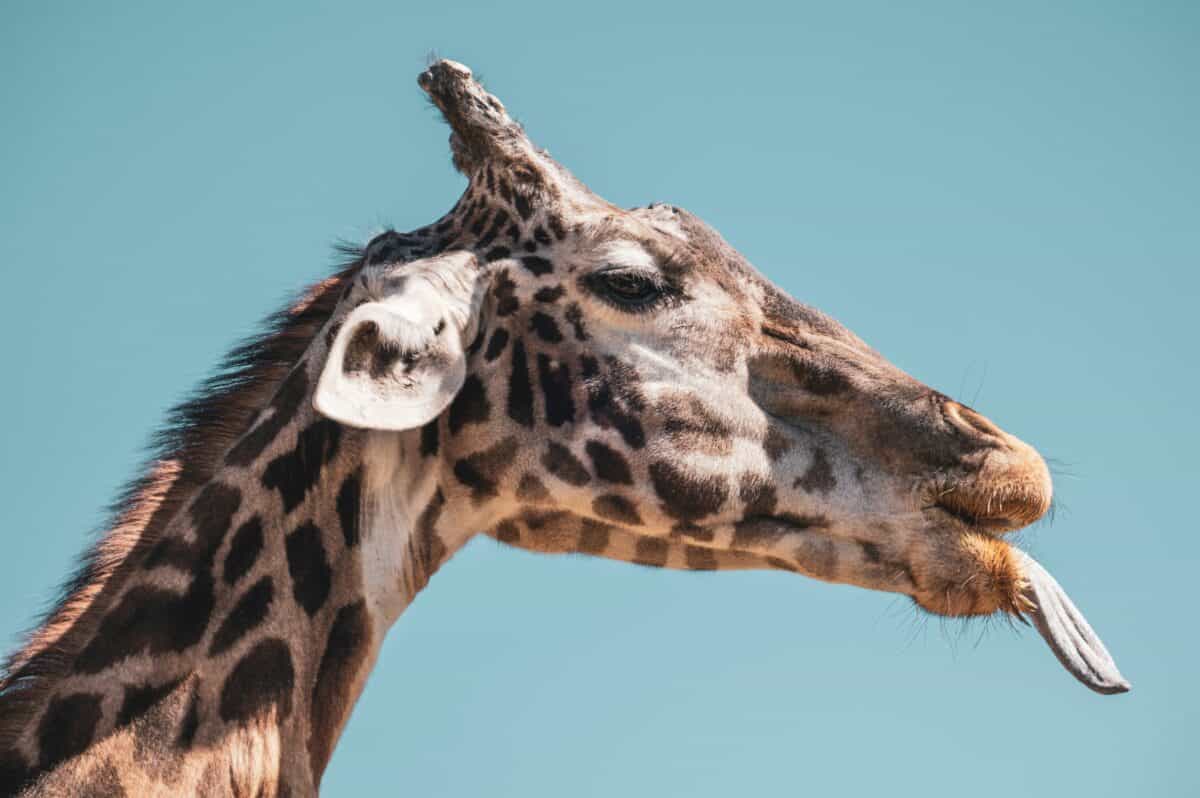
In the vast savannas of Africa, towering above the acacia trees, giraffes maintain a mysterious silence that has puzzled researchers for generations. While lions roar and elephants trumpet, the world’s tallest land mammals communicate in ways so subtle that humans rarely detect them. This remarkable phenomenon isn’t just a curious quirk of nature—it’s an evolutionary adaptation with profound implications for giraffe survival and social structure. From unique anatomical features to sophisticated communication systems that operate beyond human perception, the giraffe’s near-silence tells a fascinating story about adaptation, evolution, and survival in the African wilderness.
The Anatomy Behind the Silence

The primary reason giraffes rarely vocalize lies in their extraordinary anatomy. Their remarkably long necks—spanning up to 8 feet—create physical challenges for sound production. The extended distance between the lungs and the larynx means that air must travel a significantly longer pathway compared to other mammals. This extended air column creates complications for producing loud vocalizations, as the air pressure diminishes over distance. Additionally, the giraffe’s larynx structure differs from vocal mammals, lacking certain adaptations that would enable powerful sound projection. Their vocal cords exist but aren’t optimized for the production of loud sounds, instead having evolved to prioritize their unique feeding strategy over vocal communication.
The Rare Sounds Giraffes Do Make

Despite their reputation for silence, giraffes aren’t completely mute. Under certain circumstances, these gentle giants do produce vocalizations, albeit rarely and quietly. Researchers have documented several types of sounds in their limited vocal repertoire. Calves emit bleats or mewing sounds similar to a calf or kitten when seeking attention from their mothers. Adults occasionally produce low-frequency snorts, grunts, or hisses when alarmed. Perhaps most intriguing is the “hum” that scientists recently discovered—a deep, sustained drone typically occurring at night, measured at around 92Hz. This frequency is at the lower threshold of human hearing, explaining why it went undetected for so long. These vocalizations remain relatively quiet compared to other mammals of similar size, rarely exceeding 50 decibels—about the volume of a quiet conversation.
Infrasound: The Hidden Communication Channel

One of the most fascinating discoveries in giraffe communication research is their potential use of infrasound—sound waves at frequencies below the threshold of human hearing (typically below 20Hz). This communication method has been well-documented in elephants, who use it for long-distance communication, sometimes over several miles. While research on giraffe infrasound remains in its early stages, evidence suggests they may employ similar techniques. The 2015 discovery of nighttime humming behaviors at frequencies approaching the infrasonic range supports this theory. Infrasound offers significant advantages in the open savanna, where visual communication is limited by distance and obstacles. These low-frequency sound waves can travel farther than audible sounds, potentially allowing giraffes to maintain contact across their expansive habitats without alerting predators who might be tuned to higher-frequency vocalizations.
Visual Communication Adaptations

In the absence of loud vocalizations, giraffes have developed sophisticated visual communication systems. Their height advantage provides an exceptional vantage point for spotting both predators and other giraffes across the savanna. Their distinctive coat patterns, unique to each individual like human fingerprints, help with individual recognition at a distance. Body posturing conveys significant information: a stiff-legged stance indicates alertness to danger, while neck postures signal dominance hierarchies during social interactions. Giraffes engage in “necking” behaviors—swinging their necks to establish dominance—which serves as a visual display that replaces the need for vocal confrontations. Their large, expressive eyes and mobile ears also contribute to their visual communication system, with ear positions and gaze direction signaling attention and intent to other herd members.
The Evolutionary Advantage of Silence

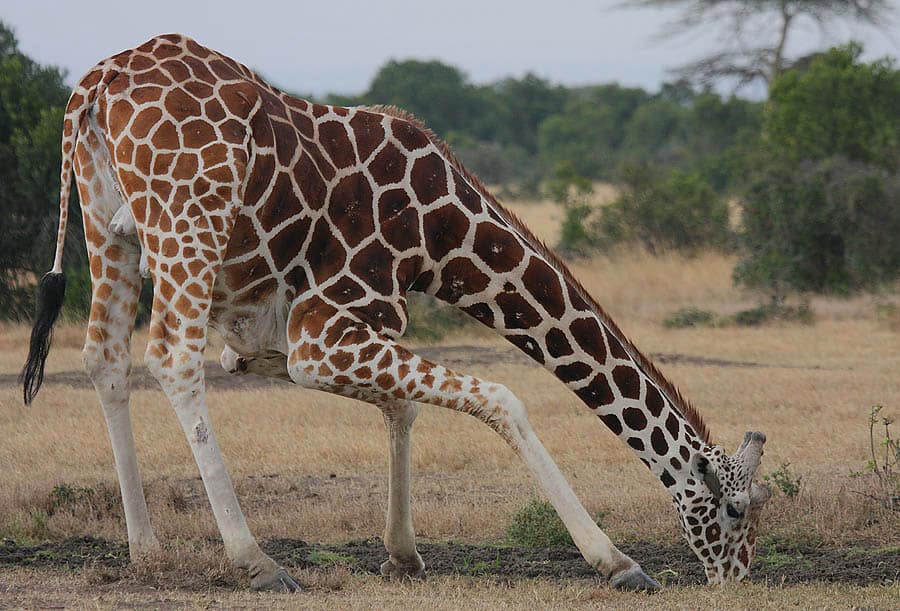
The giraffe’s silence represents a remarkable evolutionary adaptation perfectly suited to their ecological niche. In the open savannas where they evolved, loud vocalizations would be disadvantageous for several reasons. Primarily, silence offers protection from predators like lions, leopards, and hyenas that hunt by sound as well as sight. Despite their size, giraffes remain vulnerable, particularly when drinking water—a position that compromises their vigilance. A quiet communication system allows them to coordinate group movements without broadcasting their location. Additionally, giraffes maintain a social structure less dependent on vocal communication than many other herd animals. Their fission-fusion social dynamics, where groups form and separate fluidly, rely more on visual cues and physical presence than vocal coordination. This evolutionary trade-off sacrificed vocal complexity for adaptations more critical to survival in their specific environment.
The Mother-Calf Bond: Silent but Strong

The relationship between mother giraffes and their calves demonstrates how effective non-vocal communication can be. After giving birth, a mother giraffe forms an intense bond with her calf through scent, touch, and visual recognition rather than through the vocal calls common in many mammals. Within hours of birth, calves can stand and walk—a necessity in predator-rich environments—and they quickly learn to recognize their mothers visually in the herd. Nursing sessions are brief but frequent, coordinated through physical proximity rather than vocal summoning. While calves occasionally bleat when separated from their mothers, this remains relatively quiet compared to the loud distress calls of other young mammals. Research indicates that mother giraffes can recognize their calves’ specific scents from over 50 meters away, demonstrating how their communication systems have adapted to rely on non-vocal channels. This silent bonding system proves remarkably effective, with mothers successfully raising calves despite minimal vocalization.
Rumbling Vibrations: Felt But Not Heard

An emerging area of research focuses on the possibility that giraffes communicate through seismic vibrations—low-frequency rumbles transmitted through the ground rather than the air. This communication method, documented in elephants, could theoretically work for giraffes as well. Their substantial body weight (up to 2,800 pounds) creates significant ground pressure that could generate detectable vibrations when moving in certain patterns. Some researchers hypothesize that the columnar legs of giraffes might function similarly to the specialized toe pads of elephants, which are known to detect seismic signals through bone conduction. This form of communication would be particularly advantageous in open habitats where vibrations travel efficiently through soil. While this remains speculative and requires further research, preliminary observations of synchronized movement patterns in geographically separated giraffe groups suggest some form of long-distance communication that can’t be explained by visual cues alone.
Chemical Communication: The Silent Messenger

A significant component of giraffe communication occurs through chemical signals that leave no auditory footprint. Males regularly test the reproductive status of females through a behavior called flehmen, where they curl their upper lip after sampling a female’s urine to detect pheromones indicating estrus. This chemical communication system provides precise reproductive information without requiring vocal exchanges. Giraffes possess well-developed olfactory systems with specialized scent glands near their eyes and on their bodies that deposit chemical markers on vegetation as they browse. These chemical signatures can convey individual identity, territorial boundaries, and reproductive status to other giraffes that encounter them later. Unlike vocal communication, these chemical messages persist in the environment for hours or even days, creating a temporal dimension to giraffe communication that vocalizations cannot achieve. This sophisticated chemical messaging system represents another adaptation that reduces reliance on sound-based communication.
Predator Avoidance Through Silence

The giraffe’s silent nature plays a crucial role in their predator avoidance strategy. Their primary predators—lions, leopards, and hyenas—hunt primarily through a combination of stealth and acute hearing. By minimizing vocalizations, giraffes avoid drawing attention to themselves or their vulnerable calves. This silence complements their other anti-predator adaptations, including excellent vision (they can spot predators from over a kilometer away), remarkable height (providing an expansive field of view), and powerful kicks capable of killing a lion with a single blow. When a giraffe detects danger, it typically alerts the herd through visual signals rather than alarm calls. A sudden change in posture, fixed staring in one direction, or rapid movement can silently communicate threat information throughout the group. This silent alarm system proves remarkably effective, with studies showing that entire herds can respond to predator sightings within seconds, despite no audible warning calls being issued.
Comparing Giraffe Communication to Other Mammals
The contrast between giraffe communication and that of other large mammals highlights just how unusual their silent adaptation is. African elephants maintain a complex vocal repertoire of over 70 distinct calls ranging from infrasonic rumbles to trumpet blasts exceeding 100 decibels. Lions can roar at volumes approaching 114 decibels, audible up to 5 miles away. Even the giraffe’s closest living relative, the okapi, produces more frequent vocalizations including bleats, coughs, and whistles. This stark difference underscores the specialized evolutionary path giraffes have taken. While most social mammals rely heavily on vocal communication for group coordination, predator warnings, and reproductive signaling, giraffes have shifted these functions to alternative channels. This communication strategy represents a fascinating case of evolutionary divergence, where similar social and environmental challenges have been solved through dramatically different adaptations. The giraffe’s approach demonstrates that effective communication doesn’t necessarily require being loud—sometimes the most successful adaptation is learning when to stay quiet.
Research Challenges and Recent Discoveries

Studying giraffe vocalizations presents unique challenges that have delayed scientific understanding of their communication. Their tendency to vocalize rarely and quietly makes traditional observational methods insufficient. Additionally, their vast home ranges (sometimes exceeding 100 square miles) and tendency to communicate during nighttime hours complicate data collection. Recent technological advances have revolutionized this field of study. Researchers now employ specialized acoustic monitoring equipment capable of detecting both infrasonic and very quiet sounds. In 2015, a breakthrough study conducted by the University of Vienna used nighttime recording devices to document the previously unknown humming behavior of giraffes. This discovery suggested that giraffes may be more vocal than previously thought, but primarily in ways or at times that evaded earlier research methods. Ongoing studies using collars equipped with acoustic sensors promise to further expand our understanding of giraffe communication patterns, potentially revealing a more complex vocal repertoire than currently documented.
Conclusion: The Adaptive Silence of the Savanna Giants

The giraffe’s near-silence represents one of nature’s most elegant evolutionary adaptations—a sophisticated response to the unique challenges of life on the African savanna. Their quiet nature isn’t a limitation but rather a carefully calibrated survival strategy that balances predator avoidance with social coordination. Through alternative communication channels including visual signals, infrasound, seismic vibrations, and chemical messaging, giraffes have developed a communication system every bit as effective as the loud calls of other mammals, but optimized for their ecological niche. As research technologies continue to advance, we may discover that giraffes have been “speaking” all along—just in ways that human senses couldn’t detect. Their story reminds us that communication in the animal kingdom extends far beyond what human ears can hear, with countless conversations happening in frequencies, chemicals, and vibrations beyond our natural perception.

- Why You Shouldn’t Chase Butterflies With Nets - July 22, 2026
- The Animal Kingdom’s Best Dads Ranked - July 22, 2026
- The Most Vulnerable Fish Species in U.S. Rivers Today - July 22, 2026