

For decades, the waters surrounding the United States have been home to some of the ocean’s most formidable predators – great white sharks. These magnificent creatures have captured human imagination and scientific interest alike. Among the many shark sightings reported off American coastlines, certain encounters stand out for the sheer size of the animals observed. This article delves into the quest to identify the largest great white shark ever documented in U.S. waters, examining famous sightings, scientific records, and the challenges involved in verifying such claims.
The Legend of Deep Blue

When discussing extraordinarily large great white sharks in U.S. waters, “Deep Blue” inevitably enters the conversation. First documented near Guadalupe Island, Mexico, and later spotted off Hawaii’s coast in 2019, Deep Blue is estimated to be around 20 feet long and potentially weighing over 5,000 pounds. While technically not always in U.S. territorial waters, this massive female shark has been spotted in waters near Hawaii, making her one of the largest great whites ever documented in the vicinity of American territory. Marine biologists believe Deep Blue is approximately 50 years old, showcasing how these apex predators can reach impressive dimensions with age. Her distinctive size and scarring patterns have made her recognizable to researchers who track notable individual sharks.
The Martha’s Vineyard Giant

In the waters off Martha’s Vineyard, Massachusetts, a particularly large great white shark was reported in 2018 by researchers from the Atlantic White Shark Conservancy. During a tagging expedition, the team encountered a female great white estimated to be approximately 18 feet long—significantly larger than the average female length of 15-16 feet. While not quite reaching the proportions of Deep Blue, this East Coast specimen represents one of the largest confirmed great whites in Atlantic U.S. waters. The shark showed distinctive scarring and an unusually robust girth, suggesting advanced age and successful hunting behavior throughout its life. The Martha’s Vineyard sighting remains significant in discussions of maximum great white sizes along the Eastern Seaboard.
The Montauk Monster
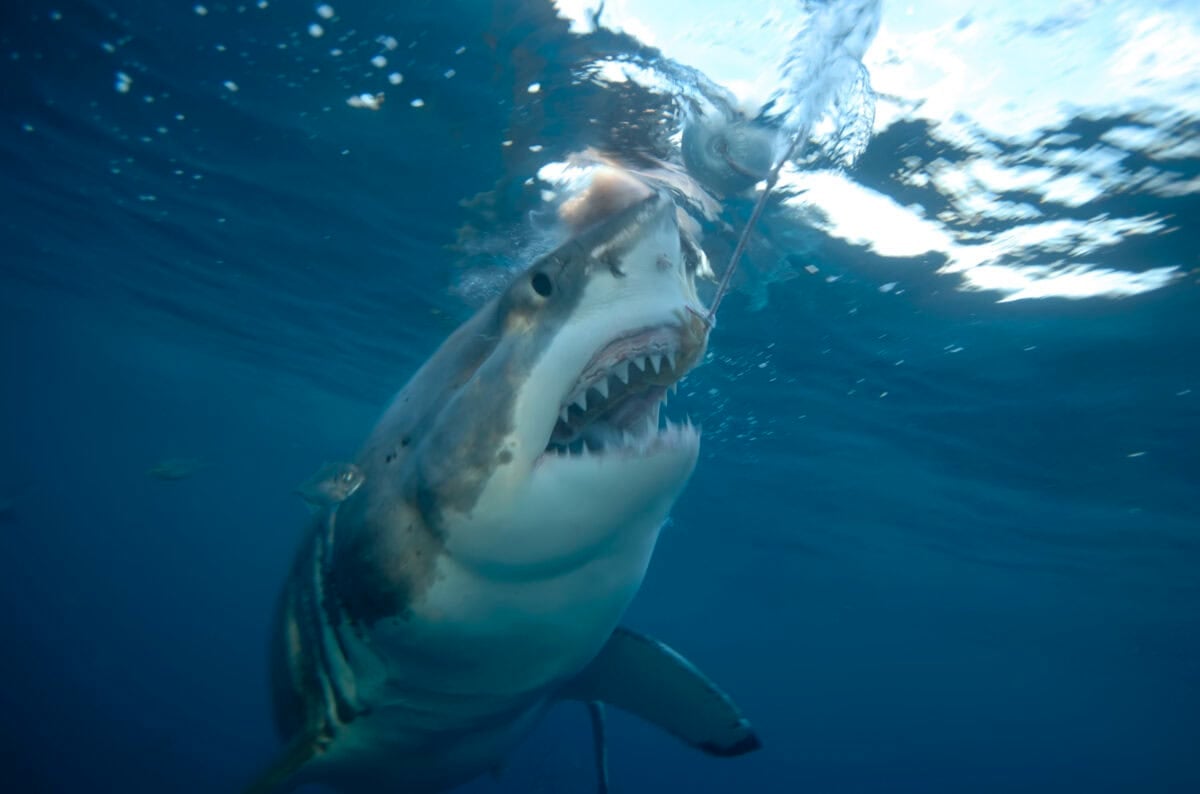
Long before modern scientific documentation methods, stories circulated about an enormous great white shark caught near Montauk, New York in 1916. According to fishermen’s accounts, this shark allegedly measured between 18-22 feet in length. However, unlike modern sightings with photographic or video evidence, the “Montauk Monster” story has elements of fishermen’s tales that have likely grown with each retelling. Without scientific verification, this historical claim remains part of East Coast maritime folklore rather than confirmed scientific record. The timing of the supposed capture coincided with the famous 1916 New Jersey shark attacks that partly inspired Peter Benchley’s novel “Jaws,” further conflating fact and fiction in the public imagination regarding massive sharks in U.S. waters.
The California Coast Colossus
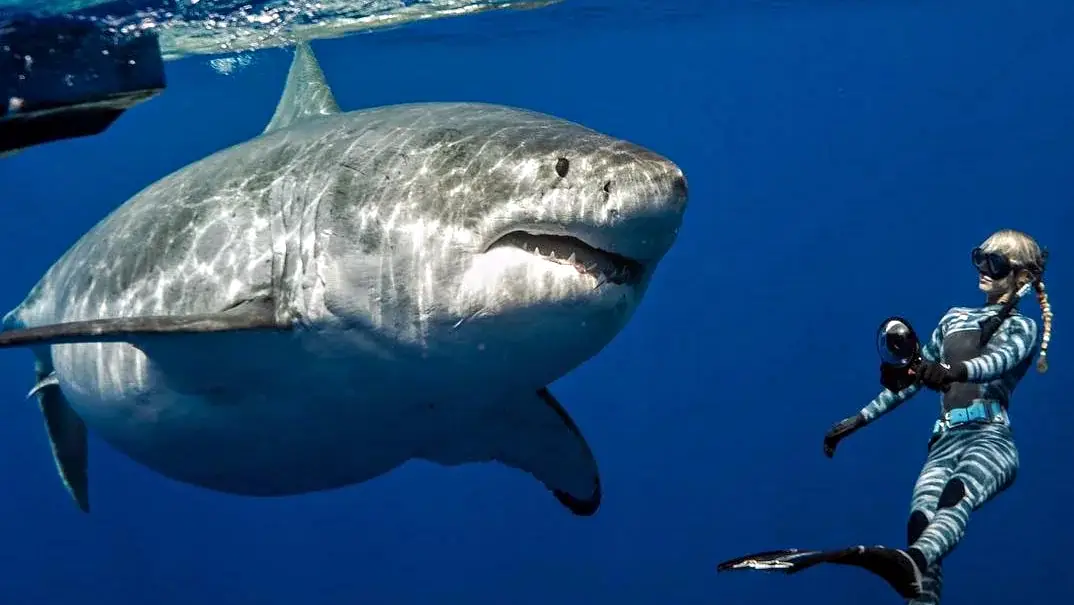
California’s waters have produced several noteworthy great white shark sightings, including a specimen estimated at 17-19 feet spotted off the coast near Santa Barbara in 2012. Documented by a team of researchers studying shark migration patterns, this particular animal displayed the robust body shape characteristic of mature female great whites. Marine biologists noted that the shark appeared to be in excellent physical condition, suggesting successful hunting in the nutrient-rich California coastal waters. The Pacific Ocean off California provides ideal conditions for great whites to reach substantial sizes due to abundant food sources, including seal colonies along the coastline. This particular sighting remains one of the most credible accounts of an exceptionally large great white in mainland U.S. waters.
Scientific Methods for Measuring Sharks

Accurately measuring great white sharks presents significant challenges for researchers. Modern methods include photogrammetry, where multiple cameras capture images that can be analyzed to determine length, and laser photogrammetry, which projects parallel laser points a known distance apart onto the shark to establish scale. For decades, estimates of shark size were notoriously unreliable, with observations from boats often exaggerating the actual dimensions. Even experienced researchers acknowledge a margin of error of at least 1-2 feet when estimating the size of living specimens in the water. This measurement uncertainty complicates definitive claims about which shark holds the title of “largest” in U.S. waters. Additionally, ethical considerations prevent capturing extremely large specimens solely for measurement purposes, further complicating scientific documentation.
The Challenge of Verification

Many purported “record-breaking” shark sightings lack sufficient scientific verification. Factors including poor visibility, brief encounters, and the natural distortion that occurs when viewing objects underwater can lead to size overestimation. Researchers are particularly cautious about accepting claims exceeding 20 feet, as verified specimens rarely reach this length. The International Game Fish Association and scientific bodies require stringent evidence before acknowledging record sizes. Historical claims are especially difficult to verify retrospectively without photographic evidence with proper scaling references. In some cases, sharks reported at extraordinary lengths were later measured more accurately and found to be significantly smaller, highlighting the importance of scientific rigor when evaluating size claims.
Great White Size Records Worldwide

To contextualize U.S. sightings, it’s worth examining worldwide records. The largest scientifically verified great white shark was a female caught in Kangaroo Island, Australia in 1987, measuring 19.7 feet and weighing approximately 4,200 pounds. Other credible contenders include a 20-foot specimen reported from Cuba in 1945, though some researchers question the accuracy of this historical measurement. Modern science suggests that great whites likely max out around 20 feet in length, with females growing larger than males. This places the largest U.S. specimens near the upper biological limit for the species. The maximum size potential for great whites remains a subject of ongoing research, with genetic factors, food availability, and environmental conditions all playing roles in determining how large these apex predators can grow.
The Significance of Female Sharks
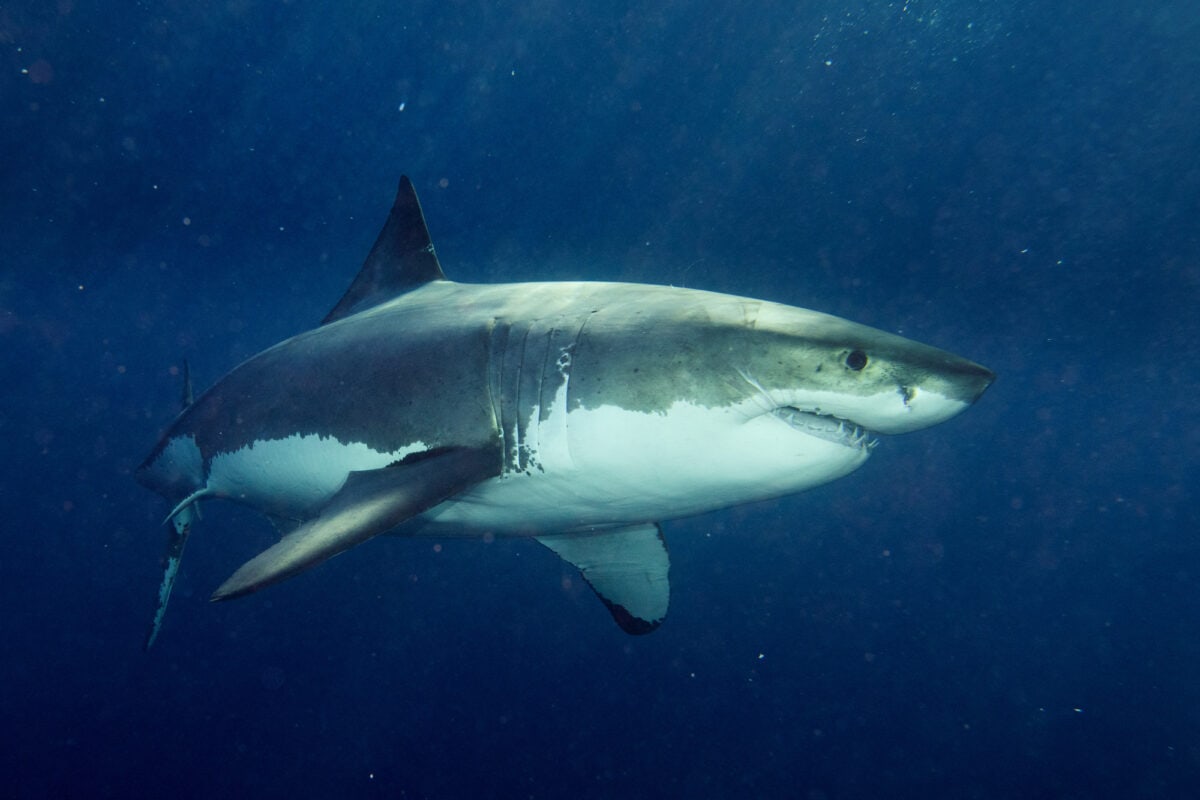
The largest great white sharks documented in U.S. waters—and globally—are invariably females. Sexual dimorphism in great whites means females typically outgrow males by 2-4 feet. Mature females can reach 15-20 feet, while males rarely exceed 15 feet. This size difference is believed to be an evolutionary adaptation supporting reproduction, as larger females can produce more offspring and carry larger pups. Additionally, female great whites experience indeterminate growth, meaning they continue growing throughout their lives, albeit at a slower rate after reaching sexual maturity. This explains why the most impressively sized specimens, like Deep Blue, are not only female but also estimated to be several decades old. The largest recorded sharks in U.S. waters follow this pattern, with all contenders for the “largest” title being mature females.
The Cape Cod Phenomenon
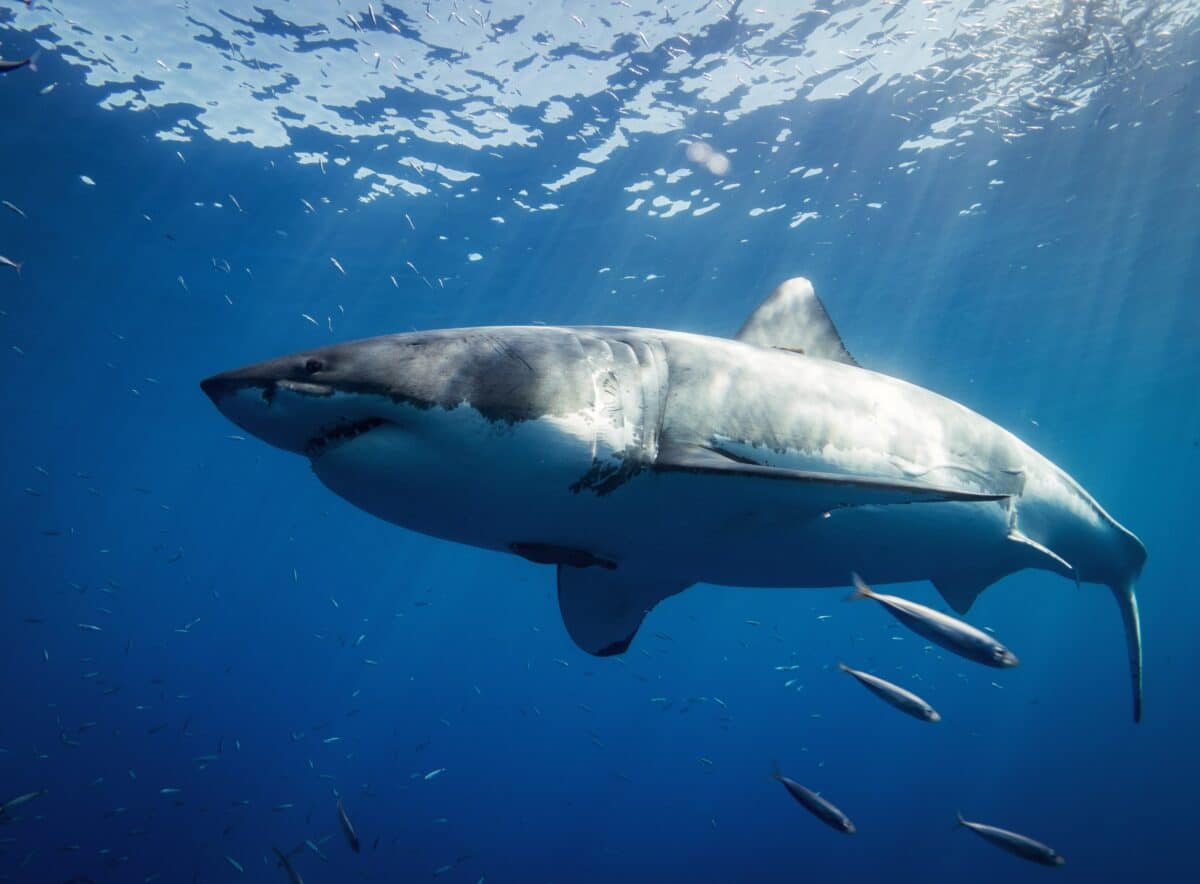
Since 2010, Cape Cod, Massachusetts has experienced a remarkable increase in great white shark presence, including sightings of exceptionally large individuals. The recovery of seal populations following the Marine Mammal Protection Act of 1972 has created an abundant food source, attracting larger numbers of sharks to these waters. Among these, researchers have documented several females exceeding 16 feet, with one particular shark nicknamed “Large Marge” estimated at approximately 18 feet in length. The Atlantic White Shark Conservancy continues to monitor these animals, providing valuable data on the upper size limits of great whites in Atlantic U.S. waters. The Cape Cod population is especially significant because it represents a rebounding ecosystem where great whites can potentially reach their maximum size potential due to abundant food resources.
Modern Technology and Shark Measurement
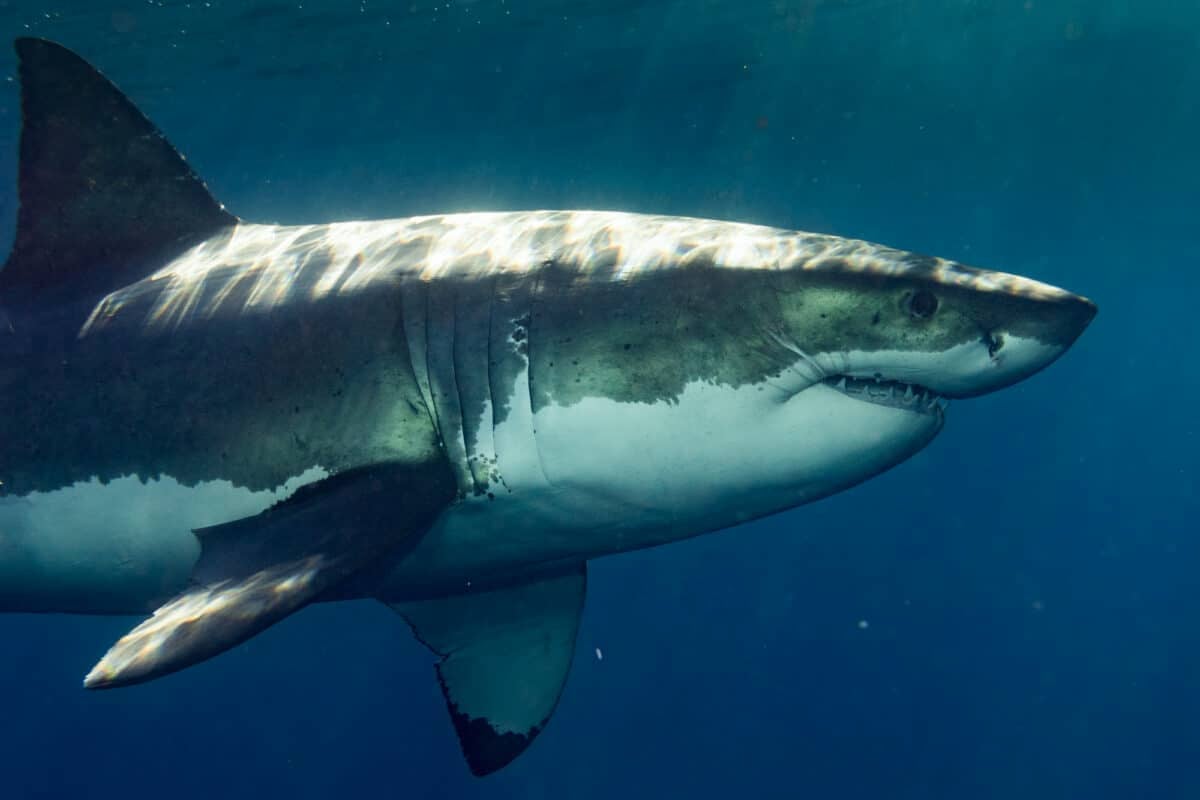
Advances in technology have revolutionized how researchers document shark sizes. Drone footage now provides aerial perspectives that can reduce measurement distortion, while underwater cameras with stereoscopic vision deliver more accurate dimensional data. OCEARCH, a non-profit research organization, has pioneered methods for temporarily lifting sharks onto measurement platforms during tagging operations, providing precise length data for numerous great whites in U.S. waters. Their largest measured specimen off U.S. coasts was “Mary Lee,” a female measuring 16 feet and weighing approximately 3,500 pounds when tagged near Cape Cod in 2012. While impressive, this falls short of some visual estimates of other sharks, highlighting the discrepancy between measured specimens and visual estimates. These technological advancements continue to refine our understanding of maximum great white dimensions.
Historical Claims and Exaggerations
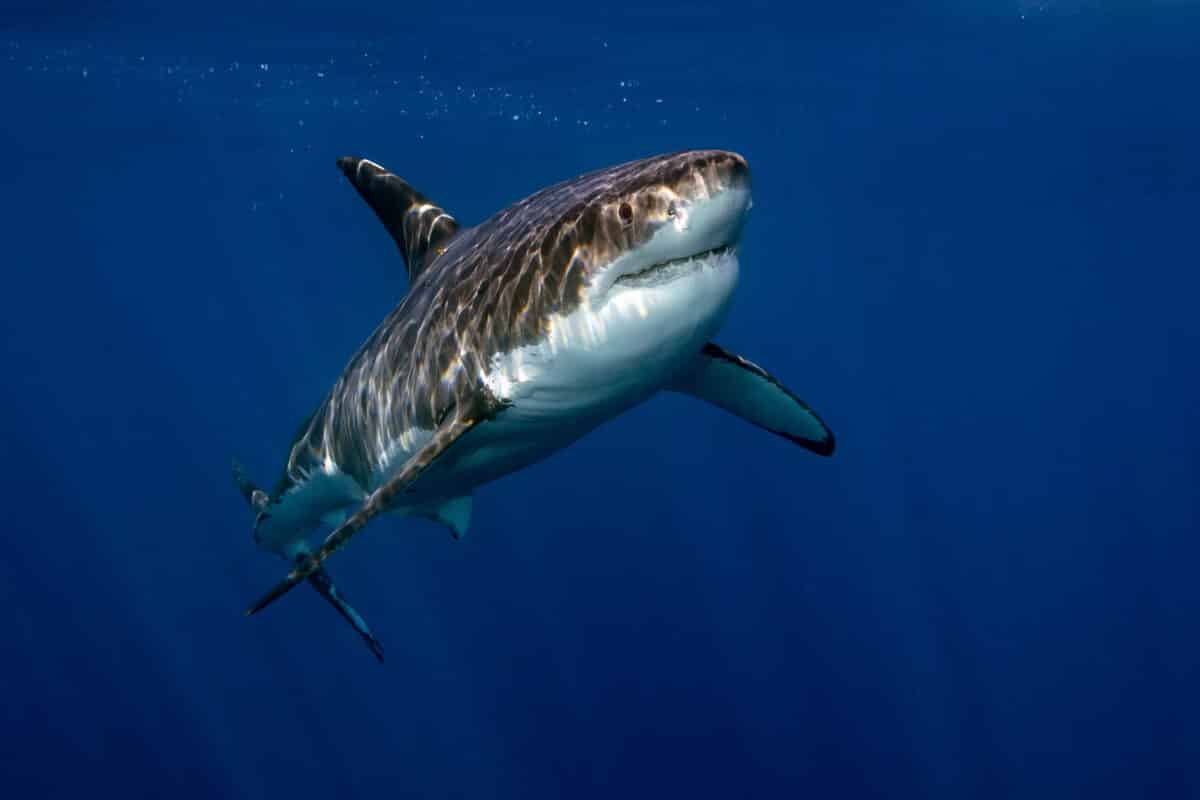
Throughout maritime history, accounts of enormous sharks have permeated fishing communities along American coastlines. Many historical claims describe great whites exceeding 25 or even 30 feet—sizes now considered biologically implausible for the species. These exaggerations likely stem from the genuine shock of encountering such impressive predators, measurement errors, and the natural human tendency to embellish extraordinary experiences. Before standardized scientific protocols, shark measurements often included the upper tail lobe fully extended or measured along the curve of the body rather than in a straight line, artificially inflating reported lengths. Additionally, some historical accounts may have confused great whites with larger species like basking sharks or whale sharks. Modern science has helped separate fact from fiction regarding maximum great white dimensions, though the allure of “monster shark” stories persists in popular culture.
Biological Limitations on Maximum Size
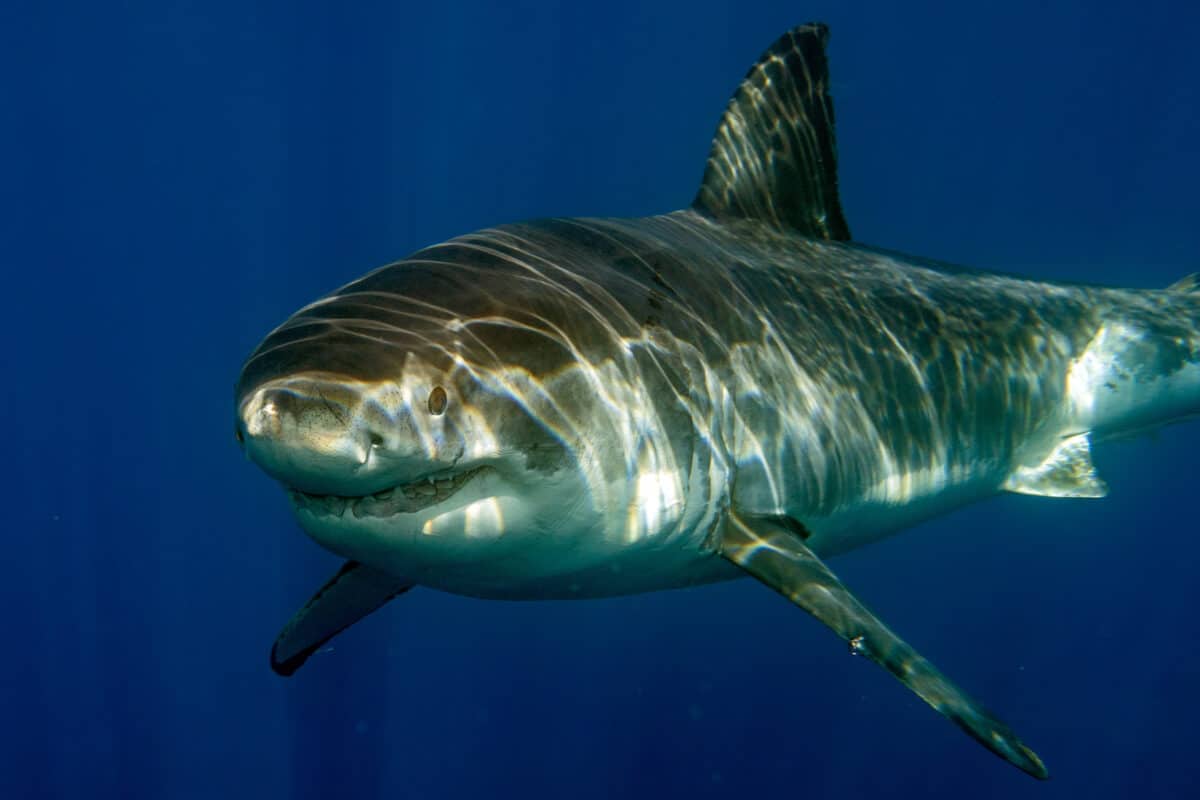
Scientific understanding of great white shark biology suggests definite upper limits to their potential size. Factors including metabolic requirements, skeletal structure, and cardiovascular efficiency place constraints on how large these predators can grow. The largest reliably documented specimens approach 20 feet, representing what researchers believe is near the biological maximum for the species. Even with abundant food sources, great whites appear unable to surpass this threshold due to physiological constraints. This understanding helps scientists evaluate the plausibility of reported sightings. When encounters with purportedly massive sharks occur in U.S. waters, biologists now have a scientific framework to assess whether such claims are within the realm of biological possibility or likely exaggerated. This scientific context is crucial when determining if a particular sighting might represent the largest great white in U.S. waters.
Conclusion: The Continuing Search

The quest to identify the definitively largest great white shark in U.S. waters remains ongoing, with several impressive contenders but no absolute certainty. Current evidence suggests the largest reliable specimens documented in American waters approach 18-20 feet, with Deep Blue’s Hawaiian appearance perhaps representing the upper extreme. As research methods improve and monitoring efforts expand, our understanding of these magnificent predators continues to evolve. The fascination with maximum size reflects humanity’s enduring respect and awe for these ocean predators. Whether we’ve already documented the largest great white possible in U.S. waters or whether even more impressive specimens remain to be discovered, these magnificent animals continue to captivate our collective imagination while playing crucial roles in marine ecosystems.

- This Tiny Insect Can Survive in Outer Space—Here’s How - July 21, 2026
- Could the Tasmanian Tiger Be Brought Back to Life? - July 21, 2026
- Why You Should Never Approach a Sleeping Hippo - July 21, 2026