


The animal kingdom is full of surprises, especially when it comes to how offspring develop and mature. While mammals like puppies and kittens generally resemble miniature versions of their parents, many species undergo dramatic transformations that make their juveniles almost unrecognizable compared to their adult forms. This fascinating phenomenon, known as metamorphosis in its most extreme cases, serves various evolutionary purposes from survival advantages to occupying different ecological niches at different life stages. Let’s explore 20 remarkable examples of baby animals that look nothing like their parents, revealing nature’s astonishing diversity of development strategies.
14. Tadpoles to Frogs The Classic Metamorphosis
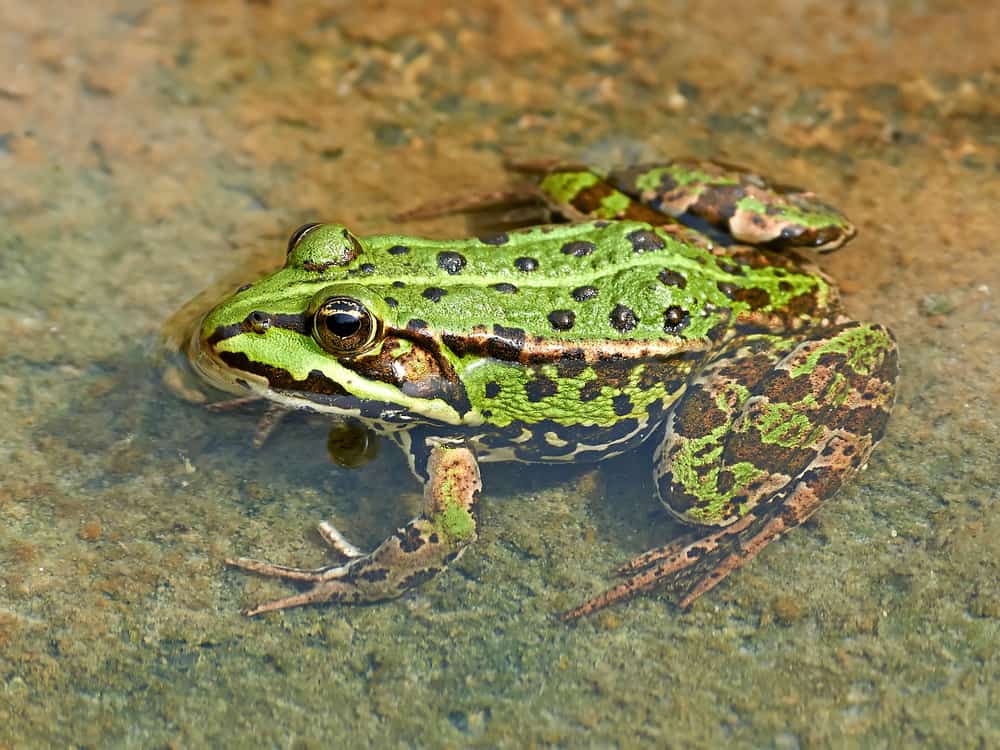
Frogs undergo one of the most dramatic transformations in the animal kingdom. Their life begins as a tadpole – an aquatic creature with a round body and long tail that looks more like a fish than a frog. Tadpoles breathe through gills, feed primarily on algae, and have a vegetarian diet unlike their insect-hunting parents. As metamorphosis progresses, they develop legs, lose their tails, their gills are replaced by lungs, and their digestive systems completely restructure to accommodate a carnivorous diet. This remarkable transformation allows frogs to exploit both aquatic and terrestrial environments throughout their lifecycle, effectively occupying two distinct ecological niches. The process takes anywhere from a few weeks to over two years depending on the species, with some tropical frogs completing the change in just 8-9 days while certain bullfrogs may remain tadpoles for up to three years.
13. Caterpillars to Butterflies Nature’s Ultimate Makeover

Butterfly metamorphosis represents one of nature’s most profound transformations. Beginning as a caterpillar – essentially a crawling eating machine with a cylindrical body, multiple legs, and chewing mouthparts – these insects bear no resemblance to their elegant adult forms. Inside the chrysalis, an extraordinary process occurs where most of the caterpillar’s body breaks down into a soup-like substance before reorganizing into the butterfly’s adult structures. This complete metamorphosis results in an entirely different creature with wings, six legs, compound eyes, and a proboscis for sipping nectar instead of chewing leaves. The ecological advantage is clear: caterpillars and butterflies don’t compete for the same resources, with larvae consuming plant material while adults primarily feed on nectar. This transformation isn’t just external – every system from digestion to respiration undergoes fundamental changes during this remarkable developmental journey.
12. Sea Squirt Larvae From Free Swimmers to Sessile Adults
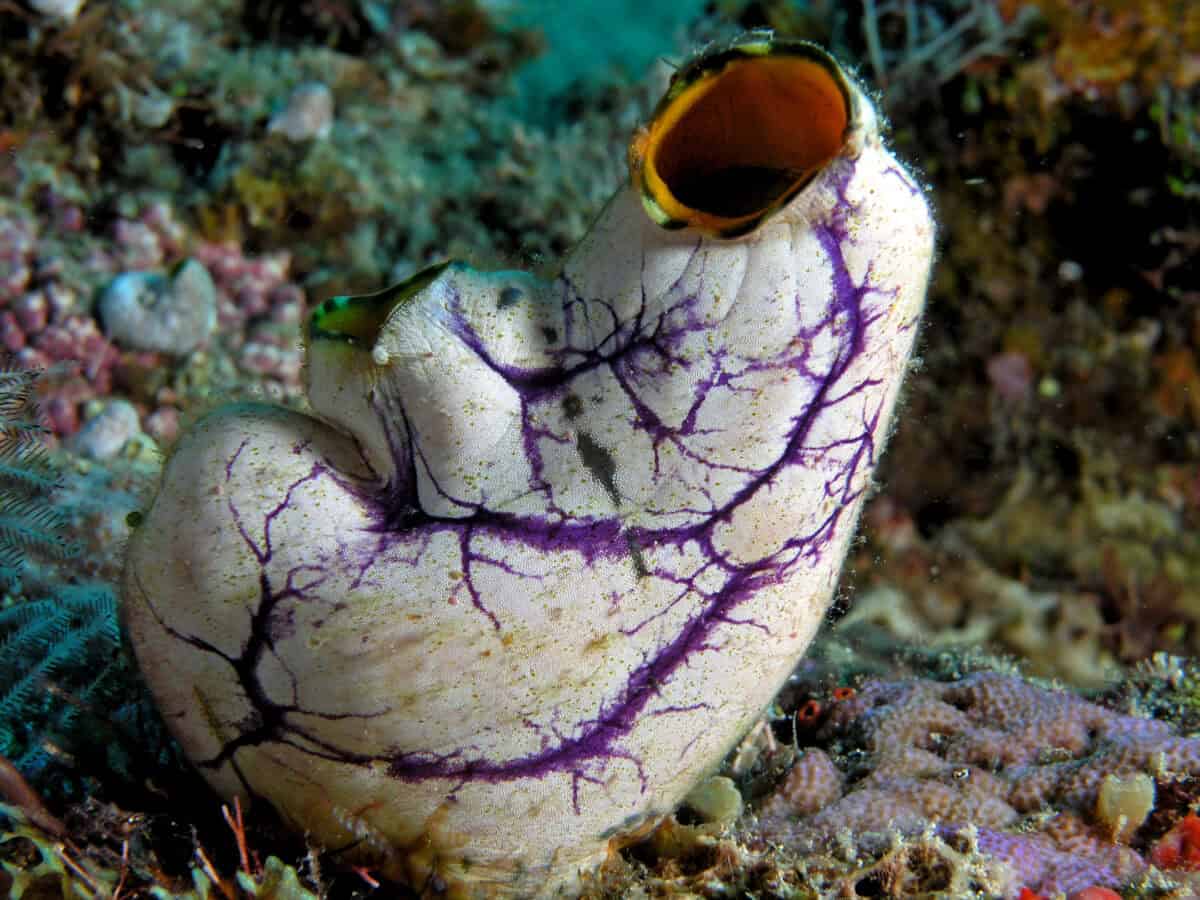
Sea squirts (tunicates) undergo one of the most drastic lifestyle changes in the animal kingdom. Their tadpole-like larvae possess a primitive spinal cord, a stiff supporting rod called a notochord, and a tail for swimming – characteristics that reveal their relationship to vertebrates. These free-swimming larvae use their mobility to find suitable attachment sites, where they undergo a dramatic metamorphosis. Once settled, they absorb their tails, spinal cords, and most of their nervous systems, transforming into sedentary filter-feeding adults that bear no resemblance to their former selves. The adult sea squirt essentially becomes a stationary sac with two siphons that pump water through its body to filter out food particles. This radical transformation represents an evolutionary trade-off where mobility is sacrificed for a secure feeding position, demonstrating how dramatically an animal’s form can change to suit different life stages and ecological requirements.
11. Axolotl Larvae The Rare Natural Neotenes

Axolotls present a fascinating case of developmental divergence. Unlike most salamanders that metamorphose from aquatic larvae into terrestrial adults, axolotls typically remain in a larval state their entire lives – a phenomenon called neoteny. The wild axolotl larvae, with their external gills, tail fins, and aquatic features, would normally transform into a terrestrial salamander-like adult in related species. However, these Mexican amphibians evolved to retain their juvenile characteristics while becoming sexually mature, making them essentially reproductive larvae. Their appearance is radically different from what their adult form would look like if they underwent complete metamorphosis, which can be artificially induced with thyroid hormone treatment. This treatment reveals the dramatic transformation that would naturally occur, resulting in the loss of gills, development of eyelids, changes in skull structure, and modifications to enable terrestrial life. This developmental flexibility highlights how evolution can manipulate developmental timing to create entirely different adult forms.
10. Starfish Larvae From Bilateral to Radial Symmetry

Starfish undergo a transformation that fundamentally changes their body symmetry – a profound developmental shift rare in the animal kingdom. Their early life begins as a bilaterally symmetrical larva called a bipinnaria, which swims freely in the ocean and bears no resemblance to adult starfish. These transparent, microscopic larvae have a distinct front and back end and swim using bands of cilia. As development progresses, they transform into brachiolaria larvae with adhesive structures for settlement. The most dramatic change occurs during metamorphosis, where the larva’s tissues reorganize to form a radially symmetrical juvenile starfish with five-fold symmetry, completely abandoning the bilateral body plan. This remarkable transformation allows starfish to exploit different ecological niches at different life stages – the larvae feed on microscopic plankton in the water column, while adults become benthic predators on the seafloor. This shift in body symmetry represents one of the most fundamental body plan changes seen in any animal’s development.
9. Eels From Transparent Leaf-Like Larvae to Serpentine Adults
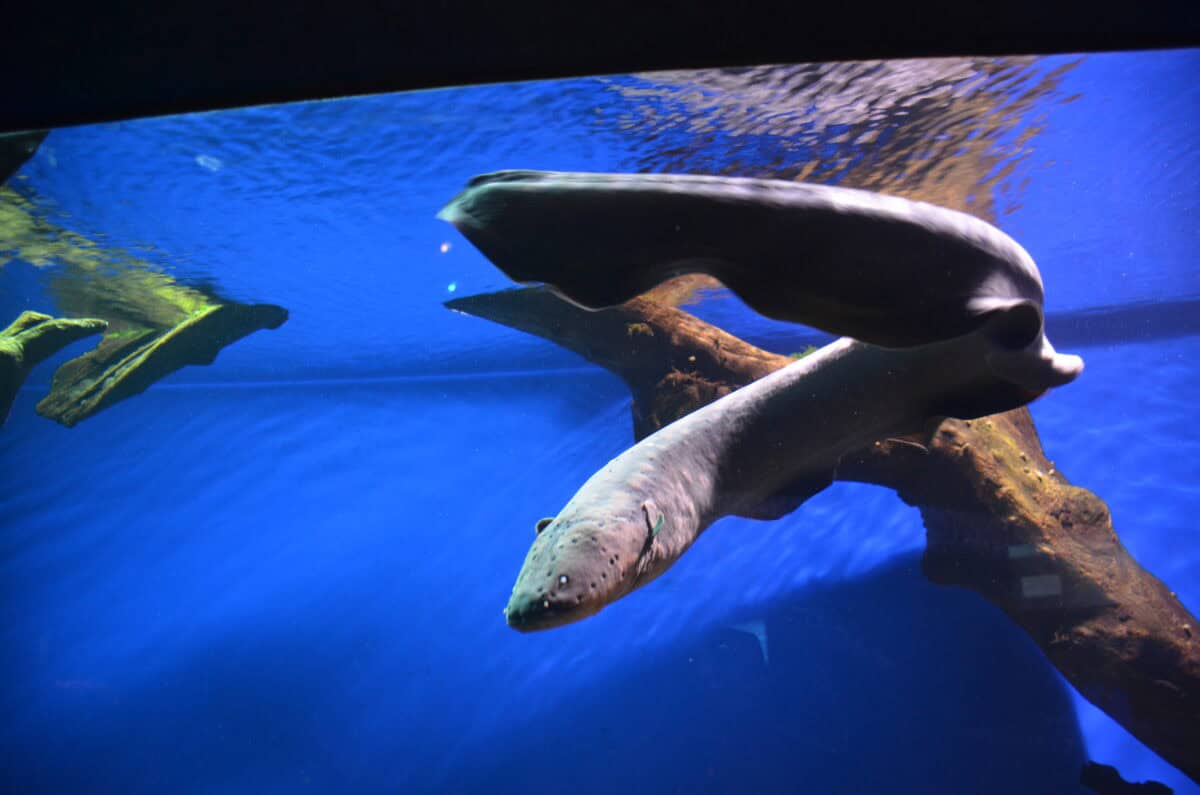
The European and American eels undergo one of the most remarkable transformations and life cycles in the vertebrate world. They begin life as transparent, ribbon-like leptocephalus larvae that look nothing like their parents, with thin, leaf-shaped bodies that are nearly transparent. These bizarre larvae can grow up to 7 centimeters long while maintaining their unusual flattened form. After hatching in the Sargasso Sea, they drift with ocean currents for up to three years before reaching coastal waters where they transform into cylindrical “glass eels.” This metamorphosis involves a dramatic reshaping of the body, with the flat, leaf-like form compressing into the familiar snake-like eel shape, accompanied by the development of pigmentation as they mature further into “elvers” and eventually adult eels. The transformation represents not just a change in appearance but a complete shift in lifestyle, from drifting plankton to active swimmers capable of migrating thousands of miles. This extraordinary life cycle remained mysterious until the early 20th century, when Danish biologist Johannes Schmidt tracked the larvae to their Sargasso Sea breeding grounds after decades of research.
8. Barnacles From Free-Swimming Crustaceans to Sessile Filter-Feeders

Barnacles undergo such a dramatic metamorphosis that early naturalists, including Charles Darwin, failed to recognize juveniles and adults as the same species. Their life begins as nauplius larvae – tiny, free-swimming crustaceans with a single eye and a shrimp-like appearance that bears no resemblance to their sessile parents. These larvae molt several times before developing into cyprid larvae, which have a bivalve-like shell and specialized appendages for finding suitable settlement locations. After attaching head-first to a surface using specialized cement glands, the cyprid undergoes a profound transformation, developing the characteristic calcareous plates of adult barnacles while completely reorienting its body. The free-swimming crustacean effectively turns upside-down, with its legs transformed into feathery cirri that sweep the water for food. This extreme metamorphosis represents one of the most dramatic lifestyle changes in the animal kingdom – from active swimming to permanent attachment – and illustrates how dramatically body plans can be modified to suit different ecological strategies at different life stages.
7. Jellyfish The Complex Cycle From Polyp to Medusa

Jellyfish have one of the most complex life cycles in the animal kingdom, involving forms that look nothing alike. Unlike most animals that develop directly from juvenile to adult, many jellyfish species alternate between two distinctly different body forms. Their life typically begins when a fertilized egg develops into a tiny, free-swimming planula larva that eventually settles on a surface and transforms into a polyp – a small, stalk-like creature that resembles a tiny sea anemone more than a jellyfish. This sessile polyp can reproduce asexually, sometimes forming colonies. In a process called strobilation, the polyp develops horizontal constrictions and begins to look like a stack of plates, each of which breaks free as an ephyra – a small, star-shaped juvenile that gradually develops into the familiar bell-shaped medusa we recognize as a jellyfish. This complex life cycle allows jellyfish to maximize their reproductive potential through both sexual reproduction (as medusae) and asexual reproduction (as polyps), creating two entirely different body forms that exploit different ecological niches throughout their lives.
6. Dragonflies From Aquatic Predators to Aerial Hunters

Dragonflies undergo a remarkable transformation that spans two completely different environments. Their juveniles, called nymphs or naiads, are aquatic predators that bear little resemblance to their elegant, flying parents. These stocky, somewhat alien-looking creatures have a hinged lower lip called a labium that can shoot out with lightning speed to capture prey. They breathe through gills located in their rectum, which they can also use for jet propulsion through water. After spending months or even years underwater, the nymph climbs out onto vegetation, where its exoskeleton splits and the adult dragonfly emerges. This final molt involves a complete habitat change from water to air, with the development of four transparent wings and a dramatically elongated body with vibrant colors. Unlike the complete metamorphosis seen in butterflies, this process is considered incomplete metamorphosis, but the transformation is no less dramatic in terms of appearance and ecological niche. The shift from aquatic to aerial predator represents an evolutionary strategy that allows dragonflies to exploit different food resources throughout their lifecycle while avoiding competition between juveniles and adults.
5. Lobsters From Transparent Leaf-Like Phyllosoma to Armored Adults
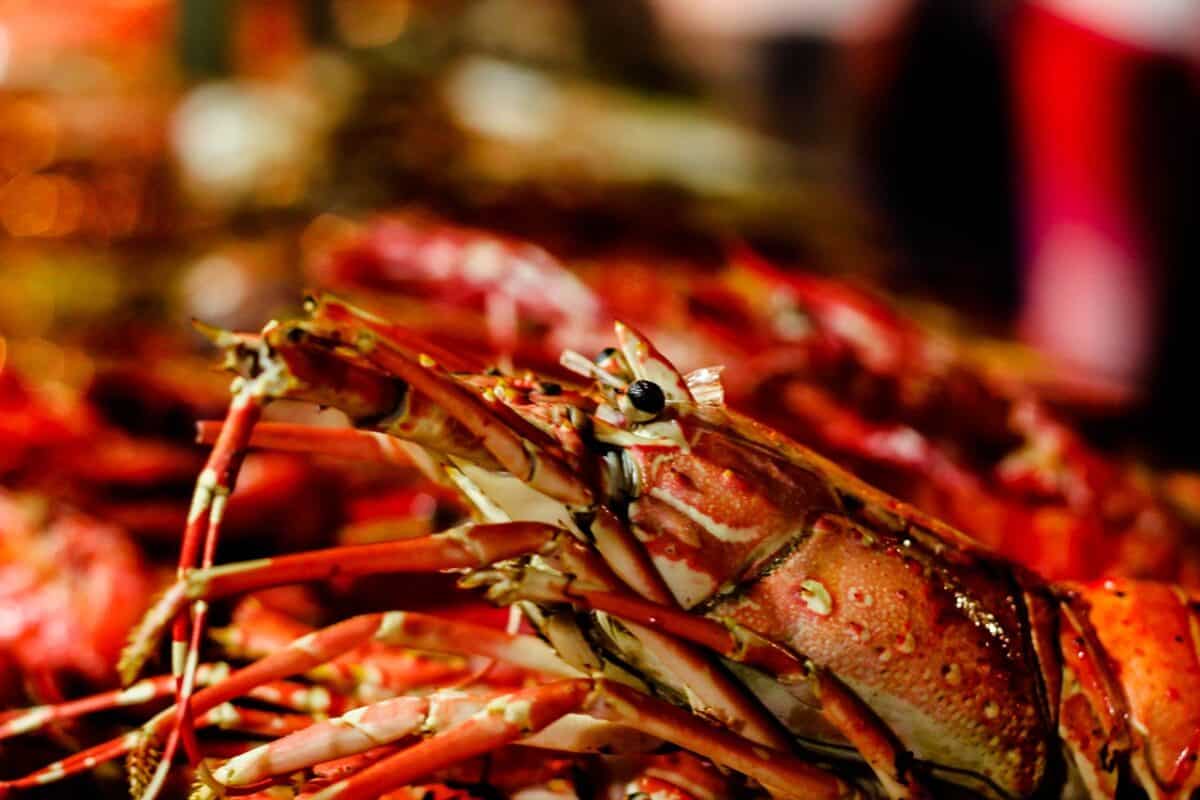
Spiny lobsters undergo a remarkable metamorphosis that makes their juveniles almost unrecognizable. Unlike clawed lobsters, spiny lobster larvae hatch as flat, transparent phyllosoma that look nothing like their heavily armored parents. These bizarre larvae have leaf-like, paper-thin bodies with long, spindly legs that can span up to 2-3 inches despite their bodies being just millimeters thick. Their transparency serves as camouflage as they drift in ocean currents for 6-12 months, sometimes traveling hundreds of miles offshore. After multiple molts, they transform into puerulus larvae, which more closely resemble miniature lobsters but remain transparent. This dramatic metamorphosis culminates when they return to coastal waters and develop the distinctive spiny exoskeleton, robust body, and coloration of adult spiny lobsters. The radical difference between the delicate, transparent phyllosoma and the heavily armored adult represents one of the most striking transformations among marine invertebrates, allowing these crustaceans to exploit different ecological niches throughout their development while undertaking impressive long-distance dispersal as larvae.
4. Platypus Hatchlings Egg-Born Mammals Unlike Their Parents

Platypus hatchlings bear surprisingly little resemblance to their distinctive duck-billed parents. As one of only five extant monotremes (egg-laying mammals), platypus babies hatch from eggs at a very early developmental stage, measuring just 15-20mm long and weighing less than a gram. These hatchlings are effectively still embryonic, blind, hairless, and with underdeveloped limbs – a stark contrast to their semi-aquatic, fur-covered parents with their characteristic duck-like bills and webbed feet. The hatchlings have specialized milk teeth that later disappear, structures not present in adults. They remain in the nesting burrow for 3-4 months, nursing on milk that seeps from their mother’s mammary gland patches rather than from defined nipples. During this time, they undergo significant development, gradually acquiring their adult features including fur, open eyes, and the refinement of their distinctive bill which contains electroreceptors for hunting underwater. This dramatic transformation from embryo-like hatchling to sophisticated semi-aquatic mammal highlights the unique evolutionary position of monotremes as mammals that retain primitive reproductive characteristics.
3. Sea Urchin Larvae From Bilateral Swimmers to Radial Adults

Sea urchin larvae, known as pluteus, bear no resemblance to their spiny, spherical parents. These transparent, bilaterally symmetrical organisms have delicate, elongated arms supported by an internal skeleton of calcium carbonate rods, making them look more like elaborate glass sculptures than the familiar spiny sea urchins. The pluteus swims freely in the plankton using bands of cilia along its arms, feeding on microscopic algae in a completely different ecological niche from their benthic parents. The transformation to adulthood involves a dramatic reorganization of the body plan, with a juvenile sea urchin developing inside the larva in a process called echinoid rudiment formation. Eventually, the juvenile emerges with the characteristic radial symmetry of echinoderms, bearing no resemblance to its former self. This metamorphosis represents one of the most fundamental body plan changes in the animal kingdom, shifting from bilateral to pentaradial symmetry. The process has been extensively studied by developmental biologists as a model for understanding the genetic control of embryonic development and body plan formation.
2. Kangaroos From Bean-Sized Embryos to Iconic Hoppers
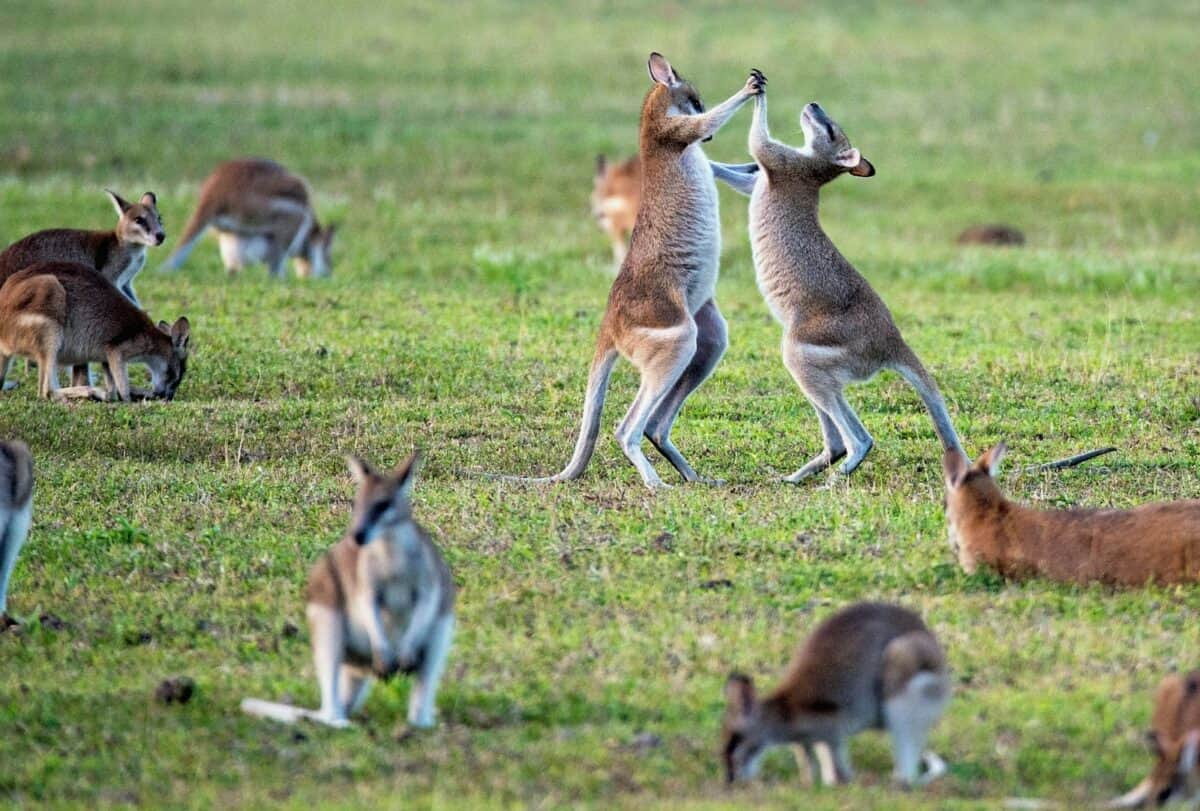
Kangaroos undergo a remarkable transformation that begins with one of the most underdeveloped births in the mammal world. A newborn joey emerges after just 31-36 days of gestation, measuring about 2 centimeters long (roughly the size of a bean) and weighing less than a gram – approximately 100,000 times smaller than its mother. This hairless, transparent embryo-like creature bears almost no resemblance to its adult form, with undeveloped hind limbs that appear as tiny buds. Using its relatively well-developed forelimbs and sense of smell, the newborn crawls through its mother’s fur to reach the pouch, where it attaches to a teat. The joey remains attached continuously for about 80 days while undergoing dramatic development. At around 190 days, the now fur-covered joey begins to emerge from the pouch occasionally, gradually spending more time outside until it leaves permanently at about 8-11 months. This extraordinary development strategy allows kangaroos to pause embryonic development during drought conditions and resume when environmental conditions improve, a remarkable adaptation to Australia’s unpredictable climate that produces offspring initially bearing no resemblance to their iconic parents.
1. Lampreys From Filter-Feeding Ammocoetes to Parasitic Adults
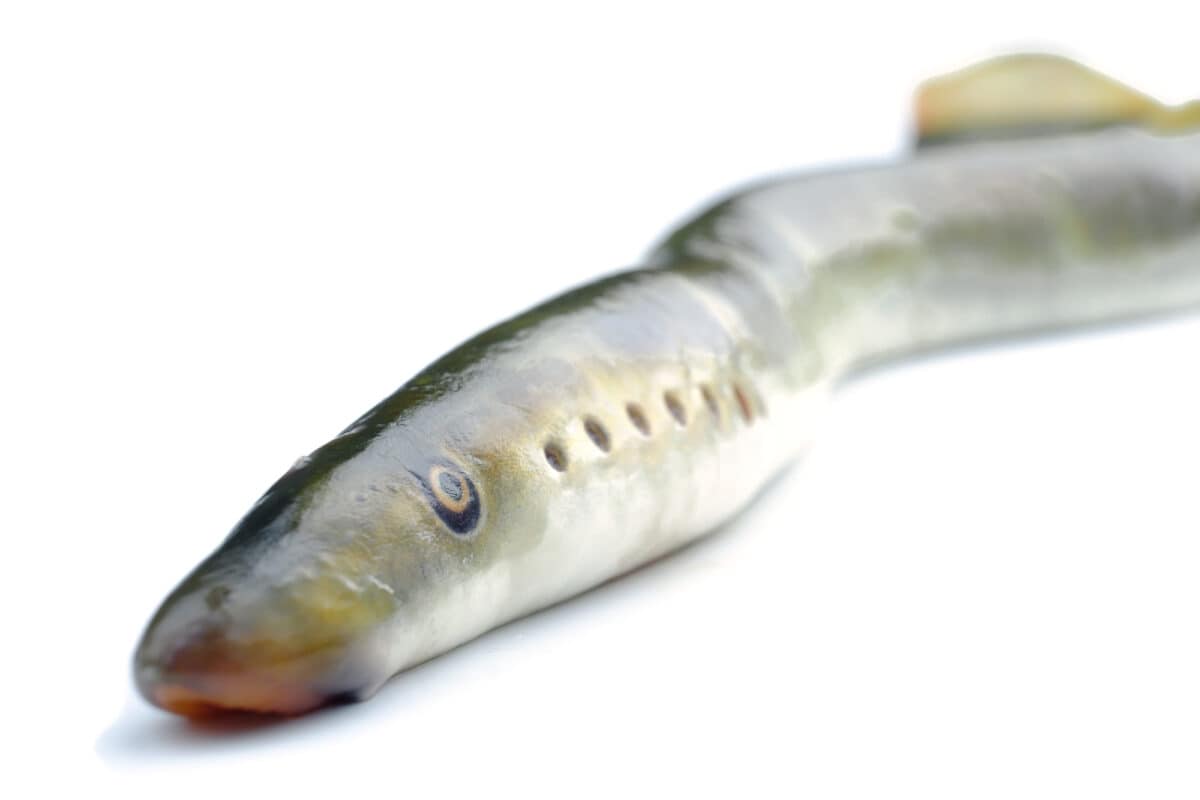
Lampreys undergo a dramatic transformation that not only changes their appearance but completely alters their feeding strategy and lifestyle. Their life begins as ammocoete larvae that look nothing like their eel-like parasitic parents. These worm-like larvae lack the distinctive sucker-like mouth of adult lampreys and instead have a hood-like structure covering a filter-feeding system. They burrow into sediment in freshwater streams, where they live as filter feeders for an extended period – from 3-7 years in most species. During metamorphosis, ammocoetes undergo a profound transformation that includes the development of eyes, the reorganization of the skull, and most dramatically, the formation of the characteristic oral disc lined with keratin teeth that adults use to attach to fish hosts. Their digestive system also changes from that of a filter feeder to one specialized for processing blood and tissue. This radical metamorphosis represents not just a change in form but a complete shift in ecological niche and feeding strategy – from a sedentary filter feeder to an active parasitic predator – making larval and adult lampreys almost unrecognizable as the same species.
Conclusion:

From fish-like tadpoles and worm-like larvae to ethereal butterflies and armored crustaceans, the animal kingdom reveals countless examples of juveniles that look nothing like their adult counterparts. These transformations aren’t just cosmetic—they reflect deep evolutionary strategies that optimize survival, reduce competition between life stages, and allow species to occupy multiple ecological niches. Whether it’s the radical symmetry shift of starfish, the parasitic metamorphosis of lampreys, or the aquatic-to-terrestrial leap of dragonflies, each example showcases nature’s incredible ability to reinvent form and function. These jaw-dropping changes remind us that evolution doesn’t always move in straight lines. Sometimes, the most unrecognizable beginnings lead to the most remarkable endings. And in the grand theater of life, metamorphosis is one of nature’s most dramatic and awe-inspiring acts.

As a little kid, I fell in love with nature, wildlife, and animals. Living in the USA, South Africa, Italy, China and Germany gave me the opportunity to discover the world's Wildlife. My favorite animals are Mountain Gorillas, Siberian Tigers, and Great White Sharks.
I'm a certified PADI Open Water Diver, went to Everest Base Camp and Trekked Gorillas in Uganda. I hold a Master of Science in Economics and Finance.
Please send any feedback to feedback@animalsaroundtheglobe.com
- 10 Most Unique Reptiles You will See in the US - July 21, 2026
- 3 Dangerous Invasive Species the USA Must Eradicate - July 21, 2026
- 10 Things That Calm Cats And 4 That Make Them Nervous - July 21, 2026