

The ocean remains Earth’s final frontier, with scientists estimating that more than 80% of our oceans remain unmapped, unobserved, and unexplored. Each year, marine biologists and oceanographers discover approximately 2,000 new species, revealing just how little we understand about the underwater world. The past decade has been particularly remarkable for marine discoveries, with advanced deep-sea exploration technology allowing researchers to venture into previously inaccessible realms. From the crushing depths of ocean trenches to the mysterious twilight zone, these discoveries have expanded our understanding of life’s adaptability and diversity. The following 20 marine animals, all discovered or formally described within the past decade, represent some of the most bizarre, beautiful, and mysterious creatures on our planet, demonstrating that the ocean still holds countless secrets waiting to be uncovered.
12. The Ruby Seadragon (Phyllopteryx dewysea)

In 2015, scientists stunned the marine biology world by announcing the discovery of a third species of seadragon, the Ruby Seadragon (Phyllopteryx dewysea). Previously, only two species of seadragon were known to exist: the Leafy Seadragon and the Common Seadragon. This remarkable discovery occurred not in the field but in a museum collection, where researchers noticed distinct differences in preserved specimens while conducting DNA analysis. The Ruby Seadragon lacks the elaborate leaf-like appendages of its relatives, instead sporting a brilliant ruby-red coloration that likely helps it camouflage in the deeper, dimly lit waters it inhabits off the coast of Western Australia. In 2017, scientists captured the first-ever footage of live Ruby Seadragons in their natural habitat, confirming their unique physical characteristics and behaviors. Unlike other seadragons, the Ruby species has a prehensile tail, suggesting it evolved to grasp objects in the deeper waters where it lives, approximately 50-55 meters below the surface.
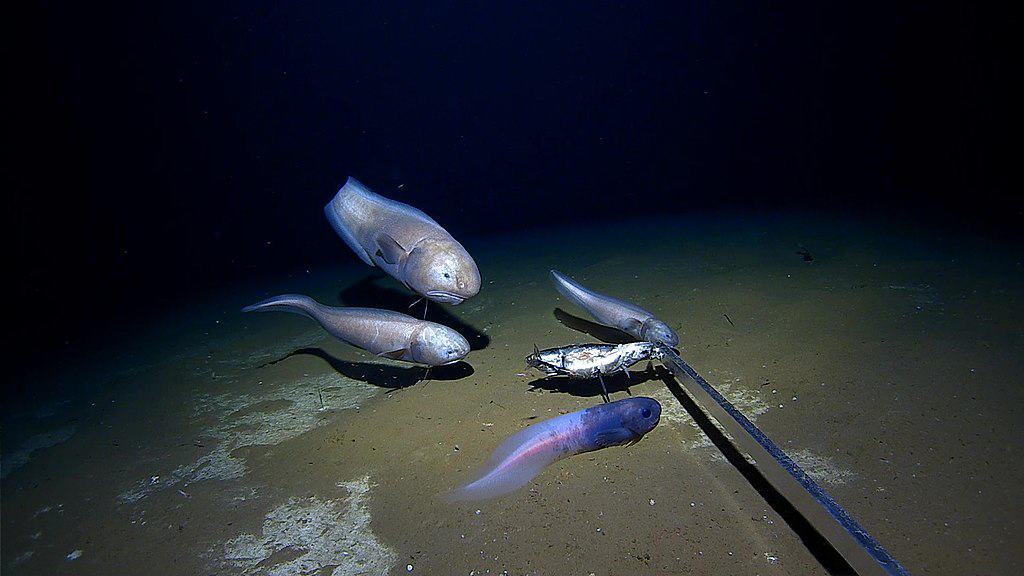
11. The Mariana Snailfish (Pseudoliparis swirei)

Discovered in 2014 and formally described in 2017, the Mariana Snailfish holds the distinction of being the deepest-living fish ever documented. This small, translucent creature was found swimming at the mind-boggling depth of 8,178 meters (26,831 feet) in the Mariana Trench, the deepest point in Earth’s oceans. Despite the crushing pressure at this depth—over 1,000 times greater than at sea level—the Mariana Snailfish has evolved remarkable adaptations to survive. Its body contains high levels of a chemical called trimethylamine oxide (TMAO), which prevents proteins from collapsing under extreme pressure. The fish lacks scales and pigmentation, giving it a ghostly appearance, and its bones are partially replaced by cartilage to resist compression. Scientists were particularly surprised to discover that these fish are actually quite active predators at this depth, feeding on small crustaceans and seemingly thriving in an environment long thought to be too hostile for complex vertebrate life.
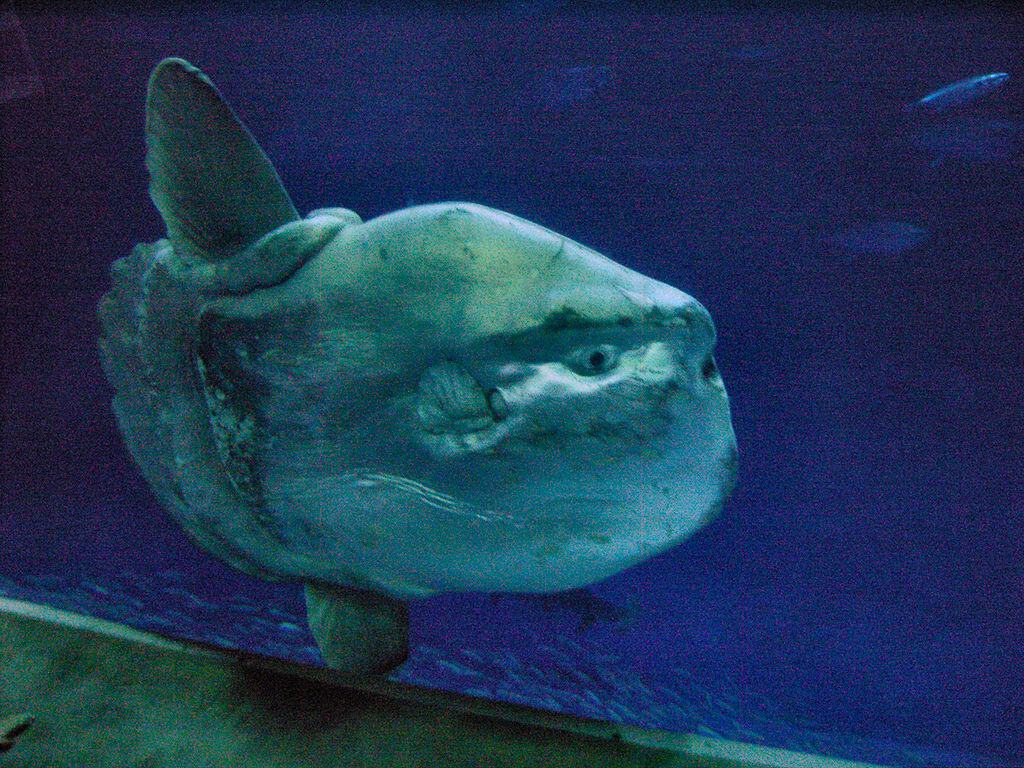
10. The Hoodwinker Sunfish (Mola tecta)

The Hoodwinker Sunfish represents one of the most remarkable cases of a large marine animal remaining undiscovered until recently. Formally described in 2017, this massive fish—which can grow up to 2.5 meters (8 feet) and weigh over a ton—had been “hiding in plain sight” for centuries. The discovery came after researcher Marianne Nyegaard spent four years collecting sunfish DNA samples and realized that genetic material from certain specimens didn’t match any known species. The name “hoodwinker” refers to the fish’s ability to remain undetected for so long despite its size. Unlike other sunfish species, the Hoodwinker has a sleeker body profile and lacks the pronounced snout and bumpy texture of its relatives. Since its discovery, the species has been documented in waters around Australia, New Zealand, South Africa, Chile, and even occasionally in the Northern Hemisphere. Scientists believe it may have evaded formal classification because it prefers cooler waters of the Southern Hemisphere, areas that have historically received less scientific attention.
9. The Giant Phantom Jelly (Stygiomedusa gigantea)
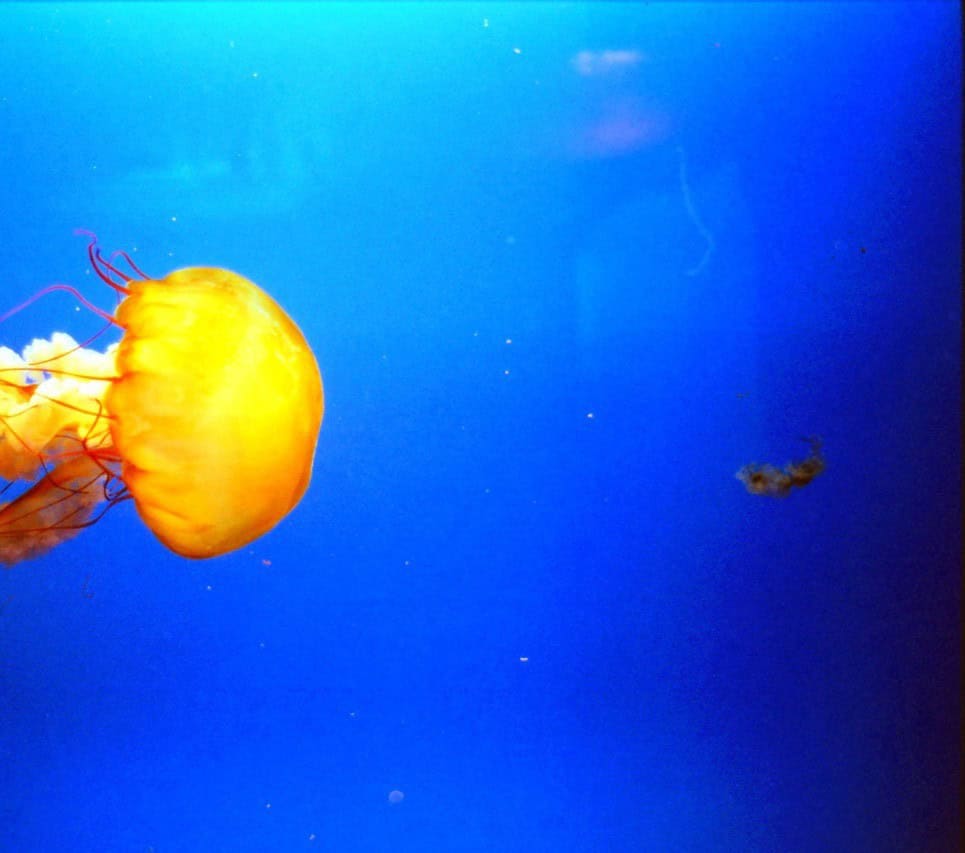
While the Giant Phantom Jelly was technically first observed in the 1900s, it has been so rarely seen that scientists have only begun to understand and properly document it this decade. In 2021, researchers using the Monterey Bay Aquarium Research Institute’s remote operated vehicles captured the most detailed footage ever of this enormous and enigmatic creature. With a bell diameter reaching up to 1 meter (3.3 feet) and ribbon-like oral arms that can extend 10 meters (33 feet), the Giant Phantom Jelly is one of the largest jellyfish species in the world. Despite its massive size, fewer than 120 encounters with this species have been documented since its initial discovery. The jellyfish inhabits the ocean’s “midnight zone” between 600 and 1,500 meters deep, where sunlight cannot penetrate. Recent studies of this elusive creature have revealed that it uses its long, ribbon-like arms to catch prey rather than tentacles with stinging cells like most jellyfish. Its deep red coloration renders it nearly invisible in its deep-water habitat, as red light cannot penetrate to these depths, making the creature appear black and virtually invisible to potential prey.
8. The Casper Octopus (Grimpoteuthis sp.)

In 2016, during an expedition by NOAA’s Okeanos Explorer near the Hawaiian Archipelago, scientists discovered a ghostly white octopus at the remarkable depth of 4,290 meters (14,075 feet). Nicknamed “Casper” after the friendly cartoon ghost due to its pale appearance and rounded fins resembling ears, this octopus represents the deepest-dwelling, incirrate (finned) octopus ever found. What makes this discovery particularly significant is that the animal was spotted on a flat, relatively featureless seafloor composed of manganese nodules—an area previously thought unsuitable for octopus reproduction. Further observations revealed that these octopuses actually use the stalks of dead sponges attached to these nodules as attachment points for their eggs, demonstrating unexpected breeding behavior. Casper lacks the pigment cells (chromatophores) common in other octopuses, resulting in its distinctive pale appearance. Scientists believe this adaptation may be related to the darkness of its deep-sea habitat, where camouflage through color change would offer no evolutionary advantage. The discovery has raised important questions about deep-sea mining, as manganese nodule harvesting could potentially destroy critical habitat for this and other still-undiscovered species.
7. The Deepstaria Enigmatica Jellyfish

While the Deepstaria enigmatica was first described in the 1960s, it wasn’t until this past decade that scientists began capturing high-definition footage of this mysterious creature, finally revealing its true nature and behaviors. Often mistaken for everything from a whale placenta to an alien life form in viral videos, this unusual jellyfish inhabits the mesopelagic or “twilight” zone of the ocean at depths between 600 and 1,500 meters (2,000-5,000 feet). Unlike typical jellyfish with a rounded bell and trailing tentacles, Deepstaria has evolved a thin, sheet-like bell that can expand to nearly 2 meters (6.6 feet) in width. In 2022, researchers using remotely operated vehicles captured footage showing how this jellyfish feeds by engulfing prey within its bell-shaped membrane, trapping them in a “bag” of tissue rather than using stinging tentacles. The intricate hexagonal pattern visible on its membrane is actually a network of canals that distribute nutrients throughout its body. Perhaps most interestingly, recent observations have documented a symbiotic relationship between Deepstaria and a small fish called the pelagic brotula, which lives inside the jellyfish’s bell, possibly feeding on parasites or scraps while gaining protection from predators.
6. The Symmetrical Wunderpus (Wunderpus photogenicus)
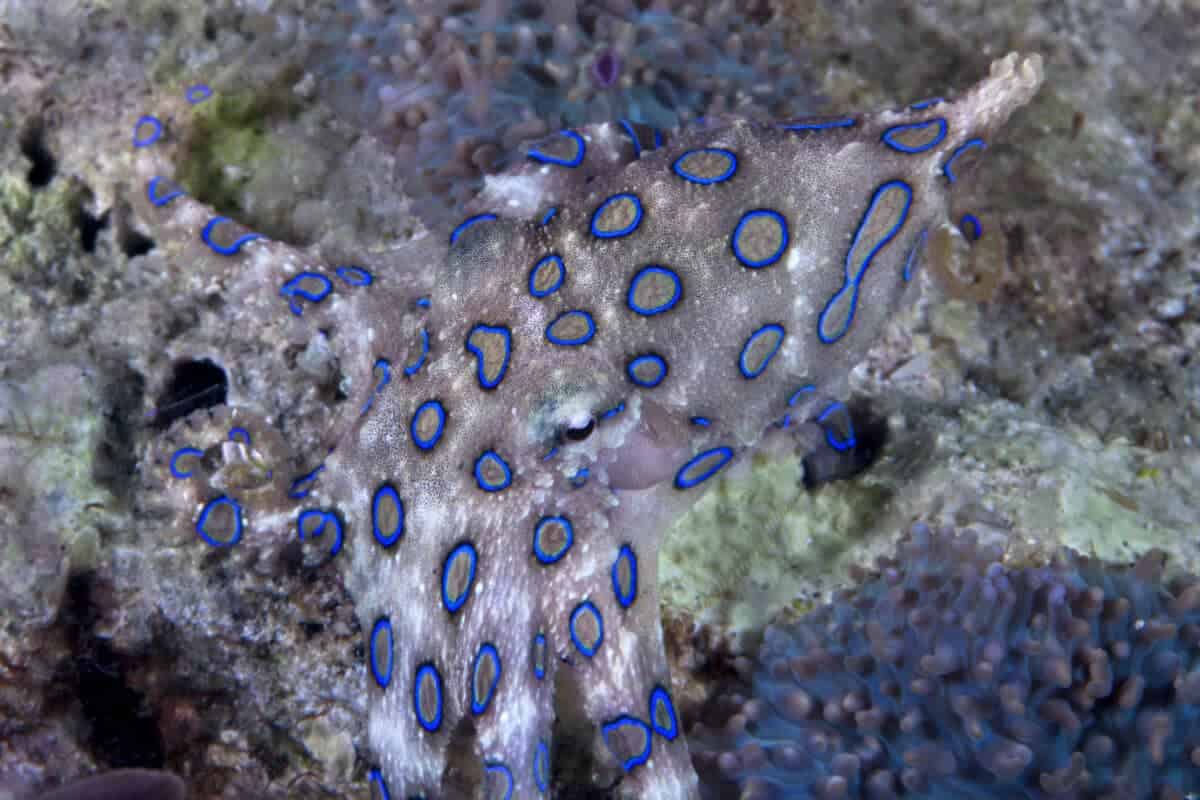
The Symmetrical Wunderpus, first formally described in 2013, represents one of the most visually striking octopus discoveries of the decade. Found in the coastal waters of Indonesia and the Philippines, this small octopus (typically 2-3 inches in body length) displays a dazzling pattern of white spots and stripes on a rich reddish-brown background that is completely unique to each individual—similar to a human fingerprint. This individualized pattern has allowed marine biologists to track and identify specific specimens without tagging them, a breakthrough for studying octopus behavior in the wild. The Wunderpus belongs to the mimic octopus family but displays its own specialized hunting and defensive behaviors. When threatened, it can flatten its body and extend its arms in a radial pattern to appear larger or mimic toxic flatfish. Recent research has revealed that the Wunderpus has extraordinarily large optic lobes in its brain relative to its size, suggesting highly developed vision capabilities that may help it recognize predators and prey in its complex reef environment. Marine biologists have also documented unique mating behaviors where males can identify receptive females by specific posture displays, a level of visual communication previously unknown in octopuses.
5. The Psychedelic Frogfish (Histiophryne psychedelica)

The Psychedelic Frogfish, formally described in 2019 following sightings off the coast of Ambon Island in Indonesia, has quickly become one of the most visually extraordinary marine discoveries of recent years. This small anglerfish (typically 3-4 inches long) stands out with its striking honeycomb pattern of white lines on an orange or yellow background, which has been compared to the psychedelic art of the 1960s. Unlike most fish that swim by undulating their bodies or using fins, the Psychedelic Frogfish uses its modified pectoral fins as “feet” to walk along the ocean floor in a distinctive bouncing motion. Perhaps its most unusual feature is its face—the fish has forward-facing eyes and a flattened profile that resembles a frog more than a typical fish. Recent research has revealed that this species can change its honeycomb pattern and base coloration over a period of several hours to weeks, an adaptation believed to help it blend with coral and sponges. The Psychedelic Frogfish also has one of the fastest strikes in the animal kingdom; high-speed video captured in 2021 showed it can engulf prey in less than 1/10,000 of a second, making it nearly impossible for nearby prey to escape once the frogfish decides to feed.
4. The Faceless Cusk-eel (Typhlonus nasus)
The Faceless Cusk-eel, rediscovered and properly documented this decade after initially being glimpsed in the late 1800s, represents one of the most bizarre adaptations to deep-sea life ever observed. In 2017, Australian researchers aboard the research vessel Investigator captured specimens of this fish from depths exceeding 4,000 meters (13,000 feet) in the Fremantle Canyon off Western Australia. True to its name, the fish appears to have no face—its eyes are internal and non-functional, covered by skin, and its mouth is positioned on the underside of its head rather than at the front. The fish has evolved highly sensitive pressure-detecting pores instead of eyes, allowing it to sense movements in the water and locate prey despite being functionally blind. Its nostrils have relocated to an unusual position on top of its head, creating what researchers describe as a “skull-like” appearance. The Faceless Cusk-eel has transparent, gelatinous skin that lacks scales and pigmentation, giving it a ghostly appearance. Recent analysis of its stomach contents has revealed that despite its blindness, it is an effective predator, feeding primarily on crustaceans and other small invertebrates that it detects through vibrations and possibly chemical signals in the water.
3. The Lilliput Ringlet Octopus (Octopus wolfi)

The Lilliput Ringlet Octopus, fully documented and studied for the first time in 2019, holds the distinction of being the smallest known octopus species in the world. With an average size smaller than a grape—typically just 1.5 centimeters (0.6 inches) in length and weighing less than a gram—this minuscule cephalopod represents an extraordinary case of evolutionary miniaturization. Found in the warm waters of Indonesia’s coral reefs, the octopus was named after the fictional island of Lilliput from “Gulliver’s Travels,” home to tiny people. Despite its diminutive size, the Lilliput possesses all the complex neurological and physiological systems of larger octopuses, including the ability to change color and texture for camouflage. Recent research has revealed that these tiny octopuses have proportionally larger brains relative to their body size than any other octopus species, suggesting they maintain high intelligence despite evolutionary pressure toward miniaturization. Their reproductive strategy is equally fascinating; females lay only about 30 eggs (compared to thousands in larger species) but invest more energy in each, producing larger, more developed hatchlings. The discovery challenges previous assumptions about the minimum viable size for complex intelligence in cephalopods and raises questions about the evolutionary pressures that led to such extreme miniaturization.
2. The Ninja Lanternshark (Etmopterus benchleyi)

Discovered in 2015 off the Pacific coast of Central America, the Ninja Lanternshark earned its distinctive name from its stealthy black coloration and ability to produce light through bioluminescence. This small shark, typically measuring about 30-40 centimeters (12-16 inches) in length, inhabits the deep ocean at depths between 800 and 1,500 meters (2,600-4,900 feet). What makes this discovery particularly noteworthy is that it was named with the help of four young children (ages 8-14), who suggested the “ninja” moniker due to its black coloration and stealth-like appearance, bringing a refreshing touch of public engagement to taxonomic science. The species name “benchleyi” honors Peter Benchley, author of “Jaws,” who later became a dedicated shark conservationist. Unlike many deep-sea creatures that use bioluminescence to attract prey, the Ninja Lanternshark’s light-producing photophores on its underside likely function as counter-illumination camouflage, helping it blend into the faint light filtering down from above when seen from below. Recent studies have shown that the shark’s unique dermal denticles (scale-like structures) absorb rather than reflect what little light exists at these depths, contributing to its nearly perfect camouflage—a true ninja of the deep.
1. The Pyrosome “Sea Unicorn” (Pyrostremma spinosum)

While pyrosomes as a group have been known to science for some time, the giant Pyrostremma spinosum or “Sea Unicorn” has only been properly documented and studied within the past decade. These enormous colonial organisms can reach lengths of up to 30 meters (98 feet), making them among the longest known marine animals. Unlike true jellyfish, a pyrosome is actually a colony composed of thousands of individual zooids—tiny multicellular animals that clone themselves to form the tube-like structure. Each zooid filters water for food and contributes to the colony’s movement and bioluminescence. The “Sea Unicorn” nickname comes from the colony’s unicorn horn-like shape—a hollow, translucent tube that’s closed at one end and open at the other. In 2017, researchers documented massive blooms of these creatures off the western coast of North America, an unprecedented event that scientists linked to changing ocean conditions. The most remarkable feature of these organisms is their coordinated bioluminescence—when stimulated, a wave of blue-green light ripples through the entire colony as each individual zooid lights up in sequence. Recent studies have revealed that this colony-wide communication happens at speeds comparable to nerve impulse transmission in more complex animals, suggesting a form of distributed intelligence previously unrecognized in colonial organisms.
Conclusion:
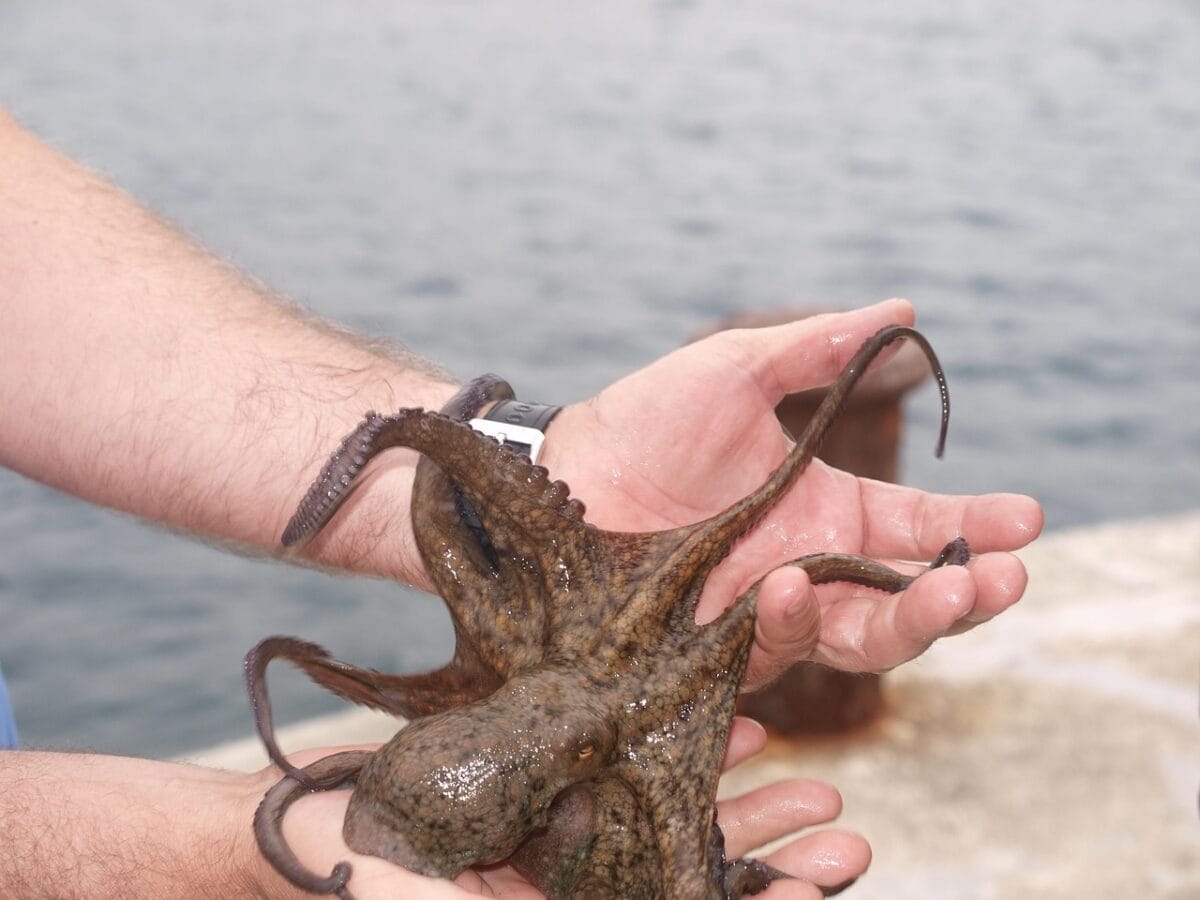
From the ghostly Casper Octopus to the luminous Sea Unicorn, the last decade has unveiled a staggering array of mysterious marine animals that challenge our understanding of evolution, adaptation, and the very limits of life on Earth. These discoveries are not only awe-inspiring but also a powerful reminder of how little we truly know about the vast oceans that cover over 70% of our planet. Many of these creatures were found in extreme environments—from crushing trench depths to unlit twilight zones—demonstrating that life persists and thrives in places long assumed inhospitable. As technology continues to evolve, allowing deeper and more precise exploration, we can expect even more astonishing revelations from beneath the waves. These 20 marine animals are just the tip of the iceberg, hinting at the countless wonders still waiting to be discovered in the uncharted depths of Earth’s last great wilderness.

As a little kid, I fell in love with nature, wildlife, and animals. Living in the USA, South Africa, Italy, China and Germany gave me the opportunity to discover the world's Wildlife. My favorite animals are Mountain Gorillas, Siberian Tigers, and Great White Sharks.
I'm a certified PADI Open Water Diver, went to Everest Base Camp and Trekked Gorillas in Uganda. I hold a Master of Science in Economics and Finance.
Please send any feedback to feedback@animalsaroundtheglobe.com
- The 10 Rarest Dog Breeds Making a Comeback in America - July 19, 2026
- 13 Creatures That Survived Mass Extinctions - July 19, 2026
- 12 Pets That Are Perfect for Seniors - July 19, 2026