


The bald eagle, America’s national bird and a powerful symbol of freedom, once faced near extinction but has made a remarkable comeback across the United States. These majestic raptors, with their distinctive white heads and impressive seven-foot wingspans, now thrive in various habitats throughout the country. While bald eagles can potentially be spotted in all 50 states during certain times of the year, some states offer significantly better viewing opportunities due to their abundant food sources, suitable nesting habitats, and protected environments. Whether you’re an avid birder or simply an admirer of wildlife, knowing where these magnificent birds concentrate can help you plan a memorable eagle-watching adventure. Here are the twelve states where your chances of encountering the iconic bald eagle are highest.
12. Alaska The Eagle Capital

Alaska stands unchallenged as America’s bald eagle headquarters, hosting approximately 30,000 birds—roughly half of the entire U.S. bald eagle population. The Chilkat Bald Eagle Preserve near Haines offers one of the world’s most spectacular eagle-viewing experiences during late fall when thousands of eagles gather to feast on salmon in the Chilkat River. The Inside Passage region, particularly around Juneau and the Alexander Archipelago, provides year-round eagle habitat. Unlike eagles in the Lower 48 states, many Alaskan eagles don’t migrate, as coastal areas remain ice-free during winter, ensuring continuous access to their primary food source: fish. The state’s abundant waterways, old-growth forests for nesting, and relatively low human population density create ideal conditions for these birds to thrive.
11. Minnesota Land of 10,000 Lakes and Eagles

Minnesota boasts the highest bald eagle population in the contiguous United States, with an estimated 9,800 nesting pairs as of recent surveys. The state’s numerous lakes, rivers, and wetlands provide essential fishing grounds, while its forests offer perfect nesting sites. During winter, areas of open water like the Mississippi River around Wabasha become eagle hotspots, with the National Eagle Center offering year-round viewing opportunities and educational programs. Lake Minnetonka, the Boundary Waters Canoe Area, and the St. Croix River Valley are prime locations for summer eagle watching. Minnesota’s commitment to habitat conservation and water quality protection has been instrumental in the bird’s recovery throughout the state, making it a model for eagle conservation nationwide.
10. Florida Winter Eagle Paradise

Florida hosts approximately 1,500 nesting pairs of bald eagles, constituting one of the densest populations outside Alaska. The abundance of lakes, coastal areas, and fish make it an ideal year-round habitat, but the population swells during winter when northern eagles migrate south. Lake Kissimmee State Park, Blue Cypress Lake in Indian River County, and the Ocklawaha River offer excellent viewing opportunities. Unlike eagles in northern states, Florida’s eagles typically nest from October through April to avoid the intense summer heat. The state’s conservation efforts, including strict nest protection regulations and habitat preservation, have helped its eagle population flourish. Orlando’s suburban areas surprisingly host numerous eagle nests, demonstrating these birds’ adaptability when protected from direct persecution.
9. Washington Pacific Northwest Eagle Haven

Washington State provides ideal eagle habitat with its combination of coastal waters, mountain rivers teeming with salmon, and abundant forests for nesting. The Skagit River Eagle Sanctuary hosts one of the largest wintering concentrations of bald eagles in the continental United States, with hundreds gathering to feed on spawning salmon between December and February. Olympic Peninsula, Puget Sound, and the San Juan Islands offer year-round eagle viewing opportunities. The state’s dedication to protecting salmon runs has indirectly benefited eagle populations, as healthy fish stocks are crucial for these birds. Washington’s eagles exhibit interesting behavioral adaptations to the Pacific Northwest environment, including specialized fishing techniques to capture the region’s abundant salmon during seasonal runs.
8. Wisconsin Eagle Watching Destination

Wisconsin’s eagle population has soared to over 1,600 nesting pairs, a remarkable recovery from just 108 pairs in the 1970s. The state’s numerous rivers, particularly the Wisconsin, Mississippi, and Fox Rivers, provide critical habitat and feeding grounds. During winter, areas of open water below dams attract concentrations of eagles, creating spectacular viewing opportunities at locations like Prairie du Sac and the Sauk City area. The Ferryville Eagle Day and Eagle Watching Day at Sauk Prairie offer organized viewing events with educational programming. Wisconsin’s Department of Natural Resources actively monitors nest success rates and population trends, contributing valuable data to national eagle conservation efforts. The eagles’ preference for tall white pines as nesting sites has influenced forest management practices in parts of the state.
7. Michigan Great Lakes Eagle Stronghold

Michigan’s combination of Great Lakes coastlines, inland lakes, and rivers creates prime eagle habitat, supporting over 800 nesting pairs. The Au Sable, Manistee, and Detroit Rivers host significant populations, while the Les Cheneaux Islands area in the eastern Upper Peninsula is renowned for its high eagle density. Winter concentrations occur where water remains open, particularly at power plant discharge areas along the Great Lakes. The Seney National Wildlife Refuge and Sleeping Bear Dunes National Lakeshore offer reliable summer viewing opportunities. Michigan’s eagles benefit from the state’s extensive wetland protection programs and the recovery of Great Lakes fisheries from historical pollution. Interestingly, Michigan’s island populations show distinct genetic adaptations and behaviors compared to mainland eagles, demonstrating the species’ ability to adapt to specific ecological niches.
6. Virginia Chesapeake Bay’s Eagle Resurgence
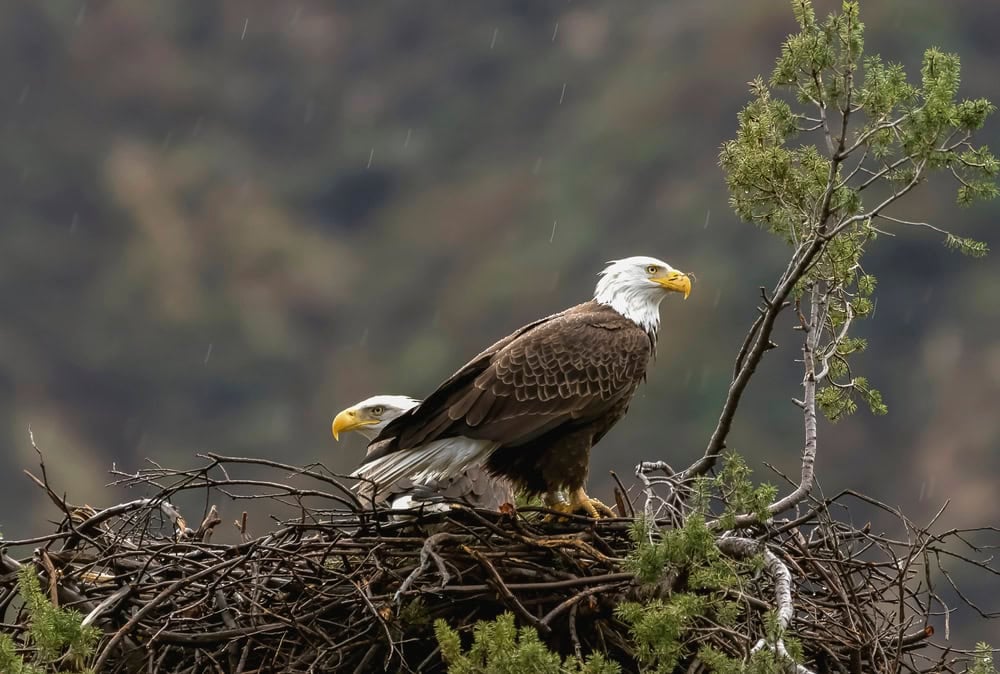
Virginia has witnessed a dramatic bald eagle recovery, particularly around the Chesapeake Bay region, which now supports one of the highest concentrations on the Atlantic Coast. The James River, once nearly devoid of eagles due to DDT contamination, now hosts hundreds of nesting pairs. The Mason Neck National Wildlife Refuge, established specifically to protect bald eagles, offers year-round viewing opportunities. Winter brings additional migratory eagles to the Rappahannock River and other waterways. Virginia’s eagles have shown remarkable adaptability to human development, with some nesting in suburban areas along protected waterways. The College of William & Mary’s Center for Conservation Biology conducts extensive research on the state’s eagles, documenting their impressive recovery from fewer than 50 pairs in the 1970s to over 1,000 today. The state’s position along the Atlantic Flyway makes it both a year-round home and important migratory stopover for eagles from northern states.
5. Maine Atlantic Coast Eagle Sanctuary

Maine hosts the largest bald eagle population in the Northeastern United States, with approximately 734 nesting pairs recorded in recent surveys. The state’s rugged coastline, numerous islands, and inland lakes and rivers provide ideal habitat, particularly in areas like Cobscook Bay, Penobscot Bay, and Moosehead Lake. Maine’s eagles have shown remarkable recovery from historical lows, increasing from just 21 nesting pairs in 1967. Winter concentrations occur along ice-free portions of major rivers, creating excellent viewing opportunities at locations like the Kennebec and Androscoggin Rivers. Maine’s eagles display interesting adaptations to the harsh New England climate, including earlier nesting than their southern counterparts to ensure young are sufficiently developed before the following winter. The state’s conservation success stems from aggressive habitat protection, particularly of shoreline nesting areas, and decades of dedicated monitoring and management.
4. Oregon Pacific Coast to Mountain Lakes

Oregon’s diverse habitats, from coastal estuaries to high mountain lakes, support a thriving eagle population of approximately 570 breeding pairs. The Klamath Basin National Wildlife Refuge Complex hosts one of the largest winter concentrations in the lower 48 states, with hundreds gathering from November through March. The Columbia River Gorge provides year-round eagle habitat, with nesting pairs visible during summer and migratory visitors in winter. Oregon’s eagle population benefits from the state’s abundant salmon runs, particularly along the coastal rivers during spawning season. The Upper Klamath Lake area demonstrates the crucial relationship between healthy wetland ecosystems and eagle populations, as restoration efforts there have directly contributed to increased eagle numbers. Oregon eagles exhibit interesting behavioral adaptations to the state’s diverse environments, from specialized coastal fishing techniques to scavenging behaviors in interior regions.
3. Idaho Mountain State Eagle Haven

Idaho’s combination of mountain lakes, wild rivers, and relatively undeveloped landscapes creates ideal bald eagle habitat throughout the state. Lake Coeur d’Alene hosts one of the most accessible eagle concentrations in the country, with dozens gathering to feed on kokanee salmon during their winter spawn. The Snake River corridor provides year-round eagle habitat, particularly around the many reservoirs along its course. Areas like Hells Canyon and Lake Cascade offer reliable summer viewing opportunities for nesting pairs. Idaho’s eagles benefit from the state’s commitment to maintaining wild rivers and protecting critical riparian habitats. Winter eagle viewing has become an important ecotourism draw, with organized events like the Lake Coeur d’Alene Eagle Watch providing educational opportunities. The state’s position along the Pacific Flyway makes it both a permanent home for resident eagles and an important migratory route for those moving between northern breeding grounds and southern wintering areas.
2. Maryland Chesapeake Bay’s Eagle Revival

Maryland’s portion of the Chesapeake Bay ecosystem supports a thriving bald eagle population, with especially high concentrations along the Eastern Shore and the Potomac, Susquehanna, and Patuxent Rivers. Blackwater National Wildlife Refuge has emerged as one of the premier eagle-watching destinations on the East Coast, hosting both nesting pairs and winter visitors. Conowingo Dam on the Susquehanna River creates spectacular viewing opportunities when eagles gather to fish in the turbulent waters below the dam, particularly from November through February. Maryland’s eagles have made a remarkable recovery from the DDT era, increasing from just 41 breeding pairs in 1977 to over 500 today. The state’s eagles demonstrate interesting adaptations to living in the relatively developed Chesapeake watershed, including tolerance for human activity at a distance and specialized fishing techniques suited to tidal environments. Maryland’s comprehensive shoreline protection programs have played a crucial role in preserving the tall trees needed for eagle nesting along waterways.
1. Wyoming Western Mountain Eagle Country

Wyoming’s combination of mountain lakes, major river systems like the Snake and Yellowstone, and relatively undisturbed landscapes creates excellent bald eagle habitat throughout the state. Yellowstone and Grand Teton National Parks host significant populations, offering visitors reliable viewing opportunities, particularly along lake shores and river corridors. The North Platte River Valley supports one of Wyoming’s densest year-round eagle populations. Unlike more temperate regions, Wyoming’s harsh winters force eagles to concentrate around remaining open water, creating spectacular viewing at locations like Keyhole Reservoir and Ocean Lake. The state’s eagles have adapted to the relatively harsh mountain environment by nesting earlier than their coastal counterparts and developing specialized hunting techniques for high-altitude lakes. Wyoming’s commitment to maintaining undeveloped river corridors and protecting crucial fish spawning habitat has been essential to maintaining healthy eagle populations throughout the state.
Conclusion: The Eagle’s Triumphant Return

The bald eagle’s recovery represents one of America’s greatest conservation success stories, from fewer than 500 nesting pairs in the 1960s to more than 71,000 eagles today. This remarkable comeback demonstrates the effectiveness of targeted protection measures, including the banning of DDT, habitat conservation, and strict enforcement of anti-poaching laws. Each of the twelve states highlighted offers unique opportunities to witness these magnificent birds in their natural habitats, from Alaska’s unparalleled concentrations to the surprising suburban adaptability displayed in Florida and Virginia. As you plan your eagle-watching adventures, remember that patience, binoculars, and respect for viewing guidelines will enhance your experience while ensuring these iconic birds continue to thrive for generations to come. The bald eagle’s recovery reminds us that with determined conservation efforts, even species on the brink of extinction can return to prominence across America’s diverse landscapes.

As a little kid, I fell in love with nature, wildlife, and animals. Living in the USA, South Africa, Italy, China and Germany gave me the opportunity to discover the world's Wildlife. My favorite animals are Mountain Gorillas, Siberian Tigers, and Great White Sharks.
I'm a certified PADI Open Water Diver, went to Everest Base Camp and Trekked Gorillas in Uganda. I hold a Master of Science in Economics and Finance.
Please send any feedback to feedback@animalsaroundtheglobe.com
- 11 Most Endangered Insects Buzzing in America Today - July 22, 2026
- 10 Most Frequently Googled Animal Birth Facts - July 22, 2026
- 10 Incredible Migration Journeys in the Animal Kingdom - July 22, 2026