
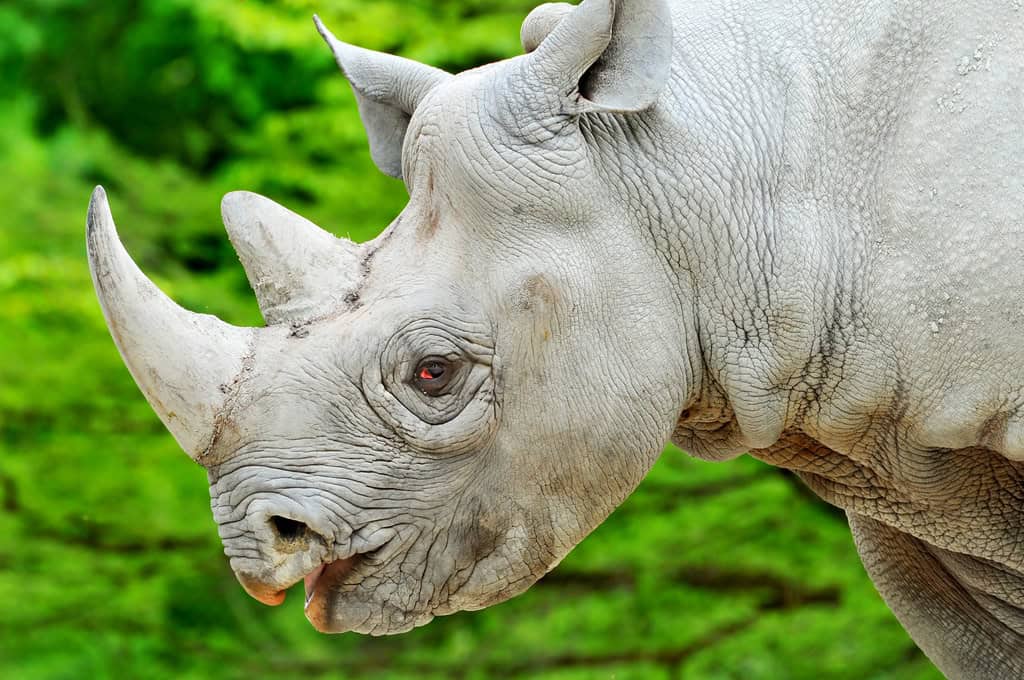
Rhinoceroses, these magnificent prehistoric-looking mammals, have survived for millions of years despite having surprisingly poor eyesight. Standing as tall as 6 feet at the shoulder and weighing up to 7,700 pounds in the case of the white rhino, these massive creatures can only see clearly for about 15-30 feet ahead of them. Their eyes, positioned on the sides of their massive heads, provide them with a wide field of view but sacrifice visual acuity in the process.
This nearsightedness might seem like a significant disadvantage for a large animal navigating complex environments, but rhinos have evolved various compensatory mechanisms that have allowed them to thrive. Their poor vision is balanced by their exceptional hearing and sense of smell, creating a sensory package that has proven effective for their survival needs. Understanding how rhinos perceive their world provides fascinating insights into how evolution shapes sensory systems to fit an animal’s ecological niche.
The Anatomy of Rhino Vision

Rhinoceros eyes are relatively small compared to their massive body size, measuring only about 1 inch in diameter. These small eyes are set wide apart on the sides of their head, resulting in limited binocular vision—the area where the visual fields of both eyes overlap to create depth perception. This positioning gives rhinos a wide panoramic field of view of approximately 300 degrees, allowing them to monitor their surroundings for potential threats without turning their heads.
However, this wide-angle vision comes at the expense of visual acuity. Rhinos possess fewer cone cells (responsible for color vision and detail) than humans and many other mammals. They also have a lower density of photoreceptors overall, which contributes to their blurry vision beyond short distances. This anatomical arrangement reflects evolutionary priorities: for a massive herbivore with few natural predators as an adult, the ability to detect movement across a wide area was historically more important than sharp, focused vision.
The Degree of Nearsightedness

If we were to translate a rhino’s visual acuity into human terms, researchers estimate they would score something like 20/200 vision, which means what a person with normal vision can see clearly at 200 feet, a rhino would need to be at 20 feet to see with the same clarity. This level of vision would classify as legally blind in humans. Rhinos struggle to distinguish fine details and can primarily detect larger shapes, movement, and contrast differences rather than crisp images.
This nearsightedness varies slightly among the five rhino species. The black rhino (Diceros bicornis) appears to have slightly better vision than the white rhino (Ceratotherium simum), though both are considerably nearsighted. For all rhino species, this limited visual acuity means they often rely on their other senses for activities that many animals would accomplish visually, such as finding food, identifying other individuals, or detecting predators. Their poor eyesight also explains why rhinos sometimes charge when startled—they’re responding defensively to a stimulus they cannot clearly identify.
The Power of Smell: Their Primary Sense

What rhinos lack in visual prowess, they more than make up for with their extraordinary sense of smell. Their olfactory capabilities are estimated to be second only to dogs among mammals. A rhino’s brain dedicates a significant portion to processing scent information, with olfactory bulbs that are proportionally much larger than those in humans. This exceptional smelling ability allows rhinos to detect odors from several miles away under favorable wind conditions.
Rhinos use their powerful sense of smell for nearly every aspect of their lives. They can identify food sources, detect water from great distances, recognize other rhinos through their unique scent signatures, and identify potential mates through pheromones. Female rhinos in estrus leave scent markings that males can detect from extraordinary distances. This olfactory dominance represents their primary compensatory mechanism for poor vision and allows them to create detailed “scent maps” of their territories that are far more informative than what they could perceive visually.
Acute Hearing: The Second Compensatory Sense
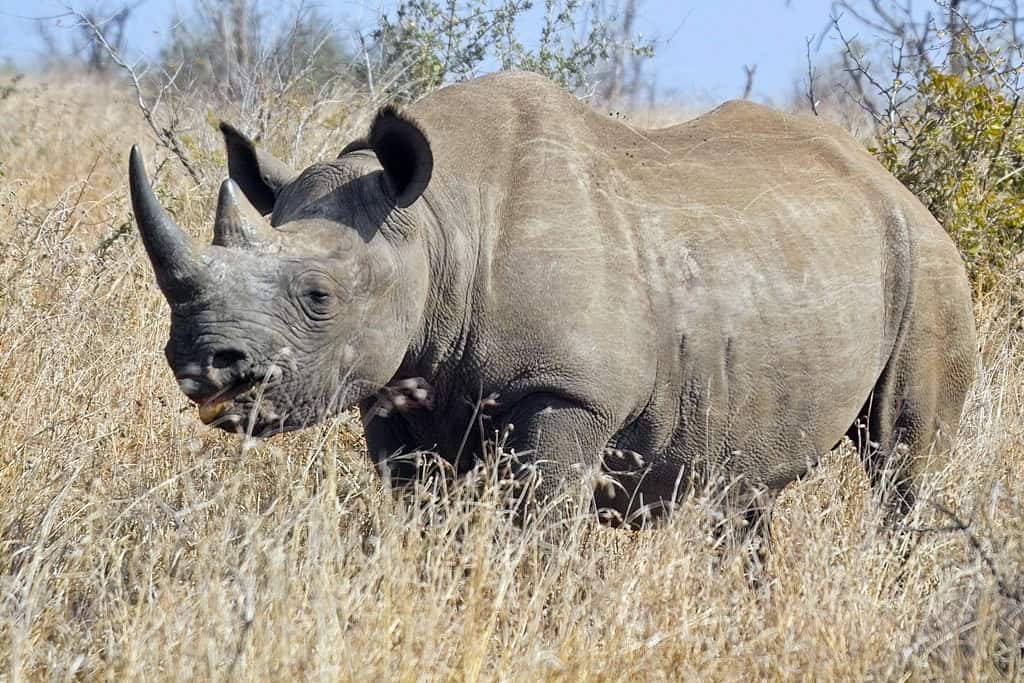
Complementing their remarkable sense of smell, rhinos possess exceptionally acute hearing that serves as another vital compensatory mechanism for their visual limitations. Their large, tubular ears can rotate independently to pinpoint sounds from different directions, creating an audio surveillance system that alerts them to potential threats or opportunities. Rhinos can detect sounds across a wide frequency range, including some that fall outside human hearing capabilities.
This auditory acuity allows rhinos to perceive subtle environmental cues that would be missed by their eyes alone. They can hear other animals moving through vegetation, detect the calls of predators or other rhinos at significant distances, and even perceive the sound of water flowing underground in some cases. When combined with their sense of smell, this acoustic awareness creates a rich sensory landscape that effectively compensates for their visual deficiencies. For creatures that appear so physically imposing, rhinos are remarkably sensitive to their acoustic environment.
Touch and Tactile Sensitivity
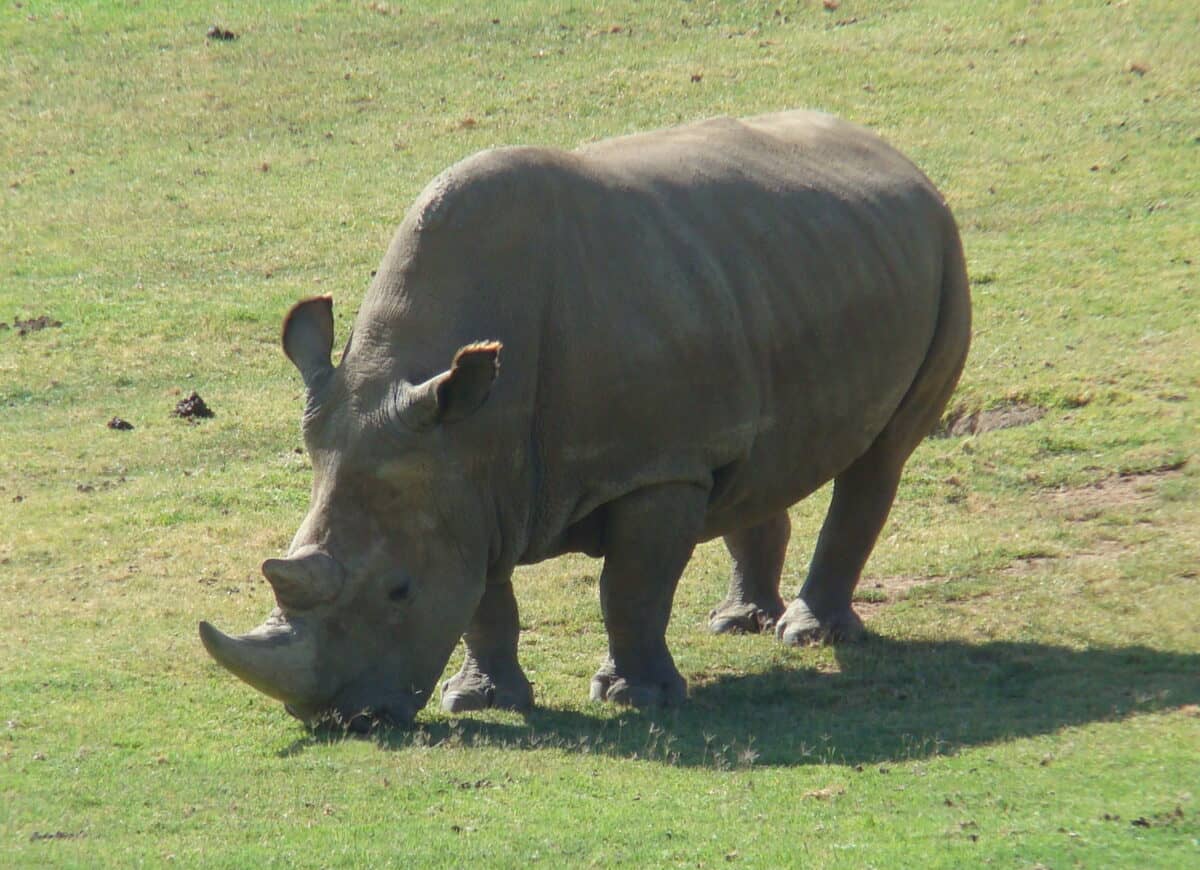
Despite their thick, armor-like skin, rhinoceroses possess surprising tactile sensitivity that further compensates for their poor vision. Their skin contains numerous mechanoreceptors that allow them to perceive physical contact and pressure with remarkable precision. The areas around their mouth and the tip of their horn (which contains nerve endings at its base) are particularly sensitive, serving as tactile exploration tools when investigating objects up close.
Rhinos frequently use their lips—especially the prehensile upper lip of black rhinos—to grasp and manipulate vegetation with dexterity that belies their massive size. Mother rhinos and their calves maintain frequent physical contact, using touch to communicate and bond. This tactile awareness provides rhinos with detailed information about their immediate environment that their blurry vision cannot supply. Through touch, they can evaluate food texture, navigate complex terrain, and engage in social interactions with precision despite their visual limitations.
Territorial Marking and Memory

To navigate their environment effectively despite poor vision, rhinos rely heavily on spatial memory and environmental marking. They create complex mental maps of their territories, memorizing locations of resources, pathways, and boundaries. These cognitive maps are primarily constructed through olfactory landmarks rather than visual ones. Rhinos regularly mark their territories with dung piles called middens, which serve as olfactory signposts that can be detected from considerable distances.
These middens create a network of scent markers that help rhinos navigate familiar areas without needing to see clearly. Adult rhinos will return to the same middens repeatedly, creating “communal toilets” that serve both as territorial markers and navigational aids. Their impressive spatial memory allows them to recall the locations of seasonal water sources, optimal feeding grounds, and safe resting areas across expansive territories. This combination of marking behavior and spatial memory effectively compensates for their inability to see distant landmarks clearly, allowing them to move confidently through their habitat.
Social Compensation Strategies

Rhinos have developed social strategies that help mitigate the challenges posed by their poor vision. While generally solitary (with the exception of mothers with calves and temporary male-female pairs during mating), rhinos do engage in specific social behaviors that reduce their vulnerability. For instance, when white rhinos do form loose groups called “crashes,” they often position themselves to maximize collective sensory awareness, with individuals facing different directions to create a more comprehensive sensory perimeter.
Communication between rhinos relies heavily on non-visual cues. They produce a range of vocalizations including snorts, grunts, and high-pitched squeals that carry information about identity, emotional state, and potential threats. These acoustic signals allow rhinos to coordinate their activities and maintain social connections without needing to see each other clearly. Young rhinos stay particularly close to their mothers, often maintaining physical contact until they’ve developed the sensory compensation skills needed to navigate independently despite their inherited visual limitations.
The Infamous Charge: A Response to Visual Uncertainty

The rhinoceros charge, one of the most feared behaviors in the animal kingdom, is directly connected to their poor eyesight. When a rhino detects something unusual through smell or hearing but cannot visually identify it, they may respond with a “defensive investigation” that can escalate into a full charge. This behavior isn’t primarily aggressive but stems from visual uncertainty—the rhino is attempting to identify a potential threat that it cannot see clearly, and charging is their evolutionary response to this uncertainty.
During a charge, a rhino can reach speeds of up to 35 miles per hour (55 km/h), despite weighing several tons. The charge serves multiple purposes: it can intimidate potential predators, it brings the rhino closer to visually identify the stimulus, and it positions them to use their horn defensively if necessary. Researchers have observed that rhinos will often stop or veer away once they get close enough to identify a non-threatening stimulus, further supporting the theory that charging compensates for their visual limitations. This behavior highlights how rhinos have adapted behaviorally to work around their sensory constraints.
Adaptations in Different Habitats

The five rhino species inhabit diverse environments, from the open savannas of Africa to the dense forests of Southeast Asia, and their compensatory strategies show subtle adaptations to these different habitats. White rhinos, which evolved in open grasslands, rely more heavily on their hearing and smell to detect distant threats across unobstructed terrain. Their wide, square lips are specialized for grazing on grasses that require minimal visual inspection for quality.
In contrast, black rhinos, which evolved in more densely vegetated areas, have developed a prehensile upper lip that allows them to grasp and examine browse (leaves and woody plant parts) through touch rather than sight. The Sumatran rhino, living in dense rainforests where visibility is naturally limited, has developed particularly acute hearing to detect sounds through thick vegetation. These habitat-specific adaptations demonstrate how each rhino species has fine-tuned its compensatory mechanisms to match the sensory challenges presented by its particular environment while working around the common constraint of poor vision.
Impact of Nearsightedness on Conservation Efforts

Understanding the visual limitations of rhinos and their compensatory mechanisms has important implications for conservation efforts. When relocating rhinos to new reserves or reintroducing them to areas where they’ve been extirpated, conservationists must consider that these animals rely heavily on familiarity with their environment and established scent markers for navigation. A rhino introduced to an unfamiliar environment without the opportunity to develop new mental maps may experience significant stress and disorientation.
Conservation techniques have evolved to accommodate these sensory considerations. For example, when creating protective barriers, conservationists now understand that visual deterrents alone are insufficient—rhinos cannot see them clearly enough from a distance. Instead, effective barriers often incorporate elements that can be detected through smell, hearing, or touch. Similarly, anti-poaching efforts increasingly utilize technologies that detect human intrusion before poachers come within a rhino’s limited visual range, providing earlier warnings that compensate for the rhinos’ inability to spot distant threats. This sensory-informed approach to conservation represents an important evolution in rhino protection strategies.
Comparing Rhino Vision to Other Mammals
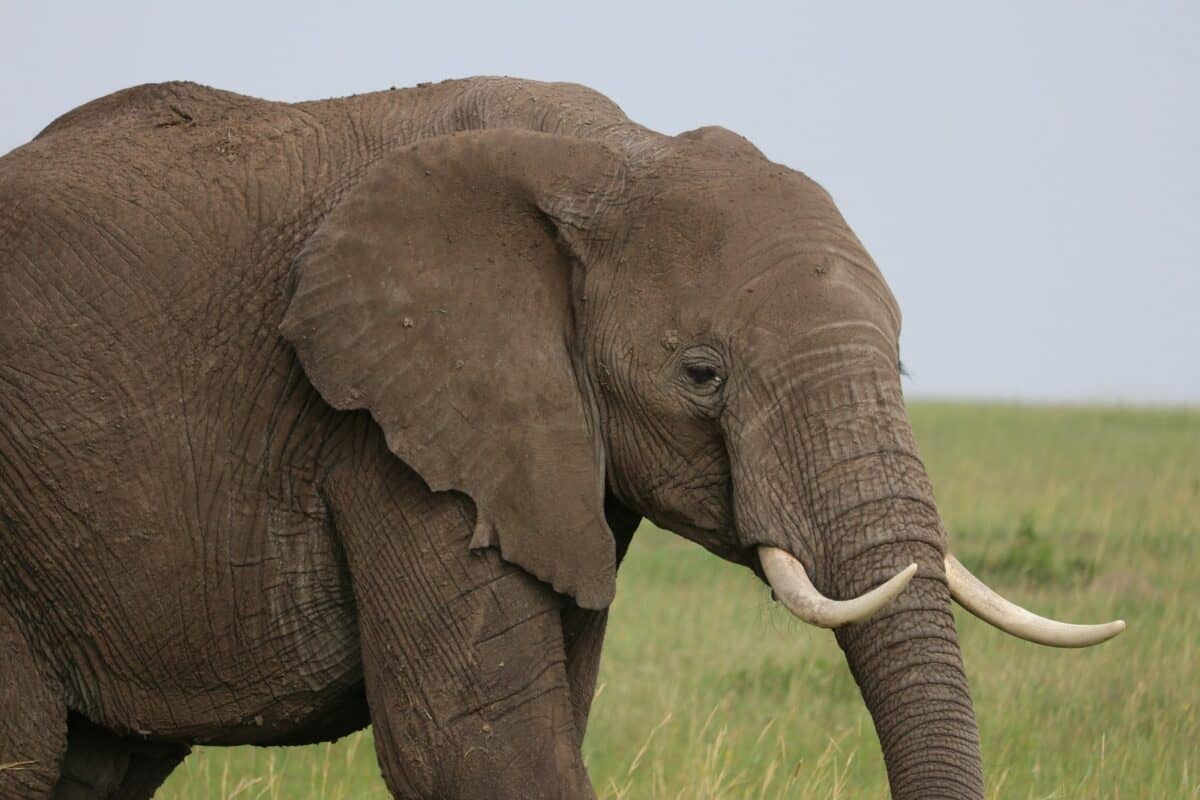
When compared to other large herbivores, rhinoceros vision stands out for its particularly poor acuity. Elephants, for instance, also have relatively poor eyesight but compensate with trunks that provide extraordinary tactile capabilities. Giraffes, by contrast, have excellent vision that allows them to spot predators from great distances. Among the large herbivores, rhinos appear to be among the most visually compromised, having evolved to rely more heavily on their chemical senses.
Interestingly, rhino vision shares some similarities with that of their distant relatives, horses. Both animals have eyes positioned on the sides of their heads, providing a wide field of view at the expense of depth perception. However, horses have significantly better visual acuity than rhinos. This comparison highlights how different evolutionary pressures can shape sensory capabilities even among animals with similar ecological roles. For rhinos, their massive size, formidable horns, and thick skin reduced predation pressure enough that sharp vision became less critical for survival compared to other large herbivores that rely more heavily on visual predator detection.
Living Successfully Despite Visual Limitations

The story of rhinoceros vision and their compensatory mechanisms offers a remarkable example of evolutionary adaptation and sensory trade-offs. Despite being among the most visually challenged large mammals, rhinos have thrived for millions of years by developing a sensory system that prioritizes smell and hearing over sight. Their success demonstrates that there is no single optimal sensory configuration in nature, but rather different sensory strategies that can be equally effective depending on an animal’s ecological niche and physical attributes.
The rhino’s compensatory adaptations remind us that evolution works with what’s available, optimizing some capabilities while accepting limitations in others. While human threats have now endangered all five rhino species, their sensory challenges have never been a significant impediment to their survival. In fact, their remarkable ability to thrive despite poor vision serves as a testament to the power of adaptive compensation and the remarkable diversity of sensory strategies in the animal kingdom. As we work to protect these magnificent creatures, understanding how they perceive and navigate their world becomes not just a scientific curiosity but a crucial component of effective conservation.

- The World’s Most Infamous Shark-Infested Beaches - August 1, 2026
- The Leafy Sea Dragon: Nature’s Master of Underwater Camouflage - August 1, 2026
- The Smartest Birds That Can Mimic Human Speech - August 1, 2026