

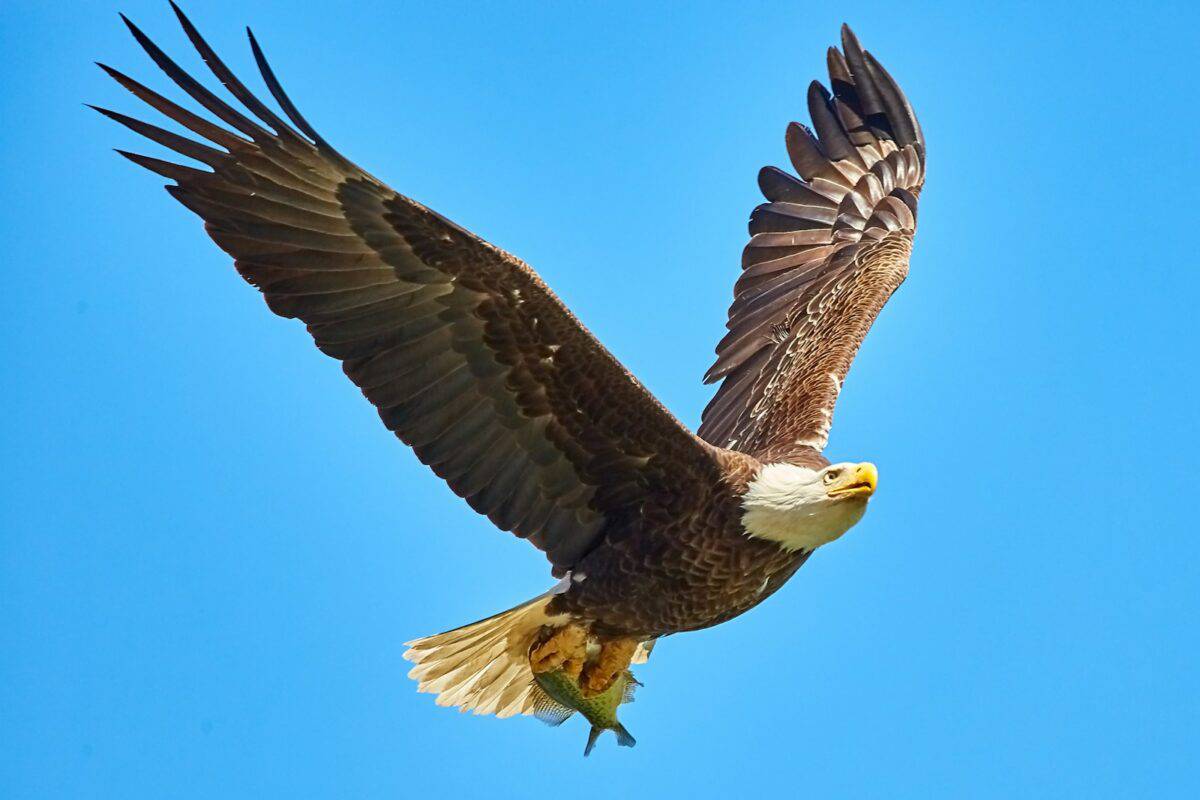
The bald eagle (Haliaeetus leucocephalus) stands as one of North America’s most impressive predators. With its distinctive white head, powerful yellow beak, and wingspan reaching up to 7.5 feet, this iconic raptor commands both respect and admiration. As opportunistic hunters, bald eagles have developed sophisticated hunting strategies and dietary preferences that have helped them thrive across diverse ecosystems. While they’re known for their spectacular fishing abilities, their diet extends well beyond fish alone.
Understanding what bald eagles eat provides fascinating insights into their ecological role and hunting behaviors. These majestic birds don’t just eat whatever they can find—they have distinct preferences and prey they actively seek out, as well as certain animals they tend to avoid. This article explores the 10 prey items that bald eagles particularly favor catching, along with 4 they generally leave alone, revealing the complex hunting patterns of America’s national bird.
14. Fish The Ultimate Eagle Delicacy

Fish constitute approximately 60-90% of the bald eagle’s diet, making them the undisputed favorite prey of these magnificent birds. Bald eagles have evolved specifically to become expert fishers, with specialized talons featuring rough bumps called spicules that help them grip slippery fish. Their preference leans toward fish species weighing between 1-3 pounds—large enough to provide substantial nutrition but not so large that they’re difficult to carry in flight.
The most commonly targeted fish species include salmon, trout, catfish, herring, and shad. Eagles typically hunt fish by soaring above water bodies, spotting prey near the surface, then swooping down in a controlled dive. Using their powerful talons, they snatch fish from just below the water’s surface without fully immersing themselves. This hunting technique, combined with their exceptional eyesight (about four times stronger than human vision), makes them extraordinarily effective fishers in both freshwater and coastal environments.
13. Waterfowl A Winter Staple

When lakes and rivers freeze over during winter months, bald eagles turn their attention to waterfowl as an important alternative food source. Ducks, geese, coots, and other water birds become prime targets, especially those that are injured, sick, or otherwise vulnerable. Eagles employ different hunting strategies for waterfowl compared to fishing. They may swoop down on birds resting on water, catch them mid-flight, or even walk along shallow water edges to surprise their prey.
Particularly during migration seasons when waterfowl congregate in large numbers, eagles capitalize on these abundant food sources. They’ve been observed targeting specific species like mallards, American coots, and various geese. What makes waterfowl especially attractive to eagles is their relatively high fat content, providing essential calories during colder months when eagles require more energy to maintain body temperature. In some regions, studies have found that waterfowl can make up to 80% of eagles’ winter diet when fish become less accessible.
12. Small Mammals Opportunistic Targets

Bald eagles readily prey on various small mammals when the opportunity presents itself. Rabbits, hares, muskrats, squirrels, and prairie dogs feature prominently among their mammalian prey. These animals typically weigh less than 5 pounds, making them manageable for eagles to capture and carry. Eagles hunt these small mammals using their exceptional vision to spot movement from high perches or while soaring, then diving swiftly to catch them with their powerful talons.
Research indicates that small mammals become particularly important food sources during breeding seasons when eagles need to provide consistent meals for their growing nestlings. In certain inland areas where fish are less abundant, some bald eagle populations rely more heavily on mammals, demonstrating their adaptability as predators. The high protein content of these mammals makes them valuable nutritional resources, especially when eagles are raising young and need to make frequent hunting trips to satisfy hungry offspring.
11. Carrion Nature’s Convenient Buffet

Despite their fearsome reputation as hunters, bald eagles are not above scavenging. In fact, carrion (dead animal flesh) forms a significant portion of their diet, especially during winter months or when live prey is scarce. Eagles are commonly observed feeding on roadkill, washed-up fish, or dead farm animals. They’re particularly attracted to large carcasses like deer, elk, or livestock that provide substantial meals with minimal hunting effort.
This scavenging behavior has ecological importance, as eagles help clean up ecosystems by consuming dead animals. Their strong digestive system, which includes highly acidic stomach conditions, allows them to safely consume carrion that might be deteriorating or harboring bacteria. Interestingly, bald eagles have been observed gathering in large numbers around predictable carrion sources, such as salmon runs where fish die after spawning. These gatherings can become quite competitive, with eagles engaging in elaborate aerial displays and vocalizations to establish feeding hierarchies.
10. Reptiles Cold-Blooded Prey

Bald eagles readily target various reptiles, particularly turtles and snakes, as part of their diverse diet. In regions where these cold-blooded creatures are abundant, eagles have developed specific hunting techniques to exploit them as food sources. For turtles, eagles may carry them high into the air and drop them onto hard surfaces to crack their shells, demonstrating problem-solving abilities. Some eagle populations living near turtle nesting beaches have been documented targeting female turtles as they come ashore to lay eggs.
Snakes, especially water snakes and other non-venomous species, are also regularly captured by eagles. These reptiles provide an easily accessible protein source, particularly during warmer months when they’re active and visible. In Florida and other southeastern states, bald eagles have been observed hunting invasive species like Burmese pythons, inadvertently helping control these problematic populations. Research indicates that reptiles may constitute up to 20% of an eagle’s diet in some southern regions where these prey are abundant year-round.
9. Seabirds Coastal Delicacies

Along coastal areas, bald eagles frequently target seabirds as prey. Species such as gulls, cormorants, murres, and puffins all fall victim to eagle predation. Coastal eagle populations have developed specialized hunting techniques for capturing these birds, often pursuing them in flight or attacking nesting colonies. These raids on seabird colonies can be particularly productive during breeding seasons when birds are concentrated and focused on protecting eggs or young rather than their own safety.
Eagles living along the Pacific Northwest coast and Alaska have been extensively documented preying on colonial nesting seabirds. Their presence can significantly impact seabird colony dynamics, sometimes forcing entire colonies to relocate. Studies on the Aleutian Islands have shown that a single pair of eagles can consume dozens of seabirds during the breeding season. This predation pressure has ecological ripple effects, as seabirds play important roles in marine-terrestrial nutrient cycling. Some researchers have noted that the recovery of eagle populations has coincided with declines in certain seabird colonies, highlighting the complex ecological relationships between these species.
8. Sick or Injured Animals8 Easy Targets

Bald eagles, as efficient predators, often target animals that show signs of weakness, injury, or disease. This selective predation serves an important ecological function by removing genetically weaker individuals from prey populations. Eagles can detect subtle signs of illness or injury from great distances thanks to their extraordinary vision. They readily target limping mammals, birds with damaged wings, or fish swimming erratically near water surfaces.
This preference for compromised prey isn’t merely opportunistic—it’s a highly efficient hunting strategy that conserves energy while maximizing success rates. Eagles expend significant energy during hunting flights, so targeting prey with reduced escape capabilities increases their energetic return on investment. During disease outbreaks among waterfowl populations, such as avian botulism events, eagles may concentrate their hunting efforts on affected birds. Wildlife biologists sometimes use the presence of hunting eagles as an indicator of potential disease outbreaks in prey populations, demonstrating how this feeding behavior connects to broader ecosystem health.
7. Other Birds’ Eggs and Nestlings Seasonal Opportunities
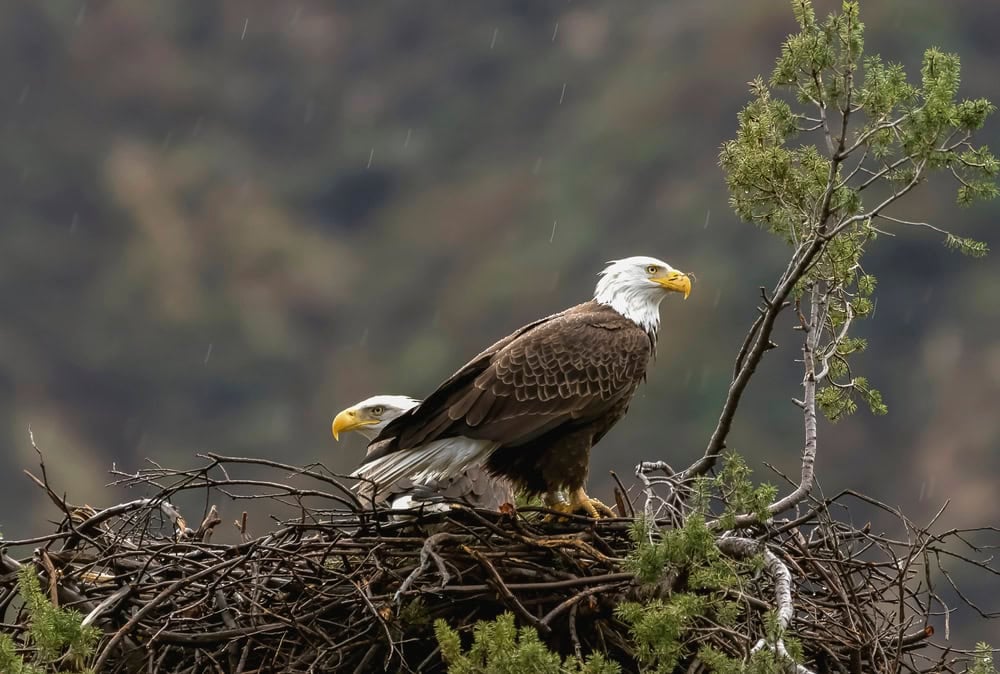
During breeding seasons, bald eagles opportunistically raid the nests of other birds, consuming both eggs and nestlings. This behavior provides eagles with easily accessible, high-protein food sources during the critical period when they’re raising their own young. Common targets include the nests of herons, egrets, gulls, and other colonial nesting birds. Eagles can devastate entire rookeries, swooping in to grab unattended eggs or nestlings while parent birds are away foraging.
Research conducted in the Chesapeake Bay region documented bald eagles regularly predating great blue heron colonies, sometimes causing these colonies to abandon nesting sites entirely. This nest-raiding behavior increases during times when eagles’ preferred prey is less available or when they have high energy demands from feeding their own nestlings. Some bird species have evolved defensive strategies against eagle predation, including nesting in dense vegetation or establishing colonies near human activity where eagles are less likely to hunt. This evolutionary arms race between eagles and their prey demonstrates the complex ecological relationships that shape animal behaviors.
6. Domesticated Animals Controversial Targets

While not their preferred prey, bald eagles occasionally target small domesticated animals, creating conflicts with human interests. Small poultry like chickens, ducks, and occasionally lambs or piglets may fall victim to eagle predation, particularly in rural areas where eagle territories overlap with farms. These incidents, while relatively rare compared to their natural prey consumption, can cause significant economic impact for individual farmers and lead to negative attitudes toward eagle conservation.
Studies tracking eagle predation on farms have found that most attacks occur during breeding season when eagles have increased protein demands for feeding nestlings. Management strategies to reduce these conflicts include physical barriers over small livestock enclosures, visual deterrents, and ensuring sick or weak animals are promptly removed from outdoor areas. Wildlife management agencies typically work with affected farmers to implement non-lethal deterrent methods, as bald eagles remain federally protected under the Bald and Golden Eagle Protection Act. Despite occasional conflicts, research indicates that eagles primarily target wild prey, with domesticated animal predation representing a very small percentage of their overall diet.
5. Amphibians Seasonal Snacks

Frogs, toads, and salamanders become important supplementary food sources for bald eagles during certain seasons. These amphibians are particularly vulnerable during breeding seasons when they congregate in large numbers around ponds and wetlands. During spring amphibian migrations and breeding events, eagles take advantage of these concentrated food sources, picking off individuals as they move to and from breeding sites or while they’re exposed in shallow water.
In some ecosystems, particularly in the Pacific Northwest and parts of the eastern United States, amphibians can temporarily constitute a significant portion of eagles’ diets. Studies examining eagle pellets (regurgitated indigestible materials) have found amphibian remains making up as much as 15% of dietary content during peak amphibian activity periods. Eagles typically consume these prey whole, and their highly acidic stomachs efficiently digest the soft tissues while bones are later regurgitated. This predation on amphibians highlights the eagle’s adaptability in exploiting seasonally abundant food sources and their important role in wetland food webs.
4. Prey They Rarely Touc: Large Mammals

Despite their impressive size and strength, bald eagles rarely attack large mammals like deer, elk, or cattle, except as carrion. While golden eagles occasionally prey on young deer or antelope, bald eagles lack the hunting adaptations necessary for taking down large, live mammals. Their talons, while formidable, are specialized for gripping fish and smaller prey rather than delivering killing blows to large animals. An adult bald eagle typically weighs between 8-14 pounds, making prey much larger than themselves energetically impractical and potentially dangerous to hunt.
There have been rare, documented cases of eagles attempting to prey on deer fawns or young mountain goats, but these represent exceptional rather than typical behavior. When bald eagles are observed feeding on larger mammals, they’re almost always scavenging animals that died from other causes. Their relationship with large mammals is primarily as scavengers rather than active predators. This limitation in prey size demonstrates how eagle anatomy and hunting strategies have evolved specifically for particular ecological niches, focusing on prey types that provide optimal energy return with minimal risk.
3. Prey They Rarely Touch Venomous Snakes

While bald eagles readily consume many snake species, they generally avoid venomous snakes like rattlesnakes, copperheads, and cottonmouths. Unlike some birds of prey such as secretary birds or certain hawks that have evolved specific defenses against snake venom, bald eagles lack specialized protection from venomous bites. Though their feathered legs provide some protection, eagles appear to recognize the danger posed by venomous snakes and typically avoid confrontations with them.
The few documented cases of eagles preying on venomous snakes usually involve unique circumstances, such as very young snakes or individuals weakened by injury or disease. Research examining thousands of eagle prey remains across various studies has found venomous snake remains in less than 1% of samples, confirming their rarity in eagle diets. This avoidance behavior demonstrates the eagle’s ability to discriminate between dangerous and safe prey, likely through a combination of instinctive recognition and learned experience. Unlike the snake eagle species found in Africa and Asia that specialize in hunting venomous snakes, North American bald eagles have evolved different hunting specializations.
2. Prey They Rarely Touch Bees and Wasps

Unlike honey buzzards and other insectivorous raptors, bald eagles almost never intentionally prey on bees, wasps, or their nests. These social insects present minimal nutritional value compared to the eagle’s preferred prey while posing significant risk of painful stings. The bald eagle’s hunting adaptations—from their visual system to their talons—are specialized for detecting and capturing larger prey items, making the pursuit of small insects energetically inefficient.
While eagles occasionally consume some insects, particularly large species like cicadas or grasshoppers when accidentally ingested with other prey, they lack the specialized feeding behaviors seen in birds that regularly eat stinging insects. Birds that specialize in eating bees and wasps typically have adaptations like thick skin around their faces or special feathering patterns that protect against stings. Bald eagles possess none of these adaptations, reflecting their evolutionary focus on larger prey. This dietary limitation illustrates how predators evolve specialized feeding strategies that balance nutritional gains against potential risks, with bald eagles clearly favoring larger, vertebrate prey over potentially dangerous insects.
1. Prey They Rarely Touch Human Food Waste

Despite their willingness to scavenge natural carrion, bald eagles generally avoid human food waste and garbage compared to opportunistic birds like gulls and crows. While occasionally eagles might be observed at landfills or near human food sources, particularly during times of natural prey scarcity, they show a strong preference for fresh animal matter over processed human foods. This behavior differs markedly from some other large birds like gulls, ravens, or vultures that readily exploit human waste as a primary food source.
Research tracking eagles in urban areas has found they typically maintain hunting territories centered on natural water bodies rather than human food sources, even when landfills are available within their range. Eagles that do utilize human food sources typically target discarded fish or meat rather than processed foods. Wildlife rehabilitators report that eagles brought into care after feeding at landfills often show signs of malnutrition or toxicity, suggesting that human food waste doesn’t provide appropriate nutrition for these specialized predators. This dietary preference helps explain why bald eagles, unlike some other birds, haven’t significantly increased their populations in highly urbanized environments where natural prey is scarce but human food waste is abundant.
Conclusion: Understanding the Eagle’s Place in the Ecosystem

Bald eagles are fierce, adaptable predators with a keen eye for opportunity. Their favorite meals—like fish, waterfowl, rabbits, and even carrion—reflect their hunting versatility and preference for abundant, accessible prey. With powerful talons and sharp vision, they dominate lakeshores, rivers, and wetlands where such food sources thrive. Whether soaring high in search of salmon or snatching a duck mid-flight, these iconic raptors are perfectly designed for predatory success.
Yet, despite their prowess, bald eagles tend to avoid prey that poses too much of a challenge or offers little reward. Large mammals, fast-flying songbirds, or spiny, toxic creatures are rarely on the menu. Understanding what bald eagles hunt—and what they avoid—not only deepens our appreciation of their survival strategies but also helps us better protect the ecosystems they rely on. As top predators and national symbols, bald eagles play a vital role in keeping nature’s balance intact.

As a little kid, I fell in love with nature, wildlife, and animals. Living in the USA, South Africa, Italy, China and Germany gave me the opportunity to discover the world's Wildlife. My favorite animals are Mountain Gorillas, Siberian Tigers, and Great White Sharks.
I'm a certified PADI Open Water Diver, went to Everest Base Camp and Trekked Gorillas in Uganda. I hold a Master of Science in Economics and Finance.
Please send any feedback to feedback@animalsaroundtheglobe.com
- 15 Crocodile Facts That Prove They Have not Needed to Evolve - June 16, 2026
- 12 Signs a Koala Is Under Stress in Captivity - June 16, 2026
- 15 Ways Weather Changes Are Affecting Backyard Birds - June 16, 2026