


Spiders are among the most misunderstood creatures on our planet. While many people harbor fear or disgust toward these eight-legged arthropods, they are actually fascinating animals with remarkable adaptations and behaviors. From their impressive engineering capabilities to their unusual reproductive strategies, spiders have evolved countless remarkable traits during their 380+ million years on Earth. In this article, we’ll explore 14 strange but scientifically accurate facts about spiders that will change how you view these amazing arachnids. Prepare to be surprised—and perhaps slightly unnerved—by these weird but true spider facts you’ve likely never heard before.
14. Some Spiders Can Hold Their Breath for Hours

While humans struggle to hold their breath for even a few minutes, some spider species have evolved remarkable adaptations for underwater survival. The diving bell spider (Argyroneta aquatica) is the only spider that lives its entire life underwater. This incredible arachnid creates a silk web shaped like a diving bell, which it fills with air collected from the water’s surface. The spider carries air bubbles down using specialized hairs on its abdomen and legs, gradually filling its underwater home with oxygen.
Even more impressive, research published in the Journal of Experimental Biology found that diving bell spiders can remain submerged for over 24 hours without returning to the surface for fresh air. Their silk bells function as physical gills, extracting dissolved oxygen from the surrounding water to supplement their air supply. This remarkable adaptation allows these spiders to hunt, mate, and even raise their young completely underwater, safe from terrestrial predators.
13. Spider Silk is Stronger Than Steel

It may seem impossible that something as delicate-looking as a spider web could be stronger than steel, but it’s absolutely true when comparing equal diameters. Spider silk is one of the strongest natural materials on Earth, with tensile strength (resistance to breaking when stretched) five times greater than steel of the same diameter. If scaled up to the thickness of a pencil, spider silk could theoretically stop a landing Boeing 747 airplane in flight.
What makes this material even more remarkable is its combination of strength and elasticity. Unlike steel, which has little give, spider silk can stretch up to 40% of its length before breaking. This unique combination makes it simultaneously strong and flexible, allowing spider webs to absorb enormous amounts of kinetic energy from flying insects without breaking. Scientists continue studying spider silk’s molecular structure in hopes of creating synthetic versions for applications ranging from bulletproof vests to medical sutures.
12. Male Spiders Sometimes Give “Engagement Gifts”

In the spider world, courtship can be an extremely dangerous affair, especially for males who risk being eaten by their potential mates. To increase their chances of successful mating without becoming a meal, male spiders of certain species have evolved remarkable gift-giving behaviors. The male nursery web spider (Pisaura mirabilis) catches prey, carefully wraps it in silk, and presents this “nuptial gift” to a female as part of his courtship ritual. Research has shown that males who offer these gifts are more likely to mate successfully and for longer durations.
However, researchers have discovered a darker side to this seemingly romantic gesture. Some male spiders have been observed giving worthless gifts or even empty silk packages to females in an attempt to mate without providing any real nourishment. In these cases of “spider deception,” females often cut mating sessions short once they discover the ruse, suggesting that these arachnids can recognize and respond to dishonest courtship tactics. This complex behavior demonstrates sophisticated cost-benefit decision making in spider mating systems.
11. Spiders Can Regenerate Lost Limbs

Unlike humans, who are stuck with the limbs they’re born with (minus any unfortunate accidents), spiders possess the remarkable ability to regrow lost legs. This process, called autotomy, is a strategic adaptation that allows spiders to escape predators by sacrificing a limb when grabbed. The spider releases the leg through a special breakage point near the body, minimizing blood loss and allowing a clean escape. While adult spiders can’t regrow limbs completely during a single molt, younger spiders often regenerate full-sized replacement legs over several molting cycles.
The regeneration process is particularly important for spiderlings, which have many molts ahead of them. A young spider that loses a leg can eventually regrow a complete, fully functional replacement through subsequent molts. Even adult spiders can partially regenerate limbs, though these replacements are often smaller and may have limited functionality compared to the original. This regenerative ability gives spiders a significant survival advantage, allowing them to escape predation and continue their lives even after sustaining serious injuries.
10. Some Spiders Can Fly Using Electricity

One of the most bizarre and least understood spider behaviors is called “ballooning,” a form of aerial dispersal that allows spiders to travel remarkable distances—sometimes hundreds of miles—despite having no wings. During ballooning, spiders climb to an elevated position, point their abdomens upward, release strands of silk into the air, and then take off, seemingly flying through the atmosphere. For centuries, scientists believed this behavior relied solely on wind currents catching the silk like a parachute.
However, recent research published in Current Biology revealed something far more extraordinary: spiders can detect and utilize the Earth’s electric field for flight. The planet maintains a natural electric potential gradient in the atmosphere, and spiders’ silk strands interact with this electric field, generating enough lift for takeoff even in completely still air. In laboratory experiments, spiders successfully ballooned when exposed to artificial electric fields similar to those found in nature, even without any air movement. This electrostatic flight mechanism helps explain how spiders become some of the first colonizers of new volcanic islands and why they’re often found floating miles above the Earth’s surface.
9. Jumping Spiders Have Better Vision Than Most Insects

Jumping spiders (family Salticidae) possess visual capabilities that are nothing short of extraordinary in the arthropod world. Unlike most spiders with their simple eyes, jumping spiders have evolved four pairs of eyes that give them nearly 360-degree vision and exceptional visual acuity. Their two large front-facing eyes function similarly to telephoto lenses, providing detailed, color vision with resolution capabilities approaching those of humans, despite their tiny size. These remarkable eyes allow jumping spiders to detect prey from over 20 body lengths away—the equivalent of a human spotting a tennis ball from 150 feet.
Even more fascinating is their complex visual processing. Research published in the journal Science demonstrated that jumping spiders can plan intricate detours to reach prey rather than approaching directly—a behavior requiring advanced spatial reasoning previously thought impossible in creatures with such small brains. They’ve also been observed watching videos on screens and responding to digital images as though they were real objects. Some species, like the peacock jumping spider, have evolved elaborate courtship displays involving vibrant colors and dance-like movements that are specifically designed to appeal to the impressive visual systems of potential mates.
8. Not All Spiders Build Webs

When most people think of spiders, they imagine elaborate silk webs designed to trap unsuspecting insects. However, web building is just one of many hunting strategies employed by spiders, and less than half of all spider species actually construct capture webs. Wolf spiders, jumping spiders, and huntsman spiders are active hunters that rely on speed, agility, and exceptional eyesight to chase down prey. These spiders use silk primarily for creating egg sacs, draglines for safety, or sperm webs during reproduction, not for capturing meals.
Other species employ even more specialized hunting techniques. Trapdoor spiders dig burrows with camouflaged doors that they rapidly open to ambush passing prey. Bolas spiders produce a single strand of silk with a sticky glob at the end, which they swing at moths attracted by chemical lures that mimic female moth pheromones. Perhaps most remarkable are spitting spiders, which spit a venomous, sticky substance that simultaneously entangles and poisons their prey from a distance. These diverse hunting strategies demonstrate the incredible evolutionary adaptations spiders have developed over millions of years.
7. Spider Blood Is Blue

Unlike humans with our iron-based, red blood, spiders have evolved a completely different circulatory system using copper-based blood that appears blue when oxygenated. This blue blood contains a respiratory protein called hemocyanin instead of the hemoglobin found in mammals. Hemocyanin dissolves directly in the blood plasma rather than being contained within blood cells, making spider blood more properly called “hemolymph.” This copper-based respiratory system is an ancient adaptation shared with other arthropods like horseshoe crabs and many mollusks.
The spider’s circulatory system also functions quite differently from ours. Rather than having a complex network of veins and arteries, spiders have an open circulatory system where hemolymph bathes the organs directly. Their heart is a simple tube with small holes called ostia that allow hemolymph to enter. When the heart contracts, valves over these holes close, and the hemolymph is forced through vessels that deliver it to different body regions. This system, while less efficient than closed circulatory systems, provides adequate oxygen delivery for spiders’ needs while requiring less metabolic energy to maintain.
6. Spiders Can Survive Months Without Food

Spiders are the ultimate survivors when it comes to food scarcity, with many species capable of enduring astonishingly long periods without eating. Research has documented some spiders surviving six months to a year without a single meal, putting human hunger strikes to shame. This remarkable ability stems from several evolutionary adaptations, including extremely efficient metabolism, reduced activity during food shortages, and the ability to drastically slow their bodily functions—almost entering a hibernation-like state called diapause.
This fasting superpower varies significantly between species and is influenced by factors like temperature, humidity, and spider size. Generally, larger spiders can go longer without food than smaller ones, and cooler temperatures extend survival time by reducing metabolic demands. The tarantula demonstrates this ability particularly well, with documented cases of individuals surviving over two years without food under controlled conditions. For spiders, this adaptation is crucial for surviving seasonal changes in prey availability and allows them to thrive in environments where food resources are unpredictable.
5. Some Spiders are Vegetarians

Contrary to the common belief that all spiders are predatory carnivores, scientists have discovered that some species incorporate significant amounts of plant material in their diets. The most remarkable example is Bagheera kiplingi, a jumping spider from Central America that derives over 90% of its nutrition from the leaf tips of acacia trees. These specialized leaf tips, called Beltian bodies, are rich in protein and are actually produced by the plant to feed ants that protect it from herbivores in a classic mutualistic relationship. The vegetarian spiders essentially “steal” this food source, avoiding the aggressive ants while harvesting the nutritious plant material.
Beyond this specialized case, researchers have found that many spider species regularly consume nectar, pollen, and plant sap to supplement their primarily carnivorous diets. A study published in the Journal of Arachnology documented over 95 species from 10 different spider families feeding on plant materials. This dietary flexibility likely helps spiders survive during periods when insect prey is scarce and may provide essential nutrients not available from animal sources alone. These findings challenge our understanding of spider ecology and demonstrate that the line between carnivore and herbivore is sometimes blurrier than previously thought.
4. Spiders Use Internal Hydraulics to Move
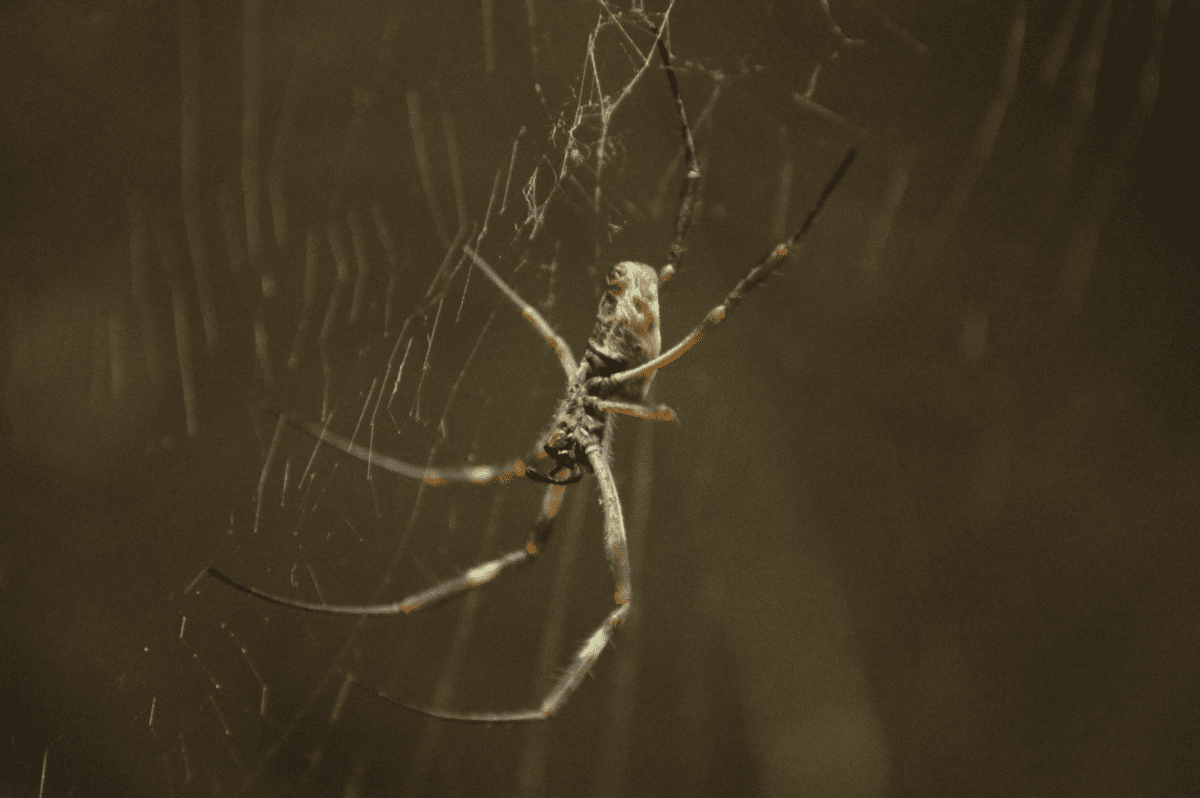
Unlike humans who rely on opposing muscle pairs to bend and straighten limbs, spiders employ a fascinating hydraulic system to extend their legs. Spider legs have flexor muscles that contract to bend the legs inward, but remarkably, they lack extensor muscles to straighten them back out. Instead, spiders use a sophisticated hydraulic mechanism, pumping hemolymph (spider blood) into their legs to extend them. This system works similarly to hydraulic machinery, where fluid pressure rather than muscle contraction creates the force needed for movement.
This unique locomotion system explains why dead spiders are always found with their legs curled inward—without blood pressure to extend the limbs, the flexor muscles contract permanently in a phenomenon called “death curl.” It also explains why larger spiders like tarantulas move relatively slowly and deliberately compared to tiny species; their hydraulic systems require more time to build sufficient pressure for movement. The hydraulic system does have vulnerabilities though. Severe dehydration can prevent spiders from generating enough pressure to move effectively, and puncture wounds that allow hemolymph to leak can temporarily immobilize legs until the spider can seal the injury.
3. Female Spiders Can Store Sperm for Years

Female spiders possess a remarkable reproductive adaptation that allows them to control exactly when and how they use male sperm. After mating, females can store sperm in specialized organs called spermathecae, keeping it viable for months or even years. This adaptation gives females extraordinary reproductive autonomy, allowing them to fertilize multiple egg sacs from a single mating event or to selectively use sperm from different males to maximize genetic diversity in their offspring. Some desert-dwelling species use this ability to time their reproduction perfectly with rare rainfall events that will provide optimal conditions for their spiderlings.
Even more fascinating is the discovery that females of many species can exercise “cryptic female choice,” selectively using sperm from certain males based on genetic quality or compatibility. Research published in the Proceedings of the Royal Society B demonstrated that female spiders can bias fertilization toward males with complementary genes or superior traits. In some species, females can even adjust the ratio of sperm used from different males based on environmental conditions, potentially selecting for genes that will give their offspring the best chance of survival in specific environments. This sophisticated reproductive control represents one of the most advanced female-choice mechanisms in the animal kingdom.
2. Some Spiders Make Specialized Tools

Tool use has long been considered a hallmark of advanced intelligence, primarily associated with mammals and birds. However, researchers have documented remarkable examples of tool creation and use among certain spider species. The most extraordinary case involves the diving bell spider, which constructs an elaborate underwater breathing apparatus from silk and air bubbles. This “diving bell” functions as both a home and an artificial gill, allowing the spider to remain submerged indefinitely. The spider actively maintains this structure, repairing damages and replenishing the air supply as needed—behaviors that meet the scientific criteria for true tool use.
Other examples include bolas spiders that craft specialized hunting instruments consisting of a single strand of silk with a sticky glob at the end, which they swing at passing moths like a medieval weapon. Net-casting spiders weave small, specialized webs held between their front legs, which they stretch and throw over prey in a calculated hunting strategy. Perhaps most impressive, certain crab spider species have been observed fashioning leaves into protective shelters using silk as a binding agent. These examples challenge our understanding of arthropod cognition and demonstrate that the capacity for tool creation evolved independently across distant branches of the animal kingdom.
1. Spiders Taste With Their Feet

While humans rely primarily on taste buds located on our tongues, spiders have evolved a completely different system for chemical detection that would seem utterly alien to us—they taste with their feet. A spider’s legs are covered with thousands of microscopic sensory hairs called chemoreceptors that can detect the chemical composition of any surface they touch. When a spider walks across a substance, these specialized hairs immediately analyze its chemical makeup, allowing the spider to “taste” without ever bringing the material to its mouth.
This unique sensory system serves multiple crucial functions in spider survival. It helps them distinguish between nutritious prey and potentially toxic substances, identify suitable mates through chemical signatures, and detect territory markings from other spiders. Female wolf spiders use this ability to recognize their own offspring, which ride on the mother’s back for protection; if a baby falls off, the mother can identify it by taste when it climbs back aboard. Some web-building species can even detect vibration patterns through these sensory hairs, allowing them to distinguish between prey, potential mates, and threats based on the specific way their web moves. This sophisticated chemical detection system represents just one of many sensory adaptations that have contributed to spiders’ evolutionary success across nearly every terrestrial ecosystem.
Conclusion

Spiders may send shivers down your spine, but behind their many legs and eerie movements lies a world of incredible adaptations, intelligence, and survival strategies. From underwater architects and airborne travelers to vegetarian hunters and deceptive suitors, spiders showcase a level of complexity that challenges our perceptions of these often-feared creatures. As we’ve seen, their behaviors can be as surprising as they are ingenious—proof that nature always has more secrets to reveal. So the next time you spot a spider in your home or garden, take a moment to appreciate the weird, wonderful marvel of evolution that it truly is.

As a little kid, I fell in love with nature, wildlife, and animals. Living in the USA, South Africa, Italy, China and Germany gave me the opportunity to discover the world's Wildlife. My favorite animals are Mountain Gorillas, Siberian Tigers, and Great White Sharks.
I'm a certified PADI Open Water Diver, went to Everest Base Camp and Trekked Gorillas in Uganda. I hold a Master of Science in Economics and Finance.
Please send any feedback to feedback@animalsaroundtheglobe.com
- 14 Weird But True Spider Facts You have Never Heard Before - July 13, 2026
- 10 Venomous Snakes That Avoid Conflict And 3 That Strike Fast - July 13, 2026
- 36 Dog Breeds That Keep Grandparents Young at Heart - July 13, 2026
Leave a comment
You must be logged in to post a comment.