


Koalas are iconic Australian marsupials known for their exclusive diet of eucalyptus leaves—a food source that would be lethal to most mammals, including humans. These specialized eaters have evolved remarkable adaptations that allow them to not only survive but thrive on what would be considered a toxic meal for the rest of us. The eucalyptus leaves that koalas consume contain compounds like cyanide-generating glycosides, tannins, and terpenes that would poison humans and most other animals. Yet, through millions of years of evolution, koalas have developed sophisticated physiological and behavioral adaptations that enable them to detoxify, digest, and extract nutrients from this challenging food source. This article explores the fascinating mechanisms that allow koalas to survive on their unique, toxic diet.
The Toxic Nature of Eucalyptus Leaves
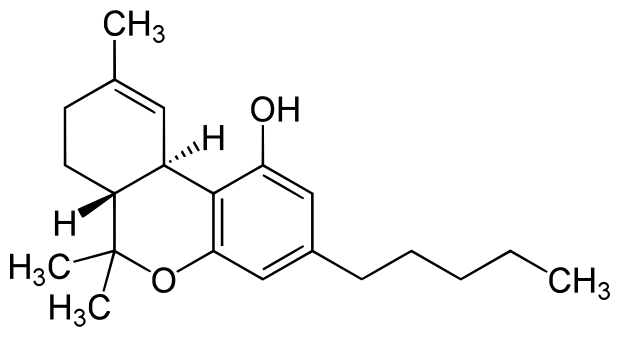
Eucalyptus leaves contain several compounds that make them highly toxic to most mammals. The primary toxins include phenolic compounds, terpenes (particularly eucalyptol or cineole), and cyanogenic glycosides that can release hydrogen cyanide when metabolized. These chemicals evolved as the trees’ natural defense mechanisms against leaf-eating animals, effectively deterring most herbivores from consuming them. For humans, ingesting eucalyptus leaves can lead to symptoms including nausea, vomiting, diarrhea, and in severe cases, convulsions, respiratory difficulties, and even death.
Additionally, eucalyptus leaves have very low nutritional value, with high fiber content, low protein (about 5%), and minimal calories. They’re also extremely tough and fibrous, requiring significant energy to break down and digest. This combination of toxicity and poor nutritional profile makes eucalyptus leaves an improbable food source—yet koalas have evolved to make this their exclusive diet, consuming between 200 to 500 grams of leaves daily.
Specialized Digestive System Adaptations
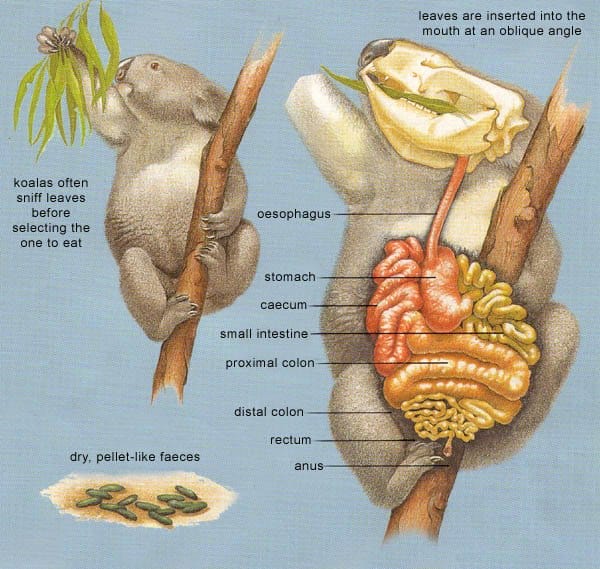
Koalas possess one of the most specialized digestive systems in the animal kingdom, specifically adapted to process eucalyptus. The centerpiece of this system is an extraordinarily long cecum—a pouch connecting the small and large intestines—measuring approximately 2 meters in length. This organ is proportionally the largest cecum of any mammal, about 4-5 times longer than their body. The cecum acts as a fermentation chamber where specialized bacteria break down the tough leaf fibers and help neutralize toxins.
The koala’s digestive system also works extremely slowly, with food taking up to 100 hours to pass through completely. This extended transit time allows for maximum extraction of the limited nutrients and gives the digestive microbiome ample time to detoxify the harmful compounds. To compensate for the low energy content of their diet, koalas have also evolved a very low metabolic rate—about 50% of what would be expected for a mammal of their size—allowing them to conserve energy while still maintaining bodily functions.
Liver Detoxification Mechanisms
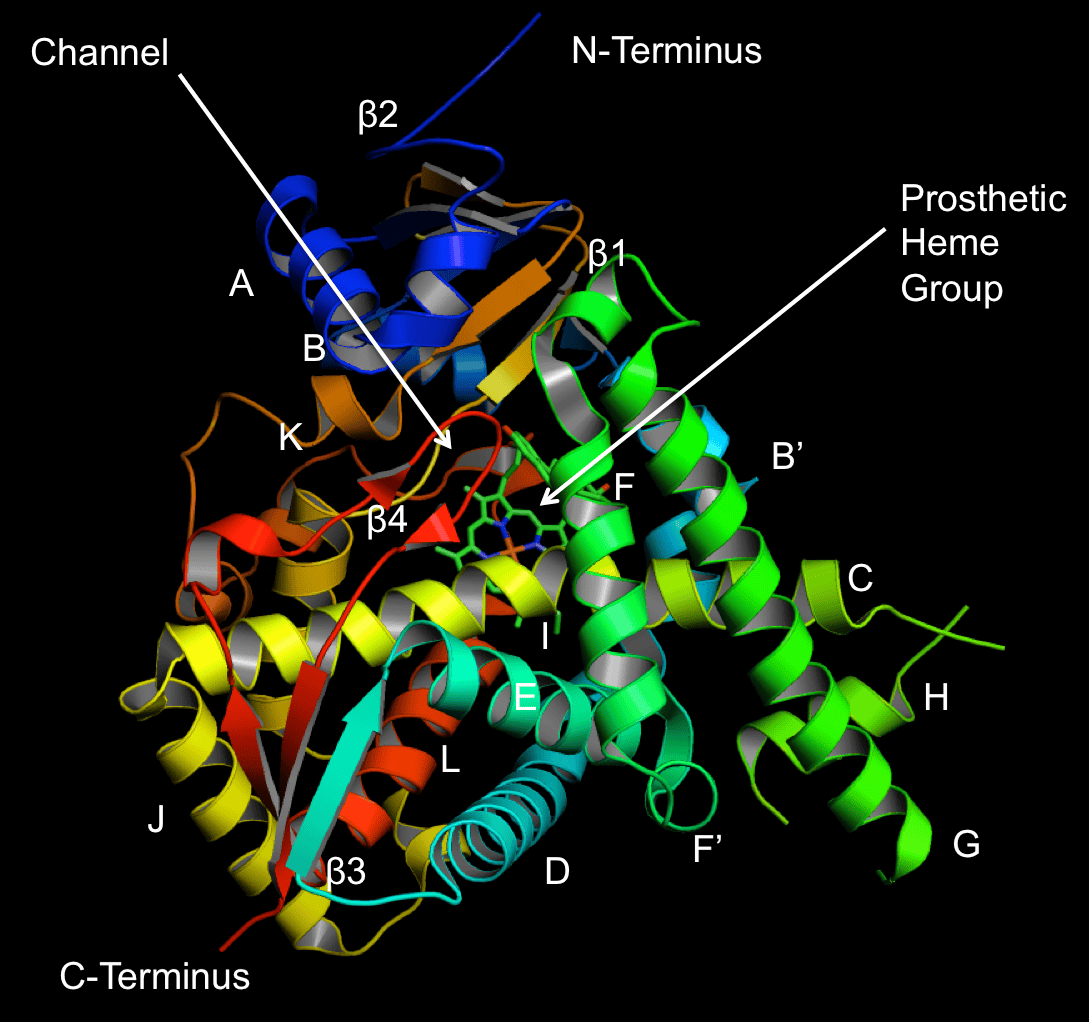
The koala’s liver is the primary organ responsible for detoxifying the eucalyptus toxins. Their liver has evolved specialized pathways to break down the phenolic compounds and terpenes found in eucalyptus. Research has shown that koalas possess unique cytochrome P450 enzymes—a family of detoxification enzymes—that are specifically efficient at metabolizing eucalyptus toxins. These enzymes can rapidly convert the toxic compounds into less harmful substances that can be safely excreted.
Additionally, koalas have a higher proportion of their liver dedicated to detoxification processes compared to other mammals. Their hepatic detoxification capacity is so specialized that koalas can tolerate eucalyptol concentrations that would be lethal to humans and most other animals. This remarkable liver function allows koalas to consume approximately 200-500 grams of eucalyptus leaves daily without suffering toxic effects, despite each leaf containing compounds that would make a human seriously ill.
Microbiome: The Hidden Detoxifiers
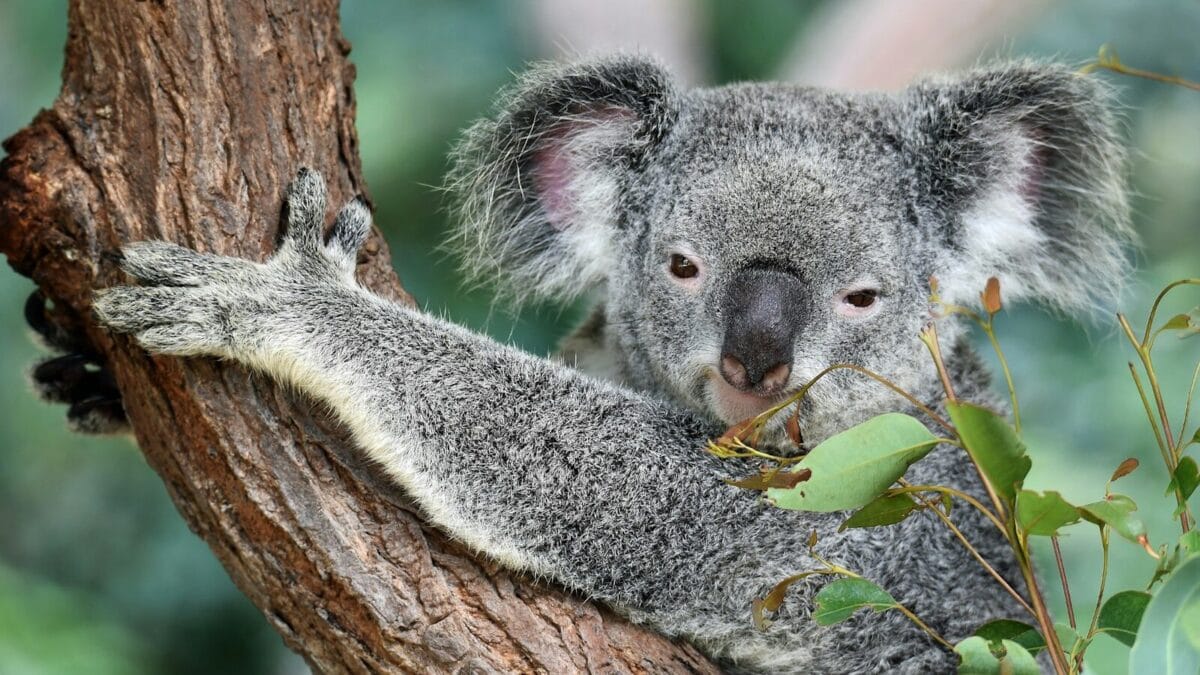
A crucial component of the koala’s ability to survive on eucalyptus is their specialized gut microbiome. The koala intestinal tract hosts a unique community of bacteria that has co-evolved with the marsupial to break down toxic compounds. These microorganisms can degrade tannins, phenolic compounds, and other plant toxins before they can be absorbed into the koala’s bloodstream. Research has identified several bacterial species unique to the koala gut that produce enzymes specifically targeting eucalyptus toxins.
Remarkably, koala mothers pass these essential bacteria to their joeys (baby koalas) through a specialized form of fecal matter called “pap.” When joeys are ready to transition from milk to leaves (at about 6-7 months old), they consume this pap directly from their mother’s cloaca, inoculating their gut with the microbes necessary for eucalyptus digestion. This vertical transmission of gut bacteria ensures that each new generation of koalas can continue to safely consume their toxic diet, highlighting the critical role the microbiome plays in their specialized nutrition.
Selective Feeding Behavior

Koalas exhibit remarkably selective feeding behaviors that help them minimize toxin intake while maximizing nutritional value. Despite Australia being home to over 700 eucalyptus species, koalas typically feed on only about 30 species, and individual koalas may specialize in just a few varieties within their habitat. They can detect subtle chemical differences between trees and even between leaves on the same tree, preferring younger leaves that generally contain fewer toxins and more moisture and protein.
Research has shown that koalas can detect variations in toxin levels as small as 2-3% through their highly developed sense of smell. They will often sniff leaves before deciding whether to eat them, rejecting those with higher toxin concentrations. Koalas also rotate between different trees in their home range, allowing individual trees time to reduce their toxin production (which increases when trees are browsed upon heavily). This selective feeding behavior represents a sophisticated strategy that complements their physiological adaptations for handling eucalyptus toxins.
Energy Conservation Strategies

Given the low nutritional value of eucalyptus leaves, koalas have evolved extraordinary energy conservation strategies. They sleep or rest for approximately 18-22 hours per day, minimizing energy expenditure. Their movement is generally slow and deliberate, and they rarely engage in high-energy activities. This sedentary lifestyle is a direct adaptation to their low-energy diet, allowing koalas to survive on far fewer calories than would be expected for a mammal of their size (typically 4-15 kg).
The koala’s metabolic rate is remarkably low—about 74% of what would be predicted based on body mass alone. Their body temperature is also maintained at around 36.6°C (97.9°F), slightly lower than most mammals, further reducing energy requirements. These adaptations work in concert with their specialized digestive system to ensure koalas can survive on a diet that provides minimal energy but requires significant resources to detoxify and process.
Genetic Adaptations for Toxin Resistance
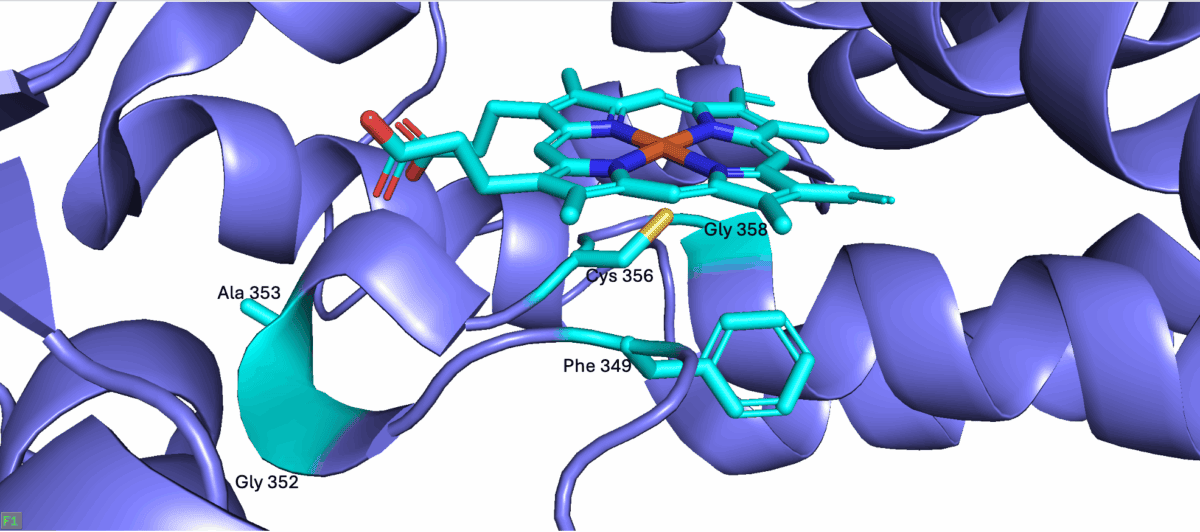
Recent genomic studies have revealed that koalas possess specific genetic adaptations that support their ability to consume eucalyptus. The koala genome, which was fully sequenced in 2018, shows expansions in gene families related to detoxification processes. Particularly notable are expansions in the cytochrome P450 gene family, which produces enzymes responsible for metabolizing toxins. Koalas have more copies of these genes compared to other mammals, allowing for enhanced detoxification capabilities.
Furthermore, researchers have identified koala-specific variations in genes related to taste receptors, potentially explaining their ability to tolerate the bitter compounds in eucalyptus that would be unpalatable to most animals. Genetic adaptations have also been found in enzymes involved in terpene metabolism, allowing koalas to process the aromatic compounds that give eucalyptus its distinctive smell and contribute to its toxicity. These genetic specializations have evolved over millions of years, fine-tuning the koala’s physiology to handle what would be a deadly meal for humans.
Water Conservation and Toxin Excretion

Koalas have developed remarkable water conservation mechanisms that complement their toxic diet management. They obtain most of their water from eucalyptus leaves, which typically contain about 50-60% water content. This adaptation is crucial because consuming eucalyptus requires significant water for processing and excreting toxins. Their kidneys are highly efficient at concentrating urine, allowing them to conserve water while still eliminating toxins effectively.
The name “koala” is thought to derive from an Aboriginal word meaning “no drink,” reflecting the observation that koalas rarely drink water in the wild. They only resort to drinking from water sources during extreme drought or heat conditions. This water independence is made possible by their specialized metabolism that maximizes water extraction from leaves and minimizes water loss during toxin excretion—a remarkable adaptation considering the dehydrating effect that processing toxins typically has on most animals.
Developmental Adaptations in Koala Joeys
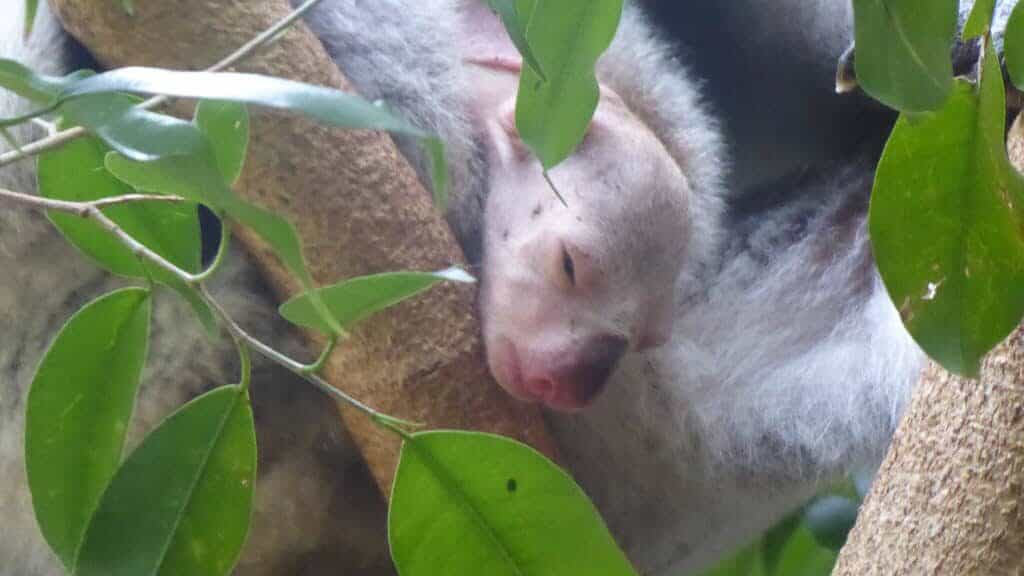
Koala joeys undergo a fascinating developmental process that gradually prepares them for their toxic adult diet. Born after just 35 days of gestation, the tiny, hairless joey (about the size of a jelly bean) climbs into its mother’s pouch and attaches to a teat, where it remains for about 6-7 months consuming only milk. During this period, the joey’s digestive system and liver are developing the specialized features needed to process eucalyptus. Around 5-6 months, the joey begins to peek out of the pouch, and its digestive system starts preparing for the transition to solid food.
At approximately 7 months, the mother begins producing pap—a specialized form of fecal matter that contains the crucial gut microbes needed for eucalyptus digestion. The joey consumes this directly from the mother’s cloaca, essentially receiving a probiotic inoculation that seeds its gut with the necessary bacterial community. After this inoculation, joeys begin to nibble on eucalyptus leaves while still nursing, gradually transitioning to their adult diet. By about 12 months, the joey is fully weaned and equipped with the complete suite of adaptations needed to survive on its toxic diet.
Challenges in Captivity and Conservation
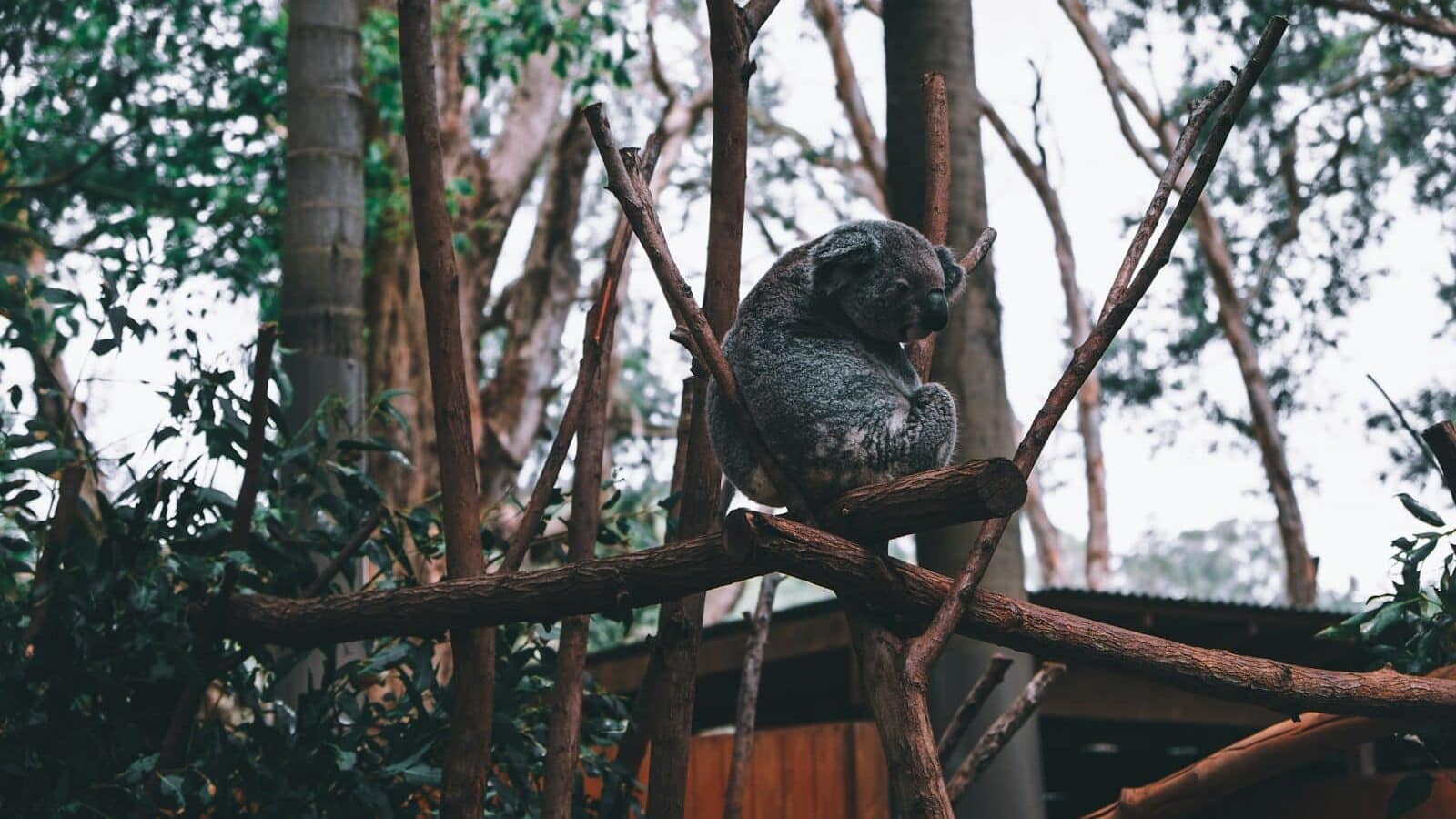
The koala’s specialized dietary adaptations present significant challenges for their care in captivity and for conservation efforts. Zoos and wildlife hospitals must provide fresh eucalyptus leaves daily, with most facilities requiring access to multiple eucalyptus species to ensure proper nutrition. The leaves must be harvested from unsprayed trees and kept fresh, as koalas generally reject wilted leaves. Some facilities maintain their own eucalyptus plantations to ensure a consistent supply, harvesting hundreds of pounds of leaves weekly to feed their koalas.
Conservation efforts face additional challenges as habitat fragmentation limits koalas’ access to their preferred eucalyptus species. Climate change is also altering the chemical composition of eucalyptus leaves, with increased CO2 levels reducing protein content and increasing toxin concentrations. This change may push the koalas’ specialized adaptations beyond their limits, potentially threatening their survival. Understanding the complex relationship between koalas and their toxic diet is therefore crucial for developing effective conservation strategies for this iconic species.
Comparison with Other Eucalyptus Specialists
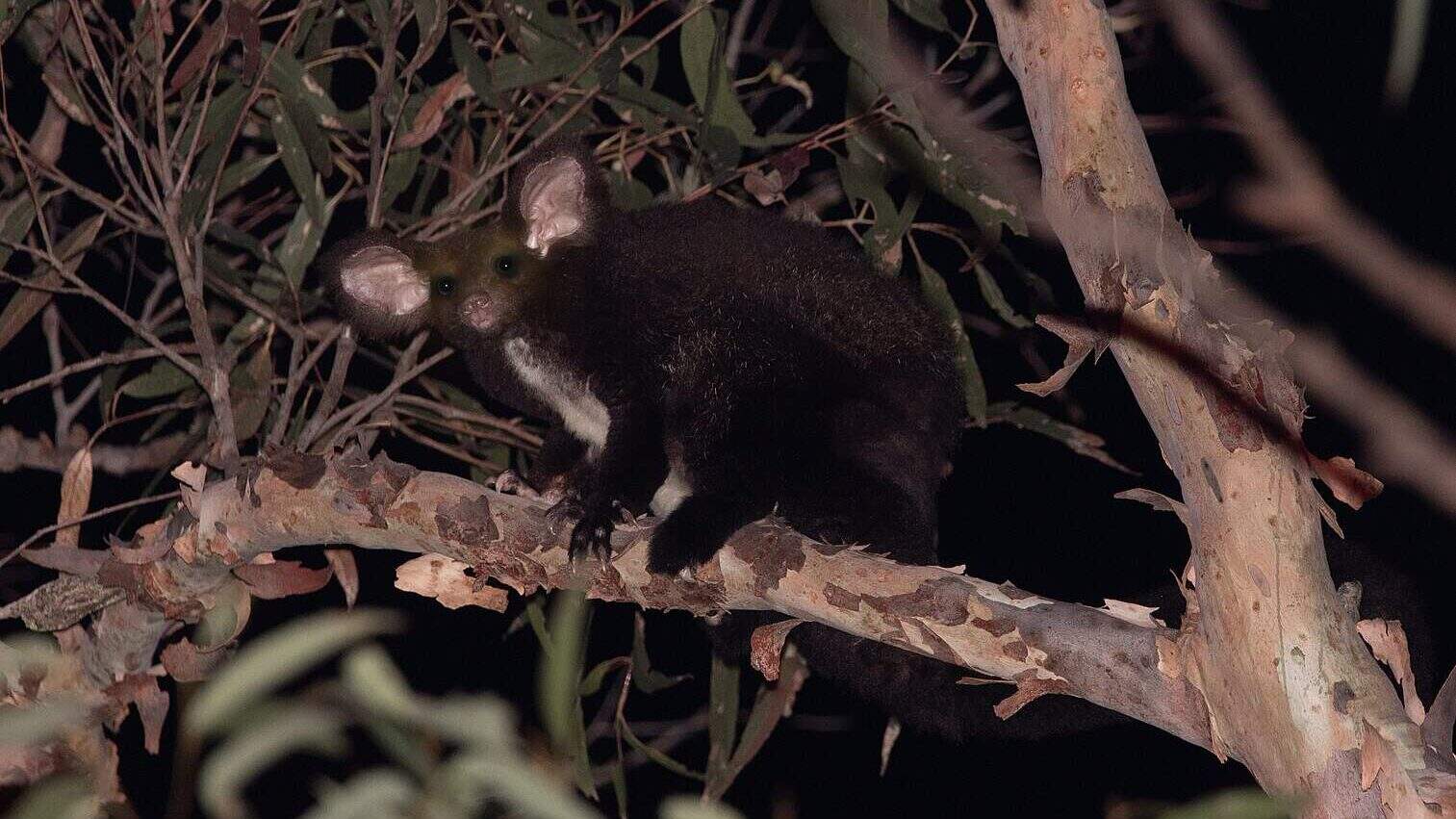
While koalas are the most famous eucalyptus specialists, they aren’t the only animals that have evolved to consume these toxic leaves. Greater gliders and some possums also feed on eucalyptus, though most supplement their diet with other plant materials. Comparing these different adaptations provides insight into convergent evolution. Greater gliders, for instance, have similar digestive adaptations to koalas but can subsist on a broader range of eucalyptus species, suggesting slightly different detoxification mechanisms.
Certain insects, particularly some beetle species and psyllids (plant lice), have also evolved to feed on eucalyptus. These insects possess different detoxification pathways than mammals, often using their specialized metabolism to sequester eucalyptus toxins and use them for their own defense. The fact that so few animals worldwide have evolved to specialize in eucalyptus consumption highlights just how remarkable the koala’s adaptations truly are, representing one of the most specialized dietary adaptations in the mammalian world.
The koala’s ability to survive on a diet of toxic eucalyptus leaves represents one of nature’s most remarkable examples of dietary specialization and adaptation. Through millions of years of evolution, these marsupials have developed a suite of integrated adaptations—from specialized liver enzymes and an elongated cecum to a unique microbiome and selective feeding behaviors—that allow them to thrive on a food source that would kill most other mammals. This extreme specialization demonstrates the power of natural selection to create solutions to seemingly impossible ecological challenges.
However, this specialization is also a double-edged sword, making koalas particularly vulnerable to habitat changes and climate effects that impact their food source. As eucalyptus forests face threats from deforestation, urbanization, and changing climate conditions, the future of these iconic marsupials depends on our understanding and preservation of their unique relationship with their toxic diet. The koala’s story is not just a fascinating example of evolutionary adaptation but also a reminder of the delicate balance between specialization and vulnerability in the natural world.

- What’s Hiding in the Forests of the Pacific Northwest - July 21, 2026
- Tarsiers: The Tiny Primates with Giant Eyes - July 21, 2026
- Are Zoos Still Ethical in 2025? - July 21, 2026
Leave a comment
You must be logged in to post a comment.