

Every year, countless birds embark on journeys that span thousands of miles, crossing oceans and continents with a precision that still baffles scientists. Every year, billions of migratory birds traverse continents with astonishing accuracy – many for the first time, without guidance or prior experience. What appears to be simple instinct is actually far more complex than we ever imagined. Hidden within these migration patterns lies a secret code that connects biology to the deepest principles of quantum physics.
The ability of these tiny creatures to navigate across vast distances without maps or GPS has puzzled researchers for decades. One of the greatest mysteries in sensory biology is how animals are able to sense the Earth’s magnetic field and to use it to navigate. Yet as modern science peels back the layers of this mystery, we’re discovering that birds possess abilities that seem almost supernatural. So let’s dive in to uncover the remarkable secrets hidden within their migration patterns.
The Quantum Compass Living in Bird Eyes

The most extraordinary discovery about bird navigation lies right in their eyes. Now researchers have isolated a molecule within the eyes of these birds that might act as a compass using quantum mechanics. Inside the retinas of migratory birds exists a light-sensitive protein called cryptochrome 4, which operates as nature’s most sophisticated navigation system. The key suspect is a light-sensitive protein called cryptochrome 4, found in the retinas of night-migratory songbirds.
This isn’t just any ordinary compass. When a particle of light, or photon, hits bird cryptochrome, its energy can perturb molecules within the protein. The process creates pairs of molecules in an unstable quantum state so delicate that Earth’s magnetic field can actually influence them. The disturbance catapults a pair of molecules into an unstable state so fragile that it can be affected by even the subtle energetic pulse of Earth’s magnetic field.
Seeing Magnetic Fields Through Quantum Eyes
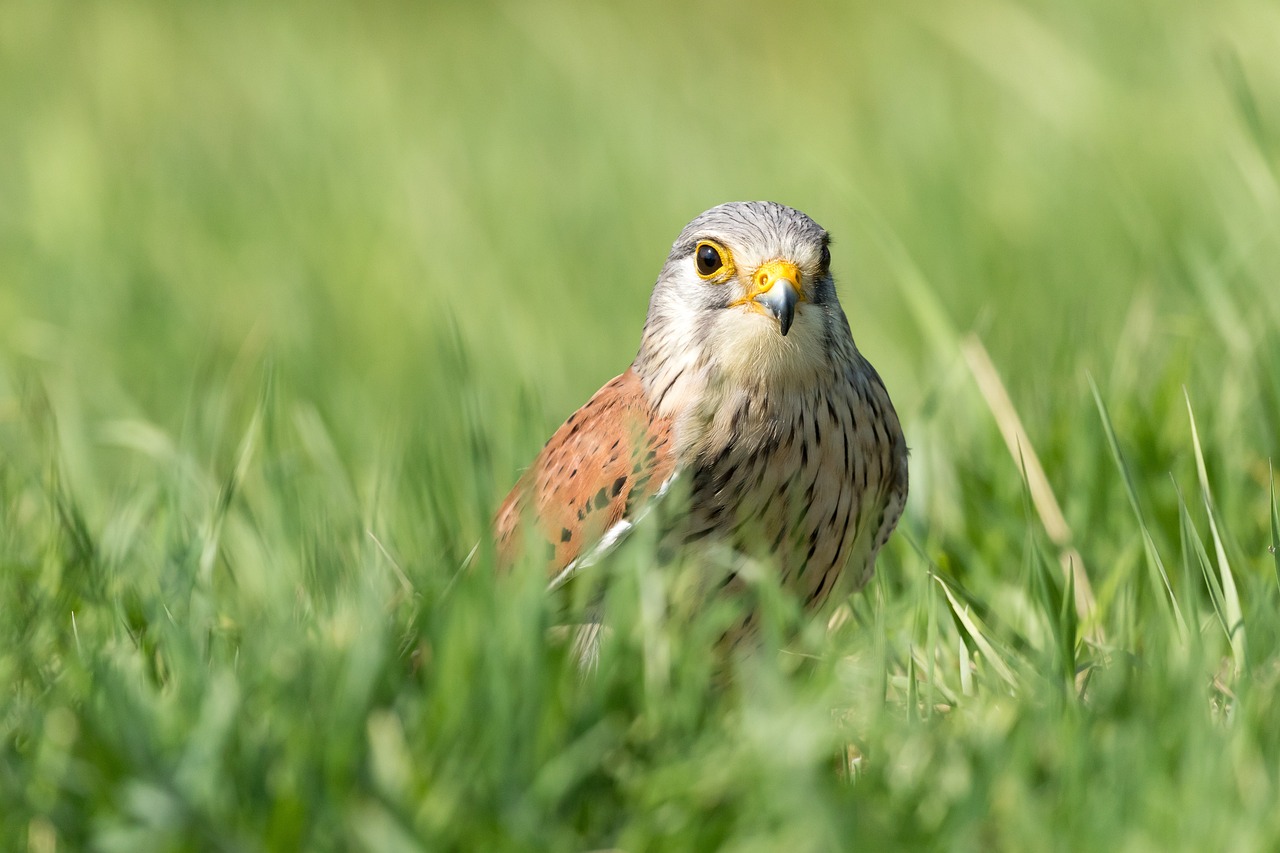
Imagine being able to literally see magnetic fields as visual patterns. That is, the creatures appear to be able to “see” Earth’s magnetic field lines and use that information to chart a course between their breeding and wintering grounds. Scientists believe this quantum mechanism allows birds to perceive magnetic information as a visual overlay on their regular sight. Cryptochrome is common in both plants and animals, but researchers believe that birds make a special variant of this protein that operates as a molecular compass.
The quantum process relies on something called quantum entanglement, where pairs of electrons remain mysteriously connected even when separated. “It seems nature has found a way to make these quantum states live much longer than we’d expect, and much longer than we can do in the lab,” Gauger says. “No one thought that was possible.” This phenomenon occurs in the warm, chaotic environment of a living bird’s eye, defying what physicists once thought possible.
The Multi-Tool Navigation System

They have at least three different compasses at their disposal: one allows them to extract information from the position of the sun in the sky, another uses the patterns of the stars at night, and the third is based on Earth’s ever present magnetic field. Birds don’t rely on just one navigation method. Instead, they use a sophisticated combination of celestial and magnetic cues that work together like an integrated GPS system.
During daytime flights, birds track the sun’s position across the sky, adjusting their flight path as the sun moves from east to west. Birds migrating by day use the Sun to navigate, adjusting their angle to the Sun as the Sun’s position moves from east to west. When night falls, they switch to stellar navigation, using the North Star and surrounding constellations as their guide. They use the rotation of star patterns around the celestial pole to determine direction, rather than orienting to any single star like Polaris.
The Genetic GPS Programming

Perhaps most remarkably, birds come equipped with built-in migration instructions. Most birds have their migration genetically encoded. These internal maps are often amazingly precise. Young birds setting out on their first migration carry genetic programming that tells them exactly where to go and when. “fly southwest for three weeks and then south-southeast for two weeks.”
It is not unusual for a songbird over the course of its lifetime to use the same breeding territory in Maine and spend the winter in the same wooded area in Mexico. This incredible precision allows birds to return to the exact same locations year after year, despite traveling thousands of miles. The genetic programming is so specific that even hybrid offspring from birds with different migration routes choose intermediate directions, revealing the hereditary nature of these navigation codes.
The Polarized Light Secret
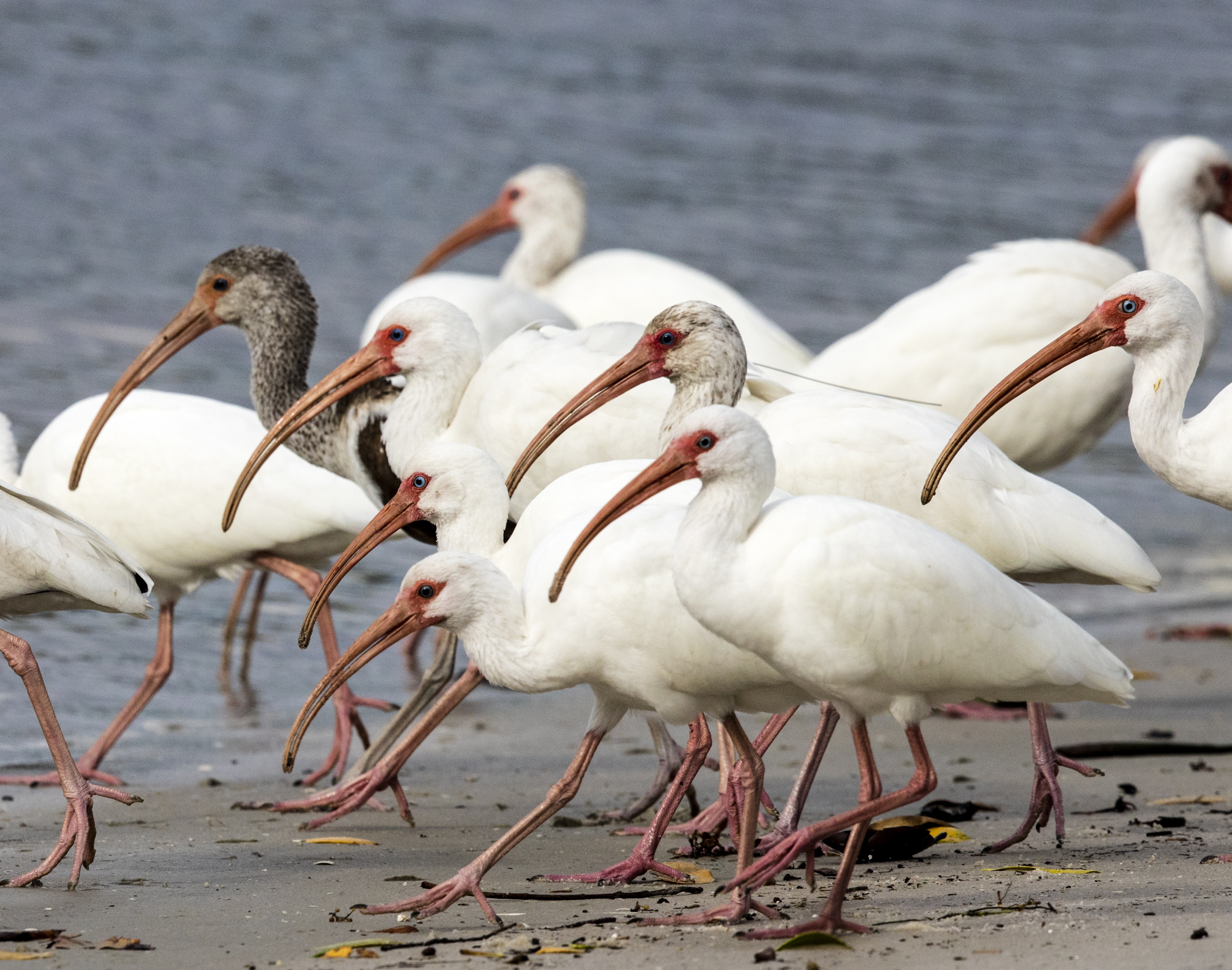
Birds possess another superpower that humans completely lack. The blue sky acts like a giant compass, creating subtle patterns of polarized light that they can detect even when we see a uniform sky. This unique ability helps them maintain direction, especially during cloudy days when the sun might be hidden. When sunlight scatters through the atmosphere, it creates invisible patterns that birds can perceive.
Patterns of polarized light also appear to play a key role in navigation. This ability proves especially valuable during twilight hours when many nocturnal migrants begin their journeys. Many of the nocturnal migrants start their flights at sunset or a little after. Birds apparently use the polarized light patterns to provide information on initial migratory flight directions.
The Social Learning Highway
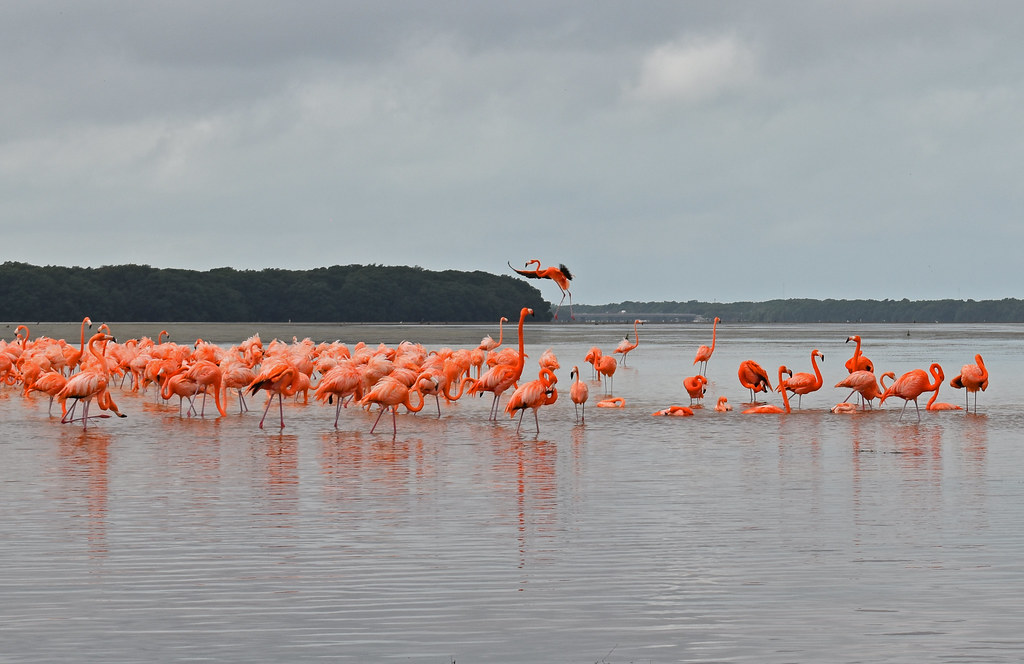
Not all birds navigate alone. By flying in flocks, younger birds can learn and follow the lead of more experienced individuals. The flocks create a communal environment that allows for experienced individuals to guide the group during a migration. This creates a kind of airborne classroom where migration knowledge passes from one generation to the next.
In addition, experienced individuals can use vocal communication to guide others. This includes specific calls or songs that serve as navigational cues. The younger birds will learn to associate these vocalizations with proper migration routes and behaviors. Over time, these social traditions become so established that entire populations follow the same routes year after year, creating invisible highways in the sky that connect breeding and wintering grounds across continents.
The Magnetic Interference Mystery
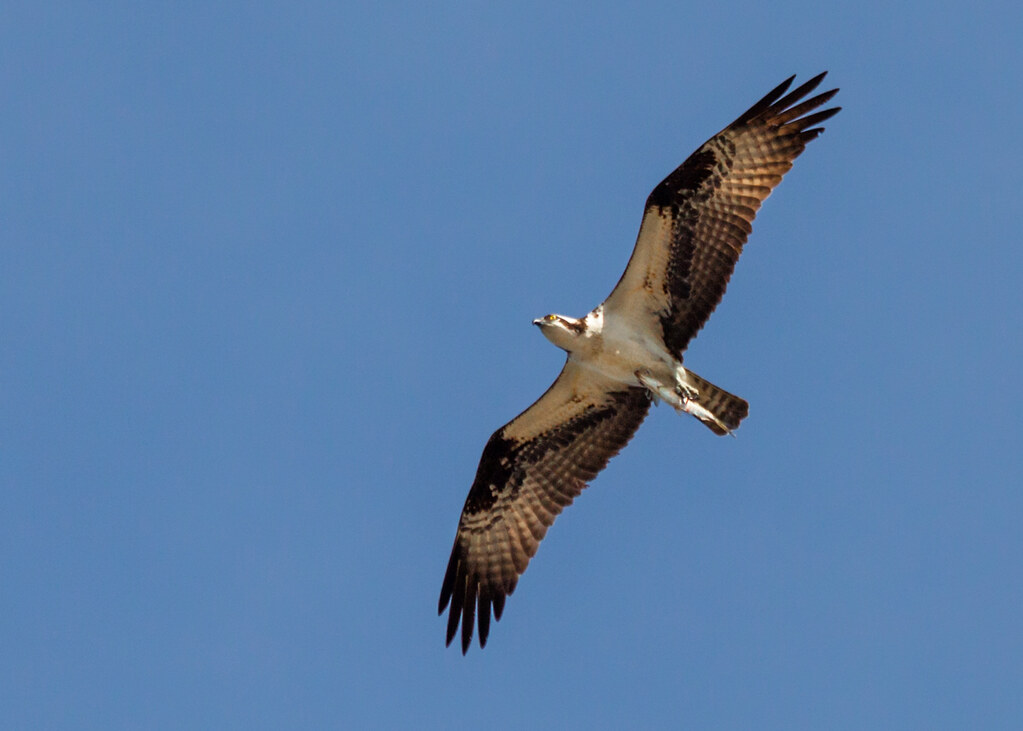
Modern technology poses an unexpected threat to these quantum navigation systems. The experiment showed that the magnetic compass used by robins could be disrupted by extremely small levels of magnetic ‘noise’. When this noise, a tiny oscillating magnetic field, was introduced it completely disabled the Robins’ compass sense which then returned to normal once the noise was removed Even weak electromagnetic fields from human technology can completely scramble a bird’s internal compass.
may provide the beginnings of an explanation for the magnetic disorientation of migratory birds exposed to anthropogenic electromagnetic noise This discovery has profound implications for conservation. Radio transmissions, cell towers, and other electromagnetic sources might be creating invisible barriers that interfere with migration patterns that have remained unchanged for millions of years. The quantum nature of their compass makes it incredibly sensitive to any disruption.
The Future of Quantum Navigation
This bold scientific adventure brings together molecular biology, biophysics, and quantum chemistry to explore something no GPS could ever explain. Understanding how birds harness quantum mechanics for navigation opens incredible possibilities for human technology. The study of quantum biology, particularly in avian magnetoreception, not only expands our understanding of animal navigation but also paves the way for innovative technological applications.
Scientists are already exploring how these biological quantum compasses might inspire new navigation technologies. And while Wiltschko says there’s no real evidence (yet) of an internal magnetic compass in humans, researchers are searching for ways to build those abilities with quantum technology. The implications extend far beyond navigation, potentially revolutionizing quantum sensing technologies and our understanding of the quantum world itself. It could inspire new ideas in quantum sensing technologies, deepen our understanding of environmental risks like electromagnetic pollution
Conclusion

reveals one of nature’s most sophisticated navigation systems, built on principles of quantum physics that we’re only beginning to understand. From the cryptochrome proteins in their eyes to the genetic programming that guides their journeys, birds possess abilities that seem almost magical. The concept of a quantum biological compass in birds is a reminder of nature’s complexity and sophistication. As research continues to unravel these mysteries, we may find that the principles of quantum mechanics play a larger role in life’s fundamental processes than previously thought.
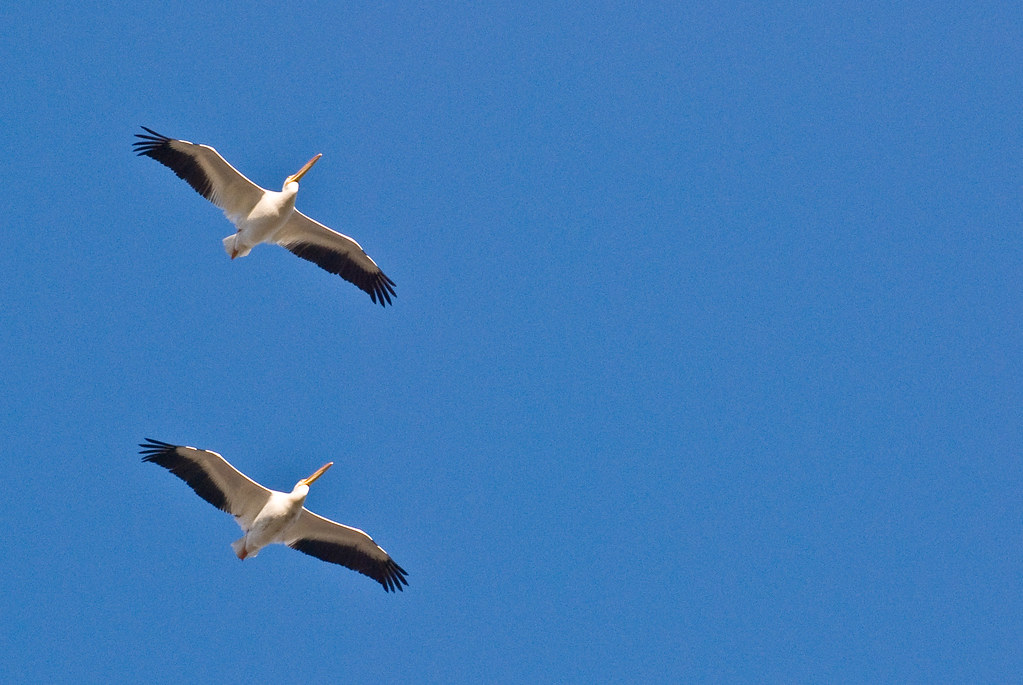
These discoveries challenge our understanding of what’s possible in the natural world and hint at technologies we might one day develop. The next time you see birds flying overhead, remember that they’re navigating using quantum mechanics, polarized light patterns, and magnetic field lines invisible to human eyes. What other secrets might nature be hiding in plain sight, waiting for us to decode them?

- These 7 Historic US Battlefields Are Sacred Grounds Of Remembrance - August 2, 2026
- The JWST Found A Jekyll-and-Hyde Galaxy In The Early Universe - August 2, 2026
- 10 Heartwarming Ways A Chihuahua Shows They’ve Bonded With You - August 2, 2026