

Imagine standing in the jungles of ancient Mesoamerica, watching the sky darken as the sun disappears behind the moon. While most civilizations turned to myths and legends to explain these frightening celestial events, the Maya developed something far more sophisticated. Their astronomers, known as “daykeepers,” created one of the most advanced eclipse prediction systems ever devised in the ancient world.
Recent groundbreaking research has finally cracked the mathematical secrets hidden within the Dresden Codex, revealing how these ancient scientists could forecast solar eclipses with stunning accuracy for more than seven centuries. The discoveries overturn decades of scholarly assumptions and showcase the remarkable scientific achievements of a civilization that flourished over a thousand years ago.
The Mathematical Foundation: A 405-Month Masterpiece
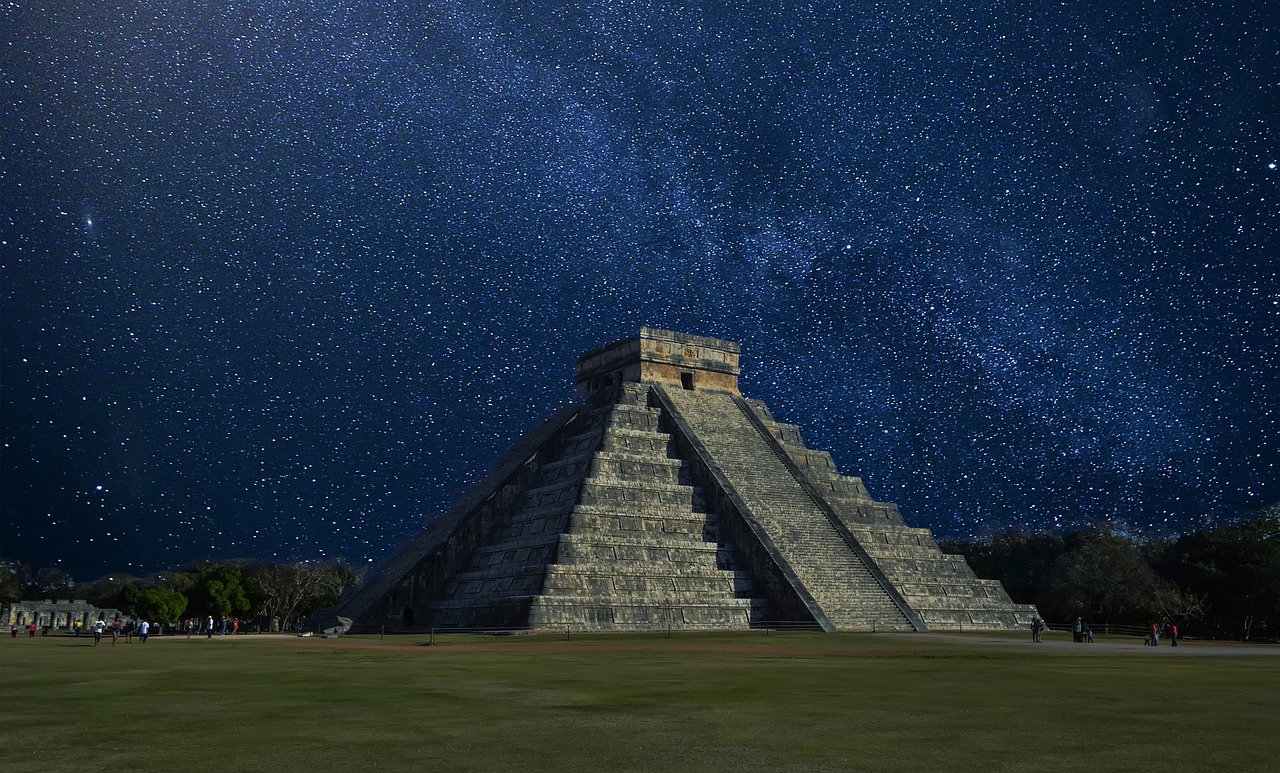
The Dresden Codex eclipse table spans 405 lunar months and contains 69 entries, of which 55 were designed as eclipse warning stations. This seemingly arbitrary number holds extraordinary mathematical precision.
At the center of the Dresden Codex table is a simple but lovely mathematical relationship: 405 lunar months = 11,960 days. That’s almost an exact match, missing the true lunar average by only 0.11 days. The accuracy is staggering when you consider that modern measurements show 405 lunations equals 11,959.89 days. The average value of the lunar month implied by the table is thus correct to within 7 minutes.
From Lunar Calendar to Eclipse Predictor
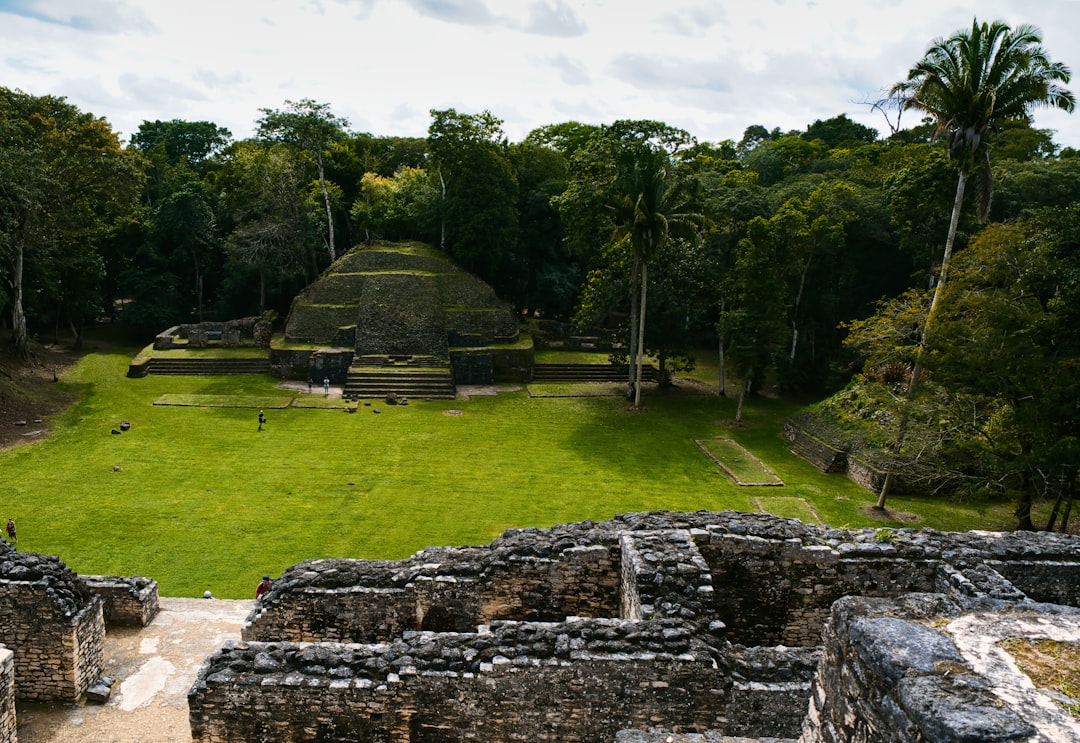
Researchers have discovered that the table’s 405-month length meant it was created solely for predicting eclipses. Instead, the paper’s authors state that it was first designed as a lunar calendar to align with the Maya’s 260-day astrological calendar. This revelation transformed our understanding of how the system evolved.
Their results show that the 405-month cycle originally arose from a general lunar calendar table, not an eclipse table. However, over time, through repeated observations, Mayan daykeepers discovered patterns between the lunar months and solar eclipses, gradually transforming their lunar chart into a predictive tool. The connection between astronomy and divination proved crucial to its development.
The Sacred Calendar Connection

The 405 lunar months – a total of 11,960 days – also line up with 46 cycles of the 260-day ritual calendar, helping to mark and predict when an eclipse would align with a ritual event. This alignment wasn’t coincidental but demonstrated the Maya’s deep understanding of numerical relationships.
Mayan calendar specialists anticipated solar eclipses by correlating their occurrences with dates in their 260-day divinatory calendar. The eclipse table evolved directly from this correlation between lunar cycles and sacred time. By tracking patterns where eclipses occurred on similar dates within their religious calendar, Maya astronomers could identify the mathematical relationships governing these celestial events.
The Overlapping Tables System

The latest study shows that to maintain correct predictions for over 700 years, the Mayans used a system of overlapping tables. Instead of starting a new table, they would reset the next table to precise internals of 223 or 358 months before the previous table ended to correct for small astronomical errors that accumulate over time. This ingenious approach prevented their calculations from drifting out of sync with reality.
The research team found that by restarting tables at these optimal intervals, maintaining a ratio of four resets at 358 months for each reset at 223 months, Maya astronomers could predict every observable solar eclipse for centuries. This level of mathematical precision rivals modern computational methods, achieved without telescopes, computers, or even metal tools.
Eclipse Families and Recurring Patterns

The study also revealed how Maya astronomers recognized eclipse “families” – groups of eclipses occurring at 88-month intervals. All 55 intended prediction stations in the Dresden Codex belong to one of three distinct families, each following this pattern. This organizational principle, combined with their understanding of the 520-day near-recurrence of eclipses in their sacred calendar, formed the backbone of their predictive system.
They found that eclipses separated by 669 lunar months, roughly 54 years, tended to recur near the same longitude and time of day. The most frequent interval between observable eclipses was 669 months – exactly three “saros cycles” of 223 months. These patterns became the foundation for their long-term predictions.
The Sophisticated Astronomical Observations

In the heart of the Yucatán more than a thousand years ago, a group of Maya astronomers, known as daykeepers, tracked the movements of the Moon with such precision that they could foresee solar eclipses centuries in advance. By the Classic period, between 350 and 900 CE, the Maya had compiled enough eclipse observations to discern long-term patterns. Their observations required decades of meticulous record-keeping.
The data suggest that Mayan daykeepers could have entertained a general framework by 453 CE or more generally after about three passes through a lunar table of 405 months. It is plausible, therefore, that eclipse tables much like that of the Dresden Codex could have existed by around 550 CE. This timeline shows how their system developed through careful observation over multiple generations.
The Legacy of Mayan Astronomical Precision

By comparing these sequences to historical eclipse data from 350 to 1150 CE, researchers showed that the Maya’s model could have accurately predicted all observable solar eclipses during that era. The table would have anticipated every solar eclipse observable in the Mayan territory from a century or two after the first evidence of the Mayan lunar calendar to at least the era of the extant eclipse table, 700 years later. Seven centuries of reliable predictions, built without telescopes, without calculus, without even a concept of gravity.
It’s fascinating what you can achieve with just careful watching, meticulous record-keeping, and the mathematical insight to turn observation into prophecy. But it’s humbling to recognize that a thousand years ago, Maya astronomers were doing much the same thing. And they were armed only with their eyes, their calendars, and an unshakeable conviction that the universe spoke in numbers.
Conclusion

The Maya eclipse prediction system represents one of humanity’s greatest astronomical achievements. Through centuries of patient observation, sophisticated mathematics, and ingenious calendar synchronization, these ancient scientists created a predictive model that rivals modern computational methods. Their success lay not just in mathematical precision but in understanding the deep connections between celestial cycles and sacred time.
Their legacy reminds us that scientific achievement doesn’t always require advanced technology. Sometimes it requires something far more precious: unwavering dedication to understanding the patterns that govern our universe. What do you think about this remarkable achievement that connected the heavens to daily life over a thousand years ago?

- What Happens to Your Brain in the Final 60 Seconds Before Death – Neuroscientists Just Mapped It - August 13, 2026
- The Most Dangerous Myths About Tornadoes at Night - August 13, 2026
- How To Ride A Horse Safely - August 13, 2026