
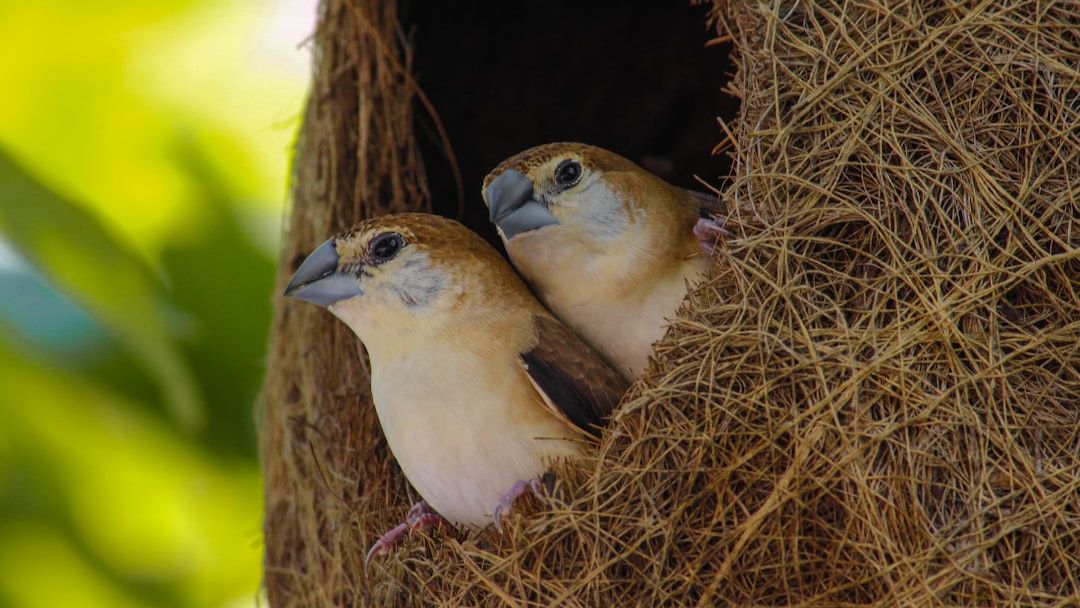
When you think about nature’s architects, birds might not be the first creatures that come to mind. Yet some species create structures so complex, so utterly bizarre, that they seem almost impossible. These aren’t just simple bundles of twigs thrown together in an afternoon. We’re talking about hanging fortresses, stitched leaf pouches, and apartment buildings that can weigh as much as a small car.
Here’s the thing: these nests aren’t merely places to lay eggs. They’re survival tools, courtship arenas, and climate control systems all rolled into one. From the deserts of Africa to the rainforests of Asia, birds have evolved extraordinary building techniques that challenge everything we think we know about animal intelligence and instinct. So let’s dive in and meet the feathered engineers who put our own construction skills to shame.
Sociable Weavers and Their Massive Apartment Complexes
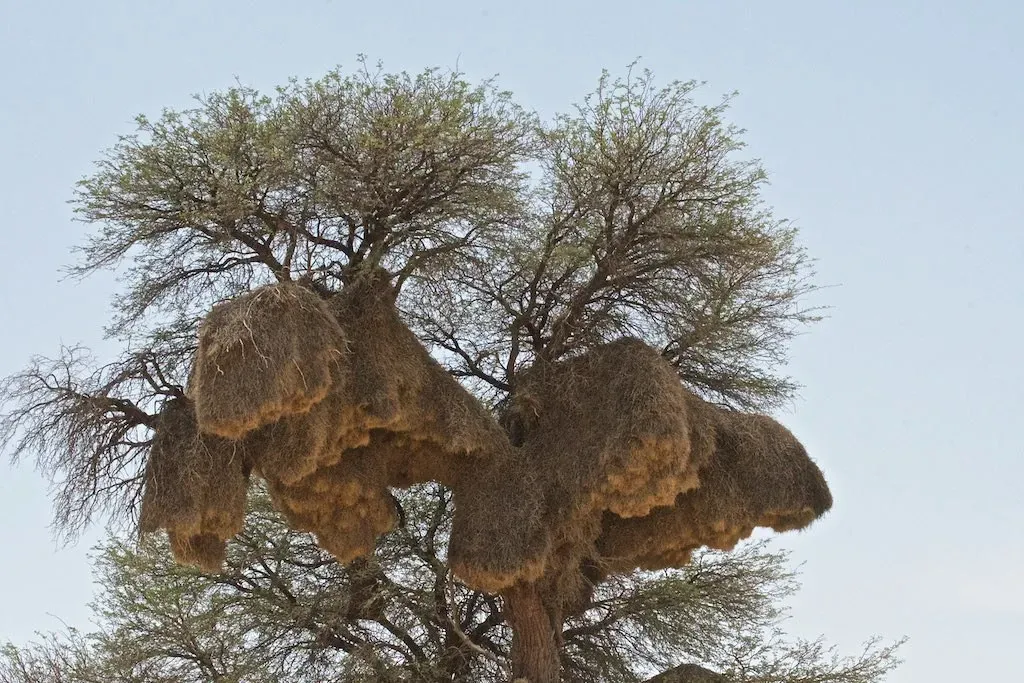
These nests are perhaps the most spectacular structure built by any bird, and honestly, that’s not an exaggeration. Sociable weavers hold the record for the largest tree nests in the world, building one gigantic structure for the entire colony instead of individual nests. Picture a haystack suspended in a tree, except it’s not hay at all.
This massive structure is like a giant apartment block occupied by up to 100 sociable weaver families all year long. There may be 5 to 100 nesting chambers in a single nest, providing a home for 10 to 400 birds. Each family has its own entrance and chamber within the larger complex. Some structures have persisted for more than 100 years, with constant occupation by succeeding generations.
What’s truly mind blowing is how well these structures regulate temperature. During freezing winter nights, a move to the nest’s well-insulated center chambers helps the little birds stay warm, while scorching summer temperatures are easier to weather when roosting in one of the outer chambers. The downside? They’re so heavy they can break their supporting branches and go crashing to the earth below.
Bowerbirds and Their Elaborate Courtship Galleries
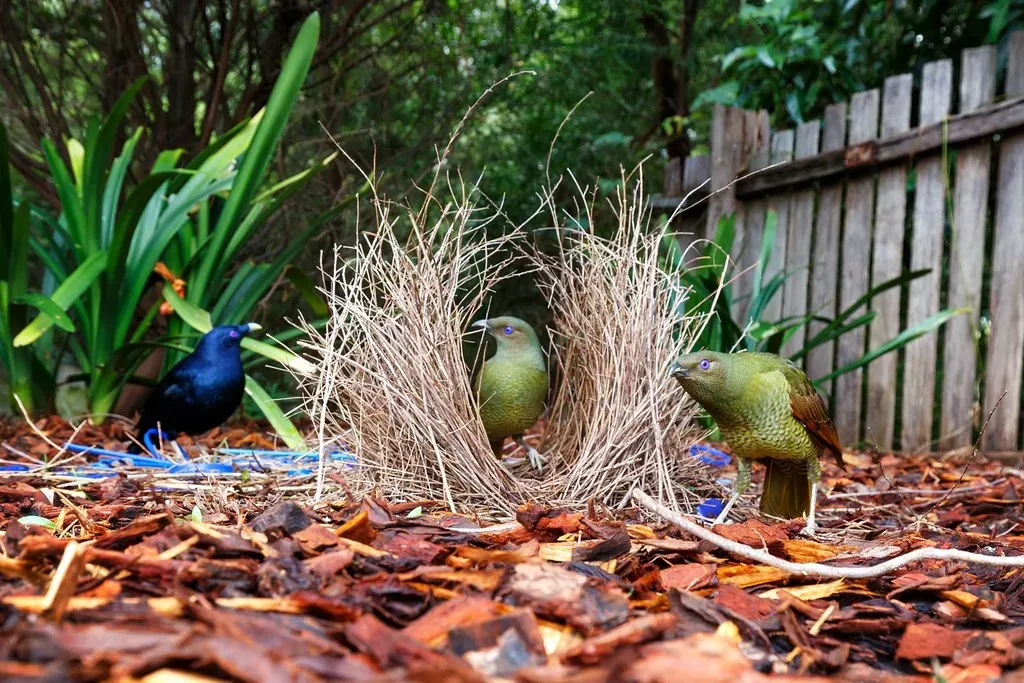
Let’s be real, most male birds show off with colorful feathers or fancy songs. Male bowerbirds construct elaborate structures called bowers specifically to attract females, and these aren’t nests for raising young at all. A bower is a courtship arena, a love nest of sorts but not for eggs, built purely to showcase the male’s ingenuity, dedication, and flair for design.
Bowerbirds build maypole bowers by placing sticks around a sapling, or avenue-type bowers made of two walls of vertically placed sticks. Then comes the really interesting part. The male places a variety of brightly colored objects he has collected, which may include hundreds of shells, leaves, flowers, feathers, stones, berries, and even discarded plastic items, coins, nails, rifle shells, or pieces of glass. Some males even paint their walls with charcoal and saliva.
Competition gets fierce among these birds. Rival males may sabotage each other’s bowers by stealing decorations or dismantling the structure altogether, forcing males to be ever vigilant. Meanwhile, the female builds a simple cup nest elsewhere and raises the chicks entirely alone.
Tailorbirds That Literally Sew Their Homes Together
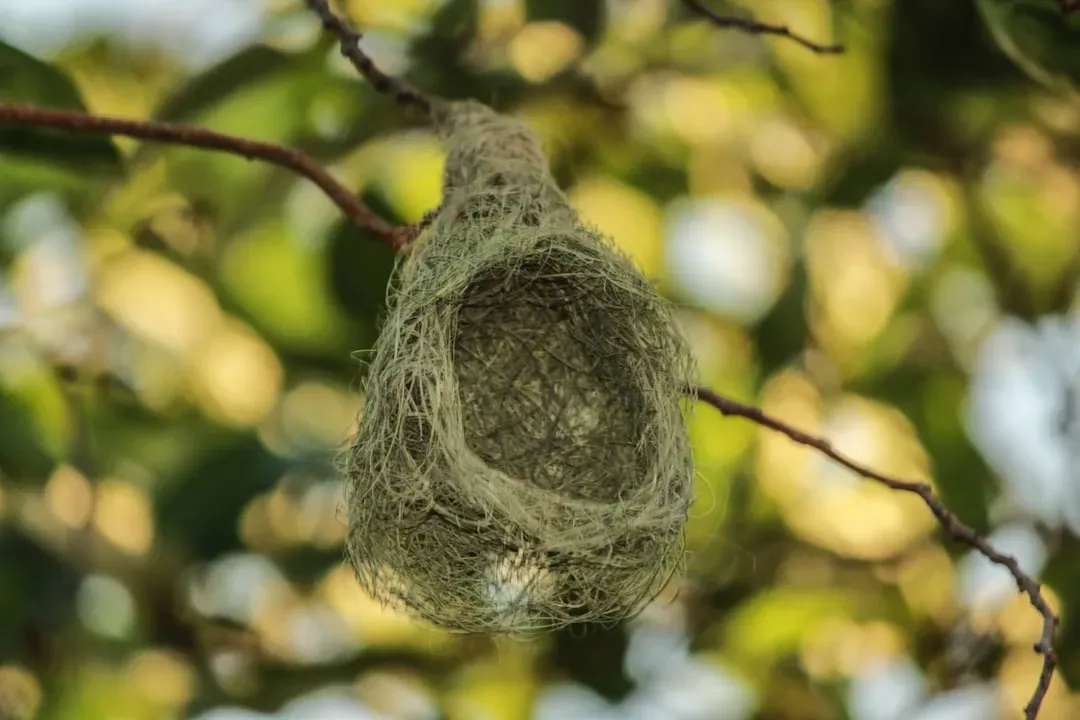
If you’ve ever struggled to thread a needle, you’ll appreciate what tailorbirds accomplish using just their beaks. Tailorbirds get their name from their ability to sew their nests together, and this isn’t just a figure of speech. The edges of a large leaf are pierced and sewn together with plant fibre or spider silk to make a cradle in which the actual nest is built.
The process is astonishingly precise. The female uses her long, slender beak shaped like a needle to pierce holes along the leaf’s edge, then threads plant fibres such as cotton or lint, or silk from cobwebs or caterpillar cocoons through the holes. A single nest can contain between 150 and 200 stitches. The holes are so tiny that the leaf doesn’t brown or wilt, keeping the nest perfectly camouflaged.
The nest is so skilfully put together that it is almost impossible to tell it apart from its surroundings without carefully observing the behaviour of the birds. I think that’s the real genius here: not just the sewing ability, but creating something that looks like it was never touched by bird feet at all.
Hummingbirds and Their Walnut-Sized Masterpieces
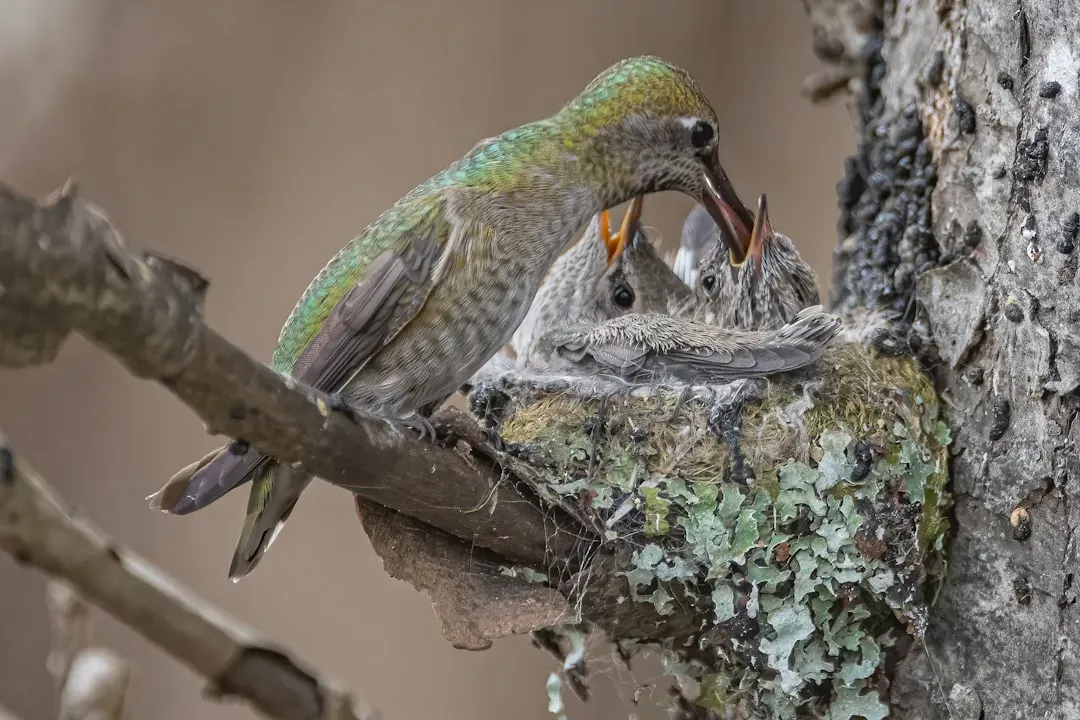
The nests of hummingbirds are some of the natural world’s daintiest structures, often about half the size of an English walnut, cleverly camouflaged and hard to spot. These tiny structures need to support equally tiny eggs while being flexible enough to expand as chicks grow. How does a bird the size of your thumb pull this off?
Spider silk is one of the most amazing materials, thinner than even the finest human hair, stronger than steel in relation to its thickness, and very elastic, which hummingbirds use to create the nest itself and anchor it to branches. Female Anna’s Hummingbirds craft nests just 1.5 inches wide, made with downy materials like cattail and feathers, bound in spiderweb and decorated with lichen.
The construction takes anywhere from several days to weeks. Female hummingbirds use the finest plant fibers and spiderwebs to craft a secure cradle for eggs and young that’s strong for its size but not durable enough for repeated use, so the hummingbird mom will build a new nest for each brood. From the ground looking up, you’d probably mistake it for a knot on a branch.
Montezuma Oropendolas and Their Hanging Colonies
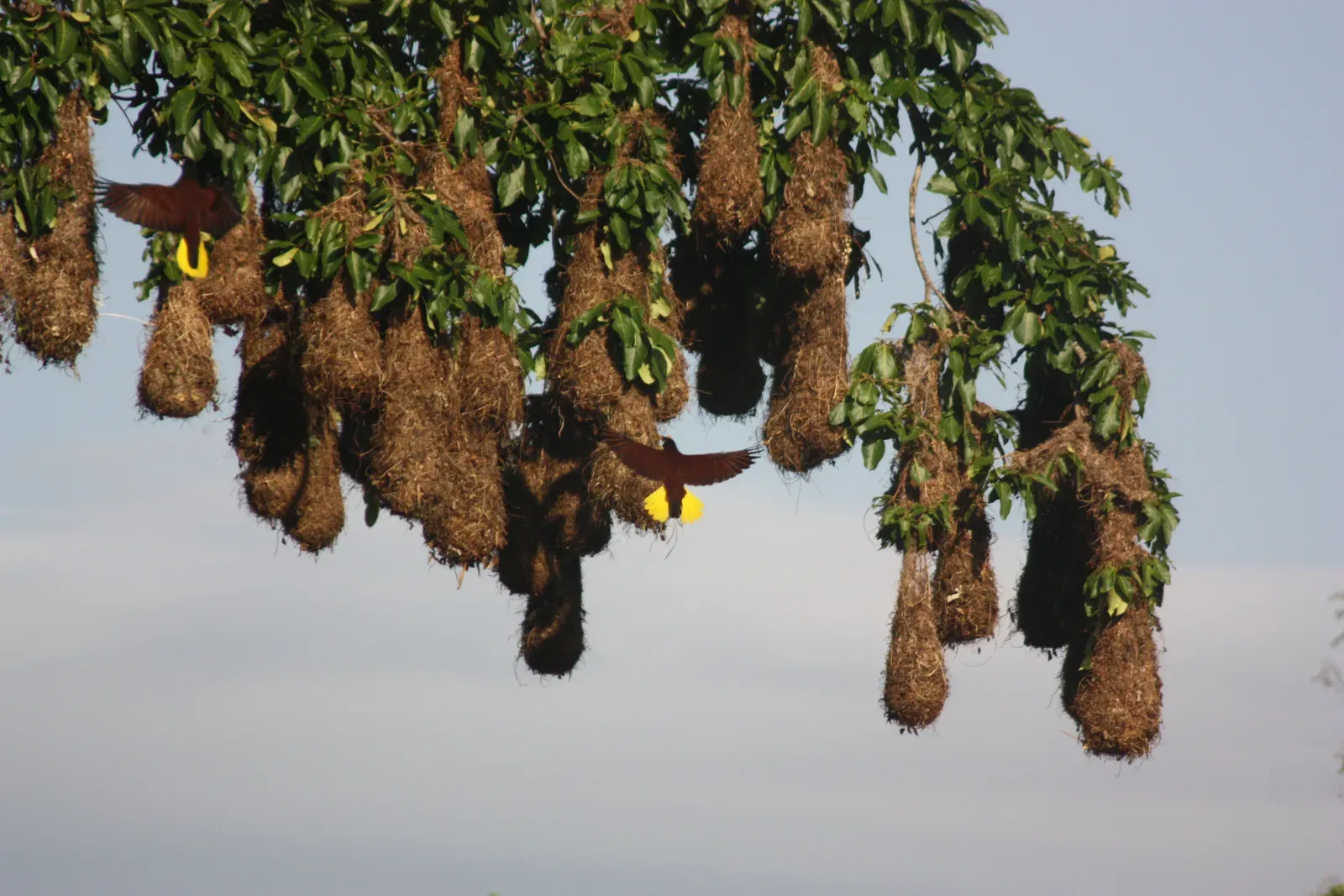
Imagine walking through a forest and seeing what looks like dozens of long socks dangling from a single tree. That’s the work of Montezuma oropendolas. Montezuma oropendolas build narrow hanging bird nests that stretch three feet or more below the branch, with females building these hand-woven nests using a mixture of fibers and vines.
These birds gather in colonies, which can include over 100 hanging nests in one spot. The birds from Central America weave pendulous nests out of vines and banana fibers that can be 3 to 6 feet long and look like a ball hanging in a stocking, with up to 150 of these nests extended from one tree although usually more like 30. The sheer visual impact of an entire tree covered in these swaying structures is something you won’t forget.
Here’s where it gets a bit awkward for the females though. The female takes 9 to 11 days to make her nest, and the male often watches her work, and if he doesn’t like what he sees, he’ll tear it apart and make her start over. Talk about harsh construction criticism.
Edible Nest Swiftlets and Their Saliva Architecture
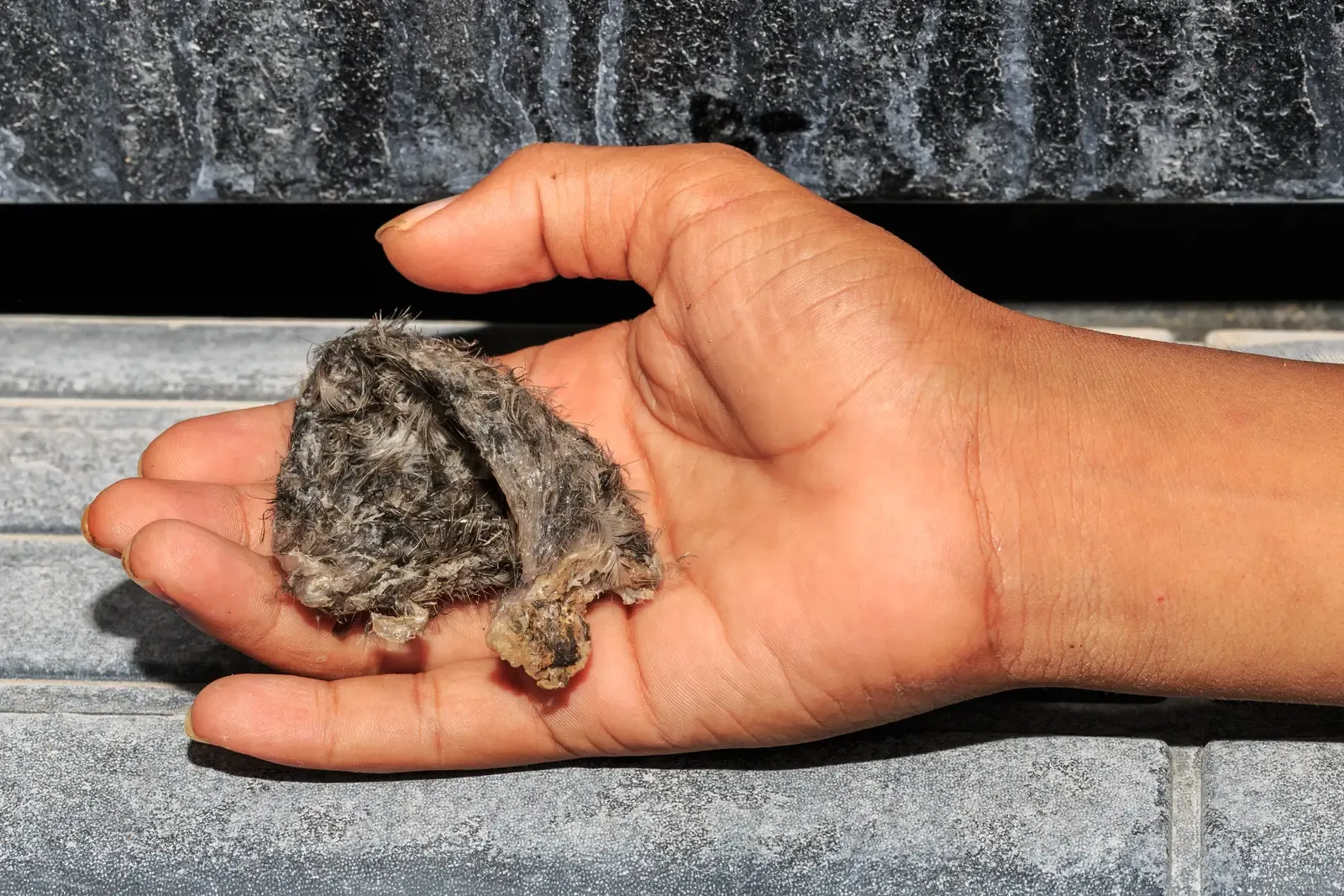
This one sounds completely made up until you see it yourself. In caves in Southeast Asia, Edible-nest Swiftlets make cliffside nests out of layers of their own spit, with the saliva sticking to rock and hardening in a bracket shape. Yes, you read that correctly. These birds build their entire nests from solidified saliva.
The birds create round white nests using regurgitated saliva and attach them to rocks and other surfaces. What makes this even stranger is that these nests have become one of the most expensive foods in the world. The nests are a sought-after delicacy for bird’s nest soup, though they have no flavor and no nutritional content.
Much like bats, edible-nest swiftlets use a simple form of echolocation to navigate their dark cave habitats in order to build these strange nests and find food. Honestly, the whole situation feels like something evolution came up with after running out of conventional building materials. It works, though.
Conclusion: Nature’s Master Builders
These remarkable birds prove that intelligence and ingenuity aren’t exclusive to humans. Whether it’s the sociable weaver constructing multigenerational apartment complexes, the bowerbird arranging decorative galleries that would make interior designers jealous, or the tailorbird performing delicate surgery with nothing but a beak, each species has developed solutions perfectly suited to their environment and needs. Some nests protect against extreme temperatures, others ward off predators, and a few simply impress potential mates.
What strikes me most is how these structures reveal something deeper about evolution and adaptation. These aren’t learned behaviors passed down through bird schools. They’re instinctive drives refined over millions of years, resulting in engineering feats that continue to baffle researchers. The next time you spot a bird’s nest, take a closer look. You might just be witnessing one of nature’s most underrated architectural wonders. What do you think? Which of these nest builders surprised you the most?

- What It Means When Hummingbirds Return on Nearly the Same Date Every Year - August 10, 2026
- Animal Science Says Songbirds Practice Their Calls Quietly Before Performing Them in Public - August 10, 2026
- 8 Scents That Cockroaches Hate - August 10, 2026