

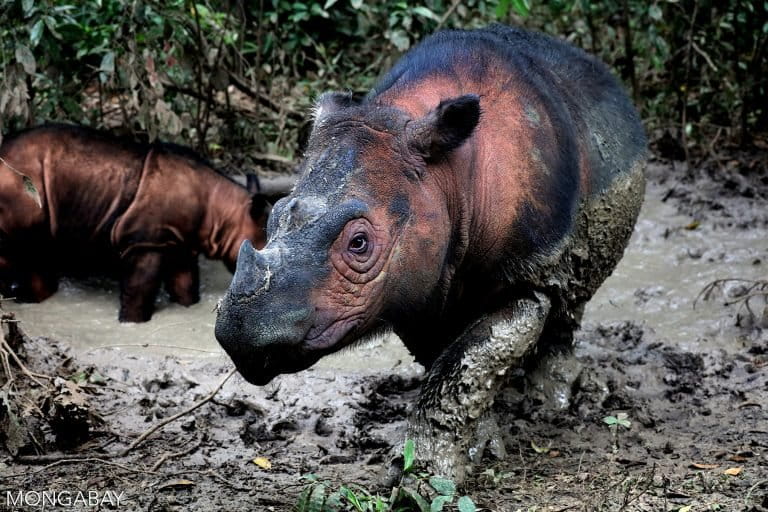

The Dire Numbers Facing a Vanishing Species (Image Credits: Imgs.mongabay.com)
Indonesia – Deep within the island’s dense rainforests, the Sumatran rhino clings to survival as one of the world’s most critically endangered mammals.
The Dire Numbers Facing a Vanishing Species
Fewer than 50 Sumatran rhinos remain in the wild, scattered across fragmented habitats in Sumatra. This small, hairy rhinoceros, the smallest of its kind, once roamed widely but now faces isolation in pockets of forest. Conservationists have tracked a steady decline over decades, driven by relentless pressures on their environment.
The species’ population plummeted from hundreds in the 1980s to its current perilously low count. Experts from organizations like the International Fund for Animal Welfare highlight how these rhinos’ elusive nature once masked the severity of the crisis. Today, camera traps and surveys reveal solitary individuals struggling to find mates amid shrinking territories.
Lessons from Past Breeding Efforts
In 1984, a bold international program captured around 40 Sumatran rhinos for captive breeding, aiming to avert what appeared to be inevitable extinction. Facilities in Indonesia and abroad housed these animals, with hopes pinned on successful reproduction to bolster wild numbers. Yet, the initiative encountered heartbreaking setbacks, including diseases and failed pairings that led to numerous losses.
By the early 2000s, outbreaks like surra decimated captive groups, reducing survivors to a handful relocated to specialized centers. The effort, though ambitious, underscored the challenges of replicating natural conditions in captivity. Still, it provided valuable data on rhino health and genetics, informing future strategies.
Modern Conservation Wins and Innovations
Recent years have brought glimmers of progress, with births in protected sanctuaries offering renewed optimism. For instance, the Sumatran Rhinoceros Conservation Centre has facilitated several calves, including successes at Way Kambas National Park. These milestones stem from improved veterinary care and habitat management tailored to the rhinos’ needs.
Collaborations between the Indonesian government, WWF, and local experts focus on the Leuser Ecosystem, home to the largest remaining population. Anti-poaching patrols have intensified, while reforestation projects aim to reconnect isolated habitats. Genetic studies now guide translocation efforts, ensuring diverse pairings to enhance breeding viability.
Persistent Threats Undermining Progress
Poaching remains a grave danger, as rhino horns fetch high prices in illegal markets despite no proven medicinal value. Criminal networks exploit remote forests, complicating enforcement in vast areas. Meanwhile, habitat destruction accelerates through logging and palm oil plantations, fragmenting the rhinos’ world and limiting food sources.
Climate change adds another layer, altering rainfall patterns and increasing disease risks in stressed ecosystems. Conservation reports from sources like Mongabay emphasize how economic priorities often clash with wildlife protection. Without stronger policies, these factors could erase the species within a generation.
| Threat | Impact | Conservation Response |
|---|---|---|
| Poaching | Direct killing for horns | Enhanced patrols and international trade bans |
| Habitat Loss | Fragmentation and isolation | Protected areas and reforestation |
| Disease | High mortality in captivity | Vaccinations and health monitoring |
A Call for Global Action
The Sumatran rhino’s story illustrates the fragility of biodiversity in Southeast Asia, where human expansion collides with ancient wildlife. Sustained funding and community involvement remain essential to scale up successes and address root causes. As numbers hover near the edge, every protected hectare and vigilant patrol counts toward potential recovery.
Key Takeaways
- Only about 30-50 Sumatran rhinos survive in the wild, primarily in Indonesia.
- Captive breeding has yielded recent births but faces ongoing challenges from past failures.
- Addressing poaching and habitat loss is crucial for long-term survival.
Ultimately, saving this iconic species demands a unified push from governments, NGOs, and individuals worldwide. What steps can we take to support such efforts? Share your thoughts in the comments below.

- 8 Mysterious Spirit Animals Associated with the Zodiac Sign Scorpio - July 29, 2026
- 23 Dog Breeds Trainers Say First-Time Owners Regret - July 29, 2026
- 18 Horse Breeds Farriers Say Are Hard on Hooves - July 29, 2026