
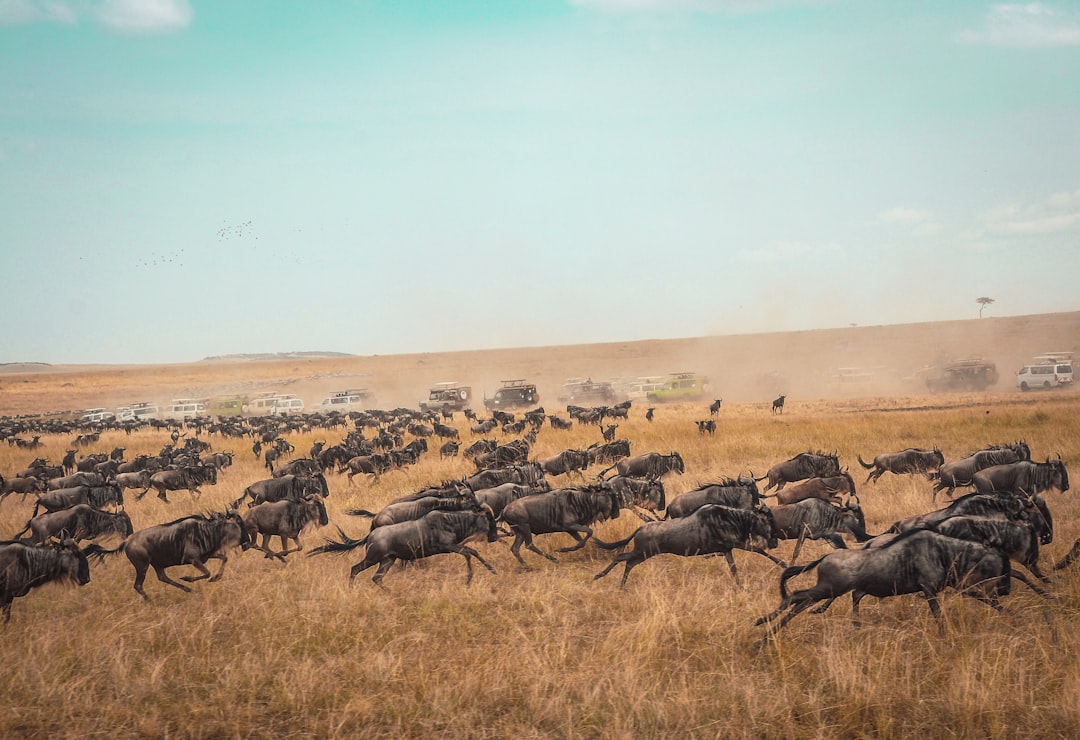

A Once-Mighty Spectacle Diminishes (Image Credits: Unsplash)
Kenya – The rhythmic thunder of hooves across the savanna, once a hallmark of the Maasai Mara, now echoes faintly as environmental pressures reshape one of Africa’s most awe-inspiring natural events.
A Once-Mighty Spectacle Diminishes
Researchers recently unveiled detailed maps highlighting the dramatic shrinkage of the wildebeest migration in Kenya’s Greater Mara Ecosystem. These visualizations, drawn from tracking data, show how long-distance movements have fractured under the weight of habitat changes. What began as a robust annual journey northward from Tanzania’s Serengeti has seen herds dwindle in both size and duration.
Historical accounts described over a million wildebeest crossing into Kenya each year, sustaining a vibrant ecosystem. Recent observations indicate fewer than 250,000 animals now make the trek, and those that do linger for shorter periods. This shift, documented in studies from the Smithsonian’s National Zoo and Conservation Biology Institute, underscores a migration on the brink of collapse.
Fencing and Development Block Ancient Pathways
Fencing erected for agricultural and tourism purposes has severed critical corridors, confining herds to smaller areas and disrupting their seasonal rhythms. A prominent example involves a luxury lodge development near the Mara River, where construction sparked widespread debate over its impact on cross-border movements between Kenya and Tanzania. Conservationists raised alarms that such barriers force animals into confusion and stranding, altering traditional routes.
The Kenya Wildlife Service countered these concerns, asserting that wildebeest utilize a broad 68-kilometer border stretch rather than a single narrow path. Still, viral videos circulating online captured stranded herds, reigniting public fears and prompting legal challenges from local advocates. These developments highlight a tension between economic growth and wildlife preservation in the region.
Broader Threats Compound the Decline
Drought and erratic weather patterns have exacerbated the crisis, reducing available grazing lands and water sources. A national wildlife census released earlier this year revealed mixed outcomes: while some species showed population gains, wildebeest numbers continued to fall, alongside losses in zebras and elephants due to environmental stress. Human-wildlife conflicts have intensified as expanding farmlands encroach on migration zones, leading to increased incidents of animals raiding crops.
Local communities, including Maasai elders, have voiced opposition to tourism expansions that fragment habitats. Reports detailed how luxury hotels not only physically obstruct paths but also pursue legal measures to quiet dissent from those protecting the land. Factors driving this erosion include:
- Proliferation of fences for private properties.
- Climate-induced droughts shrinking wet-season ranges.
- Tourism infrastructure violating reserve management plans.
- Human population growth pressuring shared ecosystems.
- Poaching and habitat loss from agriculture.
Conservation Responses and Future Outlook
Efforts to safeguard the migration include mapping initiatives by the Global Initiative on Ungulate Migration, which aim to inform policy and restore connectivity. The Wildlife Research and Training Institute’s census data supports targeted interventions, such as moratoriums on new developments until 2032 in key areas. Partnerships between researchers, government agencies, and communities seek to balance tourism revenue with ecological integrity.
Yet challenges persist, as the Reuters report on the lodge controversy illustrates ongoing disputes. Experts emphasize that without swift action to remove barriers and mitigate climate effects, the full migration could vanish within decades, robbing future generations of this natural wonder.
Key Takeaways
- The Mara wildebeest population has dropped sharply, with migrations now involving far fewer animals for shorter times.
- Fencing and luxury developments pose direct threats to traditional corridors, despite official denials.
- Integrated conservation strategies offer hope, but require urgent enforcement to prevent irreversible loss.
As Kenya grapples with these changes, the wildebeest migration serves as a stark reminder of nature’s fragility amid human progress. Protecting this phenomenon demands collective resolve to ensure the savanna’s pulse endures. What steps do you believe could best preserve Kenya’s wildlife heritage? Share your thoughts in the comments.

- 10 Most Endangered Animals in Hawaii - July 28, 2026
- Which Natural Element Are You According to Your Zodiac Sign - July 28, 2026
- The Fiercest Hurricane Ever to Strike the U.S. Mainland - July 28, 2026