

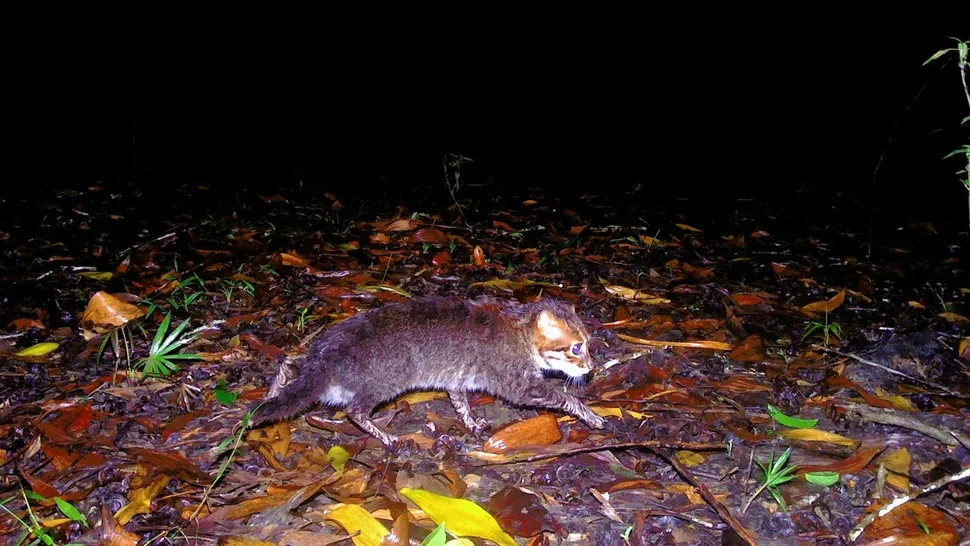
In a remarkable triumph for wildlife conservation, scientists and officials in Thailand have rediscovered the elusive flat-headed cat (Prionailurus planiceps)—a species not seen in the country in almost three decades. Once feared possibly extinct in Thailand, this small wild feline was documented through camera-trap images captured in the Princess Sirindhorn Wildlife Sanctuary’s peat swamp forests in 2024 and 2025, confirming its continued existence and even ongoing breeding activity.
Conservationists celebrated the rediscovery, which coincided with Thailand’s annual Wildlife Protection Day and highlighted both the value of sustained, scientifically guided surveys and the resilience of wetland ecosystems when given space and protection. The sightings offer rare good news for a species classified as endangered and emphasize the ongoing importance of preserving critical habitats in Southeast Asia.
An Elusive Cat Makes a Comeback
The flat-headed cat is one of the most secretive and least understood wild cats in Southeast Asia, adapted for a semi-aquatic lifestyle with webbed feet and a skull shaped for fishing. Its small size—about the weight of a domestic cat—and nocturnal habits have made it extremely difficult to detect. Until recent efforts, it had not been confirmed in Thailand since 1995.
Large-scale camera-trap surveys in southern Thailand’s peat swamp forests finally caught multiple images of the species, including a female accompanied by a cub, providing the first evidence of reproduction in the region in decades. These findings suggest that a small but viable population persists despite decades of habitat loss and fragmentation.
The Hunt for a “Lost” Species
The rediscovery followed a concerted effort by Thailand’s Department of National Parks, Wildlife and Plant Conservation (DNP), along with Panthera Thailand, a global wild-cat conservation organization. By strategically placing camera traps in likely habitat areas, researchers recorded 29 detections over 2024 and 2025—the highest frequency of sightings for the species anywhere in its range.
This success contrasts sharply with years of failed attempts, demonstrating how methodical, long-term monitoring and experienced placement of cameras can uncover species that seemed to vanish.
Threats and Habitat Challenges
Despite this breakthrough, the flat-headed cat remains endangered, with a global population estimated at around 2,500 adults. Its existence hinges on wetlands, peat swamps, and mangrove forests—ecosystems that are increasingly threatened by human activities such as agricultural expansion, water pollution, and land conversion.
Habitat fragmentation not only reduces available territory but also isolates populations, making them more vulnerable to genetic decline and localized extinctions. Conservationists warn that the rediscovery is just a first step, and protecting these fragile habitats remains urgent.
Conservation Success and Future Plans
Officials and researchers hailed the rediscovery as a major win for wildlife protection, reflecting decades of targeted conservation efforts. Thailand’s DNP has pledged to bolster patrols, enhance habitat protection, and expand monitoring in peat swamp forests to support the flat-headed cat and other wetland species.
The evidence of breeding—especially images of a cub—offers a hopeful sign that the population may be sustaining itself. The data will also feed into a new IUCN assessment expected in early 2026, potentially informing revised conservation strategies for the species across its entire range.
Why This Rediscovery Matters
Rediscoveries of species thought lost to local extinction are rare and powerful reminders that wildlife can persist in overlooked or under-surveyed habitats. They also underscore how scientific persistence, community engagement, and strong protection measures can turn the tide for endangered species.
For Thailand and Southeast Asia more broadly, the return of the flat-headed cat sends a message of hope but also a call to action: safeguarding the delicate ecosystems these animals depend on is essential not just for charismatic species, but for the health of entire landscapes.
A Victory Worth Protecting
The rediscovery of Thailand’s flat-headed cat—once feared gone for good—is a testament to the power of dedicated conservation science and habitat stewardship. While the sightings are cause for celebration, they should not inspire complacency. Instead, this moment should galvanize further efforts to protect and restore wetlands, integrate local communities in conservation planning, and secure long-term funding and policy support. The cat’s return proves that even species on the brink can rebound, but only if humans commit to preserving the intricate ecological networks that sustain them. While optimism is warranted, the real test lies in maintaining momentum through tangible action that ensures these rare felines thrive, not just survive, in Thailand’s wilds.

- Urban Coyotes Show Remarkable Adaptability, Learning to Thrive in City Environments - July 22, 2026
- Beavers Are Nature’s Engineers, Creating Vital Habitats for Other Wildlife Species - July 21, 2026
- The Recovery of the California Condor Offers Hope for Other Critically Endangered Birds - July 21, 2026