

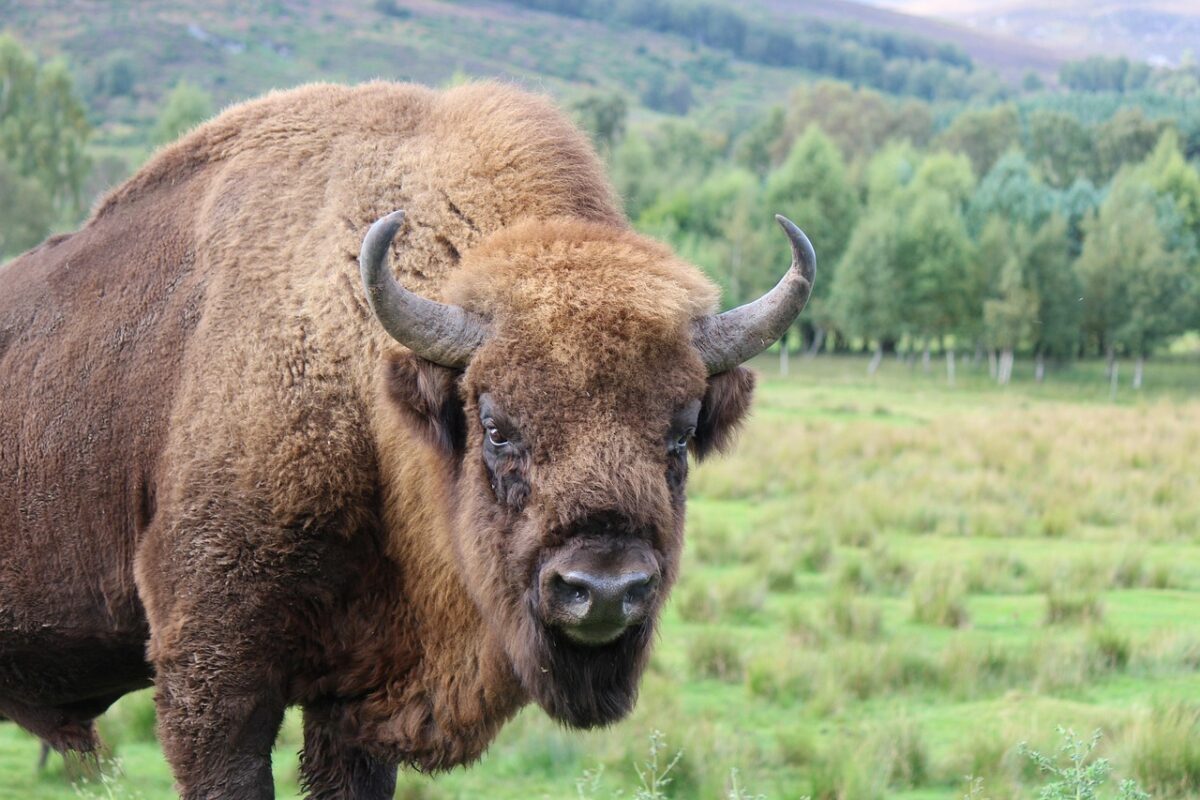
For the first time in more than two centuries, American bison — North America’s iconic largest land mammals — have returned to Kane County, Illinois, stepping onto restored prairie that once echoed with their thunderous hooves. The moment, years in the making and rooted in deep cultural and ecological partnership, marked a milestone in the restoration of the tallgrass prairie ecosystem that helped define the Midwest. As conservationists, Indigenous leaders and local communities looked on in snow-blanketed Burlington Prairie Forest Preserve, the bison’s arrival underscored a powerful narrative of ecological renewal and cultural reconciliation.
This conservation achievement isn’t simply about reintroducing a species — it’s about restoring an ecological engine that shaped landscapes, supported biodiversity, and sustained Indigenous cultures for millennia. In an era of habitat loss and biodiversity decline, seeing bison roam again in Illinois reflects both practical restoration and symbolic healing that bridges past and present.
A Historic Return After Centuries
In early December, a small herd of six American bison — distinguished by their robust brown fur, muscular humps and short, curved horns — set foot on 38 acres of prairie revived by the Kane County Forest Preserve District, about 60 miles northwest of downtown Chicago. This was the first time in over 200 years that bison have inhabited this part of Illinois.
Snow covered the grassland as conservation partners and visitors watched the animals explore their new home. The ritual of arrival — offloading from trailers and walking onto historical land — marked the culmination of years of planning and collaboration among public agencies and Indigenous stewards.
Partnership and Indigenous Rematriation
A core force behind the reintroduction was a collaborative effort between the Forest Preserve District, the American Indian Center of Chicago, and Ruhter Bison, which will manage the herd. The initiative blends scientific restoration with Indigenous perspectives, rejecting the notion of “ownership” and framing the effort as rematriation — the return of missing relatives.
For Jay Young, co-executive director of the American Indian Center, the moment transcends ecological restoration. He emphasizes that Indigenous stewardship and educational engagement are vital parts of the project, helping reconnect people — especially Native Americans in the Chicago area — with species and ecosystems from which they’ve been separated for generations.
Prairie Restoration Takes Root
The Burlington Prairie Forest Preserve was once a soybean field before efforts began in 2011 to restore native prairie species, including tall Indian grass and rattlesnake master. Over time, this work rebuilt plant communities that historically coexisted with bison herds.
Bison historically shaped Illinois’s expansive prairie — once roughly 22 million acres — through grazing patterns that maintained plant diversity and created habitats for other wildlife. The absence of these megafauna contributed to dramatic ecological shifts, with native prairie dwindling to less than a fraction of its original extent by the early 20th century.
Ecological Roles and Future Benefits
Reintroducing bison isn’t just symbolic; their grazing and physical presence trigger ecological processes that can enhance plant diversity, soil health and habitats for other species. Studies show that bison grazing can significantly boost plant biodiversity in grassland ecosystems compared to systems without large native herbivores.
These large herbivores also create microhabitats when they wallow and trample the ground, encouraging water pooling and supporting insects, amphibians and birdlife. Over time, this can lead to a cascade of ecological benefits that supports broader biodiversity resurgence.
Community Engagement and Cultural Significance
The project has sparked community interest beyond ecological circles. Residents, including children in nearby Burlington, watched through windows and began brainstorming names for the new arrivals. Local outreach efforts and planned spring events will further connect the public to the prairie and its bison.
Educational programs built around both scientific and Indigenous knowledge aim to deepen public understanding of the prairie’s history, bison’s role within it and the importance of long-term stewardship.
Challenges and the Path Ahead
The Kane County Forest Preserve plans to expand the bison’s enclosure over the coming decade, increasing acreage from the current 38 to nearly 170. Additional infrastructure, such as parking and trails, may also be added to accommodate increased visitor interest while protecting the animals and preserve ecology.
While fenced for safety and community proximity, the goal remains for the landscape and its keystone species to evolve in tandem, teaching the prairie how to be prairie once again. But realizing that long-term vision will require continued collaboration, community support and adaptive management in the face of ecological change.
More Than a Reintroduction
The return of bison to Illinois is a deeply resonant conservation success: ecological restoration supported by Indigenous leadership, community engagement and a renewed respect for the land’s history. While just a small herd on a 38-acre parcel, these giants represent the potential for broader prairie recovery and the revival of ecosystems long starved of their keystone species.
Yet this achievement also reminds us that true restoration is a long journey, demanding not only science and funding but humility, cultural reverence and shared stewardship. The bison’s return to Kane County invites us to rethink how we value native species and landscapes — not as relics of the past, but as living threads in America’s ecological and cultural tapestry.

- Urban Coyotes Show Remarkable Adaptability, Learning to Thrive in City Environments - July 22, 2026
- Beavers Are Nature’s Engineers, Creating Vital Habitats for Other Wildlife Species - July 21, 2026
- The Recovery of the California Condor Offers Hope for Other Critically Endangered Birds - July 21, 2026