

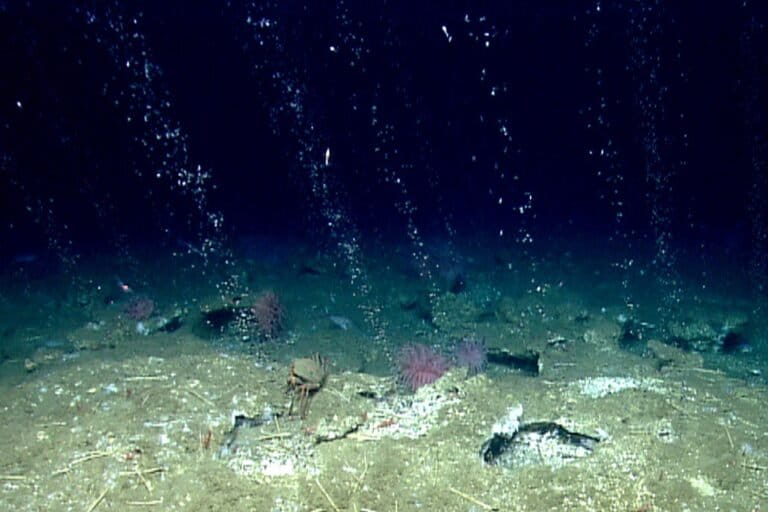

A Growing Concern in Polar Waters (Image Credits: Imgs.mongabay.com)
Deep beneath the ocean’s surface, scientists pursue elusive streams of methane bubbles emerging from the seafloor, a pursuit that reveals both ecological wonders and escalating climate risks.
A Growing Concern in Polar Waters
Researchers have observed an alarming increase in methane seeps around Antarctica, where warming waters destabilize ancient gas reservoirs trapped in seafloor sediments. Expeditions in recent years uncovered new sites at an astonishing rate, with bubbles rising through cracks in the seabed. This phenomenon, once rare in polar regions, now signals broader environmental shifts driven by global temperature rises.
Teams aboard research vessels deploy advanced sonar and remotely operated vehicles to map these seeps, often finding columns of gas stretching hundreds of meters. In the Arctic, similar discoveries highlight how rapidly changing ocean conditions accelerate methane release. Such findings challenge existing climate models, suggesting that future warming projections may underestimate the gas’s atmospheric impact. Methane, far more potent than carbon dioxide in trapping heat, could amplify global temperatures if emissions surge unchecked.
The Science of Seep Detection
Specialists, often dubbed “seep seekers,” navigate from shallow coastal zones to abyssal depths exceeding 4,000 meters, using hydrophones to listen for the faint sounds of rising bubbles. In one notable 2025 expedition off the Norwegian continental shelf, scientists quantified methane dissolution rates, revealing how much gas escapes into the water column before reaching the air. Laboratory tests with labeled methane helped refine biodegradation models, showing that ocean microbes consume a significant portion but not all of the released gas.
These hunts extend to diverse ecosystems, where seeps sustain unique chemosynthetic life forms, from tube worms to methane-munching bacteria. Yet the focus remains on climate implications, as even small increases in seafloor emissions could tip atmospheric balances. Current models predict modest rises through the century, but polar amplification – where temperatures climb faster – poses outsized threats. Efforts now integrate satellite data with shipboard observations to track seep evolution over time.
Ecological Havens Amid the Risk
Cold seeps transform barren seafloor into vibrant oases, supporting species adapted to extreme conditions like near-freezing temperatures and total darkness. In the Arctic’s depths, recent surveys identified thriving communities of clams, shrimp, and crabs around methane vents, ecosystems that rely on chemical energy rather than sunlight. These discoveries, made during 2026 voyages, underscore the ocean’s resilience even as human-induced changes loom.
However, destabilizing hydrates – ice-like methane structures – threatens these habitats by triggering sudden releases. Scientists noted hotspots where gas eruptions form mud volcanoes or landslides, potentially disrupting marine food webs. Balancing biodiversity preservation with emission monitoring requires innovative tools, such as autonomous underwater drones that sample seeps without disturbance. As warming penetrates deeper, protecting these fragile zones becomes urgent for both science and conservation.
Implications for Global Climate Strategies
Seafloor methane represents a vast, understudied reservoir estimated at thousands of gigatons, dwarfing known fossil fuel deposits. While most stays locked below sediments, rising ocean acidity and pressure changes from melting ice could unlock more. International teams emphasize the need for expanded monitoring, as current data gaps hinder accurate forecasting of methane’s role in feedback loops.
Policy responses lag behind scientific urgency, with calls for integrating seep data into emission inventories. Collaborative expeditions, like those linking Europe and polar nations, aim to fill these voids through shared technology and expertise. Understanding seep dynamics offers clues to mitigating broader climate tipping points, from permafrost thaw to ocean circulation shifts.
Key Takeaways
- Methane seeps are accelerating in polar regions due to warming, potentially underestimating future global heat trapping.
- Ocean microbes offset some emissions, but not enough to prevent atmospheric buildup in vulnerable areas.
- These sites host unique ecosystems, highlighting the need for balanced research on ecology and climate risks.
As scientists continue their global chase for these invisible threats, the stakes for planetary stability grow clearer, urging swift action to curb ocean warming. What steps do you believe should prioritize seafloor monitoring in climate agendas? Share your thoughts in the comments.

- Urban Coyotes Show Remarkable Adaptability, Learning to Thrive in City Environments - July 22, 2026
- Beavers Are Nature’s Engineers, Creating Vital Habitats for Other Wildlife Species - July 21, 2026
- The Recovery of the California Condor Offers Hope for Other Critically Endangered Birds - July 21, 2026