

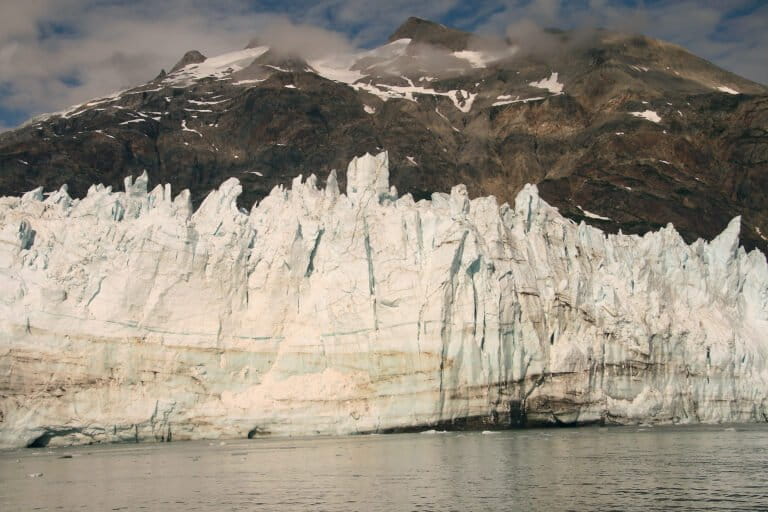

The Essential Role Glaciers Play in Global Ecosystems (Image Credits: Imgs.mongabay.com)
Glaciers, those vast expanses of ice sculpted by millennia, serve as indispensable reservoirs that sustain ecosystems and human societies across the globe.
The Essential Role Glaciers Play in Global Ecosystems
Glaciers have long anchored the planet’s hydrological cycles, providing meltwater that nourishes rivers and wetlands vital for biodiversity. In regions like the Himalayas and the Andes, seasonal runoff from these ice masses supports diverse wildlife, from alpine flora to migratory birds dependent on consistent water flows. Scientists have documented how retreating glaciers disrupt these habitats, leading to shifts in species distribution and increased vulnerability to extinction. For instance, post-glacial lakes emerging from melting ice create new ecosystems, yet they remain fragile amid accelerating climate shifts.
Beyond wildlife, glaciers influence broader environmental stability. They regulate regional climates by reflecting sunlight and cooling surrounding areas, a function now compromised as ice cover diminishes. Conservation experts emphasize that protecting these features preserves not just ice but interconnected web of life, including microbial communities in glacial streams that form the base of food chains. Recent studies highlight how glacier loss exacerbates habitat fragmentation, challenging species adaptation in high-altitude environments.
Promising Initiatives to Combat Glacier Retreat
International efforts gained momentum in 2025 when the United Nations declared it the International Year of Glaciers’ Preservation, spotlighting the urgency of coordinated action. Organizations like the IUCN have advocated for in-situ protection measures, such as limiting human access to sensitive glacial zones to reduce additional stress from tourism and pollution. In Antarctica, a groundbreaking ice vault opened recently, storing core samples from glaciers worldwide, including Mont Blanc, to safeguard genetic and climatic records for future research.
Modeling by glaciologists from France and Switzerland projects glacier evolution through 2100, informing targeted interventions like reforestation in upstream watersheds to slow melt rates. These models underscore the value of emission reductions, showing that curbing global warming could preserve up to 30 percent more ice volume in key areas. Community-led programs in mountain regions promote sustainable water management, integrating local knowledge to monitor changes and adapt agricultural practices. Such strategies blend global policy with grassroots involvement, fostering resilience in glacier-dependent ecosystems.
Persistent Challenges Hindering Effective Protection
Despite these advances, glacier conservation faces formidable obstacles rooted in climate dynamics. Forecasts indicate that under current emission paths, thousands of glaciers could vanish entirely by the century’s end, with critical ones in Asia losing 80 percent of their mass and threatening water for billions. Melting accelerates hazards like glacial lake outburst floods, which endanger downstream wildlife habitats and human settlements alike.
Another emerging concern involves the release of ancient contaminants from thawing ice, including antibiotic-resistant bacteria that could infiltrate rivers and impact aquatic life. Economic dependencies complicate matters; industries reliant on glacial melt for hydropower and irrigation resist rapid transitions. Geopolitical tensions over shared transboundary glaciers, such as those in the Himalayas, further impede unified responses. These intertwined issues demand multifaceted approaches, yet progress remains uneven across regions.
Innovative Approaches and Their Limitations
Researchers explore geoengineering techniques, like artificial shading to reduce solar absorption on ice surfaces, but scalability proves challenging in remote terrains. Here’s a look at key strategies under consideration:
- Climate mitigation through renewable energy shifts to lower greenhouse gases driving melt.
- Protected area expansions to shield glaciers from industrial encroachment.
- Water infrastructure upgrades in vulnerable basins to buffer seasonal shortages.
- International monitoring networks for real-time data on ice loss.
- Restoration of surrounding wetlands to enhance natural water retention.
While these hold potential, limitations abound. Geoengineering risks unintended ecological disruptions, and funding shortages plague implementation in developing nations. A recent analysis compared stabilization scenarios, revealing that even aggressive warming limits might not fully halt retreat in overshoot situations. Success hinges on global cooperation, yet political inertia often delays action.
Key Takeaways
- Glaciers support nearly half the world’s population through water provision, underscoring their role in both human and wildlife sustainability.
- 2025’s International Year of Glaciers’ Preservation marked a pivotal push for awareness and policy reforms.
- Balancing short-term flood risks with long-term water scarcity requires integrated, adaptive strategies.
As glaciers continue to recede, their conservation emerges as a litmus test for humanity’s commitment to planetary health, reminding us that inaction today echoes through generations. Protecting these icy sentinels demands urgent, collective resolve to mitigate losses and adapt to inevitable changes. What steps do you believe are most crucial for safeguarding glaciers? Share your thoughts in the comments.

- Urban Coyotes Show Remarkable Adaptability, Learning to Thrive in City Environments - July 22, 2026
- Beavers Are Nature’s Engineers, Creating Vital Habitats for Other Wildlife Species - July 21, 2026
- The Recovery of the California Condor Offers Hope for Other Critically Endangered Birds - July 21, 2026