

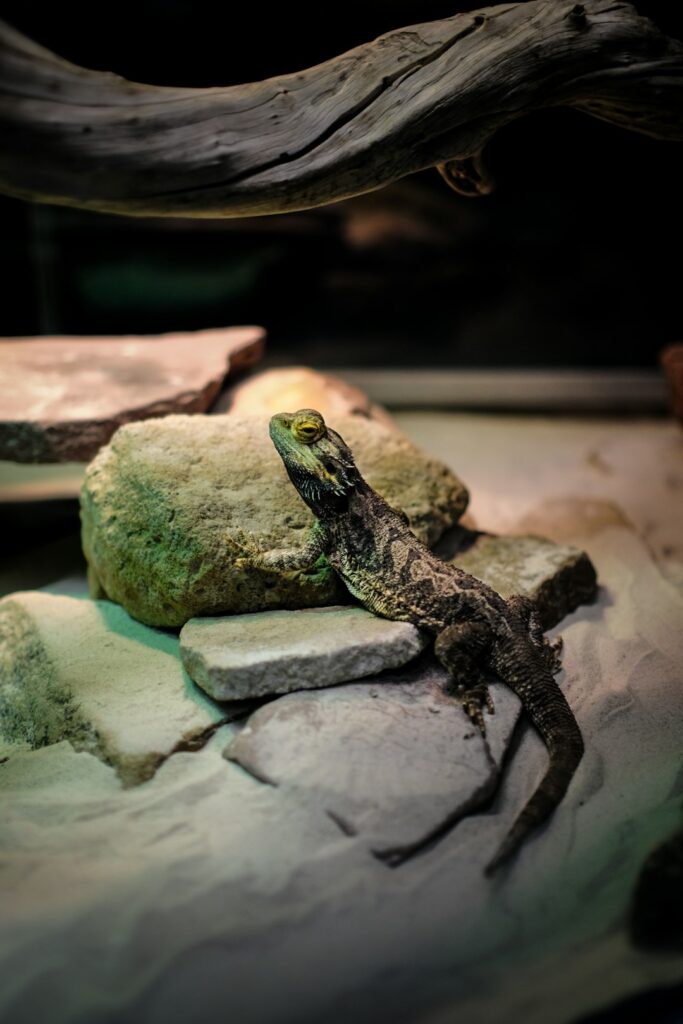

Choosing the Foundation: Enclosure Basics (Image Credits: Unsplash)
Reptile enthusiasts often discover that a well-designed habitat transforms pet ownership into a rewarding experience, closely mirroring the wild conditions these animals crave.
Choosing the Foundation: Enclosure Basics
Selecting an appropriate enclosure forms the cornerstone of any successful reptile setup. Experts emphasize that the size must accommodate the species’ adult dimensions to prevent stress and promote natural behaviors. For instance, arboreal lizards require taller vivariums, while burrowing snakes benefit from longer, shallower ones.
Materials matter as well; glass or acrylic tanks offer visibility and durability, but secure lids prevent escapes. Ventilation plays a critical role to maintain air quality without excessive drying. Many owners start with readily available pet store options, but custom builds allow for precise tailoring to specific needs.
Balancing Heat and Light for Vitality
Reptiles depend on external heat sources to regulate their body temperatures, a process known as thermoregulation. Providing a gradient – warmer on one side and cooler on the other – enables them to choose optimal spots for activity or rest. Under-tank heaters or ceramic emitters prove safer than heat rocks, which can cause burns.
Lighting extends beyond illumination; ultraviolet B (UVB) bulbs support calcium absorption and prevent metabolic bone disease. Placement at the correct distance ensures even exposure without overheating. Thermostats monitor and adjust temperatures automatically, typically aiming for daytime highs around 85-95 degrees Fahrenheit depending on the species.
Humidity Control and Substrate Selection
Maintaining proper humidity levels prevents respiratory issues and aids in shedding. Desert dwellers like bearded dragons thrive in drier conditions around 30-40 percent, while tropical species such as ball pythons need 50-70 percent. Misting systems or humid hides achieve this balance effectively.
Substrate choices influence both aesthetics and functionality. Aspen shavings suit many snakes for their absorbency and ease of cleaning, whereas coconut fiber works well for humidity-loving reptiles. Avoid loose substrates like sand for small species to reduce impaction risks. A layered approach – base material topped with moss or leaf litter – enhances the natural feel.
| Substrate Type | Best For | Pros |
|---|---|---|
| Aspen Shavings | Snakes, Lizards | Low dust, burrowing-friendly |
| Coconut Fiber | Tropical Reptiles | Retains moisture, naturalistic |
| Paper Towels | Quarantine, Juveniles | Easy to clean, hygienic |
Incorporating Hides and Enrichment Elements
Hides offer security, reducing stress and encouraging exploration. At least two per enclosure – one warm and one cool – allow reptiles to retreat as needed. Branches, rocks, and artificial plants create climbing opportunities and mimic wild terrains.
Enrichment goes further by stimulating mental engagement. Rotating decor or adding puzzle feeders keeps behaviors active. Live plants, when safe and non-toxic, boost humidity and provide cover, though they require careful selection to avoid ingestion hazards.
- Secure branches to prevent collapses.
- Choose hides proportional to the reptile’s size.
- Incorporate varied textures for sensory stimulation.
- Monitor for wear and replace as necessary.
- Ensure all items are escape-proof.
Ongoing Maintenance for Long-Term Health
Regular cleaning sustains a healthy environment, with spot checks daily and full disinfections monthly. Removing waste promptly curbs bacterial growth, and fresh water sources stay contaminant-free. Tools like substrate sifters simplify the process without disturbing the setup.
Seasonal adjustments account for changes in reptile activity, such as increased heating during cooler months. Veterinary check-ups confirm that the habitat supports overall well-being. Owners who track parameters with hygrometers and thermometers catch issues early.
Key Takeaways
- Prioritize species-specific needs in every design choice.
- Use technology like thermostats for consistent conditions.
- Balance enrichment with safety to foster natural behaviors.
Building a reptile habitat demands attention to detail, but the result – a vibrant, stress-free home – strengthens the bond between pet and owner. What aspects of your reptile’s setup have worked best for you? Share your experiences in the comments below.

- Urban Coyotes Show Remarkable Adaptability, Learning to Thrive in City Environments - July 22, 2026
- Beavers Are Nature’s Engineers, Creating Vital Habitats for Other Wildlife Species - July 21, 2026
- The Recovery of the California Condor Offers Hope for Other Critically Endangered Birds - July 21, 2026