
Have you ever stopped to consider that while humans pride themselves on architectural marvels, we’re hardly the only master builders on this planet? Throughout the natural world, countless creatures are constructing elaborate homes, fortresses, and shelters that rival our own engineering feats. Some of these structures are so intricate, so cleverly designed, that they make you wonder if maybe we’ve been underestimating the intelligence of our fellow Earth inhabitants all along.
Animals shape and modify their physical environment, creating a diversity of structures from underground burrows to constructed nests to towering above-ground edifices. Let’s be real, the engineering prowess displayed by certain species is absolutely mind blowing when you really dig into it. From birds that tie actual knots to insects that regulate temperature better than some human buildings, nature has been perfecting architectural techniques for millions of years. So let’s dive in and meet ten of the most remarkable animal architects whose building skills will leave you genuinely impressed.
Sociable Weavers: The Apartment Builders of Africa
Picture a haystack hanging in a tree, except this haystack houses hundreds of birds and can weigh as much as a car. That’s the sociable weaver’s communal nest for you. These birds construct permanent nests on trees and other tall objects that are amongst the largest built by any bird, large enough to house over 100 pairs of birds containing several generations at a time. Honestly, calling these structures nests feels like an understatement.
The largest sociable weaver nests are over 20 feet wide and close to 10 feet tall, with more than 100 individual nesting chambers. Each family has its own private entrance tunnel and chamber within this massive complex, making it function remarkably like a human apartment building. The birds use different materials strategically: large twigs form the protective roof, dry grasses create the separate chambers, and sharp spikes of straw guard entrance tunnels from predators like snakes.
What makes these nests even more remarkable is their longevity and climate control capabilities. Large nesting colonies can be active across many generations, sometimes over 100 years. During the extreme Kalahari temperatures, which can swing from freezing winter nights to scorching summer days, the nest’s architecture provides crucial insulation. When frost blankets the desert, birds huddle together indoors where the temperature stays about 60 degrees Fahrenheit above that outside. That’s better thermal regulation than many human homes achieve.
Some sociable weaver nests weigh several tons and can get so heavy they knock down the supporting tree. Think about that for a moment. These sparrow sized birds collectively build structures so massive that they can topple the very trees supporting them. The sheer scale of their cooperative construction effort is staggering. It’s hard not to be impressed by what these tiny engineers accomplish through teamwork and instinct alone.
Village Weavers: Master Knot Tyers of the Avian World
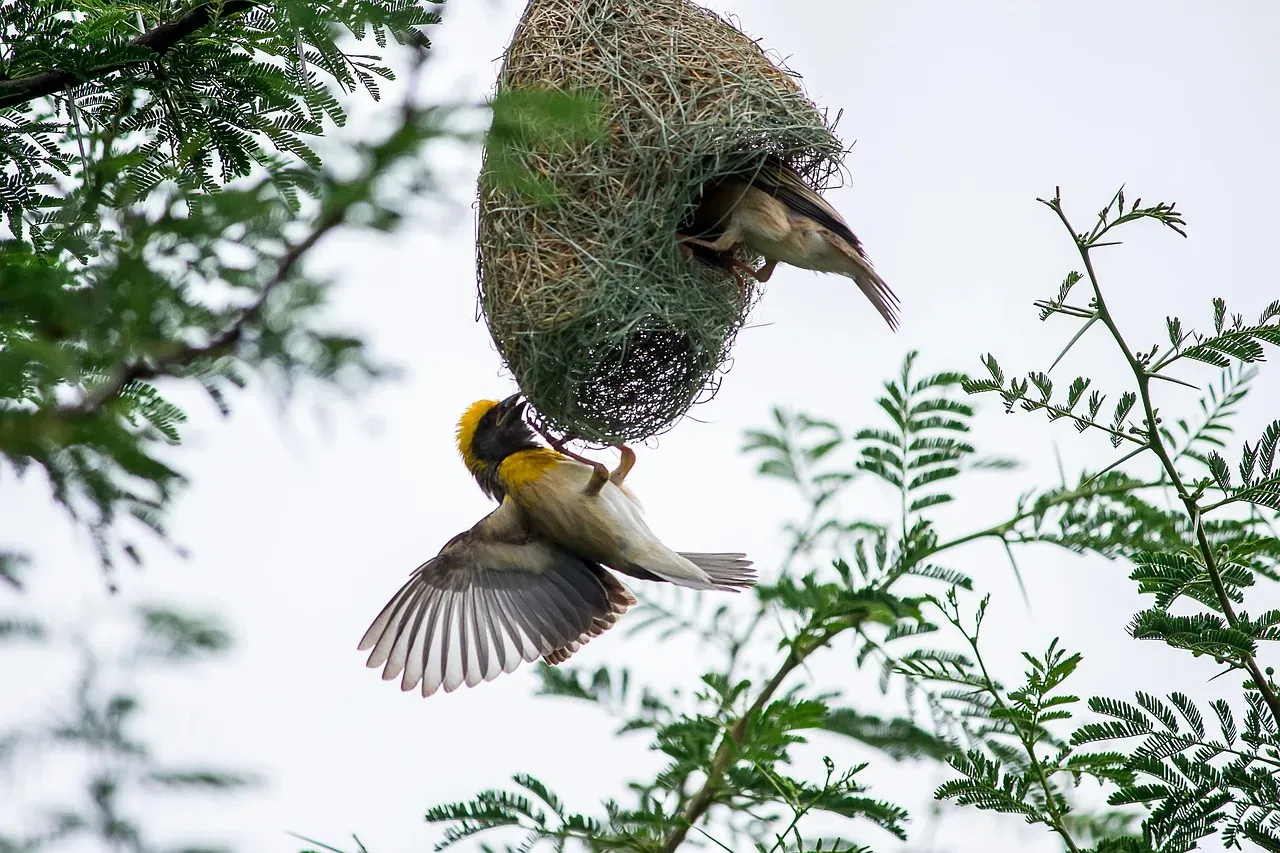
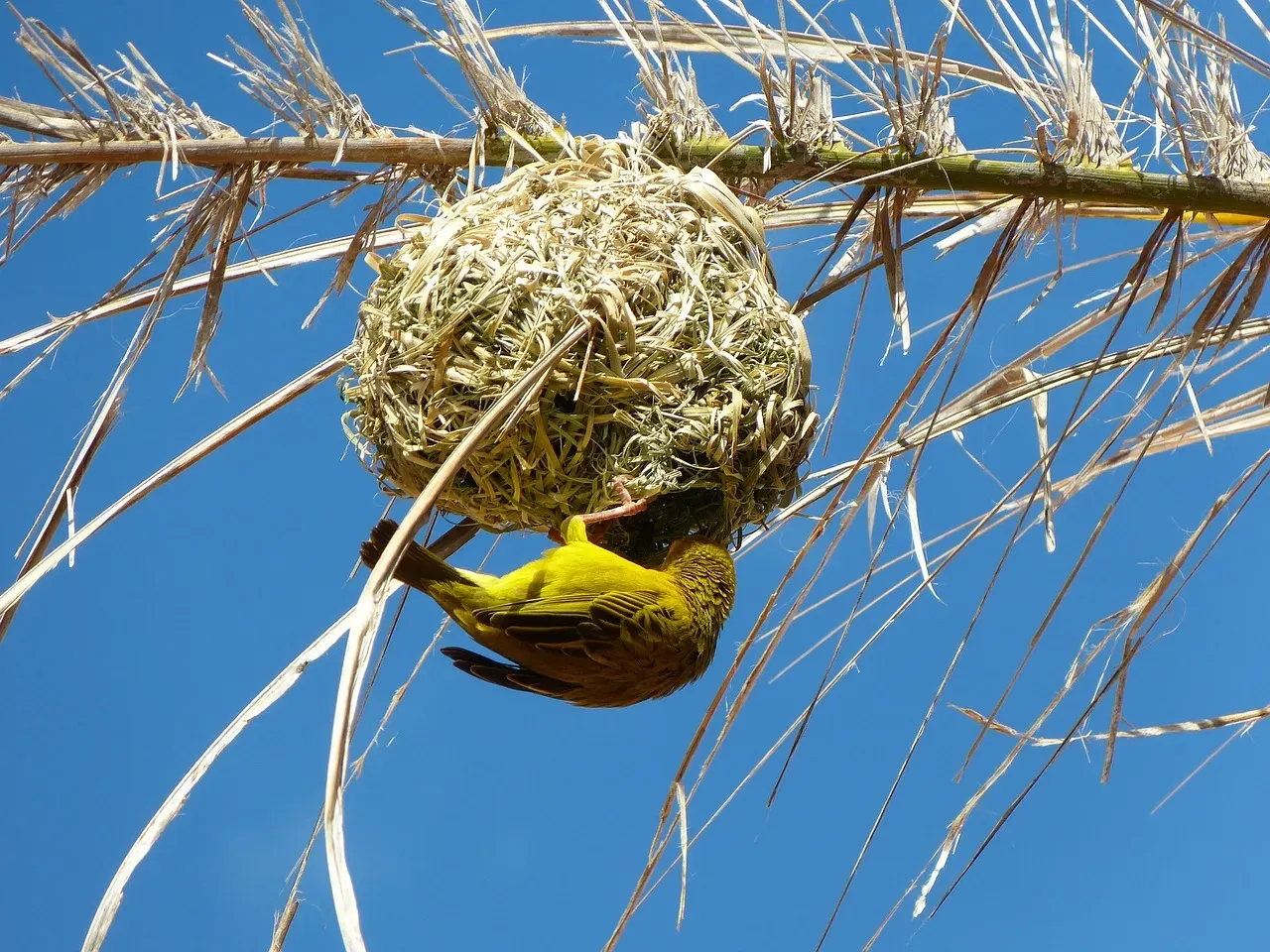
If sociable weavers build apartment complexes, village weavers are the textile artists of the bird world. The nest begins with a single strand, knotted to a branch with beak and claw, and after that the technique is just like any other weaving pattern with strands threaded through others at opposing angles, building an entrance from the first knot. Yes, you read that correctly. These birds tie knots.
Let that sink in. While many of us struggle with shoelaces, these birds manipulate grass strips with just their beaks and feet to create intricate woven structures. Weaverbirds employ intricate knot tying skills to weave together strands of grass. The males are particularly dedicated builders, often constructing multiple nests during mating season to attract females.
It is extremely important for male weaver birds to know how to create an elaborate and impressive nest, so training nests are often seen where a number of young males can practice their skills. The fact that young males practice their craft before building actual nests for courtship shows a level of learning and skill development we don’t usually associate with instinctive behavior. Each nest can take a male around 18 days to complete, involving hundreds of trips to gather materials.
When the nest is complete, the male will announce an open house by fluttering his wings, inviting a female home hoping she approves, and if she does there will be eggs within days, but if she doesn’t the nest is usually abandoned. Imagine spending weeks building your dream house only to have it rejected. According to some reports, most weaver males never become parents, highlighting just how selective females are about nest quality. The architecture literally determines reproductive success in these species.
Termites: The Climate Control Engineers

Termite mounds maintain stable internal temperatures in their nests with fluctuations of only 0 to 4 degrees Celsius despite fluctuating external conditions, acting as natural climate control systems enabling colonies to thrive in harsh environments. When you consider that termites are tiny insects building structures that can tower several meters high, their architectural achievement becomes even more astonishing.
Here’s the thing that really gets me: Both inhabited and uninhabited mounds exhibit similar temperature stability, implying that the mound’s architectural design rather than termite activity is the key factor in maintaining internal temperature stability. The structure itself, not the metabolic heat of the inhabitants, creates this remarkable climate control. That’s pure engineering genius encoded into instinctive building behavior.
The ventilation system is equally brilliant. Instead of relying on wind blowing over the mound, termites manage airflow within the nest with something even simpler and more predictable: sunlight, with these daily temperature oscillations driving convective flow which reverses twice a day and serves to ventilate the mound. Solar powered climate control built by insects smaller than your fingernail.
Even the tallest of human architecture is rivaled by animal architecture: termite mounds exceed skyscrapers in their size relative to that of the architects. When scaled proportionally to the builders, a termite mound would be like humans constructing a building several miles high. The complexity of their tunnel networks, with chambers for nurseries, fungus gardens, and ventilation channels, creates a three dimensional city beneath and above ground. Recent studies using X ray tomography have revealed networks of micropores and channels we never knew existed, suggesting these structures are even more sophisticated than we previously imagined.
Beavers: The Dam Engineers Reshaping Landscapes
Beavers are one of the most influential mammalian ecosystem engineers, heavily modifying river corridor hydrology, geomorphology, nutrient cycling, and ecosystems. Unlike birds building nests for shelter or termites constructing mounds for climate control, beavers literally reshape entire landscapes to suit their needs. That’s next level architecture right there.
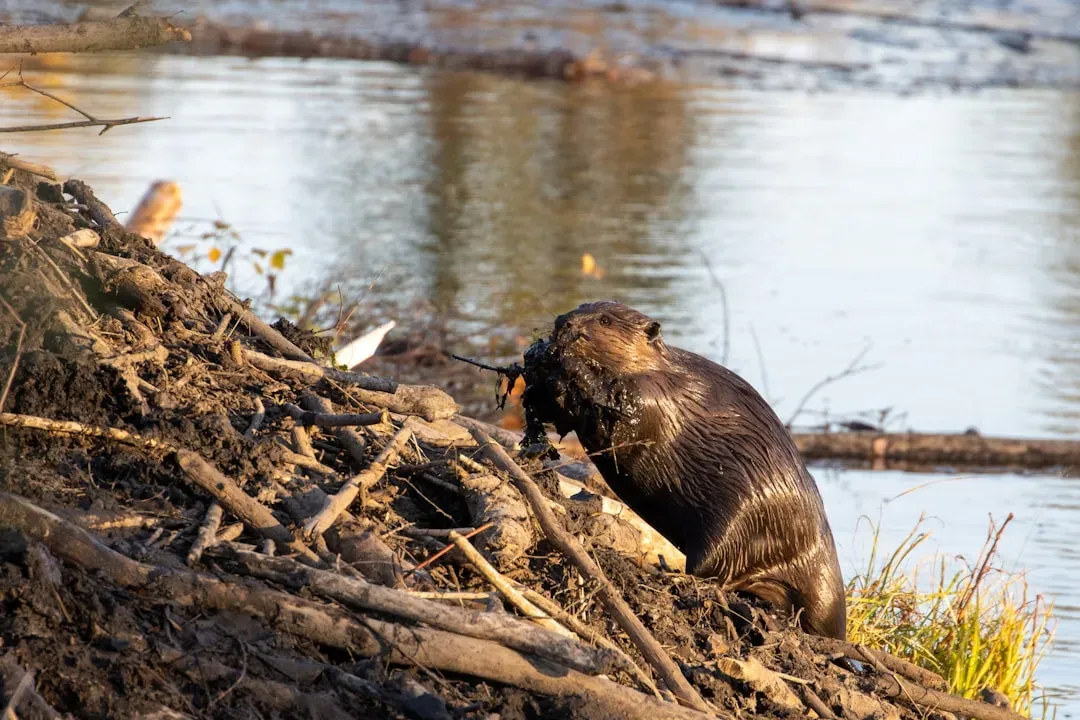
Beavers build dams to raise the water depth around their lodges, their dome shaped homes made of sticks and mud, and this deeper water acts as a natural barrier making it challenging for predators to access their lodges while allowing beavers to create underwater entrances. The dam isn’t the home itself but rather the infrastructure that makes their home safe and functional.
The construction process is surprisingly methodical. Beavers can transport their own weight in material, dragging logs along mudslides and floating them through canals to get them in place, and once the dam has flooded enough area to the proper depth to form a protective moat for the lodge, beavers begin construction of the lodge. Some beaver dams span hundreds of feet. The longest beaver dam in the world is 2,788 feet and located in Wood Buffalo National Park, Alberta, Canada.
What’s particularly fascinating is that a beaver’s construction skills are instinctive, with even beavers raised in captivity exhibiting this behavior, though beaver kits follow their parents and older siblings as they maintain their lodge and dam so it is likely youngsters also hone their instincts through observation. The combination of instinct and learned refinement produces structures that can last for generations. Some dams have been maintained and expanded by successive beaver families for decades, creating wetland ecosystems that support countless other species. They’re not just building homes; they’re creating entire habitats.
Bowerbirds: Artists Who Build to Impress
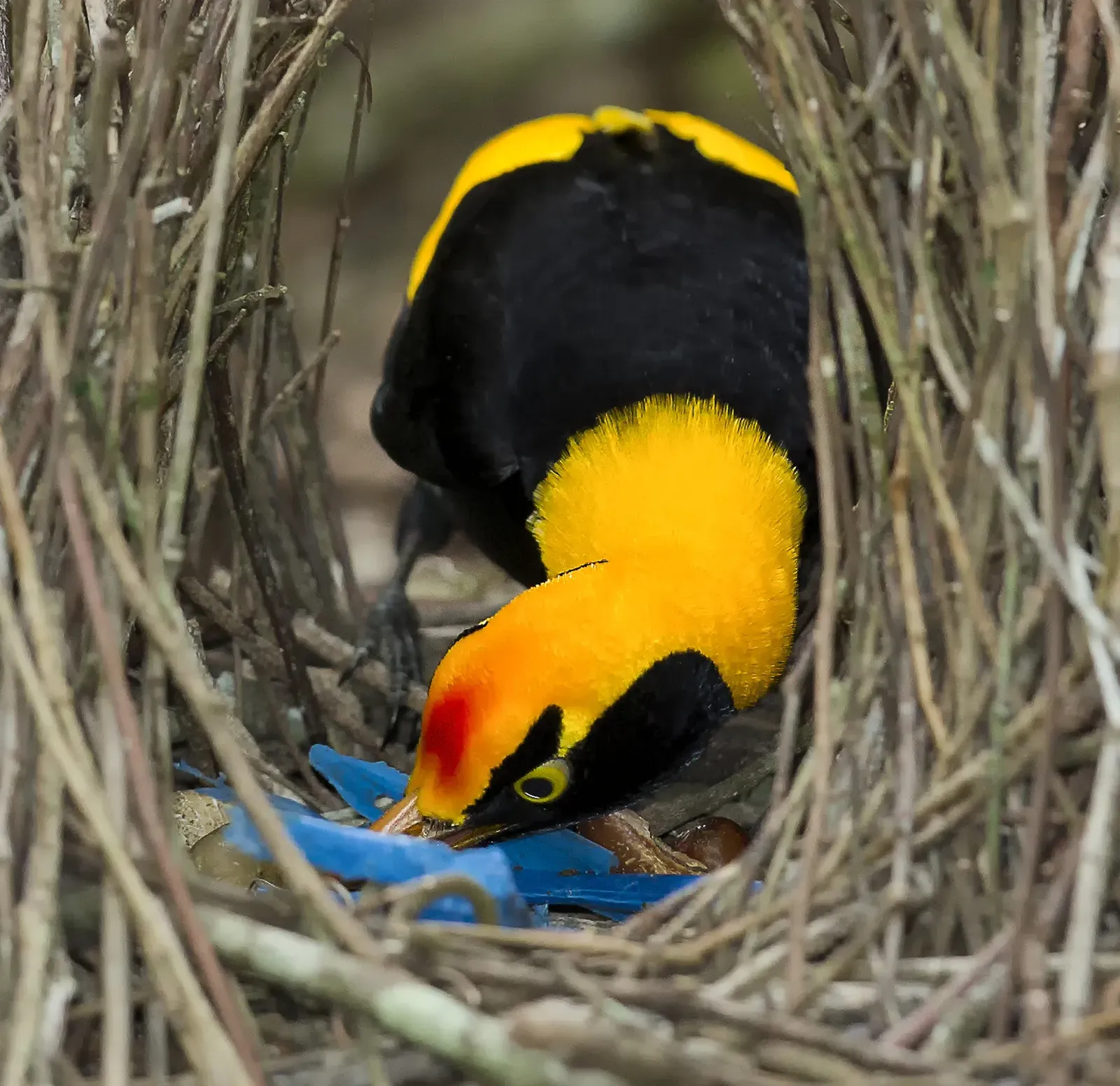
Now here’s where animal architecture gets truly artistic. Bowerbirds don’t build elaborate nests for raising young. Instead, males construct decorated structures called bowers purely to attract mates. Native to Australia, bowerbirds are known for their elaborate and colorful courtship displays during which the male builds a bower to attract a mate, which is not a nest for raising offspring but a decorative structure designed to impress females, with males collecting a variety of objects including flowers, shells, plastic, and even bits of glass or metal arranged around their bower.
Think of it as nature’s art gallery. Some species create avenue style bowers with two parallel walls of sticks, while others build maypole structures around a central sapling. Then comes the decoration phase, where males become obsessive curators. These avian artists meticulously arrange moss, flowers, and fruits to create stunning displays that captivate potential mates, with their gardens being masterpieces of symmetry and color coordination showcasing an eye for aesthetics rarely seen in the animal kingdom.
Males spend hours arranging and rearranging their collections, often stealing prized items from neighboring males. Decorating nests with colorful objects, as seen in bowerbirds, serves primarily as a form of courtship display, with males using these decorations to attract females and demonstrate their fitness and resourcefulness, and the quality and quantity of decorations can influence a female’s mate choice. The architecture here serves an entirely different purpose: it’s a visual resume, a demonstration of the male’s aesthetic sense, resource gathering ability, and dedication.
What strikes me most is that females judge males based purely on the quality of these constructions and the artfulness of their displays. The bower architecture literally determines reproductive success. In some species, males even paint the walls of their bowers using charcoal or fruit pulp mixed with saliva, applying it with a piece of bark held in the beak. That’s tool use combined with artistic expression. These aren’t just builders; they’re designers with an eye for what appeals to their audience.
Paper Wasps: The Original Paper Manufacturers
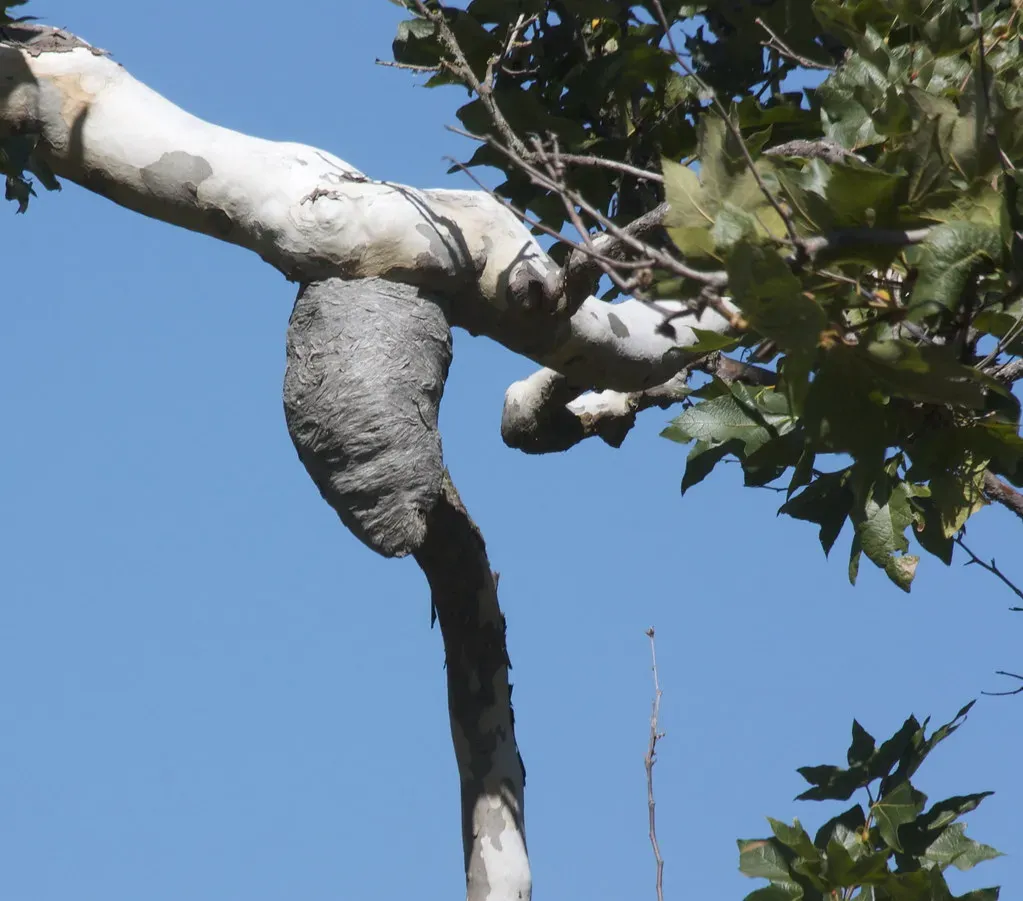
Long before humans invented paper, wasps were masters of the craft. Paper wasps, such as European paper wasps, build a nest from a mixture of fibers and saliva. They scrape wood fibers from dead trees or plant stems, chew them up, mix them with saliva, and create a papery pulp that dries into remarkably sturdy hexagonal cells.
The hexagonal structure isn’t random. It’s the most efficient shape for maximizing space while minimizing material use, the same principle that honeycombs employ. Each cell is precisely sized to house a single larva, and the whole nest hangs from a thin stalk attached to a protected surface like the eave of a building or a tree branch.
Among the structures created by animals to prevent predation are those of paper wasps, with the nests containing defensive structures which are formations built onto or inside of the nest to prevent predation, with one method queens use being covering the developing pupae in pulp which acts as a reinforcer making it more difficult for predators to break open the pupae. The architecture serves dual purposes: housing the colony and actively defending against threats.
What’s remarkable is the social organization behind the construction. The queen starts the nest, but as workers emerge they take over expansion duties, each wasp instinctively knowing its role. The result is an elegant suspended structure that can house hundreds of individuals, all protected by layers of paper thin but surprisingly resilient material. It’s lightweight yet strong, water resistant yet breathable, and entirely biodegradable. Humans spent centuries trying to replicate what wasps have been doing instinctively for millions of years. The efficiency and sustainability of their construction puts many human manufacturing processes to shame.
Weaver Ants: Living Bridges and Leaf Architects
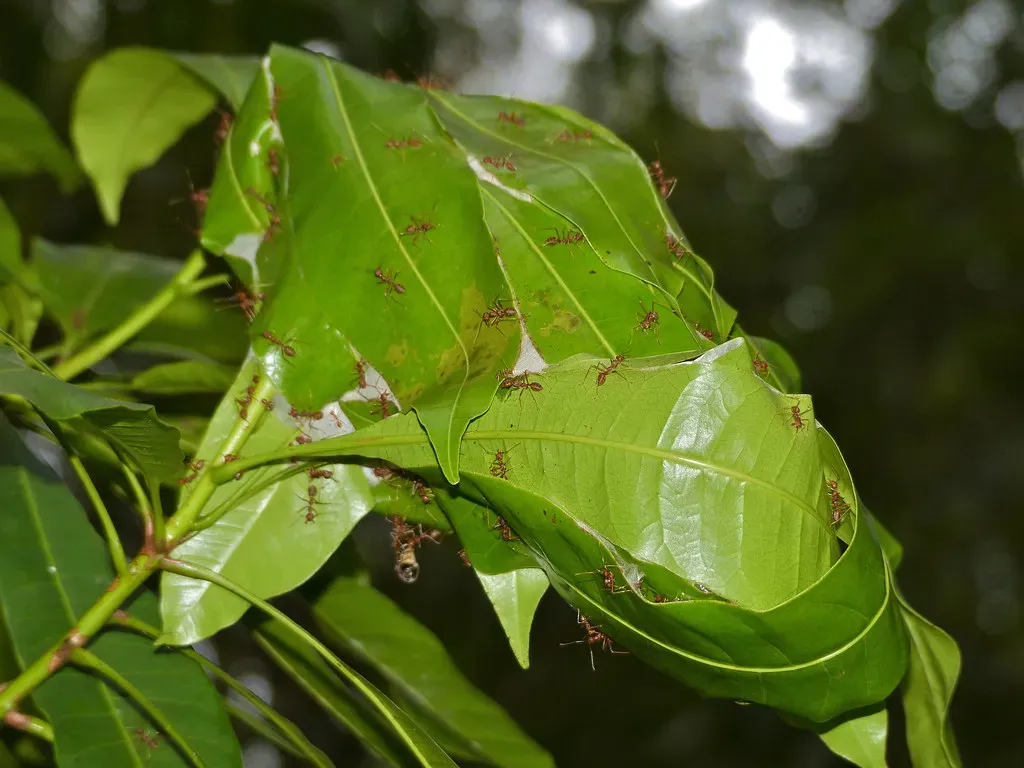
Weaver ants are known for building large hanging nests in trees by weaving together leaves using their silk producing larvae, with nests that can hold entire colonies and are constructed with remarkable efficiency, with workers cooperating to gather leaves, transport them, and then use their larvae to produce silk which is used to bind the leaves together. Yes, they use their own babies as glue guns. If that’s not innovative problem solving, I don’t know what is.
The construction process is genuinely fascinating to watch. Worker ants form living chains, grasping each other to pull distant leaves together. Once the leaves are positioned, other workers retrieve larvae from existing nests, gently squeezing them to make them secrete silk, then using this silk to literally sew the leaves together edge to edge. The larvae aren’t harmed in the process, and once the nest is complete, they pupate safely inside.
These nests can be as large as several feet in diameter, providing the ants with a safe place to live, sleep, and raise their young. A single colony might construct multiple nests connected by ant highways along branches, creating a distributed network of homes throughout the canopy. The nests blend seamlessly with the surrounding foliage, providing camouflage from predators while maintaining structural integrity even during tropical storms.
The level of cooperation required is extraordinary. Hundreds of ants must work in perfect coordination, some pulling leaves, others ferrying larvae, still others standing guard against threats. There’s no blueprint, no foreman giving orders. Yet somehow the collective intelligence of the colony produces sophisticated arboreal architecture that’s been refined over millions of years of evolution. The ants’ ability to use living tools (their larvae) and form cooperative structures (living chains) demonstrates problem solving that goes far beyond simple instinct.
Hummingbirds: Miniature Masterpiece Makers
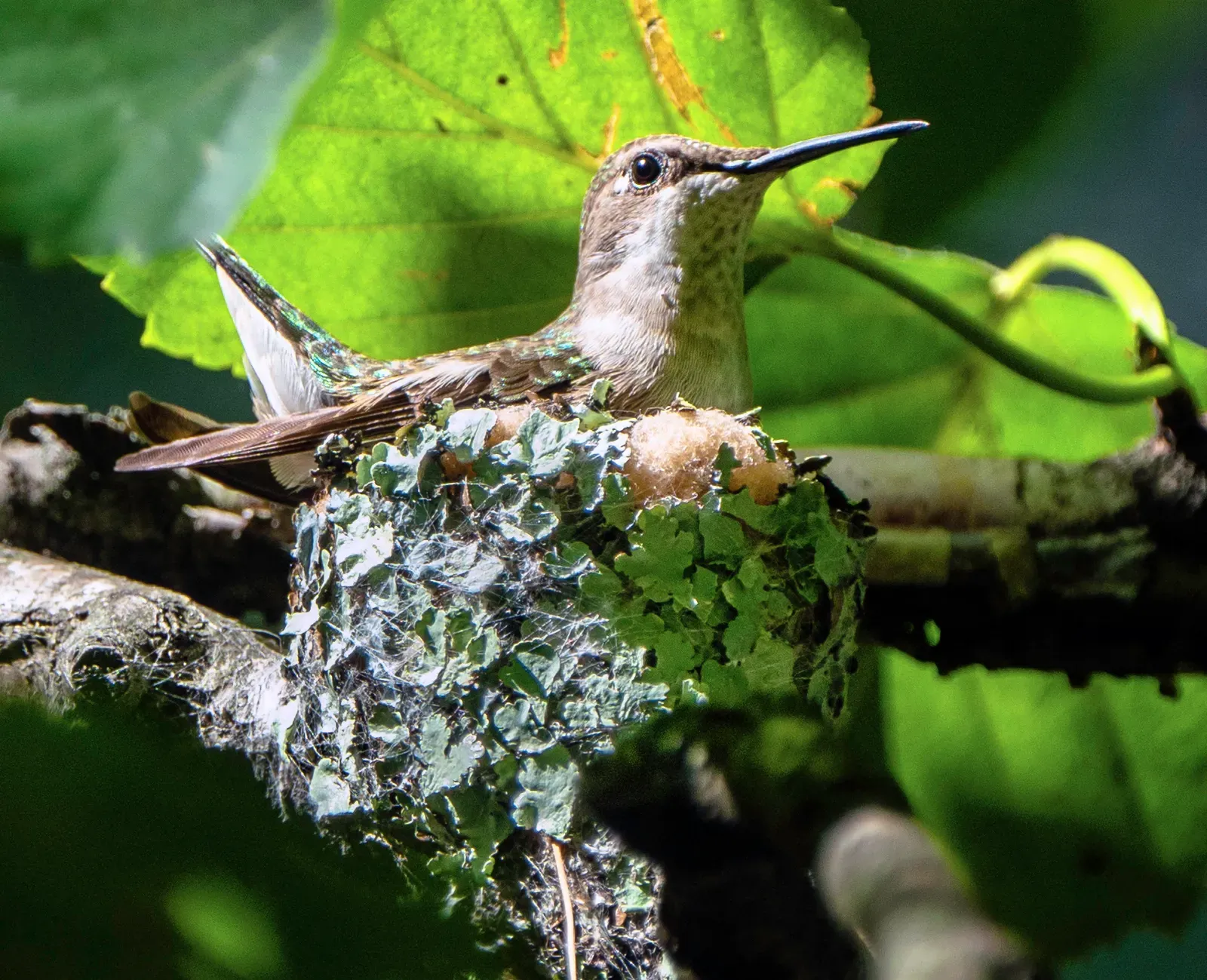
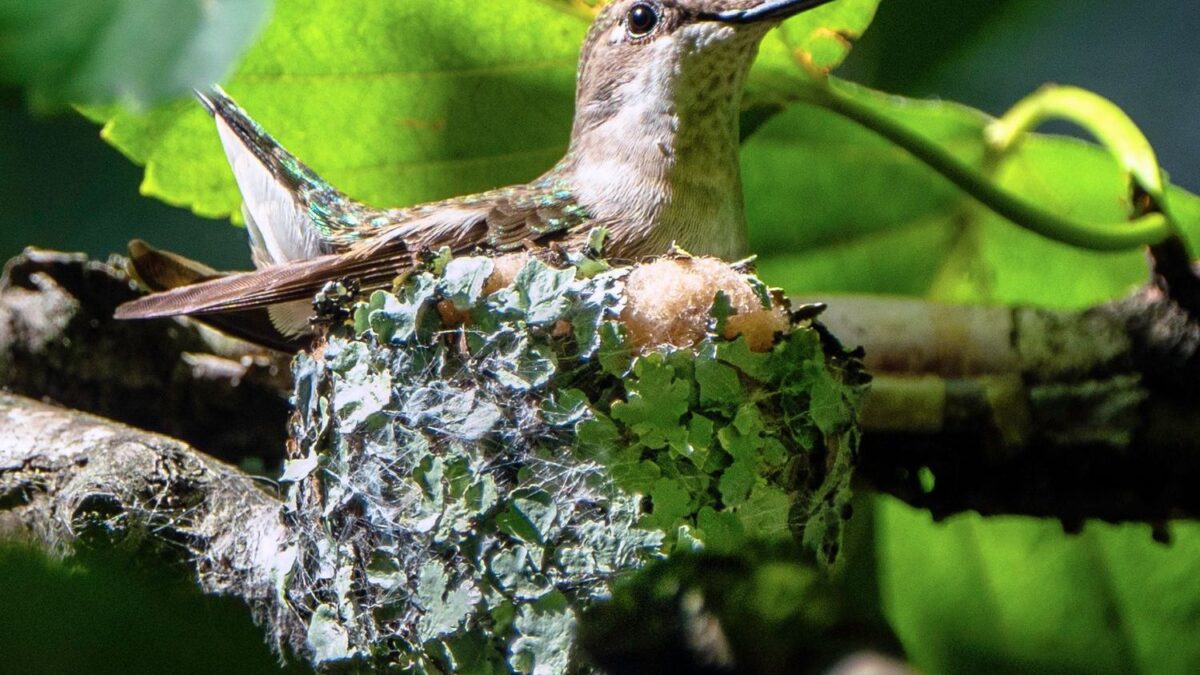
The hummingbird builds tiny camouflaged nests using moss and spider webs. At first glance, that might not sound impressive compared to massive beaver dams or enormous termite mounds. Then you realize these nests are roughly the size of half a walnut shell, constructed by a bird no bigger than your thumb, and suddenly the engineering precision becomes apparent.
Spider silk is the secret ingredient that makes these impossibly delicate nests work. Hummingbirds collect spider webs and use them like elastic thread, binding together moss, lichen, and plant down into a tiny cup. The spider silk provides both strength and flexibility, allowing the nest to stretch as the chicks grow. It’s also slightly sticky, helping bind materials together without any additional adhesive.
The camouflage aspect shows remarkable awareness of predation risk. Hummingbirds deliberately select lichen and moss that match the surrounding branch, making the nest nearly invisible to passing predators. Some species even decorate the exterior with bits of bark or leaf fragments to break up the nest’s outline. The result is a structure so well camouflaged that you can stand directly beneath it and never notice it’s there.
What strikes me about hummingbird nests is the precision required. These birds are working with materials that weigh almost nothing, assembling them into a structure that must be sturdy enough to support eggs and growing chicks while remaining flexible enough not to crack or break. The engineering tolerances are incredibly tight. One poorly placed strand of spider silk or one too many pieces of moss could make the nest too heavy or too rigid. Yet somehow these tiny birds get it right, building homes that successfully raise the next generation despite being no larger than a bottle cap.
Orb Weaver Spiders: Geometric Precision Engineers
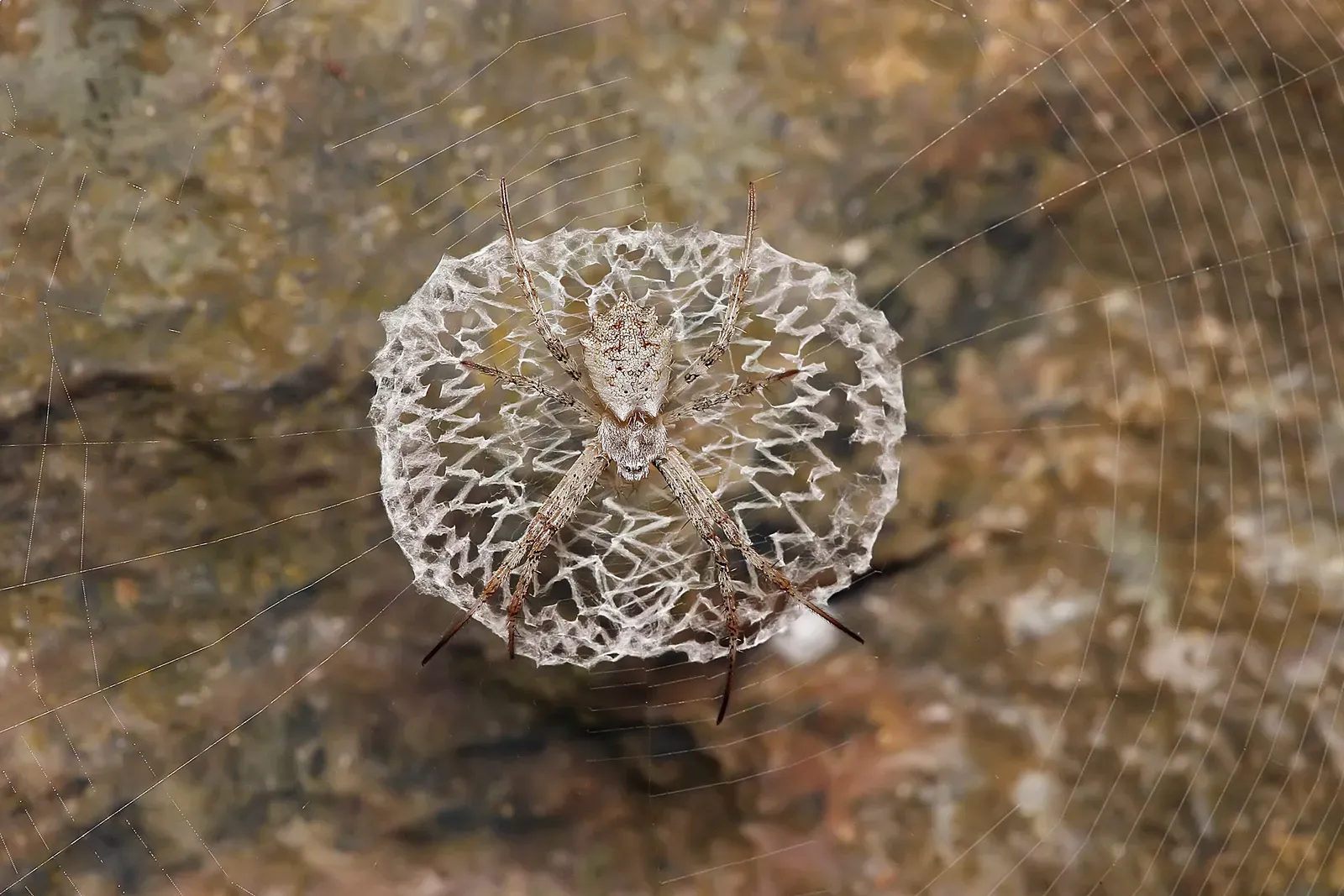
Some species of spiders, such as the orb weaving spiders, construct elaborate webs that are masterpieces of engineering, built with precision and purpose designed to maximize the spider’s chances of catching prey. What makes these structures particularly impressive is that many orb weavers build entirely new webs every single night. Talk about a daily architectural challenge.
The construction follows a precise sequence. First, the spider creates a bridge thread between two anchor points, often by releasing silk into the wind and waiting for it to catch on something distant. From this initial strand, the spider builds a frame, then adds radial spokes like the spokes of a bicycle wheel, and finally spirals inward laying the sticky capture thread that will trap flying insects.
The wasp spider, known for the zigzag pattern or stabilimentum in their webs, creates structures that are both functional and mesmerizing, serving multiple purposes: capturing prey, signaling presence, and enhancing camouflage. That zigzag pattern you sometimes see in spider webs isn’t accidental. Scientists still debate its exact function, but theories include making the web visible to birds so they don’t accidentally fly through and destroy it, attracting certain prey insects, or providing structural reinforcement.
The material properties of spider silk make these constructions possible. Some threads are sticky for capturing prey while others remain dry for the spider to walk on. Some are elastic to absorb the impact of flying insects while others are stiff for structural support. The spider instinctively knows which type of silk to deploy for each section of the web. Recent research has shown that spiders can adjust their web architecture based on environmental conditions and prey availability, demonstrating a level of adaptive problem solving we’re only beginning to understand. Some species even repair damaged sections of their webs rather than rebuilding entirely, showing a kind of engineering pragmatism.
Caddisfly Larvae: Underwater Architects in Portable Homes
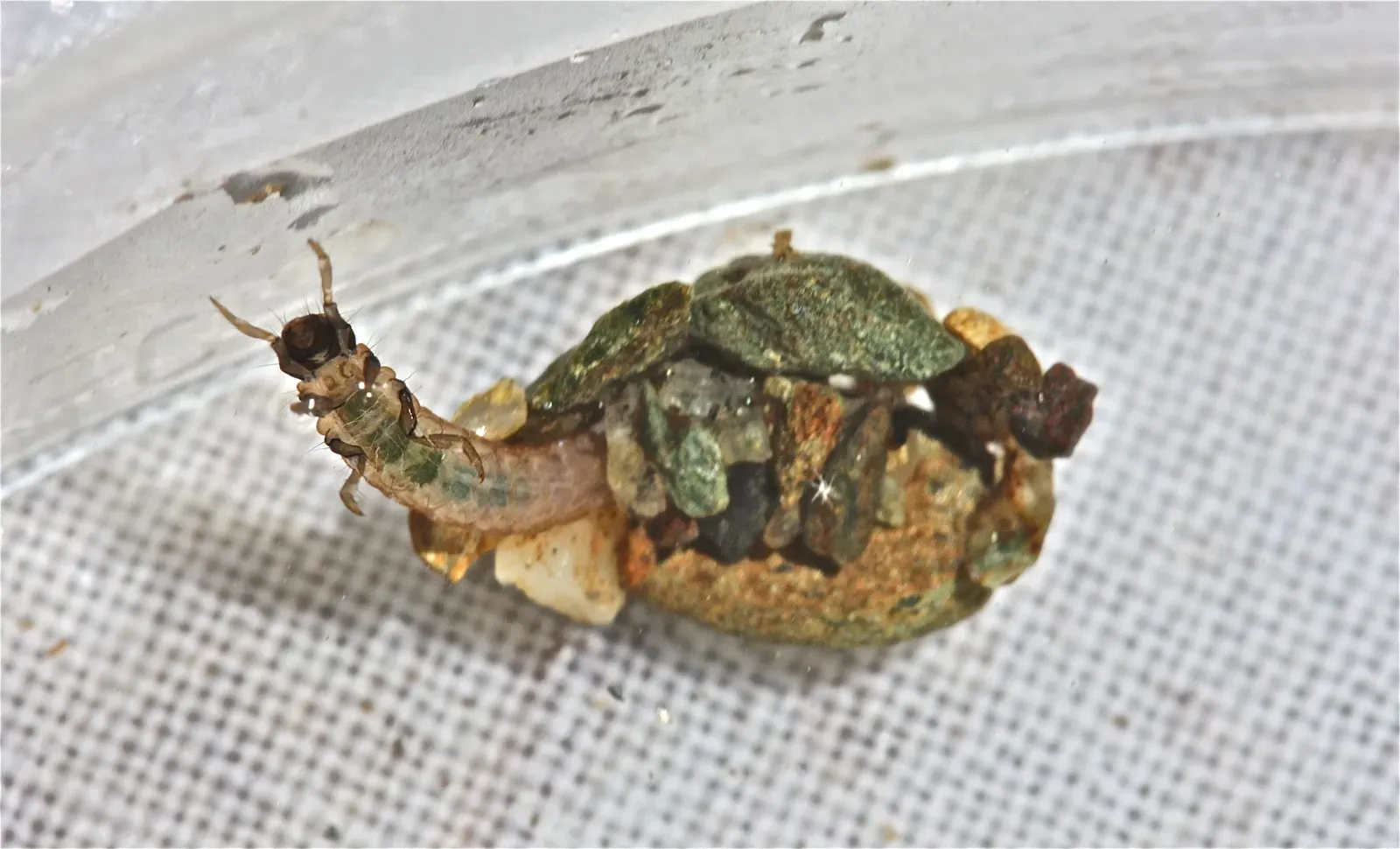
Most of the architects we’ve discussed build stationary structures, but caddisfly larvae take a different approach: they build portable protective cases that they carry with them everywhere. These aquatic insect larvae collect materials from the stream bed, tiny pebbles, sand grains, bits of plant material, even small shells, and bind them together with silk they produce from glands near their mouths.
The result is a tubular case perfectly sized to the larva’s body, with the head and legs protruding from one end while the rest of the body remains protected inside. As the larva grows, it adds new material to the front of the case while trimming away old material from the back, effectively expanding its home continuously. Different species have remarkably distinct architectural styles. Some prefer symmetrical stone arrangements, others create chaotic assemblages of whatever’s available, and still others specialize in specific materials like pine needles or snail shells.
What’s particularly clever is how these cases provide both protection from predators and ballast to keep the larva from being swept away in currents. The weight and shape of the case helps anchor the larva to the stream bottom while the sturdy construction deters fish and other predators from making an easy meal of the soft bodied inhabitant. The case essentially functions as both armor and anchor.
Artists have even experimented with giving caddisfly larvae only colored beads or gold flakes to build with, resulting in jewel like creations. This demonstrates that the larvae follow reliable construction algorithms regardless of the materials available. They’re not selecting specific materials for aesthetic reasons but rather building according to instinctive patterns that have proven successful over millions of years. The fact that they create recognizably structured cases even with unnatural materials shows just how deeply encoded their architectural behavior really is. In a way, each caddisfly larva is a mobile architect, constantly renovating and expanding its home while navigating the challenges of life in fast flowing streams.
Conclusion
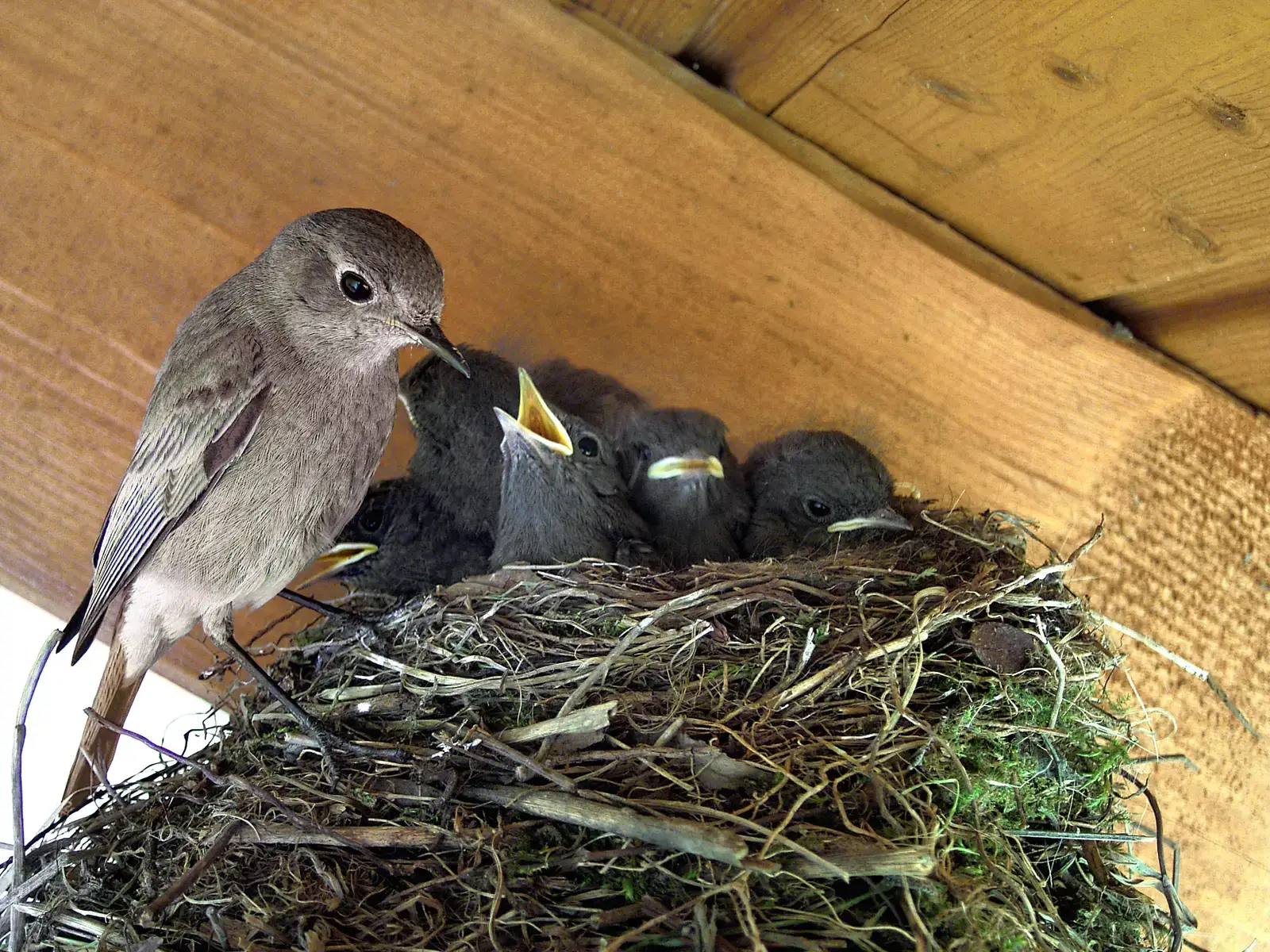
From the enormous communal apartments of sociable weavers to the delicate silk bound nests of hummingbirds, from the climate controlled skyscrapers of termites to the landscape altering dams of beavers, animal architecture spans a remarkable range of scales, materials, and purposes. Architecture may even have altered the very course of evolution. The structures animals build shape their survival, reproduction, and the very environments they inhabit.
What’s striking is that none of these architects work from blueprints or engineering degrees. Their building skills arise from millions of years of evolution encoding successful construction strategies into instinct, refined through trial and error across countless generations. Yet the results often rival or exceed human engineering in efficiency, sustainability, and adaptation to local conditions. Perhaps there’s something humbling about recognizing that we share this planet with countless other master builders, each solving architectural challenges in their own remarkable ways.
Next time you see a bird’s nest or notice a spider web glistening with morning dew, take a moment to appreciate the engineering marvel you’re witnessing. What do you think about these incredible animal architects? Have you ever observed any of these structures in nature?

- 12 Amazing Dog Breeds That Are Unbelievably Gentle with Children - July 30, 2026
- 12 US State Flowers and Their Hidden Meanings - July 30, 2026
- 7 Ways Your Dog Shows Affection Without Touch - July 30, 2026