

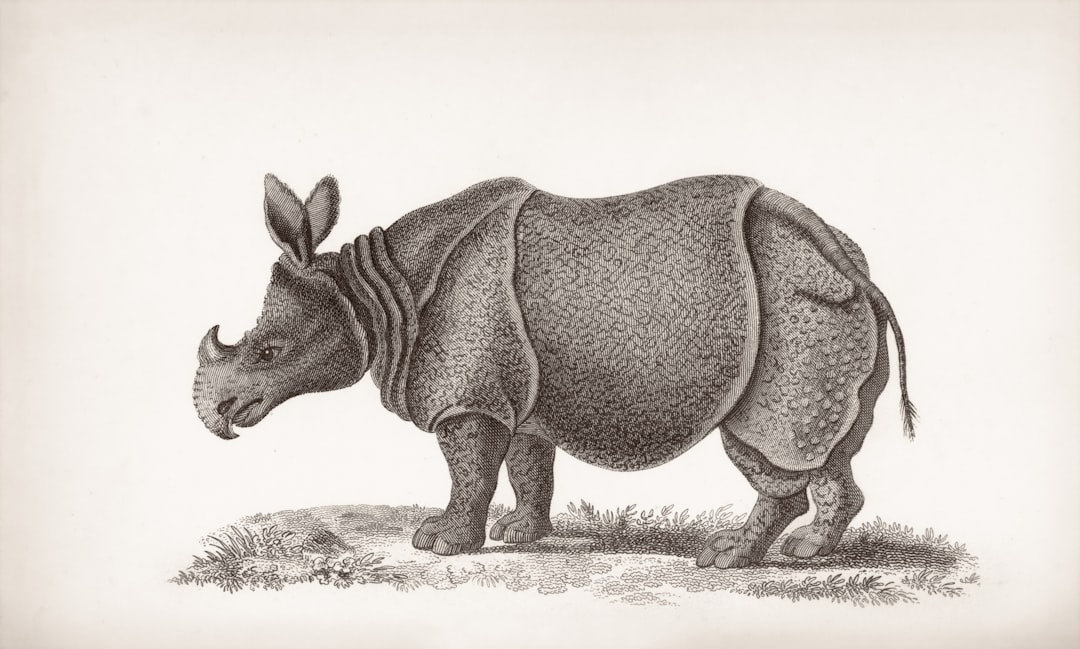

A Chilling Find in Permafrost (Image Credits: Unsplash)
Researchers examining a remarkably preserved 14,400-year-old wolf carcass uncovered traces of woolly rhino tissue in its stomach, hinting at the circumstances surrounding the rhino’s disappearance.
A Chilling Find in Permafrost
The wolf, frozen solid for millennia, offered scientists an unprecedented glimpse into Ice Age diets. Inside its stomach, they identified remnants of woolly rhino, a massive herbivore that once roamed vast northern landscapes. This discovery stood out because the wolf had consumed the rhino shortly before both froze in place.
Preservation in permafrost allowed detailed analysis of the contents. Genetic material from the rhino tissue remained intact enough for modern genomic study. Such direct evidence from a predator’s gut proved rare and valuable for reconstructing ancient ecosystems.
Genomic Clues Point to Rapid Decline
Analysis of the rhino DNA suggested the species experienced a swift extinction event. Populations appeared stable until a sudden collapse around 14,000 years ago. This timeline aligned with environmental shifts at the end of the last Ice Age.
Genomics revealed no signs of prolonged decline or genetic bottlenecks prior to the end. Instead, the data indicated healthy diversity right up to the vanishing point. Factors like climate warming likely played a key role in the abrupt end.
Rethinking Megafauna Mysteries
This wolf-stomach evidence challenged earlier theories of gradual woolly rhino extinction. Previous models emphasized slow habitat loss or human hunting over thousands of years. The new findings supported a more catastrophic scenario.
Scientists now consider rapid climate change as the primary driver. Rising temperatures melted grasslands essential for rhinos, disrupting food chains. Predators like wolves adapted, but rhinos could not keep pace with the transformations.
Lessons from the Ice Age
The discovery highlighted vulnerabilities in large herbivores during environmental upheaval. Woolly rhinos depended on specific cold-climate vegetation that vanished quickly. Wolves, more flexible in diet, survived longer in the changing world.
Similar patterns appeared in other megafauna extinctions, such as mammoths. This case underscored how predator-prey interactions captured pivotal moments in history. For more details, see the EarthSky report.
Key findings from the wolf discovery include:
- Woolly rhino tissue preserved in a 14,400-year-old stomach.
- Genomic evidence of sudden population crash.
- Support for climate-driven rapid extinction over gradual decline.
Key Takeaways:
- The rhino’s end came abruptly, not gradually.
- Predator remains offer direct dietary snapshots.
- Climate shifts remain a dominant extinction factor.
This breakthrough reminds us how fragile ecosystems can prove during rapid change. Modern conservation efforts might draw parallels to protect species facing today’s climate pressures. What lessons do you see for current wildlife challenges? Share your thoughts in the comments.

As a little kid, I fell in love with nature, wildlife, and animals. Living in the USA, South Africa, Italy, China and Germany gave me the opportunity to discover the world's Wildlife. My favorite animals are Mountain Gorillas, Siberian Tigers, and Great White Sharks.
I'm a certified PADI Open Water Diver, went to Everest Base Camp and Trekked Gorillas in Uganda. I hold a Master of Science in Economics and Finance.
Please send any feedback to feedback@animalsaroundtheglobe.com
- The Best Ways to Introduce New Fish to an Existing Aquarium - July 30, 2026
- 10 Creatures With the Strongest Jaws on Earth - July 30, 2026
- 14 Animals Endangered in the U.S. And Whats Being Done - July 30, 2026