

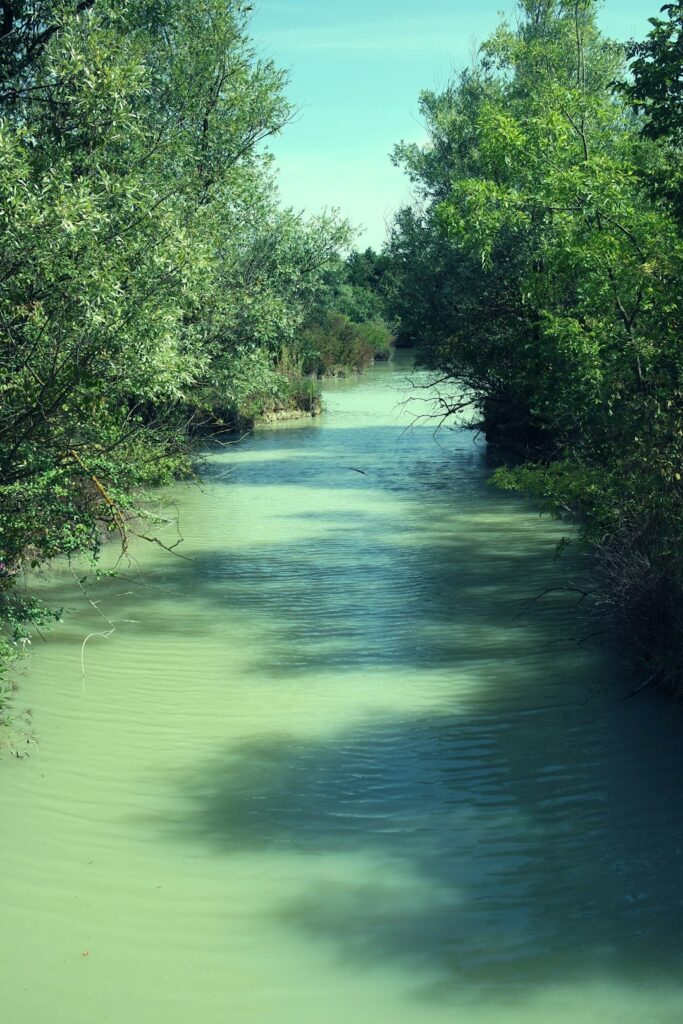

A Game-Changer Emerges for eDNA Tracking (Image Credits: Unsplash)
Scientists have introduced an innovative model that determines the likely source of environmental DNA particles collected from water bodies, marking a significant step forward in monitoring aquatic life.
A Game-Changer Emerges for eDNA Tracking
Environmental DNA, or eDNA, has revolutionized how researchers detect species presence in water without direct observation. Yet challenges persisted in pinpointing exactly where those DNA traces came from amid currents and dilution. Researchers overcame this hurdle with a new predictive model. It analyzes particle characteristics and water dynamics to forecast origins with remarkable precision. This development addresses a key limitation in eDNA studies.
Conservationists long relied on broad sampling, which often left questions about habitat specifics unanswered. The model now provides clarity, enabling targeted interventions. Early tests demonstrated its potential across rivers, lakes, and oceans. Such accuracy could reshape field protocols worldwide.
How the Model Works in Practice
The innovation stems from integrating fluid dynamics with genetic data. When eDNA particles are sampled, the model factors in water flow patterns, particle size, and degradation rates. Algorithms then simulate backward trajectories to identify probable release points. This process yields probabilistic maps of species locations.
Unlike previous methods that treated water bodies as uniform, this approach accounts for complex movements. Field applications already show reduced uncertainty in origin estimates. Researchers reported success in diverse aquatic settings, from freshwater streams to coastal zones.
Boosting Conservation Through Precise Monitoring
Aquatic ecosystems face threats from habitat loss, pollution, and climate change. Traditional surveys proved labor-intensive and invasive. The eDNA model offers a non-disruptive alternative, enhancing efforts to protect endangered fish, amphibians, and invertebrates.
Key benefits include:
- Improved detection of rare or elusive species.
- Faster identification of biodiversity hotspots.
- Enhanced tracking of invasive species spread.
- Support for real-time conservation decisions.
- Cost savings in large-scale monitoring programs.
Agencies can now allocate resources more effectively, focusing on verified habitats.
Broader Impacts on Wildlife Protection
This breakthrough extends beyond immediate tracking. It supports long-term studies on population health and migration patterns. Policymakers gain data-driven insights for protected area designations. Collaborative projects between universities and conservation groups accelerate adoption.
Challenges remain, such as refining models for extreme environments like fast-flowing rapids. Still, ongoing refinements promise wider applicability. The tool aligns with global initiatives to safeguard aquatic biodiversity.
- The model predicts eDNA particle origins by simulating water flows and genetic persistence.
- It enhances species tracking accuracy, vital for endangered aquatic wildlife.
- Conservation efforts stand to benefit from more precise, efficient monitoring.
This eDNA advancement equips scientists with a powerful tool to protect vital water-based ecosystems before threats escalate. As adoption grows, it could prevent species declines on a larger scale – what role do you see it playing in your local conservation efforts? Share your thoughts in the comments.

As a little kid, I fell in love with nature, wildlife, and animals. Living in the USA, South Africa, Italy, China and Germany gave me the opportunity to discover the world's Wildlife. My favorite animals are Mountain Gorillas, Siberian Tigers, and Great White Sharks.
I'm a certified PADI Open Water Diver, went to Everest Base Camp and Trekked Gorillas in Uganda. I hold a Master of Science in Economics and Finance.
Please send any feedback to feedback@animalsaroundtheglobe.com
- The Lizard That Can Run on Water – Nature’s Real-Life Jesus Lizard - July 29, 2026
- Why Some Fish Can Live in Both Freshwater and Saltwater - July 29, 2026
- 8 Things Komodo Dragons Hunt — And 3 They Avoid - July 29, 2026