
There’s something almost otherworldly about watching a white stallion perform a perfect levade, balancing its entire weight on its hind legs at a precise angle. These aren’t just horses. They’re living pieces of history, trained through methods that have been refined over centuries. The Lipizzaner stallions of Vienna’s Spanish Riding School represent one of the most fascinating intersections of art, athleticism, and tradition in the entire equestrian world.
What makes their story so captivating isn’t just the elegance of their movements. It’s the sheer dedication required to preserve this living art form. We’re talking about a breed that has survived wars, near extinction, and the collapse of empires, all while maintaining training methods that haven’t fundamentally changed since the Renaissance.
A Noble Birth in Habsburg Territory
In 1580, Archduke Charles II founded the court stud at Lipizza, establishing what would become one of Europe’s most distinguished horse breeds. The location wasn’t chosen randomly. This area near Trieste offered the perfect environment for breeding exceptional horses.
Archduke Charles bought nine Andalusian stallions and 24 Karst mares to stand at the newly formed stud in Lipizza, creating what became known as the Imperial Herd. The breed’s foundation combined the finest bloodlines available, blending Spanish nobility with local hardiness. The Lipizzan was developed in the Habsburg Empire in the sixteenth century, during a time when European nobility prized horses that could perform both on the battlefield and in the refined atmosphere of court.
The Mysterious Transformation to White
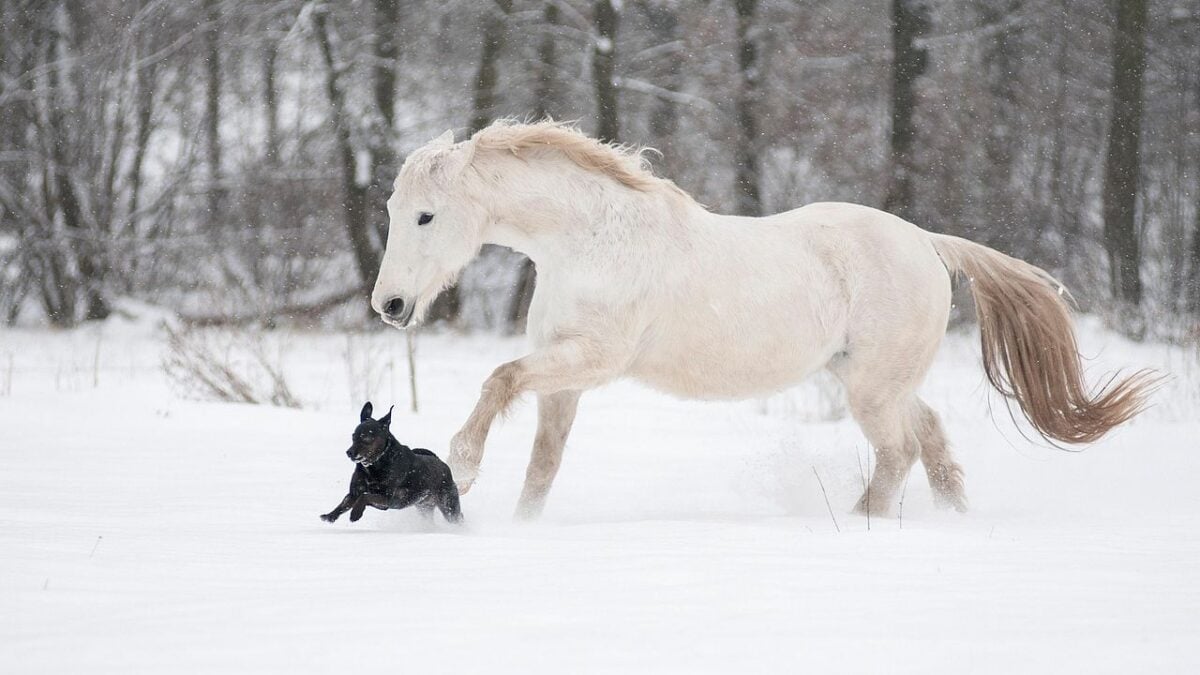
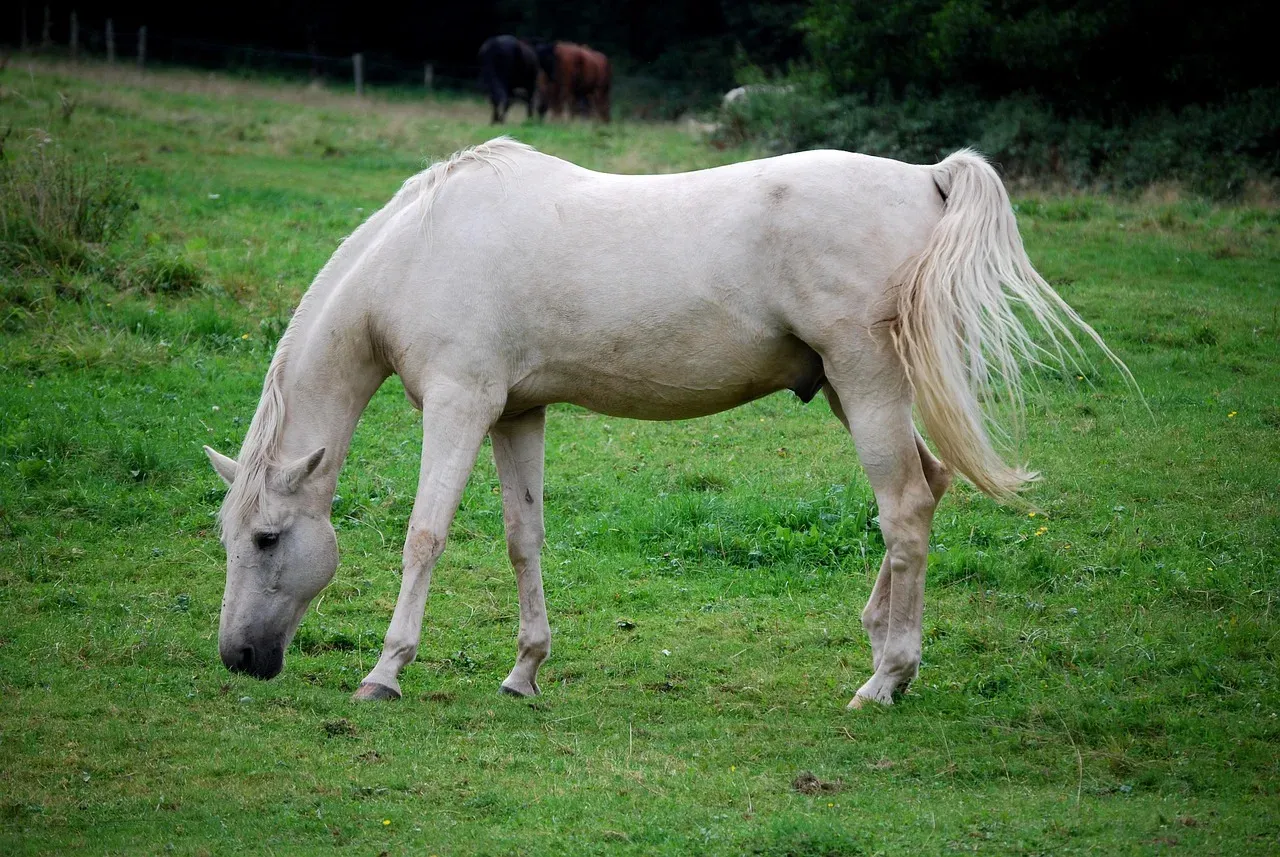
Here’s something most people don’t know. The Lipizzaner stallions are not born with the famous white coat, but turn that colour after six to nine years. Only a very few retain a dark coat. Foals arrive in shades of black, brown, or gray, making their eventual transformation all the more remarkable.
Gray was the color preferred by the royal family, so the color was emphasized in breeding practices. Thus, in a small breed population when the color was deliberately selected as a desirable feature, it came to be the color of the overwhelming majority of Lipizzan horses. There’s even a charming tradition at the Spanish Riding School. It is a long-standing tradition for the Spanish Riding School to have at least one bay Lipizzan stallion in residence, kept for good luck and to honor the breed’s diverse heritage.
A Training Journey That Takes Years
Patience isn’t just a virtue in training Lipizzaners. It’s an absolute requirement. The training of the stallions, who progress from the Lipizzaner Stud Piber to the training centre in Heldenberg or Vienna at the age of around four, marks the beginning of an extraordinarily long educational process.
It takes six years on average before a stallion can be included in the School Quadrille, which also means that he has completed his training as a School Stallion. Think about that for a moment. Six years of daily work, gradually building strength and understanding. During training, horse and rider are always on an equal footing, and the horse decides when he is ready to learn the next skill. This philosophy separates the Spanish Riding School from conventional training methods. Force has no place here.
The training progresses through distinct stages. The horse is usually ready for the second stage after a year of riding in the first stage. During this time, he is taught collection, and is ridden in turns and circles at all gaits. The main purpose of this phase is to develop impulsion, improve the natural paces, promote self-carriage, make the horse supple and flexible, building the foundation for more advanced movements.
The Legendary Airs Above the Ground
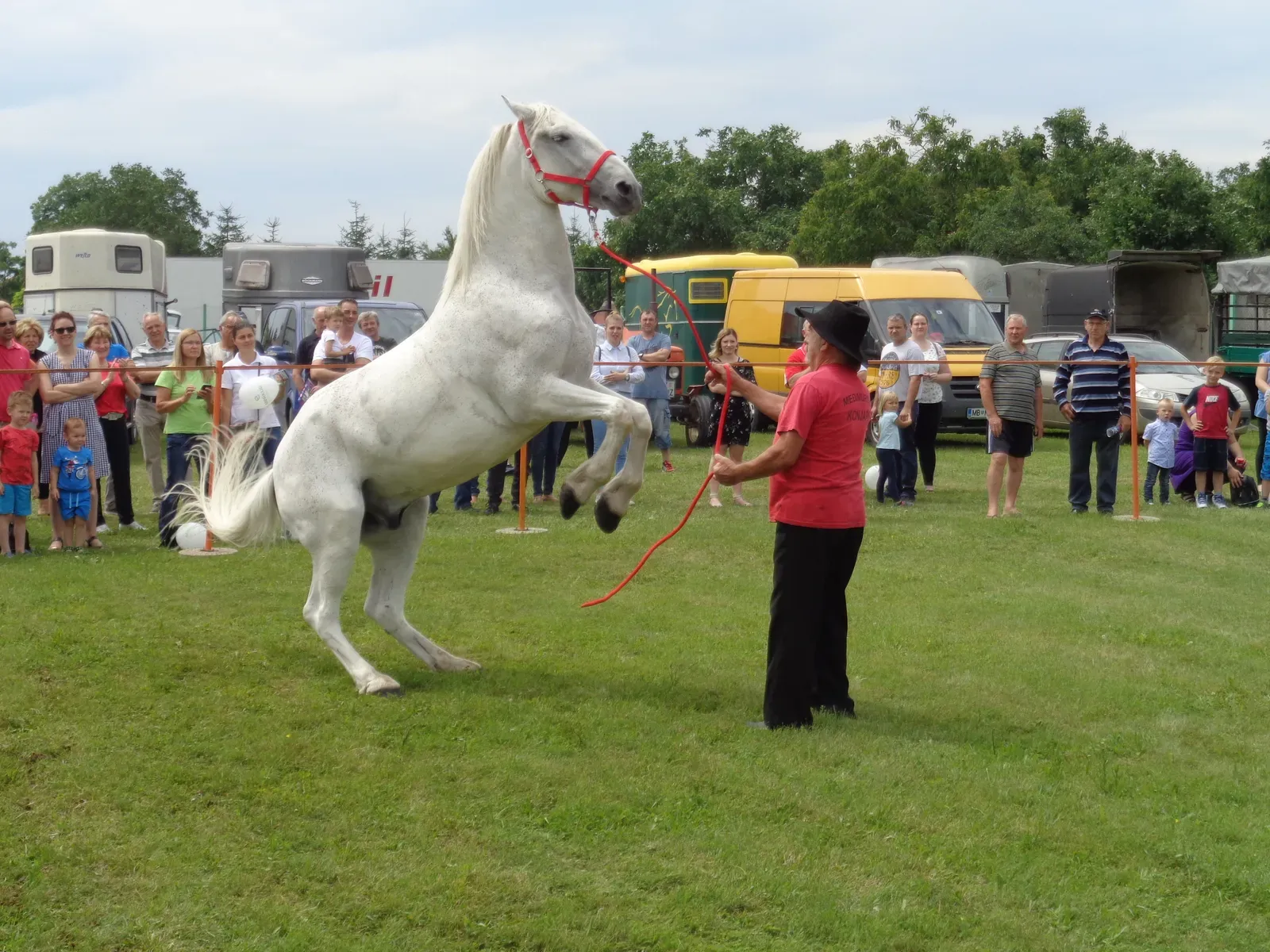
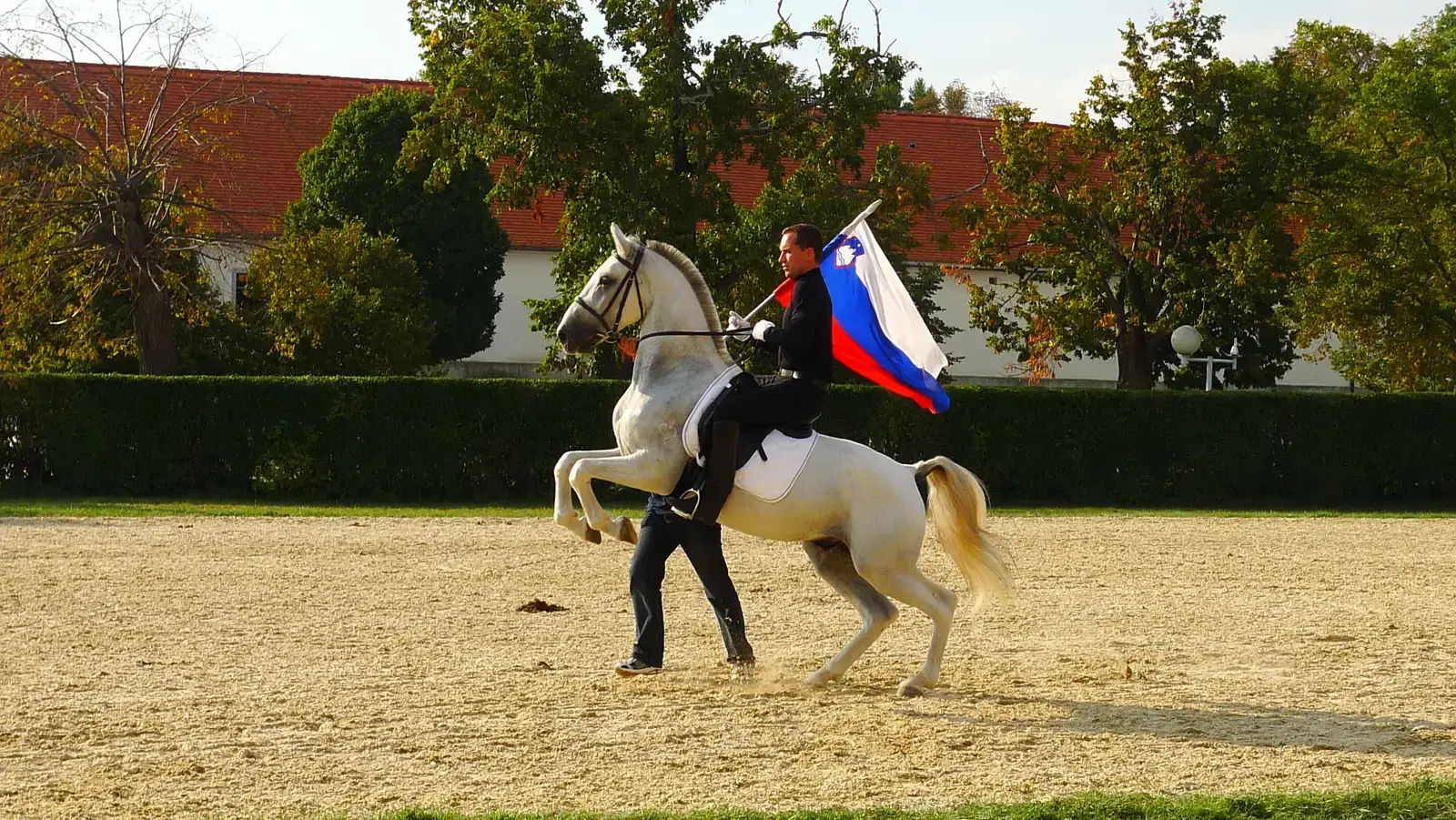
Let’s be real, the movements called “airs above the ground” are what most people come to see. The “airs above the ground” are the difficult “high school” dressage movements made famous by the Lipizzans. The levade is a position wherein the horse raises up both front legs, standing at a 30° angle entirely on its hind legs in a controlled form, requiring incredible hindquarter strength and balance.
The courbette is a movement where the horse balances on its hind legs and then essentially “hops”, jumping with the front legs off the ground and hind legs together. Watching this live is genuinely breathtaking. The famous school jumps of the “schools above the ground” – levade, courbette and capriole – are only mastered by a few exceptionally talented and sensitive stallions. Not every horse can achieve these movements, which makes witnessing them even more special.
Classical Methods From Ancient Greece
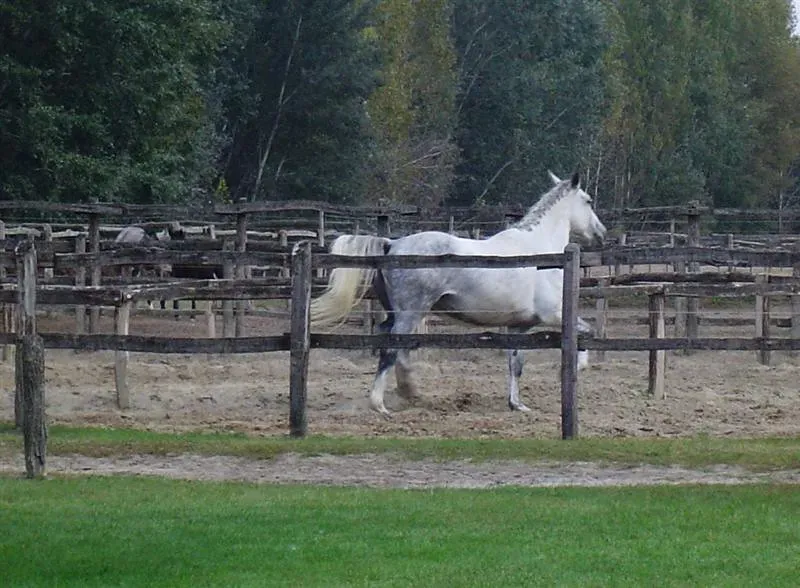
The traditional horse training methods for Lipizzans were developed at the Spanish Riding School and are based on the principles of classical dressage, which in turn traces to the Ancient Greek writer Xenophon, whose works were rediscovered during the Renaissance. It’s remarkable that ideas from over two millennia ago still inform modern training.
Other writers who strongly influenced the training methods of the Spanish Riding School include Federico Grisone, the founder of the first riding academy in Naples, who lived during the sixteenth century, and Antoine de Pluvinel and François Robichon de la Guérinière, French masters from later centuries. These influences created a comprehensive system that values the horse’s natural abilities. The methods for training the Lipizzan stallions at the Spanish Riding School were passed down via an oral tradition until Field Marshal Franz Holbein and Johann Meixner published the initial guidelines for the training of horse and rider at the school in 1898.
Surviving Wars and Near Extinction
The breed has been endangered numerous times by warfare sweeping Europe, including during the War of the First Coalition, World War I, and World War II. The rescue of the Lipizzans during World War II by US troops was made famous by the Disney movie Miracle of the White Stallions. This wasn’t some minor evacuation. It was a dramatic race against time.
In April 1945, the Hostau stud farm was secretly handed over to the U.S. Army after covert contact was made with the Eighth U.S. Army commanded by General George S. Patton. A surprise action led by Colonel Charles H. Reed of the Second Cavalry Brigade saved the Lipizzans. General Patton himself was a dressage rider, making him uniquely positioned to understand what was at stake. Operation Cowboy resulted in the recovery of 1,200 horses, including 375 Lipizzans. Without this intervention, the breed might have been lost forever.
The Baroque Stage Where Magic Happens
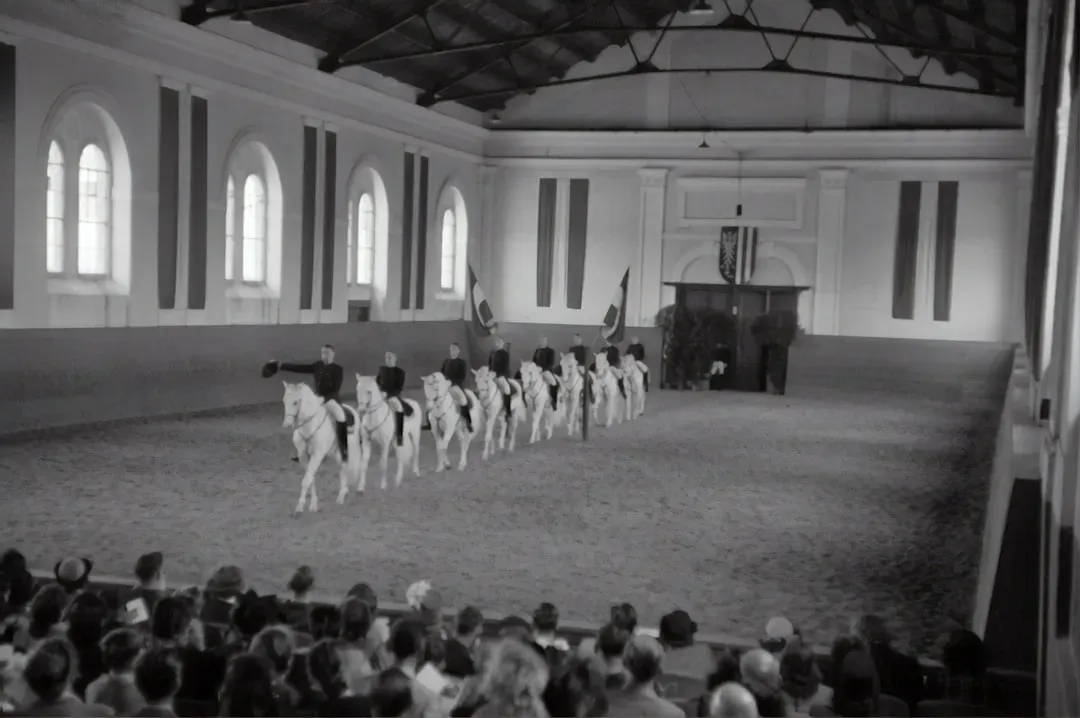
The Winter Riding School in the Hofburg Palace in Vienna is recognised as the most beautiful riding hall in the world and was built between 1729 and 1735. The setting itself adds to the experience. Walking into this ornate baroque space feels like stepping back in time to imperial Austria.
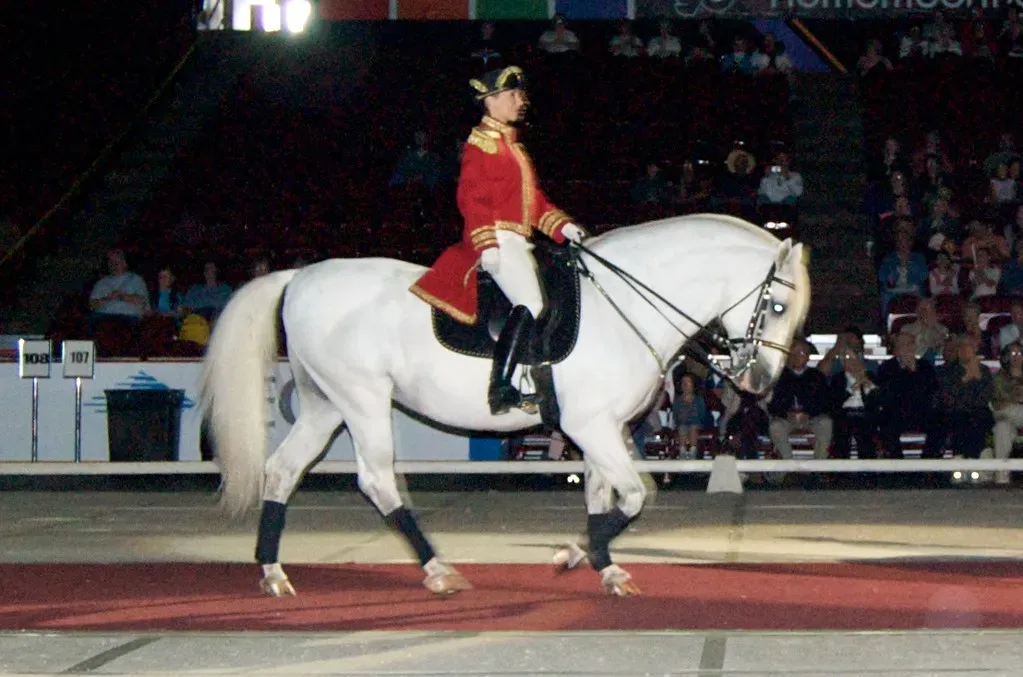
A portrait of Emperor Charles VI is located above the royal box and opposite the entrance (to which the riders always salute before they ride). This gesture of respect connects each modern performance to centuries of tradition. Lasting 20 minutes, the School Quadrille of the Spanish Riding School is the longest and most difficult in the world. Eight stallions moving in perfect synchronization through complex patterns creates a spectacle that transcends ordinary horse shows.
The performances showcase different elements. The performance finishes with the “School Quadrille”, consisting of 8 riders working in formation at the walk, trot, and canter, with flying changes, pirouettes, the half pass and the passage. The ride is performed to classical music.
The Lipizzaner story continues to unfold today, with the Spanish Riding School still training horses and riders in methods virtually unchanged for over four centuries. These white stallions represent more than impressive athleticism. They embody a living connection to European history, a testament to what patience and respect can achieve between human and horse. What do you think draws people to witness these centuries-old traditions? Tell us in the comments.

- What It Means When a Hummingbird Hovers Directly in Front of Your Face and Does Not Move – According to Indigenous Tradition From the American Southwest - July 16, 2026
- The Story Behind the Lipizzaner Stallions and Their Incredible Training - July 16, 2026
- 5 Dog Breeds That Are Surprisingly Good with Kids - July 16, 2026