

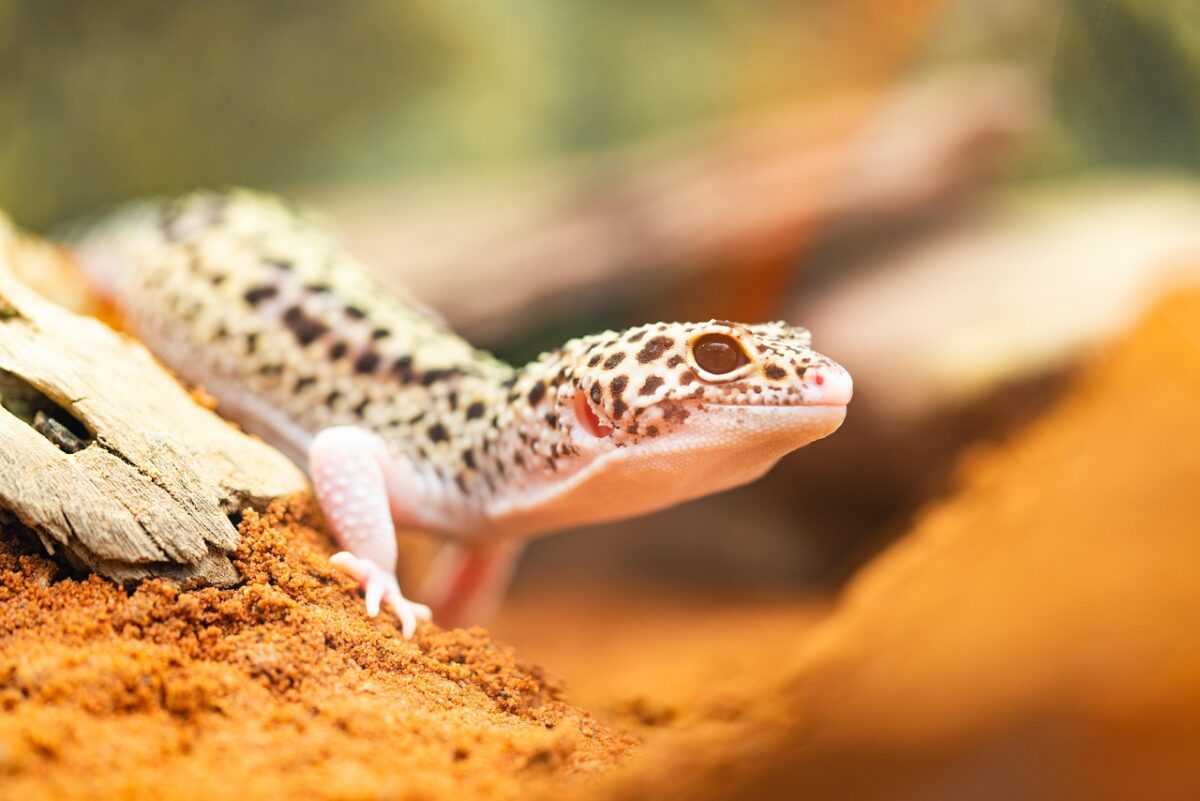
Mastering the Ideal Temperature Gradient (Image Credits: Pixabay)
Leopard geckos flourish when their terrariums replicate the thermal gradients of their native arid landscapes.
Mastering the Ideal Temperature Gradient
These ectothermic reptiles require a warm side maintained at 88-92°F for basking and digestion, contrasted with a cool side at 75-80°F.[1]
Nighttime temperatures should dip to 70-75°F to support natural circadian rhythms. Such conditions enable behavioral thermoregulation, where geckos shuttle between zones as needed. Professional herpetologists emphasize this setup mimics sun-warmed rocks and shaded burrows from their habitat. Accurate monitoring with digital probes and infrared thermometers proves essential for consistency.[1]
Under-Tank Heat Pads Deliver Targeted Belly Warmth
Under-tank heaters, or heat pads, attach beneath the enclosure and provide gentle ventral heat at 8-16 watts.[1]
This method excels in energy efficiency and silent operation, creating microclimates ideal for digestion. Installation remains straightforward: position the pad under one-third to one-half of the terrarium floor and connect to a thermostat. Maintenance stays minimal, appealing to novice keepers. However, pads warm substrates more than ambient air, and thick bedding can block heat transfer. Some geckos occasionally ignore heated zones due to individual behaviors.[1]
Overhead Heat Lamps Offer Comprehensive Coverage
Ceramic heat emitters and halogen bulbs mounted above deliver infrared radiation that permeates air and surfaces alike.[1]
These options produce dynamic gradients with hot spots up to 50-150 watts, supporting full-terrarium warmth. Ceramic models run light-free for 24/7 use, while halogens boost efficiency and mimic daylight. Guards prevent burns, and fixtures ensure safe positioning. Still, room temperature fluctuations affect performance, and bulbs demand regular replacement. Fire risks loom larger without proper clearances from flammables. Overhead sources sometimes induce stress, as geckos link them to predators.[1]
Side-by-Side Comparison of Key Features
Choosing between pads and lamps hinges on setup specifics like enclosure size and substrate type.
| Feature | Heat Pad | Heat Lamp |
|---|---|---|
| Energy Use | Low (8-16W) | Moderate-High (50-150W) |
| Installation | Simple | Moderate |
| Heat Distribution | Substrate-focused | Air and full coverage |
| Safety Risks | Low | Burns/Fire hazards |
| Maintenance | Minimal | Bulb changes |
Beginners favor pads for reliability, while experienced owners layer both for superior results.[1]
Proven Setup Tips and Best Practices
Always pair heaters with proportional thermostats to avert overheating. Place heating elements on partial floor space to foster gradients, and scatter hides across zones.
- Monitor substrate-level temps with probes at multiple points.
- Opt for thin substrates with pads to maximize conduction.
- Employ lamp guards and inspect wiring routinely.
- Combine methods: pads below for belly heat, emitters above for air warmth.
- Observe gecko activity – active basking signals success.
These steps ensure safety and health, regardless of primary choice.[1]
Hybrid systems combining under-tank pads and overhead emitters emerge as the gold standard, delivering belly warmth alongside ambient control for thriving leopard geckos. This balanced approach aligns with advice from seasoned breeders.
- Maintain 88-92°F warm side, 75-80°F cool side for thermoregulation.
- Heat pads suit beginners with low-risk, efficient belly heat.
- Hybrid setups provide the most natural and effective environment.
What heating method do you use for your leopard gecko? Share your experiences in the comments.

- Urban Coyotes Show Remarkable Adaptability, Learning to Thrive in City Environments - July 22, 2026
- Beavers Are Nature’s Engineers, Creating Vital Habitats for Other Wildlife Species - July 21, 2026
- The Recovery of the California Condor Offers Hope for Other Critically Endangered Birds - July 21, 2026