
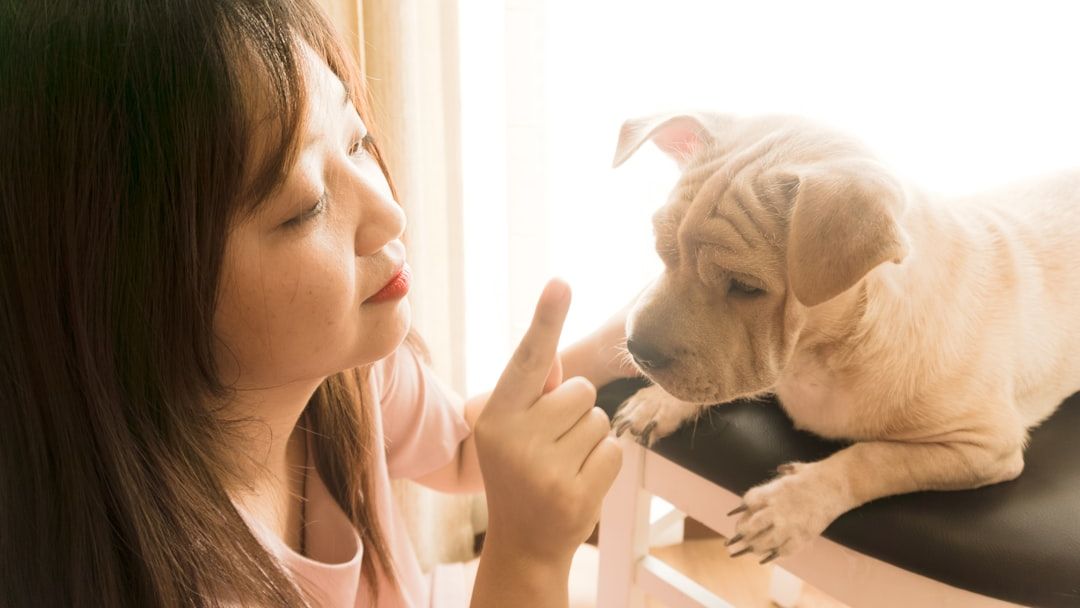
Have you ever watched your dog completely fall apart in a situation that seemed perfectly calm to everyone else in the room? Barking at nothing. Trembling before a storm even begins. Lunging on the leash when another dog is still half a block away. It can feel baffling. Isolating, even.
Here’s the thing though: if you yourself are someone who feels everything deeply, who gets easily overwhelmed in loud environments, who notices the subtle shift in a room’s energy before anyone else does, there’s a good chance your dog does too. The connection between highly sensitive people and highly reactive dogs is not a coincidence. It is rooted in biology, psychology, and one of the most profound emotional bonds in the animal kingdom. Let’s dive in.
What It Actually Means to Be a Highly Sensitive Person
Sensory Processing Sensitivity, or SPS, is a temperamental or personality trait involving “an increased sensitivity of the central nervous system and a deeper cognitive processing of physical, social, and emotional stimuli.” It’s not anxiety. It’s not weakness. It’s a fundamentally different way of experiencing the world.
The terms SPS and HSP were coined in the mid-1990s by psychologists Elaine Aron and her husband Arthur Aron, who developed the Highly Sensitive Person Scale questionnaire by which SPS is measured. Since then, the research has grown considerably.
Aron’s work highlighted that roughly 15 to 20 percent of the human population has a more finely tuned nervous system, leading them to be more sensitive to stimuli, emotions, and social dynamics. These individuals tend to process information deeply, be more aware of subtleties, and are often more affected by sensory input, like bright lights or strong smells.
The trait is not a disorder but an innate survival strategy that has both advantages and disadvantages. Honestly, that last part is worth sitting with. It’s not a flaw. It never was.
Turns Out, Dogs Can Be Highly Sensitive Too

I know it sounds a little wild, but scientists have actually confirmed what many dog owners have long suspected. Dogs can carry the same sensitivity trait their humans do.
Sensory Processing Sensitivity is a personality trait in humans characterized by a tendency to process information deeply, to be easily overstimulated, and to have strong emotional responses and an enhanced sensitivity to subtle stimuli. A trait similar to SPS has recently been identified in dogs, called “canine Sensory Processing Sensitivity,” or cSPS.
Not long after Dr. Aron’s book was published, biologists began identifying the trait of high sensitivity in more than 100 other animal species, from dogs, cats, and horses to wild creatures such as fish, monkeys, and birds. That’s a staggering range.
Just like humans, highly sensitive dogs are more aware of their surroundings, react more intensely to stimuli, and can easily become overwhelmed by too much activity or noise. Think of it like a radio with the volume dial permanently turned up. They catch every frequency the rest of us miss.
The highly sensitive pet tends to startle easily and may quickly become overwhelmed by loud noises and new sights, changes in routine, and the intense emotions from people or other animals around them. They may even have a greater reactivity to hunger and pain and take longer to calm down than other dogs would.
Your Stress Is Your Dog’s Stress, Literally

This is where things get really fascinating. And a little uncomfortable to admit.
Researchers determined stress levels over several months by measuring the concentration of cortisol in a few centimeters of hair from the dog and from its owner. They found that the levels of long-term cortisol in the dog and its owner were synchronized, such that owners with high cortisol levels have dogs with high cortisol levels, while owners with low cortisol levels have dogs with low levels.
Surprisingly, researchers found no major effect of the dog’s personality on long-term stress. The personality of the owner, on the other hand, had a strong effect, leading researchers to suggest that the dog mirrors its owner’s stress. That finding from Linköping University in Sweden is about as clear as science gets.
Although dogs’ personalities had little effect on their cortisol hair concentrations, the human personality traits of neuroticism, conscientiousness, and openness significantly affected dog cortisol levels. Your inner world, in other words, becomes their inner world.
A dog living with a calm, emotionally stable owner is more likely to be relaxed, confident, and socially adaptable. Conversely, a dog cohabiting with high emotional tension may exhibit hyperactivity, reactivity, or withdrawal. This isn’t “bad behavior.” It’s behavior shaped by emotional proximity.
The Personality Mismatch Problem Nobody Talks About
Here is where it gets a little more complicated. It’s not just about whether the owner is stressed. It’s also about whether the owner and dog are a good emotional match for each other.
Research demonstrates that canine Sensory Processing Sensitivity interacts with owner personality and use of aversive communication to influence the likelihood of behaviour problems in dogs. More behaviour problems were reported for more highly sensitive dogs when there was a relative mismatch between owner and dog personality.
In humans, there is an interaction between parenting style and child personality, where more sensitive individuals are more deeply impacted by poor parenting style. There is also good evidence that humans and dogs form attachments similar to the parent-child attachment. Think of the dog-owner relationship like parenting a highly sensitive child. The same rules apply.
Dogs may respond to their owners’ anxiety directly through emotional contagion, or owners’ anxiety may affect dogs indirectly through overprotectiveness, thereby restricting the dog’s ability to familiarize itself with novel situations, or through the use of coercive dog-training methods.
Owners that used positive punishment were more likely to have dogs that had behavior problems. The use of negative punishment was also associated with increased behavior problems, but only in highly sensitive dogs. Sensitive dogs feel the emotional charge behind correction far more acutely than other dogs. It’s not stubbornness. It’s overload.
Why HSPs Are Drawn to Sensitive Dogs in the First Place
Let’s be real: this pairing is rarely random. There is something deeply magnetic about the bond between a highly sensitive person and an emotionally attuned dog.
Many HSPs speak of having a special relationship with one domesticated species, whether dogs, cats, horses, or rabbits, as well as with their own particular companion animal. The connection often feels like something beyond ordinary pet ownership.
If you are an HSP yourself, learning about the highly sensitive pet may also help you deepen your understanding of why you chose this animal and what they are mirroring or modeling for you in your life. That one line should give every sensitive dog owner pause for thought.
HSPs tend to startle easily, try to avoid violent films and TV, and notice subtleties in their environment. They often sense what needs to be done to make another person feel more comfortable and pick up on, and even take on, other people’s energy and moods as their own. Is it any surprise they raise dogs that do the same?
As pairs moved through training classes from puppy to advanced, the similarities shared between dogs and their caregivers grew exponentially. These striking similarities in behavior and personalities were more common than uncommon. Over time and shared experience, the two become a kind of mirror of one another.
What You Can Actually Do to Help Your Reactive Dog
The good news? Understanding this connection is already half the work. Once you see it, you can start changing it.
The way we handle highly sensitive animals can increase or decrease their reactivity. That is both a responsibility and an opportunity.
Highly sensitive dogs thrive on routine. Regular feeding times, walks, and play sessions can help them feel secure and reduce anxiety. Predictability is their safety net. Remove that net and you remove their sense of control over the world.
Being aware of your own emotions and energy when interacting with your dog matters more than most people realize. They’re likely picking up on your cues more than you think, so doing your best to remain calm and positive around them makes a genuine difference.
Harsh, angry words or energy will have a negative impact on a dog or cat with high sensitivity. On the other hand, praise, encouragement, trust, and other positive actions will help empower them by making them feel better and calmer. It’s a gentle loop: your calm feeds their calm, and their calm starts to feed yours.
The key is self-regulation. Practicing mindfulness, creating calm environments, and maintaining healthy routines can help soothe both of your nervous systems.
Conclusion

The relationship between a highly sensitive person and a highly reactive dog is not a problem to be fixed. It is a dynamic to be understood. These two beings share something genuine and real: a nervous system that was built to feel everything at full volume.
As a genetic trait, high sensitivity isn’t something that we can train ourselves or our dogs to “snap out” of. Accepting that is not giving up. It’s actually where real progress begins.
The most powerful shift you can make as a sensitive dog owner is to start looking inward first. Your dog is not broken. They are, in many ways, a brilliantly accurate reflection of the emotional environment you both share. Tend to yourself, and you tend to them.
What do you think: does your dog’s reactivity tell you something about your own inner world? It might be worth asking. Drop your thoughts in the comments below.

- Why Highly Sensitive People Often Have Highly Reactive Dogs - July 31, 2026
- Avoid These 8 Cat Breeds If You’re a Scorpio - July 31, 2026
- Your Dog Understands More Than Just Your Words – Here’s How - July 31, 2026