
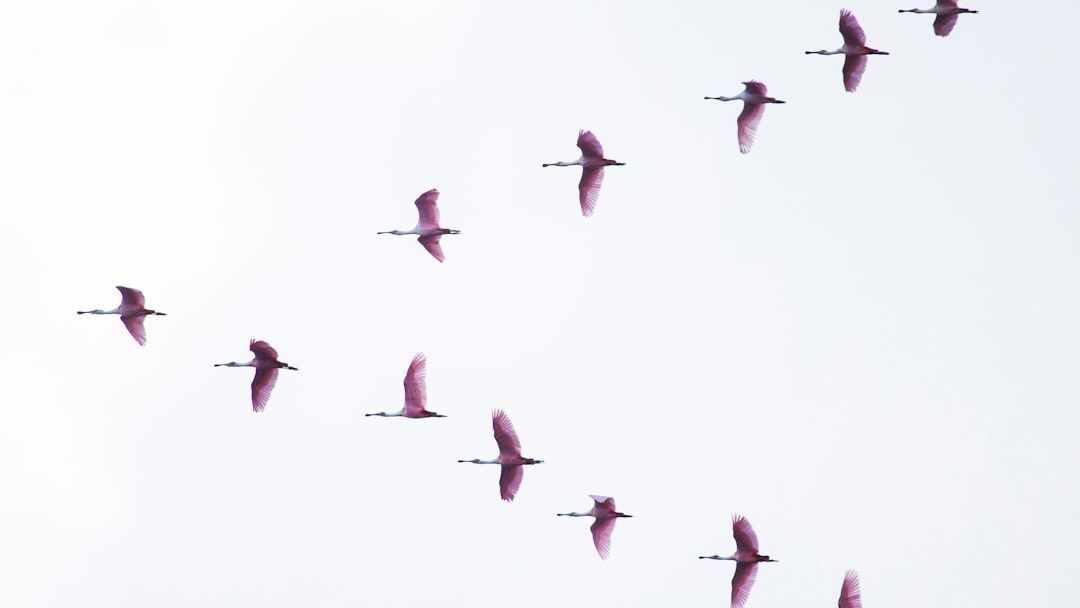
Every year, trillions of living creatures pull off something that would leave the most seasoned human traveler completely bewildered. No phone signal. No road signs. No satellite guidance. Just raw biology, instinct, and senses we barely understand.
Think about it for a moment. A tiny bird weighing barely more than a handful of coins crosses an entire ocean. A sea turtle, born on a beach it has never seen before as an adult, somehow returns to that exact same shore decades later. A butterfly the size of your palm navigates from Canada to a specific grove of trees in Mexico. These are not isolated miracles. They happen every single season, millions of times over, all around the planet.
Science has been chasing these answers for well over a century. We’re still piecing it together. So let’s dive in.
The Earth as a Living Compass: Magnetoreception and the Invisible Map
Here’s the thing – the most mind-bending navigation tool animals use isn’t something you can see, smell, or touch. It’s the planet itself. The Earth has a magnetic field, and while humans can’t detect it without a compass, some animals have the remarkable ability to detect and use it for their migrations, helping them determine which way is north.
Many animals navigate via magnetism, orienting themselves along the north-south lines of Earth’s magnetic fields. In one study of baby sea turtles, which typically migrate east after hatching, changing the orientation of magnetic generators around a swimming pool actually changed the direction in which the hatchlings swam. That is not a coincidence. That is a built-in compass you were born with.
Spiny lobsters off the Florida coast migrate seasonally between deep and shallow water. When researchers gave captive lobsters a magnetic field that exists north of their home area, they responded by walking south. When given a field that exists south of their home area, they walked north. The lobsters seem to have a magnetic map quite similar to the ones sea turtles have.
One scientific possibility involves a chemical reaction triggered by light that generates free-radical molecules with electrons whose quantum spin makes them behave as subatomic magnets. Regardless of exactly how it works, magnetoreception seems to be a noisy sense, so animals probably combine it with signals from other navigational cues. Honestly, the quantum angle alone should make your jaw drop.
Reading the Sky: Celestial Navigation and the Solar Compass
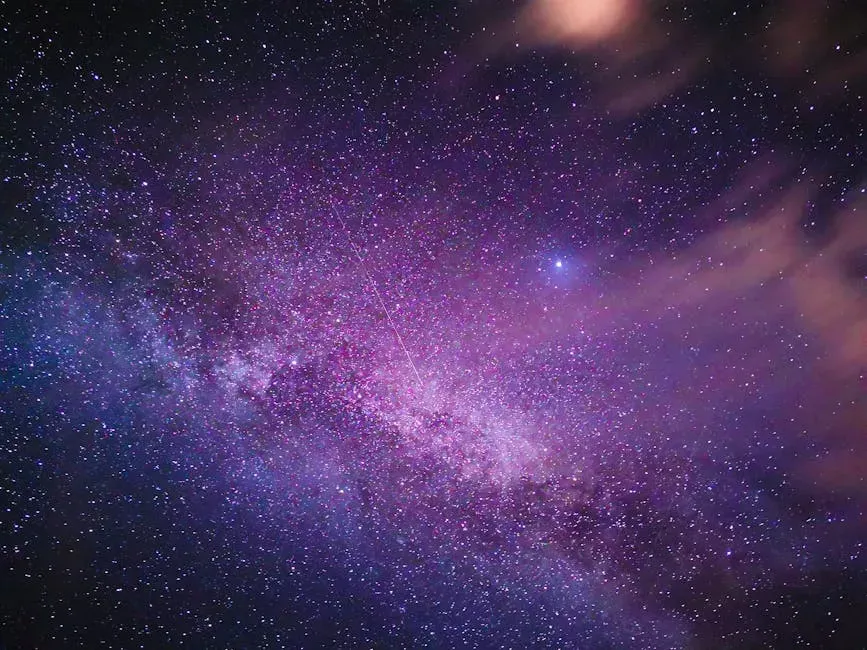
In the 20th century, Karl von Frisch showed that honey bees can navigate by the Sun, by the polarization pattern of the blue sky, and by the Earth’s magnetic field, relying on the Sun when possible. These tiny insects essentially built a solar clock millions of years before humans did.
The solar navigation system used by birds is more sophisticated than simply following the sun’s position. Studies have shown that birds possess an internal clock that allows them to adjust their directional calculations based on the time of day and the sun’s arc. The Indigo Bunting, for example, calibrates its orientation by observing the sun’s position relative to landmarks during dawn and dusk.
Seabirds are believed to steer mostly by the sun and the stars, since if the animals are ever going to get lost, it tends to happen when the skies are overcast. The same is true of the dung beetle. While naturalists have studied them in planetariums, as long as the artificial Milky Way was in view, the beetle and its dung ball rolled right along. Switch off the stars, however, and the little creature was completely flummoxed.
Some animals, notably insects such as the honey bee, are sensitive to the polarization of light. Honey bees can use polarized light on overcast days to estimate the position of the Sun in the sky, relative to the compass direction they intend to travel. Let’s be real – that’s more sophisticated than what most of us do when we get lost on a road trip.
The Nose Knows: Smell as a Navigation Superpower
We tend to think of navigation as a visual exercise. Look at a map, spot a landmark, follow a road. Animals are doing something far stranger and arguably far more impressive. They’re reading invisible chemical signatures drifting through the air and water, and using those signatures as a kind of olfactory atlas.
The sense of smell, long underestimated in birds, has emerged as another important navigational tool for some species. Seabirds like albatrosses and petrels, which navigate vast featureless oceans, appear to create “olfactory maps” by detecting airborne chemicals that vary across marine environments.
Salmon use scents in rivers to find spawning areas to lay their own eggs in the same area where they were hatched. Scientists also think wildebeest follow the scent of rain on the dry Serengeti soils to reach greener pastures. That second one floors me every time. A wildebeest literally smells rain from hundreds of miles away and walks toward it.
Desert ants, for example, use environmental olfactory cues and odour plumes – clouds of scent dispersed by the wind moving odour molecules – to navigate their way both to food sources and back to their nests. Compare that to a salmon, which can remember the specific chemical signature of the river it was born in and use it years later to return home. The range of olfactory navigation across species is staggering.
Learning the Route: Experience, Memory, and Social Intelligence
It would be tempting to think all of this is pure instinct. A genetic program, switched on at birth, guiding every step. The truth is far more nuanced and, in many ways, more moving than that.
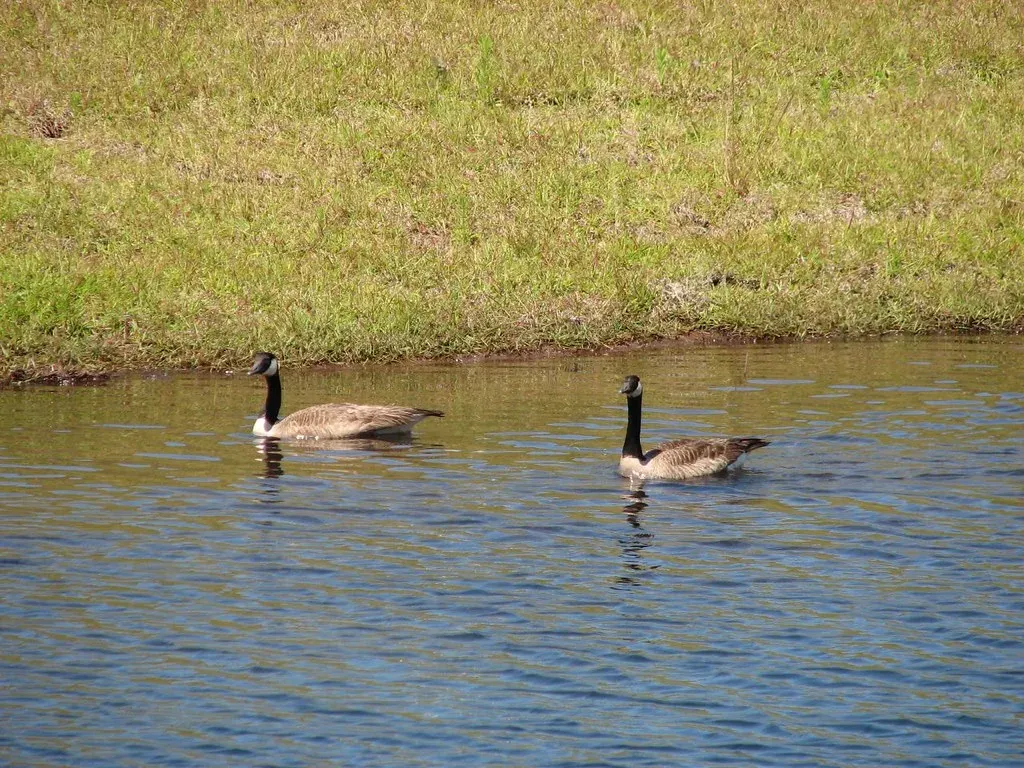
Research tracking white storks showed that they incrementally refine migration timing and routes by innovating novel shortcuts during migration. Storks switch from energy-efficient exploration to rapid and directed movement as they age. Together, these results suggest that learning and early-life exploration play an important role in the development of migration in a long-lived migratory bird.
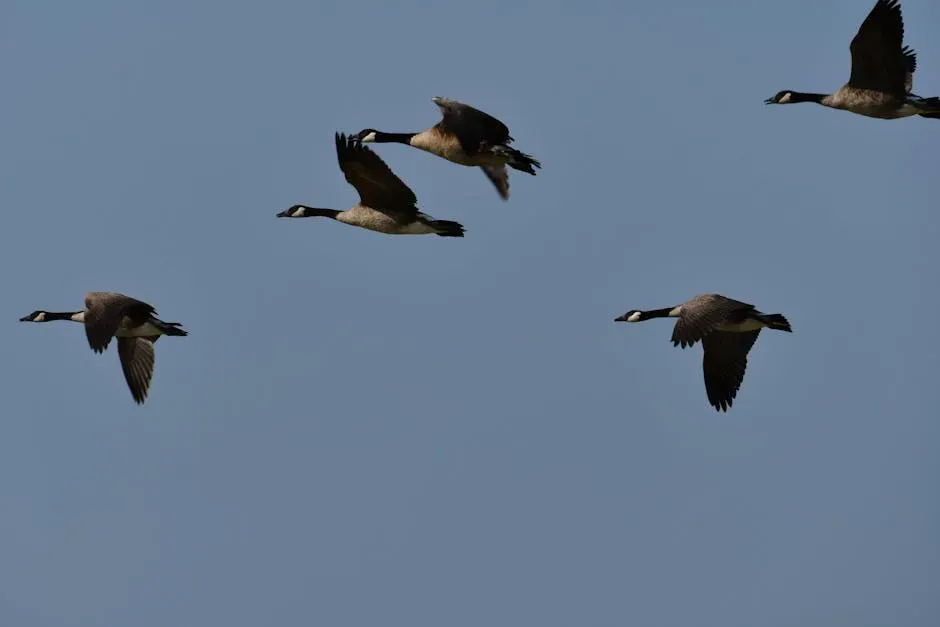
While many aspects of bird navigation are innate, experience and learning play crucial roles in refining these abilities. First-time migrants typically make more navigational errors and take less efficient routes than experienced birds. Studies using GPS trackers have shown that migration routes become increasingly precise and efficient with each passing year as birds learn to recognize landmarks, optimize fuel consumption, and avoid hazards.
Research findings suggest that birds learn migration routes over many years, with older birds more likely to become leaders. Such learning probably applies to other birds that are long-lived and social, including storks and geese. Think of it like a family road trip where grandma still remembers the best shortcuts because she’s driven it forty times. Only in this case, the stakes are survival. An individual caribou’s decision-making is driven, in part, by social decision-making and learning, consistent with the potential of animals to improve their fitness with collective knowledge and collective behaviors.
Multi-Modal Mastery: How Animals Layer All Their Senses Together
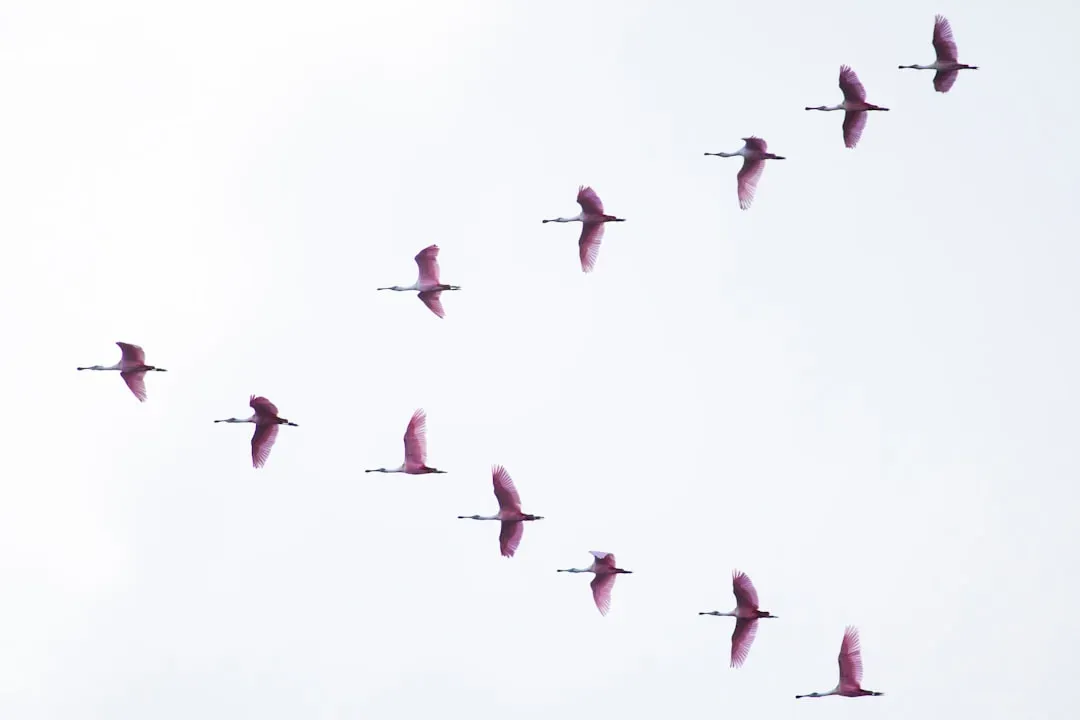
Here’s what truly separates animal navigation from anything we have built so far. It is not one system. It is not two. Navigation is multi-modal, in that birds may use different cues at different times as a response to environmental conditions they find themselves in. Think of it like a pilot who uses radar, visual cues, air traffic control, and gut instinct all at once.
Long-distance navigation has three distinct phases, each focusing on different environmental cues. During the long-distance phase, animals use stable signals such as celestial cues from the sun or stars, or Earth’s magnetic field, and sometimes large visual landmarks such as a coastline or mountain range. Then, during the homing phase, animals use sounds and smells associated with home. Finally, during a pinpointing-the-goal phase, they recognize familiar sights such as a specific tree or cave entrance.
Each year, billions of birds undertake journeys spanning thousands of miles, often returning to the exact same locations year after year. The Bar-tailed Godwit holds the record for the longest non-stop flight, traveling over 7,500 miles from Alaska to New Zealand without a single break for food or rest. Even more remarkably, juvenile birds of many species can navigate to wintering grounds they have never visited before, without the guidance of experienced adults.
Perhaps one of the most remarkable aspects of avian navigation is that many species appear to have genetically encoded migration routes and timing. Young birds of certain species can successfully complete their first migration without guidance from experienced adults, suggesting an inherited program directing their journey. The Common Cuckoo provides a striking example, as these birds are raised by host species that do not migrate to the same wintering grounds, yet young cuckoos independently find their way to ancestral wintering areas in Africa.
Communication and signaling among individuals also plays a role, with some animals that migrate in groups communicating as they travel to help with navigation. Whales, for example, use sound to tell each other where they are and where they are headed. The whole system is breathtakingly elegant.
Conclusion: Nature’s Navigation Puts Our Technology to Shame
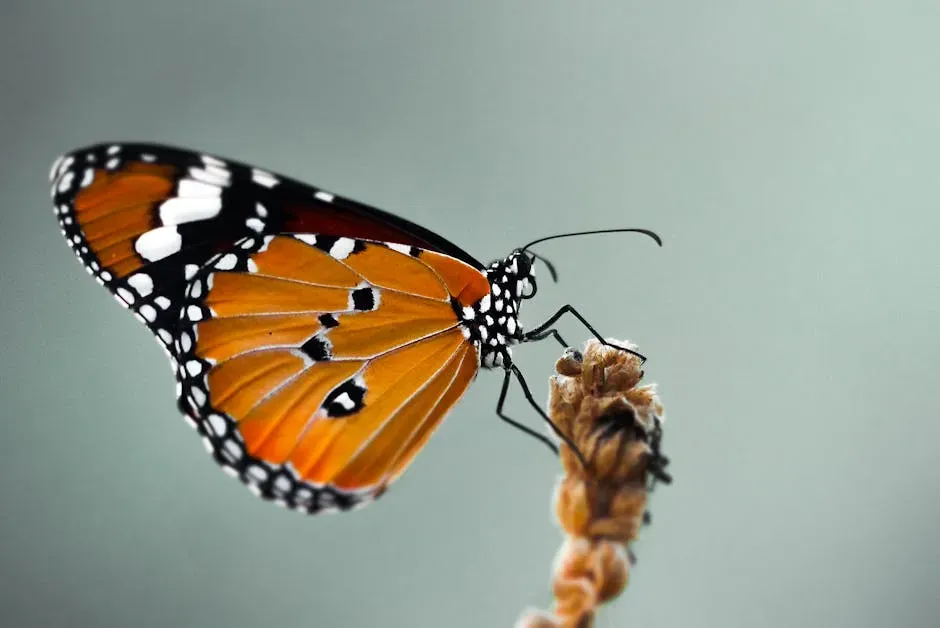
We live in a world where many people can’t find a nearby coffee shop without pulling out a smartphone. Meanwhile, a monarch butterfly finds a specific cluster of trees thousands of miles away using nothing but sunlight, magnetic fields, and the smell of the wind. This innate ability to navigate across vast distances without maps or human technology demonstrates sophisticated biological mechanisms that scientists are still working to fully understand, and migration is not simply random wandering but a precisely orchestrated journey guided by multiple complementary navigation systems working in concert.
The aerospace industry is already looking into navigational systems that would do something similar – relying for precision guidance on the Earth’s natural magnetism rather than on expensive GPS satellites. In other words, we are only just beginning to copy what animals have perfected over millions of years of evolution.
A vast array of species, from beetles to birds to dogs, demonstrate amazing abilities to travel long distances without the use of electronic GPS, something many humans have perhaps become over-reliant upon. The real wonder here is not just what animals can do. It is what they quietly remind us: that the most sophisticated navigation systems on Earth were never built in a lab. They evolved. They breathe. They fly.
What would you do if your phone died in the middle of nowhere? And more to the point – how many senses would you need to find your way home? Tell us what you think in the comments.

- 12 Surprising Facts About Reindeer - July 30, 2026
- 10 Common Bird Feeder Mistakes That Could Harm Your Backyard Visitors - July 30, 2026
- How Beavers Are Naturally Restoring Wetlands and Preventing Flooding - July 30, 2026