
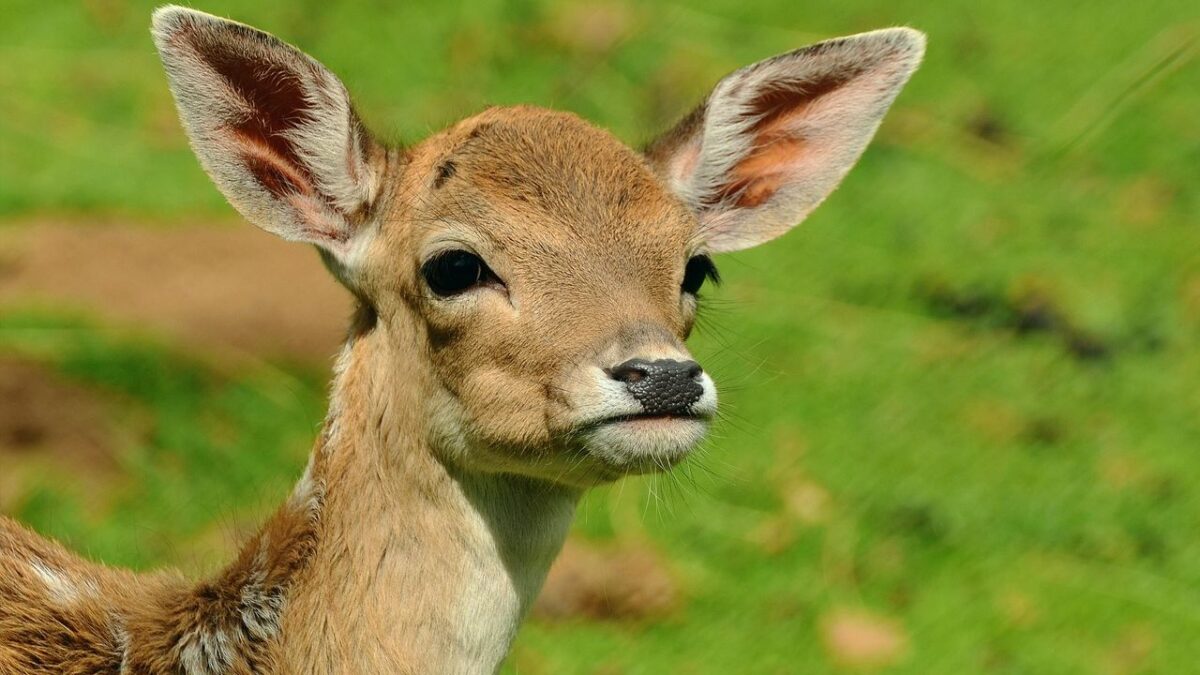
Imagine spotting a deer no bigger than a large dog trotting through your backyard. Not a fawn. A fully grown adult deer. It sounds like something from a fairy tale, but in the Florida Keys, this is simply Tuesday. There is a creature living on these sun-drenched islands that is so unique, so perfectly shaped by its environment, that it exists nowhere else on the planet. Not in a zoo. Not in the wild somewhere remote. Only here, on a tiny chain of islands dangling off the southern tip of Florida.
This is the story of the Key deer. Part survival tale, part conservation triumph, and part urgent warning about what we stand to lose. If you’ve never heard of them, you’re in for a surprise. Let’s dive in.
A Deer Like No Other: Meet the Key Deer
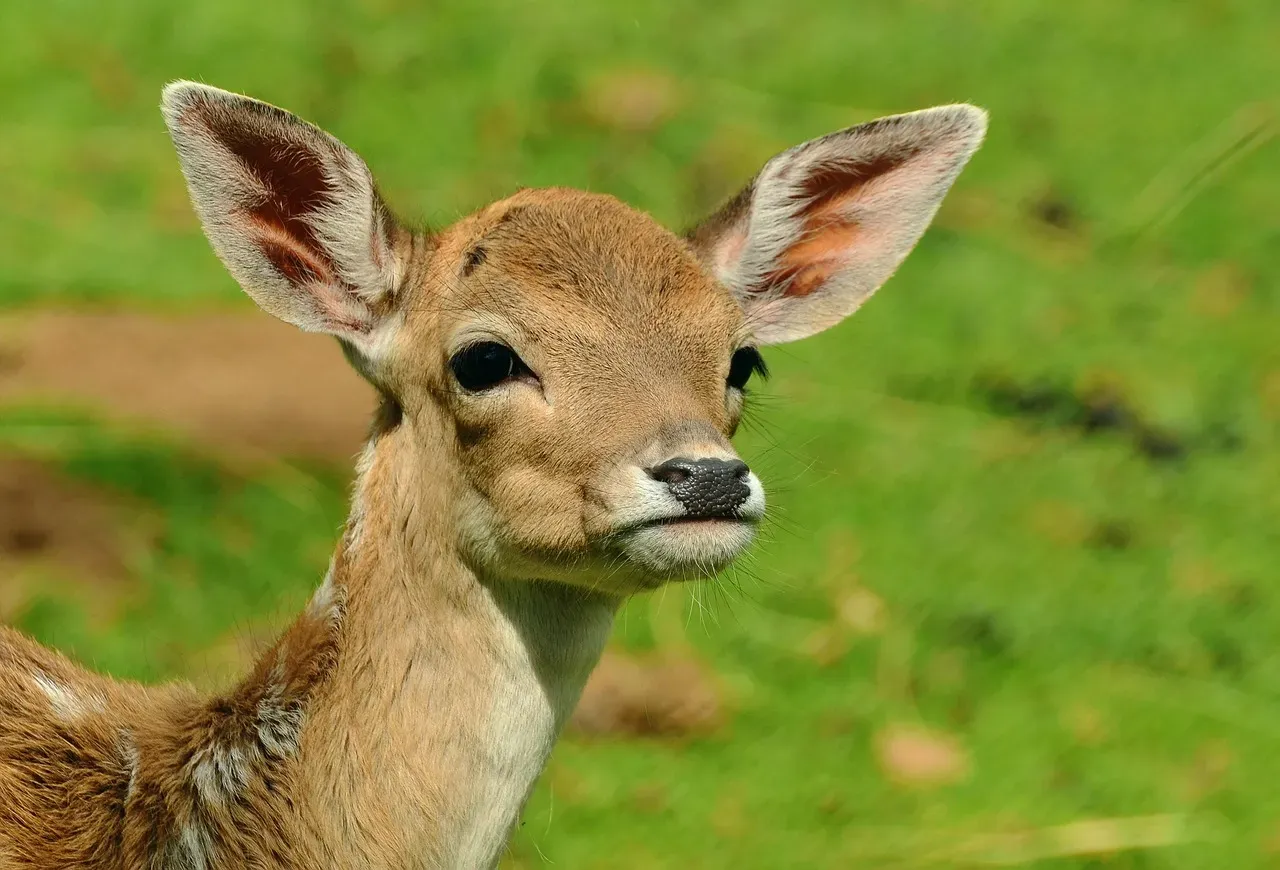
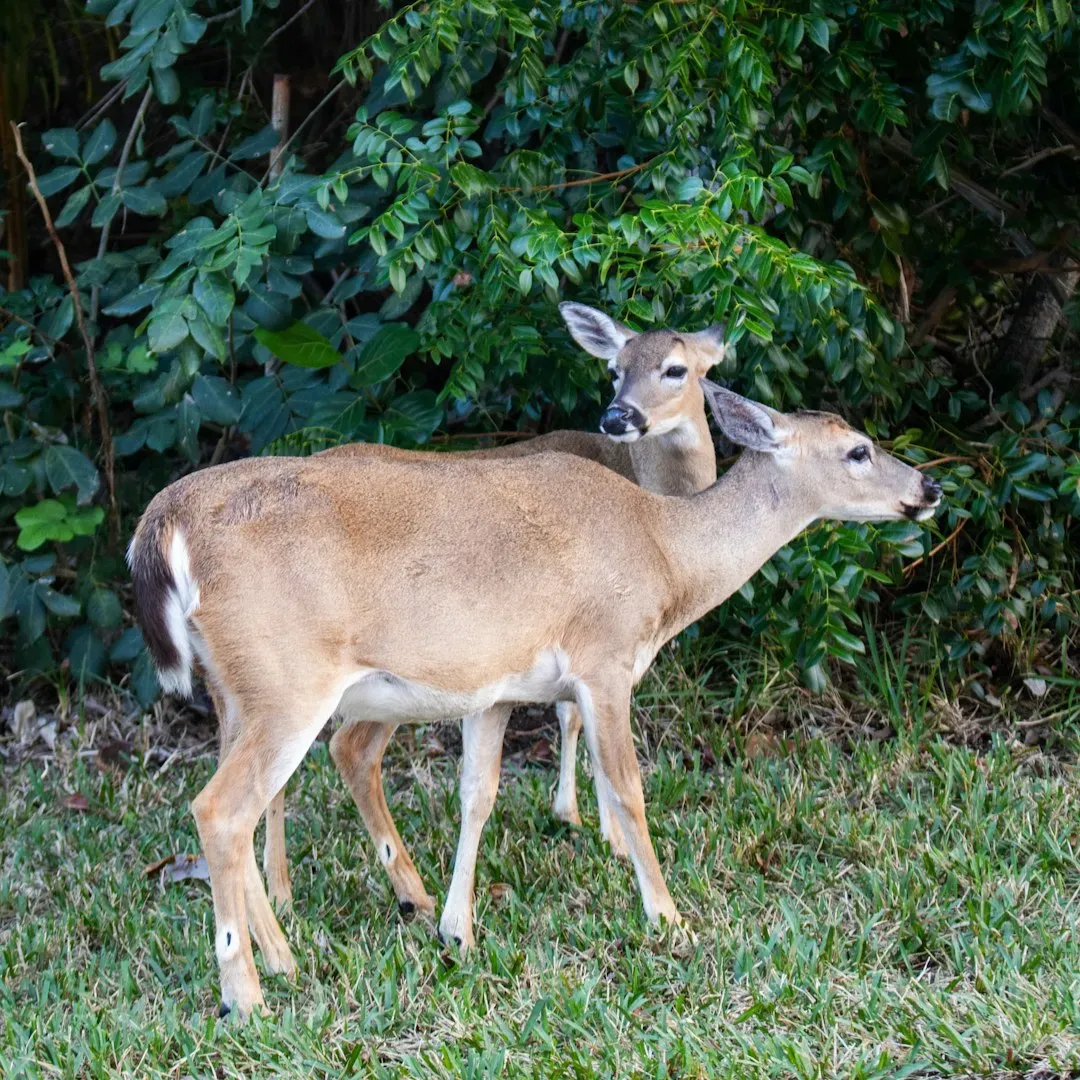
The Key deer, known scientifically as Odocoileus virginianus clavium, is an endangered subspecies of the white-tailed deer that lives only in the Florida Keys. That alone makes it extraordinary. It is the smallest extant North American deer species, and it can be recognized by its characteristic size, smaller than all other white-tailed deer.
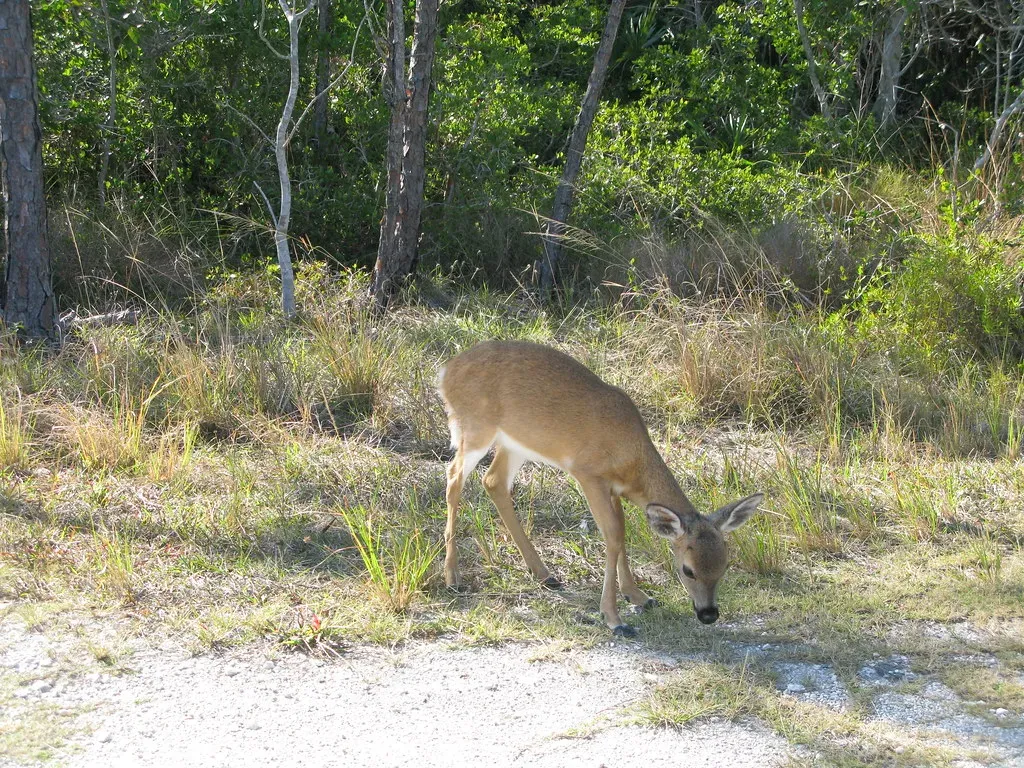
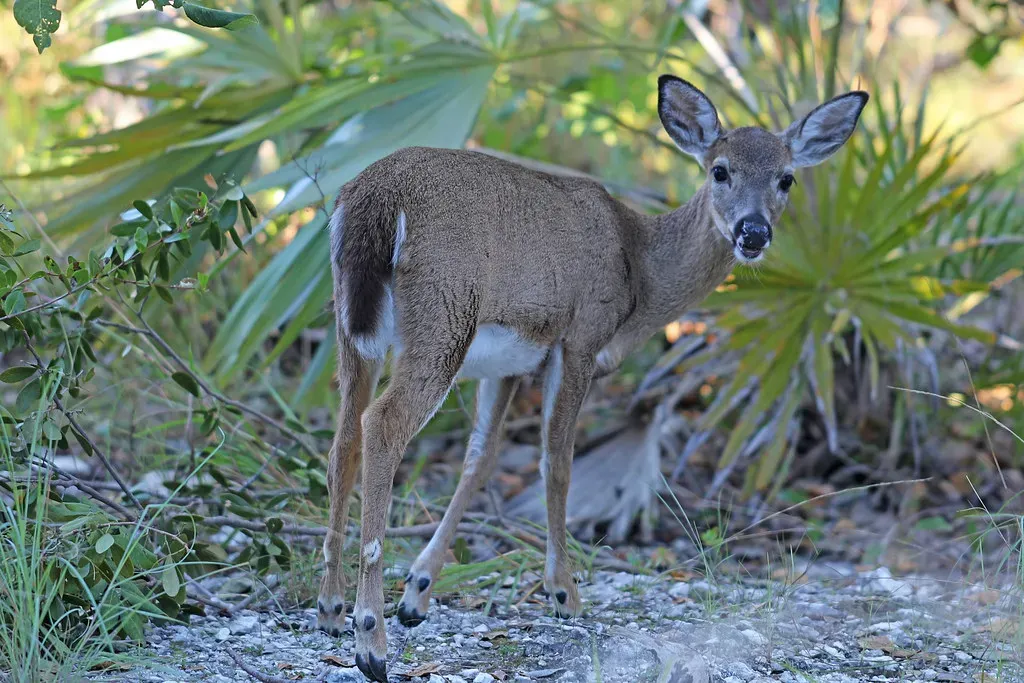
Sometimes called the “toy deer,” the Key deer is the smallest subspecies of white-tailed deer. Honestly, calling it a toy deer feels accurate. Key deer clock in around 60 to 80 pounds at maturity for does and bucks respectively, so picture your golden retriever or yellow lab running around with antlers on its head. That mental image never gets old.
The smallest race of North American deer, adult Key deer measure 25 to 30 inches at the shoulder and have an average weight of 55 to 75 pounds for males and 45 to 65 pounds for females. To put that in perspective, a typical white-tailed deer from the mainland can weigh well over 200 pounds. The size difference is almost comical.
How Did They Get So Small? The Island Effect
Millennia ago, when much of North America was covered in ice, a distant relative of a white-tailed deer grazed its way down a limestone ridge to the southeast edge of the continental United States. Over time, as the ice melted and seas rose, the limestone ridge was reduced to a series of shrinking islands, and the deer, trapped and isolated from its mainland relatives, shrank too.
A subspecies of the whitetail deer, it is believed to have become isolated on the islands as sea level rose some 10,000 years ago at the end of the last glaciation period, subsequently shrank in size due to insular dwarfism, and became genetically unique. This phenomenon, called insular dwarfism, is a well-documented biological process where animals on islands evolve to be smaller over generations due to limited food resources and reduced predation pressure. It’s like nature hitting a “shrink” button, slowly, over thousands of years.
It is believed that Key deer migrated to their current abode during the Wisconsin Glaciation when sea levels were lower than today, but the first written records date back to the 1550s in the journal of a Spanish shipwreck survivor. Think about that. These deer have been noticed and documented for nearly 500 years.
Where Exactly Do They Live?
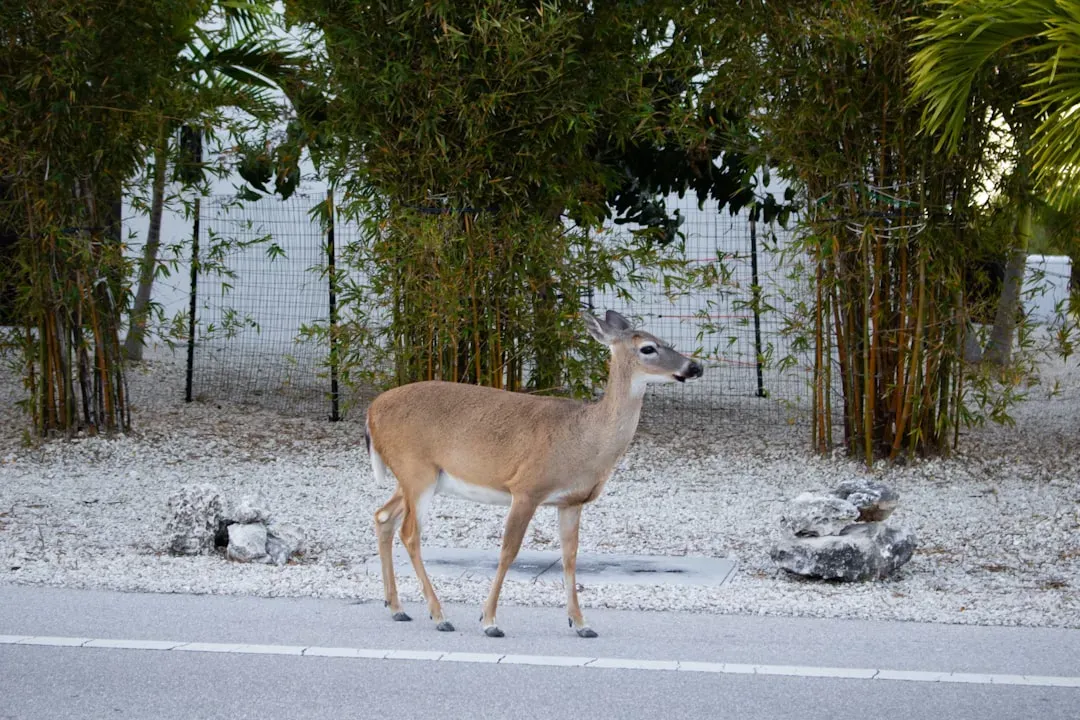
Key deer are unique because they are the smallest subspecies of North American white-tailed deer and are found nowhere else in the world except the Florida Keys. Their world is tiny by any measure. The current Key deer range includes approximately 25 islands extending from Big Pine Key to Sugarloaf Key.
Key deer inhabit nearly all habitats within their range, including pine rocklands, hardwood hammocks, mangroves, and freshwater wetlands. They are remarkably adaptable for an animal with such a narrow geographic range. They can swim between islands and move around their habitat in search of freshwater. Yes, these little deer are also swimmers. Surprise.
Key deer use all islands during the wet season when drinking water is more generally available, retreating to islands with a perennial supply of fresh water in dry months. By August 2019, most individuals were living on only one of the Florida Key islands, Big Pine Key. Their dependence on fresh water is actually one of their most critical vulnerabilities, and we’ll come back to that.
What Do They Eat and How Do They Behave?
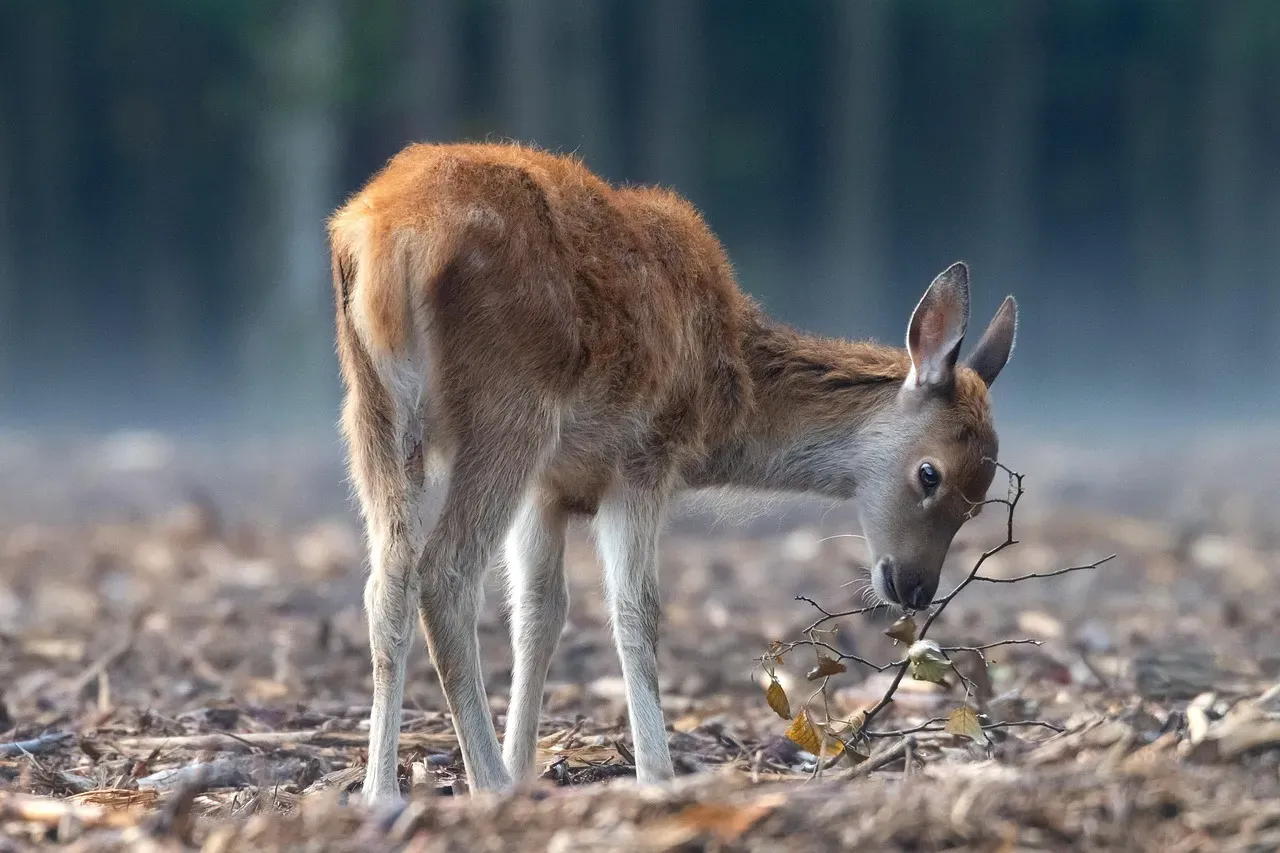
The species feeds on over 150 types of plants, but mangroves, silver palm fruit, and thatch palm berries make up the most important parts of their diet. In other words, they are tropical island gourmands with a very specific taste in vegetation. The Key deer’s diet varies throughout the year, likely due to seasonal availability and nutritional needs.
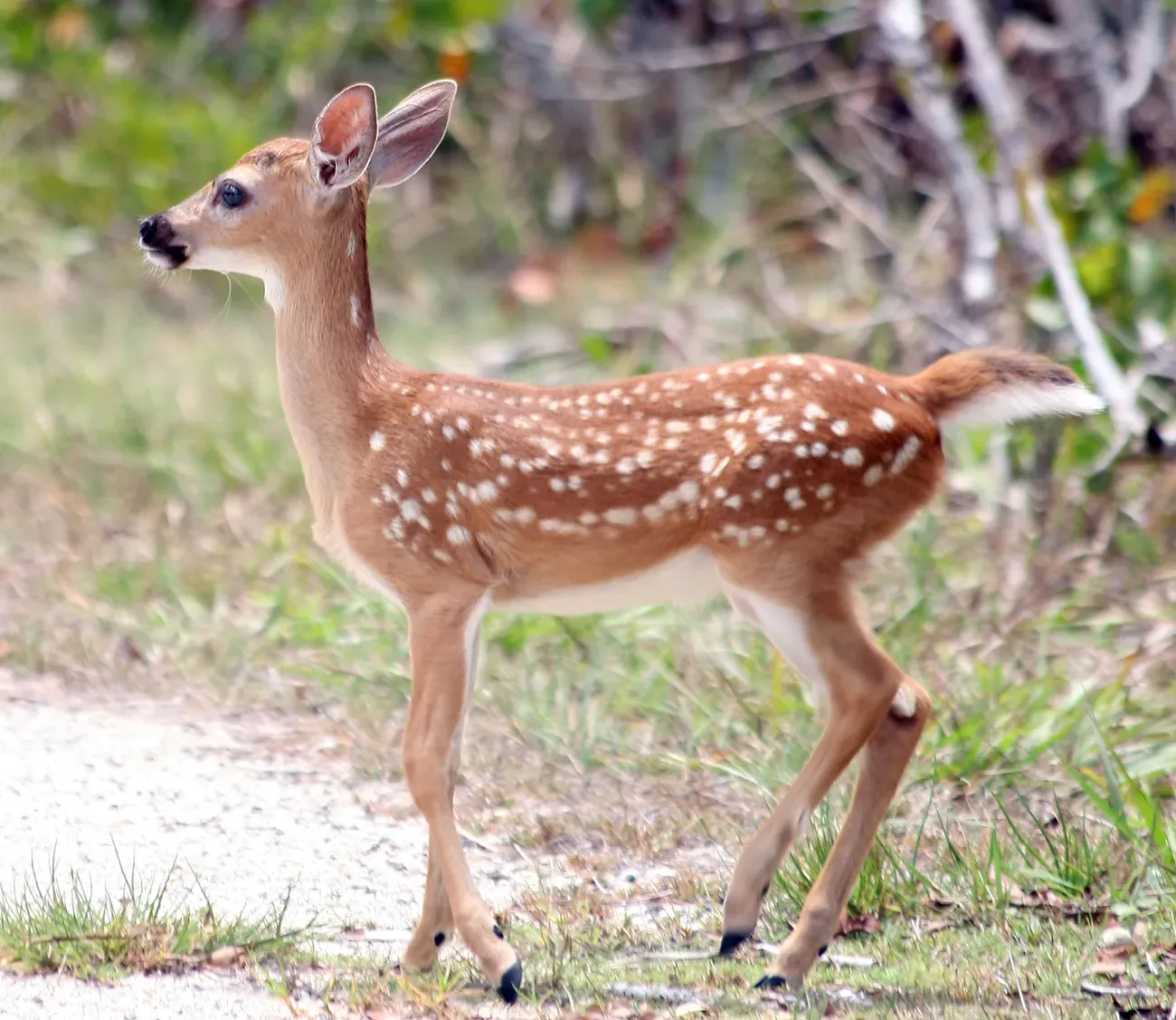
The breeding season for Key deer begins in September, peaks in October, and declines through December and January. Younger animals breed later in the season, if at all. Their reproduction is notably slower than their mainland cousins. The gestation period for the Key deer is 200 days, with fawns being born between April and June. Females usually give birth to one offspring a year, with the offspring averaging a weight of two to four pounds.
During courtship, males become very aggressive with other males that are competing for the same female. The two males will charge each other and lock antlers in a fight over the rights to mate with the female. So don’t let the small stature fool you. These deer can be fiercely competitive when love is on the line.
From the Brink of Extinction: Their Dark History
The earliest known written reference to Key deer comes from the writings of Hernando de Escalante Fontaneda, a Spanish sailor shipwrecked in the Florida Keys and captured by Native Americans in the 1550s. Key deer were hunted as a food supply by native tribes, passing sailors, and early settlers. For centuries, they were simply a convenient meal for anyone passing through.
Hunting them was banned in 1939, but widespread poaching and habitat destruction caused the subspecies to plummet to near-extinction by the 1950s. Let’s be real, that is an almost unforgivable chapter in the story. By the 1950s, fewer than 50 individuals remained. A whole species, nearly gone, due to human carelessness.
The National Wildlife Federation worked to protect the Key deer since 1951, when only about 25 of the animals still survived. That year, they adopted a resolution at their annual meeting to safeguard them and soon after made “Save the Key Deer” the subject of National Wildlife Week. It was a rallying cry that, thankfully, people listened to.
Conservation Efforts and the Road to Recovery
The National Key Deer Refuge, a federally administered National Wildlife Refuge operated by the Wildlife Service, was established in 1957. This refuge became the anchor of all recovery efforts. Biologists knew something needed to be done to prevent the loss of such a unique creature, and the 8,500-acre National Key Deer Refuge was established in 1957.
Thanks to conservation efforts, including the establishment of the National Key Deer Refuge, their numbers have rebounded to an estimated 800 to 1,000 today. That is a remarkable turnaround from fewer than 50 animals in a single lifetime. The Florida Department of Transportation has installed about three miles of fencing along US 1 on Big Pine Key, as well as two underpasses, four deer guards, and signage to reduce deaths from automobiles.
Still, not every chapter of the recovery story has been smooth. In September 2016, a screwworm infestation was discovered, the first infestation of its kind in the United States since 1982, affecting the Key deer population. The screwworm is a fly larva that enters an open wound of a live animal and eats the flesh of the animal from within, leading to a gruesome death. The pest was declared eradicated in April 2017, but the outbreak killed 135 deer, roughly an eighth of the herd. One disease. One eighth of the entire population. That is how precarious things still are.
The Biggest Threats Facing Key Deer Today
The ongoing rise in sea level, owing to climate change, is a new threat to the Key deer’s remaining habitat on the islands of southern Florida. This is not a distant concern. It is happening now. Between development and sea-level rise, pine rockland has been reduced to only about 2 percent of the deer’s historic range in South Florida.
Road kills from drivers on US 1, which traverses the deer’s small range, are also a major threat, averaging between 125 and 150 kills per year, representing roughly 70 percent of the annual mortality. Think about that number. The single biggest killer of this endangered animal is a car. Climate change is already directly threatening more than 10,000 species, but plants and animals that live in only one unique location, endemic species such as the Key deer, are consistently more adversely impacted. That is particularly true for island-based species.
Beginning in 2023, when assisted migration was newly authorized as a recovery option for endangered species, the Key deer was among the animal species mentioned in the press that might have no other option for escaping extinction in its historical range. In other words, scientists are now seriously considering moving these animals elsewhere entirely. That is both a hopeful and sobering thought to sit with.
Conclusion: A Little Deer With an Enormous Story
The Key deer is proof that nature can produce something truly irreplaceable in the most unexpected corner of the world. A tiny deer, found only on a handful of Florida islands, shrunk by millennia of isolation, pushed to the very edge of extinction by human hands, then slowly pulled back through human will. It’s one of the more poetic conservation stories out there, if you ask me.
The challenges ahead, rising seas, speeding cars, shrinking habitat, are real and urgent. While its population is considered stable for now, the Key deer remains listed as a federally endangered species. Stable is not the same as safe. The margin between existence and extinction for this animal has always been razor thin.
What strikes me most is how interconnected their fate is with ours. The same rising seas threatening their pine rocklands threaten coastal communities everywhere. The same careless driving that kills hundreds of them each year is something any one of us could change simply by slowing down. The Key deer’s survival, it turns out, depends less on nature and far more on us.
So here’s a thought to leave you with: if a creature this small, this fragile, this geographically cornered can fight its way back from 25 surviving individuals, what does that say about what’s still possible? What do you think it would take for us to truly protect what we haven’t yet lost?
