

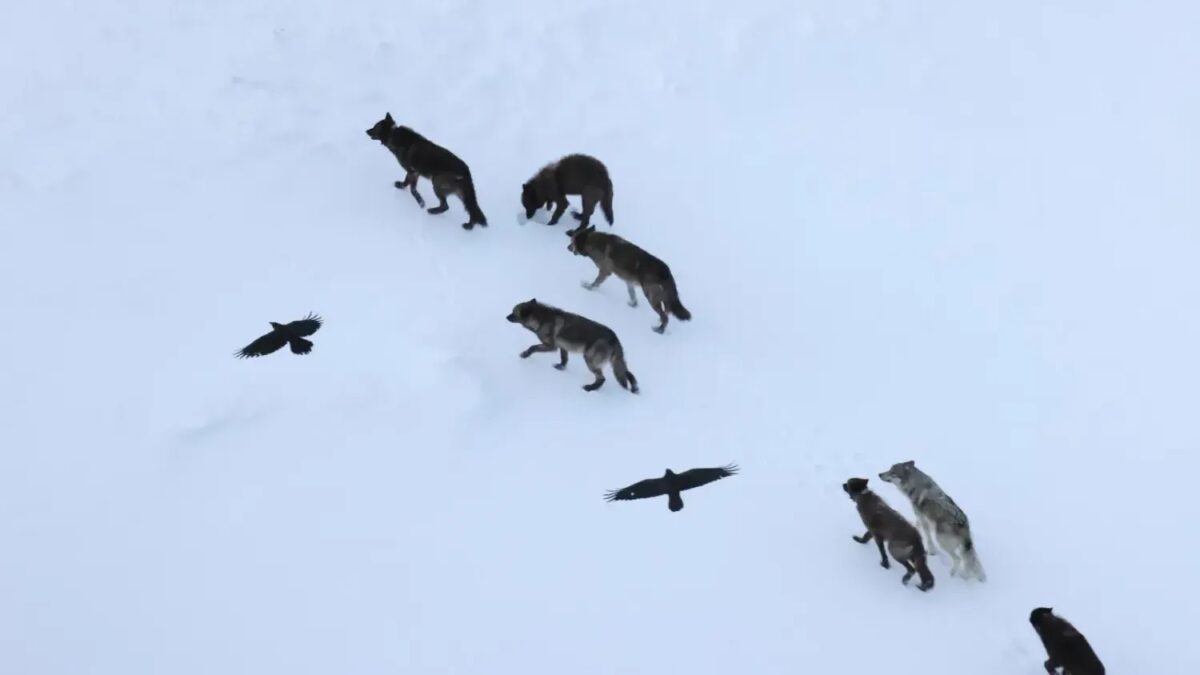
There’s something almost mythological about wolves and ravens coexisting in the wild. For centuries, Indigenous cultures across the Northern Hemisphere treated their relationship as sacred, almost spiritual. Now science is catching up, and what researchers are finding is genuinely fascinating.
It turns out this isn’t just two animals tolerating each other in the same ecosystem. There’s something far more deliberate happening out there in the forests and tundra. Let’s dive in.
A Partnership That Has Puzzled Researchers for Decades
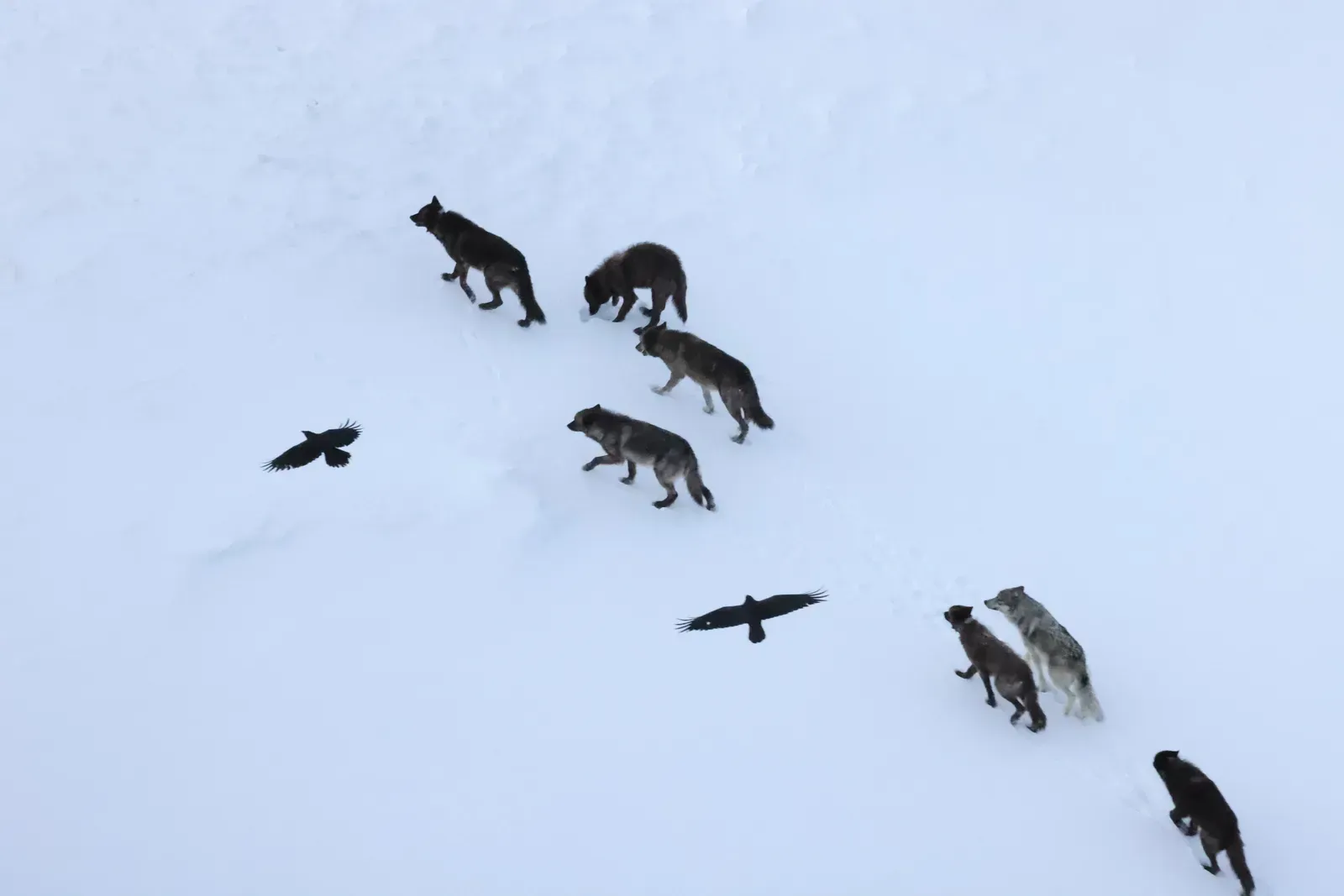
Here’s the thing – wolves and ravens have been observed together so consistently that it stopped looking like coincidence a long time ago. Ravens follow wolf packs with almost stubborn loyalty, trailing hunts, circling kill sites, and even appearing to play with wolf pups. For decades, biologists chalked it up to simple opportunism: ravens eat what wolves leave behind. Clean, simple, transactional.
Honestly, that explanation always felt a little too tidy. New research is now revealing that the relationship runs considerably deeper than a scavenger following a predator around for scraps. The social and behavioral dimensions of this bond are surprising even to scientists who’ve spent careers studying both species. It’s less like a business deal and more like an unlikely friendship that evolved over thousands of years.
Ravens Actively Seek Out Wolf Company – and Here’s Why That Matters
What’s striking in recent findings is that ravens don’t merely tolerate wolves. They actively seek them out, even when there’s no immediate food reward on the table. Observations show ravens flying toward wolf packs, landing nearby, and engaging in what can only be described as social behavior, bobbing, tumbling, and even tugging at wolf tails in apparent play.
This kind of non-feeding interaction is rare between wild species that aren’t closely related. It suggests the ravens derive something from wolf company beyond a meal. Whether that’s protection, stimulation, or something we don’t yet have a good word for, it challenges the standard framework scientists use to think about interspecies relationships. I think that alone should make us rethink how we define “friendship” in the animal kingdom.
Wolves Seem to Actually Tolerate and Even Enjoy Raven Presence
You might expect wolves to chase ravens off kill sites. Strangely, they often don’t. Wolves have been documented pausing hunts to interact with ravens, and younger wolves in particular seem almost drawn to the birds. Some packs show remarkably low aggression toward ravens even when food is involved, which biologically speaking is no small thing.
This tolerance doesn’t appear to be passive indifference. Wolves that grow up around ravens seem to develop a kind of familiarity with them that shapes their social behavior. It’s a bit like how dogs raised around cats learn to read feline body language. There’s a mutual literacy forming between these two species over time, and that is genuinely extraordinary to consider.
The Role of Play in Cementing Interspecies Bonds
Play is one of the most underestimated behaviors in animal research. When a raven swoops down and nips a wolf’s tail, or when a wolf mock-chases a raven that lands just close enough to tempt it, that’s not random noise. That’s communication. Researchers now believe that play behavior between wolves and ravens may actually serve to reinforce social bonds between the two species across time.
Think about what play does in human social contexts. It builds trust. It creates shared experience. It signals safety. The same logic, it seems, applies here. Ravens that engage in play with wolf packs may be cementing a long-term cooperative relationship that benefits both parties well beyond any single hunting season. It’s a slow, ancient negotiation carried out through joy rather than strategy.
Ravens as Scouts: The Hunting Advantage Nobody Expected
One of the more remarkable revelations from recent research is the possibility that ravens actively guide wolves toward prey. Ravens are aerial, fast, and have extraordinary vision. Wolves are powerful ground hunters but limited by terrain and cover. Together, they form something resembling a coordinated hunting system, with ravens potentially signaling the location of large prey that wolves then pursue.
This isn’t firmly proven to the level of scientific consensus yet, it’s hard to say for sure, but the behavioral evidence is mounting. Wolves in areas with dense raven populations have been observed locating prey more efficiently than those in areas without. If ravens are functioning as scouts, even partially, then this relationship crosses a threshold from social curiosity into genuine ecological significance. That would be a big deal.
What Yellowstone Is Teaching Us About This Dynamic
Yellowstone National Park has become one of the most important natural laboratories in the world for studying wolf behavior since their reintroduction in the mid-1990s. And unsurprisingly, it’s also become a key site for observing wolf-raven dynamics up close. Researchers there have documented ravens following specific wolf packs with what appears to be consistent preference, suggesting individual-level recognition rather than just species-level tolerance.
That’s a remarkable detail. If ravens can distinguish between wolf packs and develop preferences for particular groups, then the cognitive complexity of this relationship is far greater than previously assumed. Yellowstone’s long-term datasets are particularly valuable here because they allow researchers to track these patterns across multiple generations of both wolves and ravens. The picture emerging is of a relationship that is learned, transmitted, and potentially culturally maintained within animal communities.
What This Means for How We Understand Animal Social Intelligence
Let’s be real – science has often been slow to credit animals with the kind of social sophistication that everyday observation seems to suggest. The wolf-raven relationship is another case where the evidence is quietly dismantling older, more dismissive frameworks. These aren’t just animals reacting to stimuli. They’re building relationships across species lines, and doing it with apparent intent and memory.
The implications reach beyond just these two species. If wolves and ravens can develop something that resembles a genuine social bond rooted in play, mutual benefit, and possibly individual recognition, then the boundaries of what we consider “social intelligence” need expanding. It also raises a more philosophical question worth sitting with: what else is happening out there in the wild that we’ve been too quick to explain away? The forest, it turns out, is far more socially complex than we ever gave it credit for.
Conclusion: An Ancient Bond We’re Only Beginning to Understand
The relationship between wolves and ravens may be one of the most compelling examples of interspecies social bonding in the natural world. It’s been hiding in plain sight, observed by hunters, Indigenous peoples, and naturalists for centuries, while formal science took its time catching up.
What’s becoming clear is that this bond is real, layered, and far more nuanced than simple opportunism. Both species appear to benefit, both appear to invest in the relationship, and both appear to remember it across time. That’s a lot more than most of us do with some of our own acquaintances.
The deeper question this research opens up is whether we’ve been fundamentally underestimating animal social lives all along. What do you think – could there be other wild partnerships just like this one that we haven’t looked closely enough to notice? Tell us in the comments.

- Beavers Are Nature’s Engineers, Creating Vital Habitats for Other Wildlife Species - July 21, 2026
- The Recovery of the California Condor Offers Hope for Other Critically Endangered Birds - July 21, 2026
- Bats Play a Crucial Role in Controlling Insect Populations Across the United States - July 21, 2026