
Science has always loved a good rule. Gravity pulls things down. Bigger animals tend to live in colder places. Hexagons show up everywhere in nature because they are the most efficient shape for covering a surface. These are the kinds of clean, satisfying principles that help us make sense of a wildly complex world.
So what happens when researchers stumble upon something that seems to break all the rules? What if the thing driving life forward is not stability, not efficiency, not conservation, but something closer to chaos? That is exactly the uncomfortable discovery now shaking up evolutionary biology. And it may be stranger, and more profound, than anyone expected. Let’s dive in.
Biology Has Rules, Just Fewer Than You Think
Biology may have fewer rules than many other sciences, but it does have roughly two dozen broad generalizations about the behavior and nature of evolution. These are not laws in the strict physics sense. They are more like hard-won observations that have held up across enough species and ecosystems to be considered reliable patterns.
Nature is often full of biological exceptions, and so rules of biology are considered broad generalizations rather than absolute facts that explain and govern all known life. Think of them less like commandments and more like very good guesses based on a mountain of evidence.
Some of these broad generalizations include things like Allen’s Law, which dictates that body shapes in endotherms adapt to climatic conditions. Short and stocky helps retain heat in cold climates, while tall and lanky helps dissipate heat in warmer ones. Another law, known as Bergmann’s rule, states that species of a broadly distributed clade tend to be larger in colder climates and smaller in warmer ones, though exceptions always apply.
Meet the Scientist Who Wants to Add a New One
Here is where things get interesting. John Tower, professor of biological sciences at USC Dornsife, believes he has uncovered another rule of biology. He published his idea on May 16, 2024, in the journal Frontiers in Aging.
Tower’s rule challenges long-held notions that most living organisms prefer stability over instability because stability requires less energy and fewer resources. It is a bit like finding out that a car runs better when the engine is slightly on fire. Counterintuitive? Absolutely. Tower and his USC colleagues want to add a new rule called selectively advantageous instability, or SAI, which explores how instability can actually benefit a cell and a cellular organism.
The study was funded by the National Institute on Aging, which makes perfect sense once you realize how deeply this idea connects to how and why we grow old.
What Exactly Is Selectively Advantageous Instability?
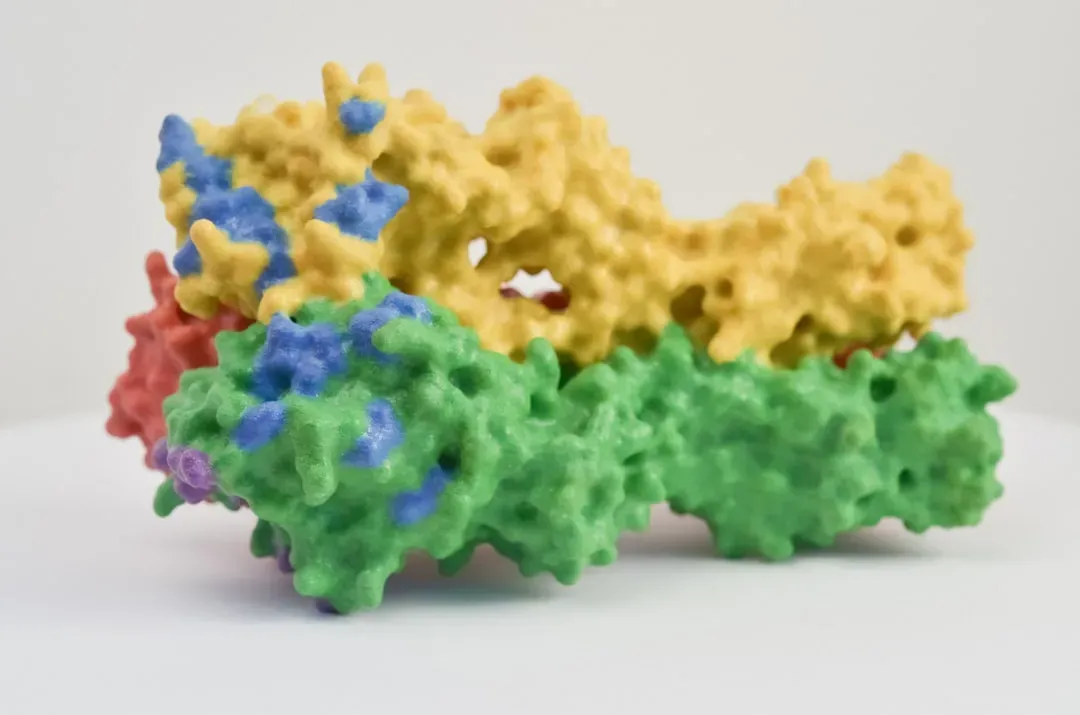
Let’s be real, the name sounds like a contradiction. How can instability be advantageous? The short answer is that life, it turns out, is not a machine built for stillness. Tower centers his rule on instability, specifically a concept called selectively advantageous instability, or SAI, in which some volatility in biological components such as proteins and genetic material provides an advantage to cells.
In the context of SAI, instability is defined as the relative propensity of the subunit to undergo a physical disintegration of its structure, either spontaneously, or through the action of a degradative agent such as an enzyme. Picture a protein that falls apart on purpose, releasing fragments that go on to do something useful elsewhere in the cell. That is the core idea. Short-lived transcription and signaling factors enable a rapid response to a changing environment, and turnover is critical for replacement of damaged macromolecules.
The minimal gene set for a viable cell includes proteases and a nuclease, suggesting that SAI is essential for life. Even the most stripped-down living cell is built to break things down and rebuild them. Destruction, it seems, is a feature, not a flaw.
How Instability Actually Drives Evolution
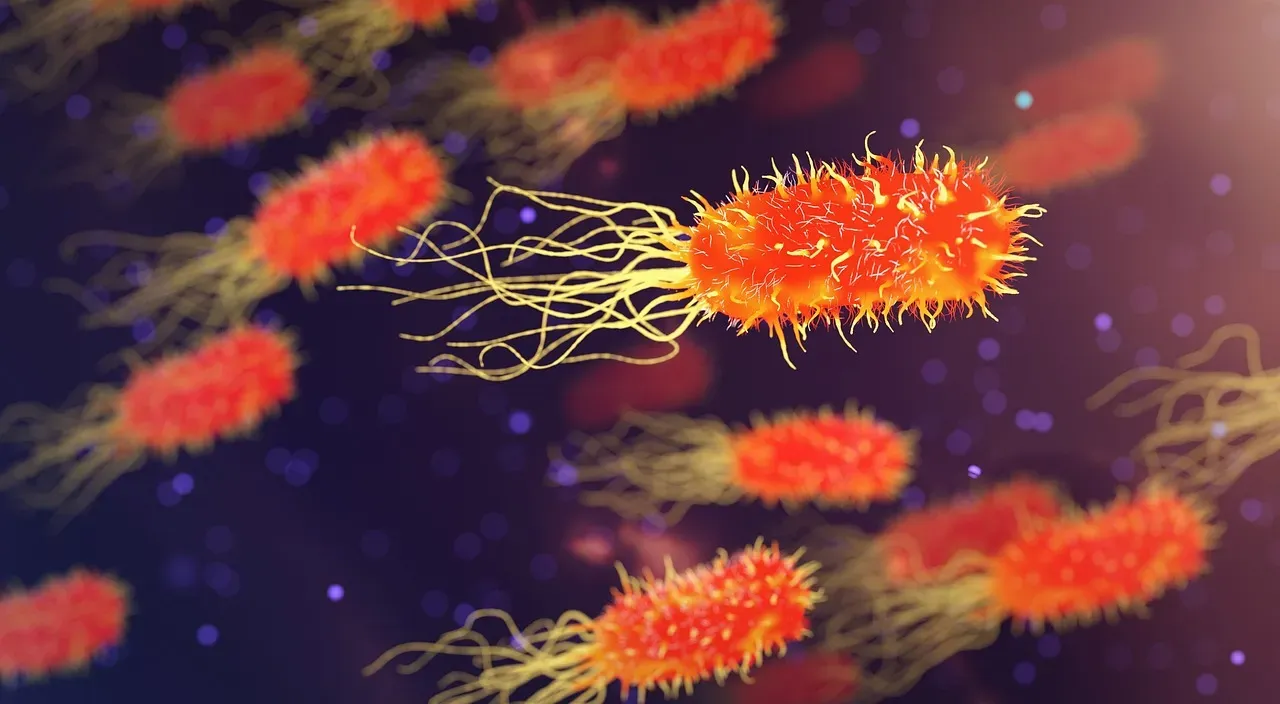
As cells go about their business, building and degrading various unstable components, they exist in one of two states. One state has an unstable component present, and the other has it absent. Natural selection may act differently on those two cell states.
This is where the real twist comes in. This dynamic can favor the maintenance of both a normal gene and a gene mutation in the same cell population, if the normal gene is favorable in one cell state and the gene mutation is favorable in the other. Allowing this genetic diversity can make cells and organisms more adaptable. Think of it like keeping two different tools in your toolkit instead of just the one you use most often. This genetic diversity, driven by instability, is what allows cells and organisms to adapt and evolve over time.
Instead of always purging harmful mutations and rewarding helpful ones, evolution appears to preserve a surprising mix of both, in ways that can make organisms more adaptable over time. I think that is the part that will keep geneticists up at night for years to come.
The Darker Side of SAI: Aging, Disease, and the Cost of Chaos
Every coin has two sides, and SAI is no exception. The flipside of this rule is that SAI can also be a key factor in things like disease and aging, so understanding this process could aid in exploration of those biological processes.
This energy-requiring process of mutation instability can introduce deleterious cells that contribute to aging, while also inducing other types of damage and dysfunction. Since SAI sets up two potential states for a cell, allowing normal and mutated genes to co-exist, if the mutated gene is harmful, this may contribute to aging.
In summary, SAI promotes replicator genetic diversity and reproductive fitness, and may promote aging through loss of resources and maintenance of deleterious alleles. It is a genuine trade-off baked into the very architecture of life. More adaptability in youth, potentially more vulnerability over time.
SAI, Chaos Theory, and the Bigger Picture
The implications of SAI extend far beyond evolution and aging. It has the potential to shed light on a wide range of biological phenomena, from chaos theory and criticality to Turing patterns and even cellular consciousness. That last one raises eyebrows, and honestly it should.
Coverage of the work emphasizes that the proposed rule is meant to sit alongside, not replace, existing frameworks, by offering a new lens on how mutation, selection, and population structure interact. This twist is forcing researchers to rethink how genes change, how species age and diversify, and even whether evolution itself can improve its own ability to innovate.
Because of its apparent ubiquity in biology and its far-reaching implications, SAI may be the newest rule of biology. Whether the broader scientific community ultimately gives it that official stamp is still an open question, but the conversation it has sparked is undeniably significant.
Conclusion: When the Paradox Becomes the Principle
Honestly, I find this idea genuinely thrilling, and maybe a little unsettling. We have spent centuries building a picture of life as something that strives for order, efficiency, and conservation. SAI says: not quite. Sometimes, life leans into disorder because disorder, managed carefully, is what keeps the whole system alive and evolving.
As researchers refine models of mutation, population structure, and evolvability, the paradox is starting to look less like a bug and more like a feature that belongs in the core playbook of biology. That shift in perspective, from viewing instability as failure to seeing it as a strategy, could reshape how we approach everything from aging research to disease treatment.
The deeper lesson here may be the most humbling one of all: life does not play by the rules we write for it. It writes its own. And every now and then, a scientist is clever enough to read them. What do you think – does the idea that chaos might be built into the blueprint of life change how you see your own biology? Share your thoughts in the comments.

- Animal Science Says Dolphins Use Signature Whistles That Function Remarkably Like Individual Names - August 15, 2026
- 7 Reasons the Maned Wolf Looks Like a Fox on Stilts but Is Neither a Fox Nor a Wolf - August 15, 2026
- Animal Science Says Vampire Bats Share Food With Hungry Companions They Know - August 15, 2026