
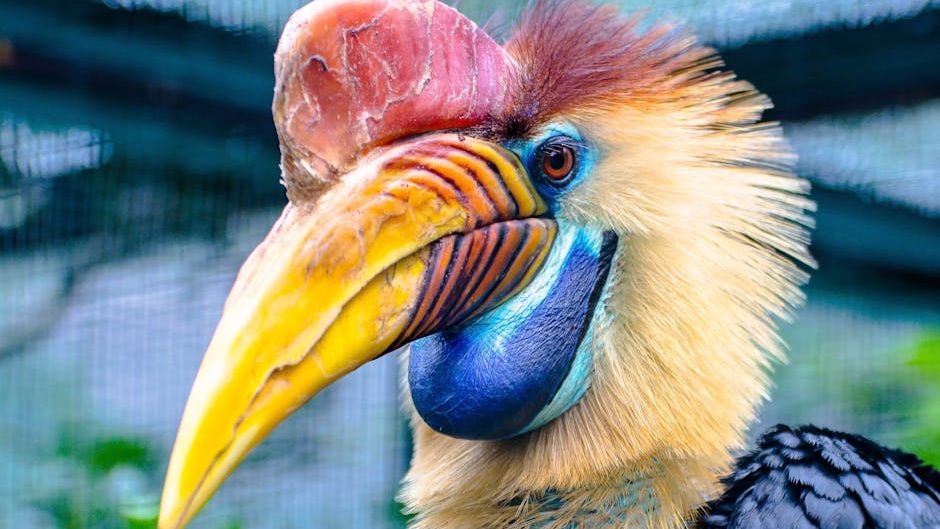
We tend to think of birds as graceful, feathery creatures that fill the sky with beauty and song. But nature, as it turns out, has a wickedly strange sense of humor. Somewhere between millions of years of evolution and some genuinely baffling design choices, a handful of bird species ended up looking like they were assembled by a committee that simply could not agree on anything.
Honestly, some of these creatures seem less like birds and more like fever dreams. A parrot that can’t fly, a stork that looks like the Grim Reaper, a bird with a literal horn growing out of its forehead – the avian world has some seriously wild characters hiding in its ranks. If you thought you knew birds, prepare to have that assumption completely shattered. Let’s dive in.
1. The Shoebill: Nature’s Living Dinosaur
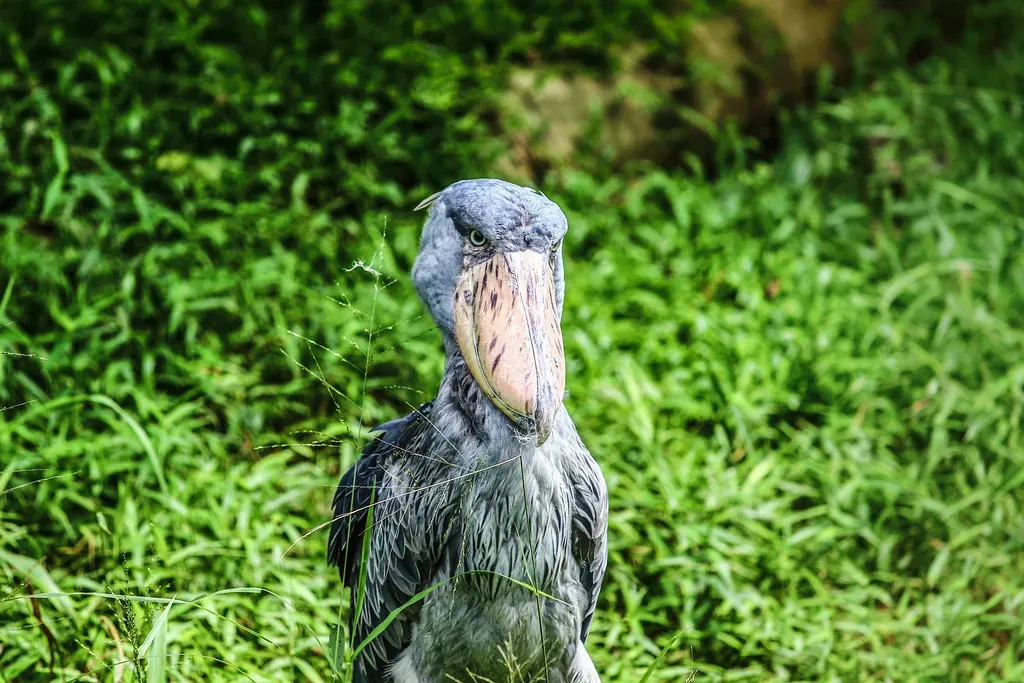
There is no gentle way to introduce the shoebill. This bird has one of the biggest beaks of all birds on the planet, measuring about 12 inches long, and it is shaped like a shoe. That alone would make it memorable. The hook at the end of the beak makes it look like something engineered specifically to be unsettling.
It is a prehistoric-looking bird mainly found within Sudan to Zambia, and its enormous bill is what makes it look so strange. These huge bills have a length of between 7.5 to 9.5 inches and have sharp edges. The Sudd wetlands of South Sudan have the largest known shoebill population. This thing doesn’t look like it belongs in 2026. It looks like it belongs in a museum, behind glass, labeled “extinct.”
2. The Kakapo: The World’s Most Hopeless Parrot
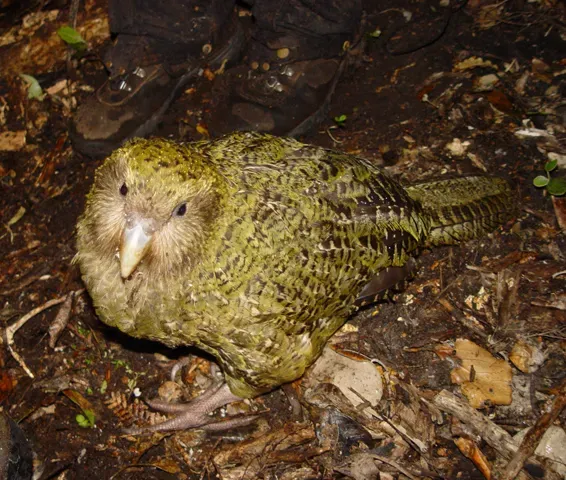
Strigops_habroptilus_1.jpg: Mnolf, CC BY-SA 3.0)
Let’s be real, calling the kakapo a parrot feels generous. It is fatter than most parrots and is considered one of the world’s heaviest birds. Unlike other parrots, this New Zealand bird is flightless and nocturnal. A parrot that wanders around at night and can’t fly? Sure, why not.
Featuring a yellowish, mossy-green plumage speckled with brown and gray, the kakapo is sometimes called the “owl parrot” due to its feathery facial disc that resembles an owl. To make things even stranger, the kakapo only mates approximately three times per decade because its mating habits are linked to the cone cycle of the rimu tree. Three times. Per decade. I think my houseplants have a more active social life.
3. The Marabou Stork: The Undertaker Bird
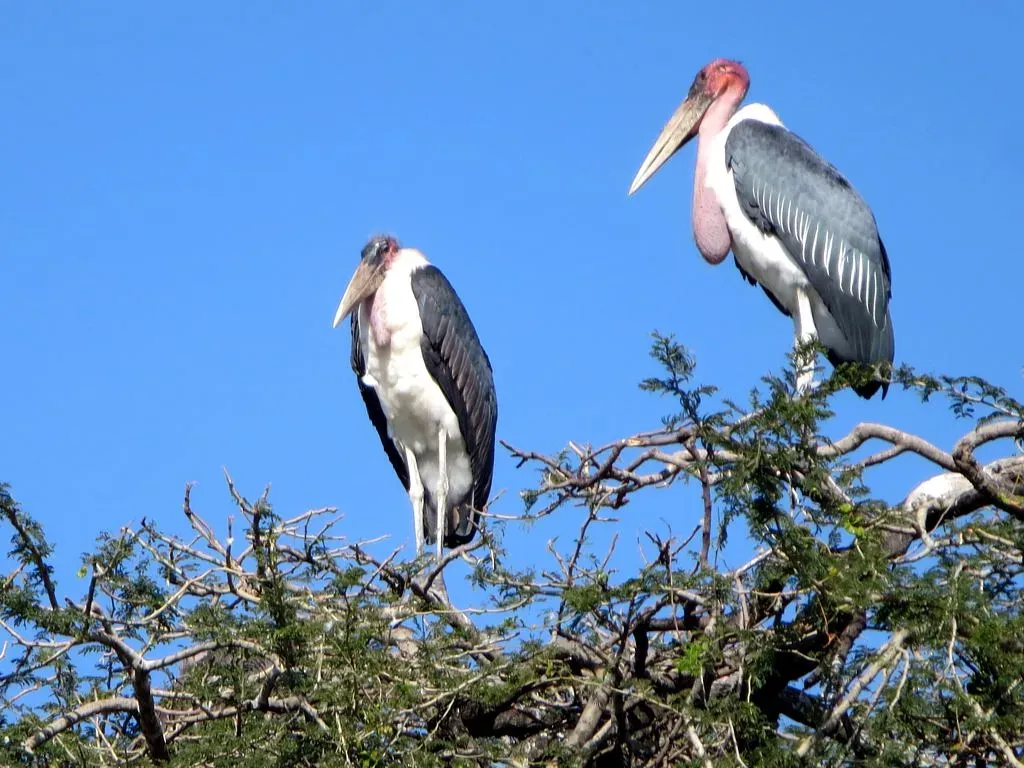
The marabou stork doesn’t just look weird. It looks downright scary, which is one of the reasons it is often called the “undertaker bird.” Standing up to 5 feet high and weighing around 20 pounds with a wingspan of about 11 feet, this sub-Saharan African stork features a bald, rotting-looking head, a dangling pink wattle, long spindly legs, a white underbelly, and a black mantle of plumage that makes it look like the Grim Reaper.
The looks are just the beginning. The marabou stork lives by eating dead animals as well as human waste, and it loves scavenging around in dumpsters and landfills. Disgusting as that sounds, this stork plays an important role by cleaning up the local ecosystem. One more jaw-dropping fact: the marabou stork deliberately poops on its own legs, but this actually helps the bird cool down. Remarkable and horrifying in equal measure.
4. The Hoatzin: The Stinkiest Bird Alive
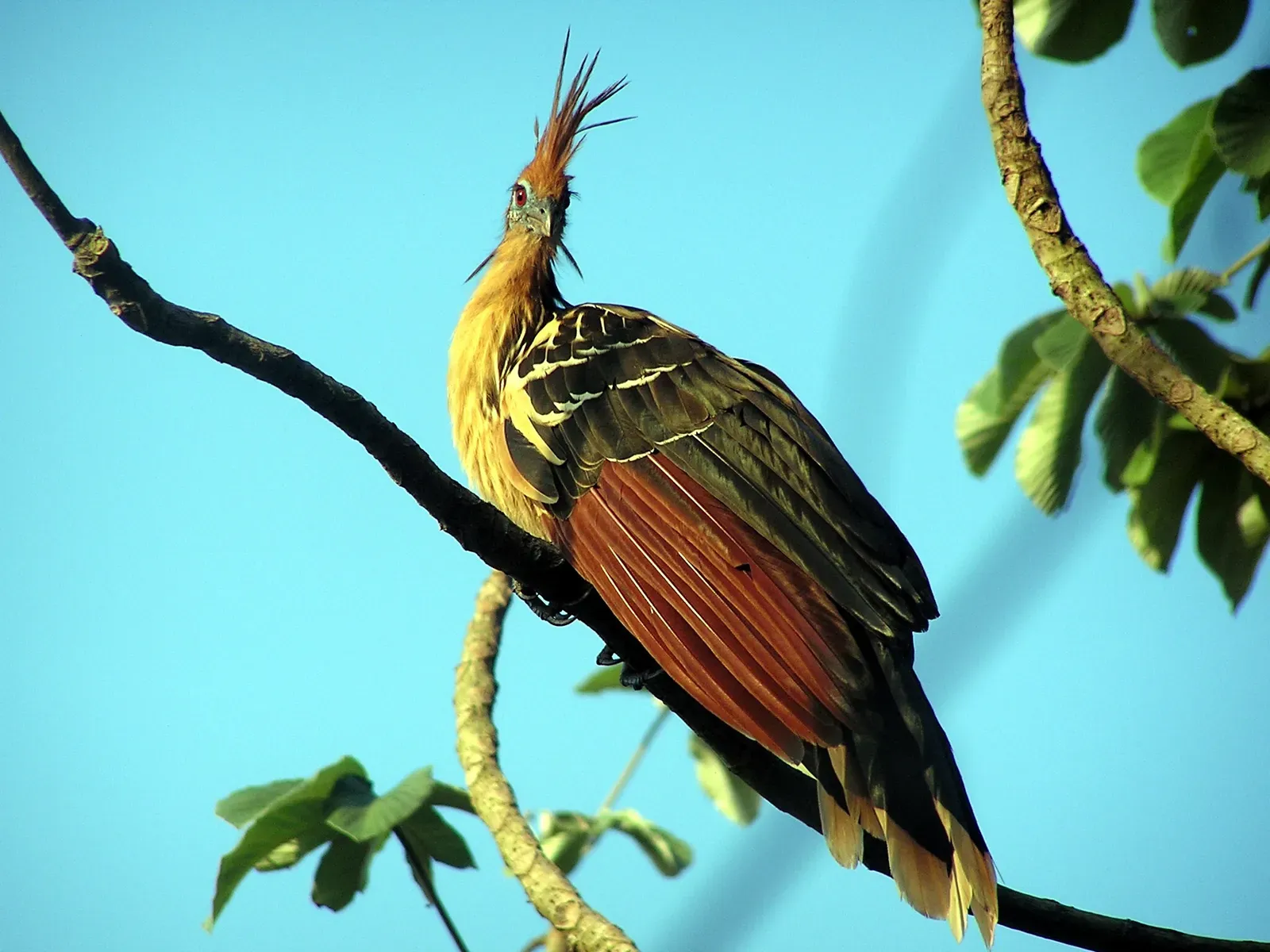
Resembling a creature from the prehistoric era and tagged with unpleasant nicknames like reptile-bird, stinkbird, and skunk bird, the hoatzin may be the weirdest bird of all because everything about it is bizarre. Often found in groups in the swamps and mangroves of the Amazon basin, this strange pheasant-like bird is recognized not only by its brown mohawk crest feathers, blue face, and red eyes, but its unpleasant odor as well.
The hoatzin is one of the only birds that ferments its food like a cow, with a specialized stomach that breaks down tough leaves. This gut fermentation produces gases that give the bird its foul smell, likely acting as a deterrent to predators. Its large crop makes its chest appear bloated, adding to its awkward, hunched shape. Hoatzin chicks even feature creepy claws on their wings that enable them to climb trees for safety. A stinking, clawed, mohawked swamp bird. Truly one of nature’s most committed experiments.
5. The Magnificent Frigatebird: The Balloon-Necked Pirate
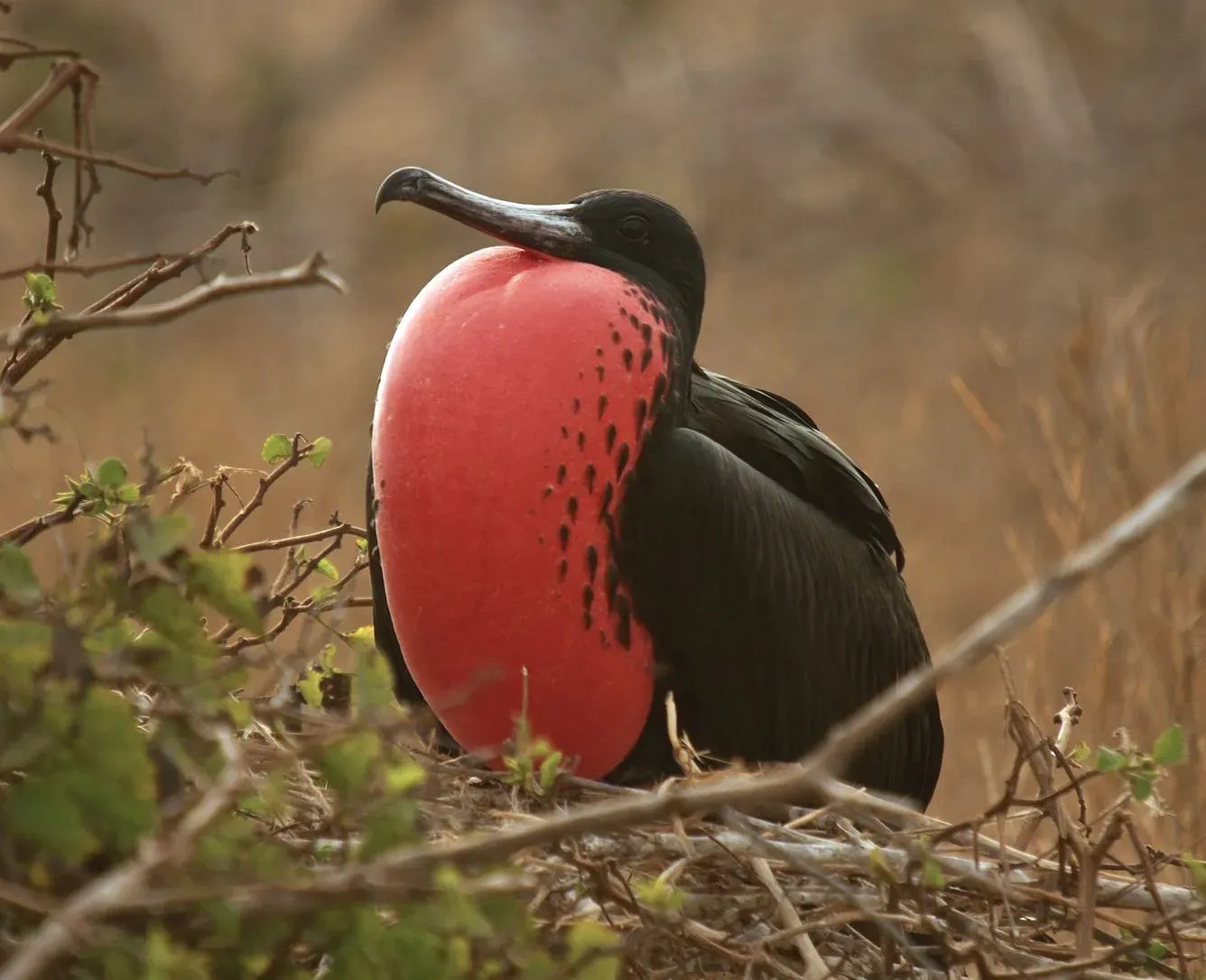
Uploaded by snowmanradio, CC BY 2.0)
Picture a large black seabird. Now imagine it suddenly inflates a tomato-red balloon the size of a football from its throat. That is, more or less, exactly what the magnificent frigatebird does. The inflated, bright crimson neck of the male magnificent frigatebird places it in the realm of the world’s weirdest birds. Males can inflate the pouch around their neck until it looks like an enormous red balloon.
Strangely enough, it seems as if this feature only exists as a mechanism for attracting mates. The pouch itself isn’t present in females of the species. Their wingspans are shockingly wide, reaching up to 8 feet, and they can fly longer than most birds, but they cannot swim. A bird that flies over the ocean for a living, can’t swim, and inflates its throat like a party trick. The more you think about it, the weirder it gets.
6. The Andean Cock-of-the-Rock: Nature’s Orange Nightmare
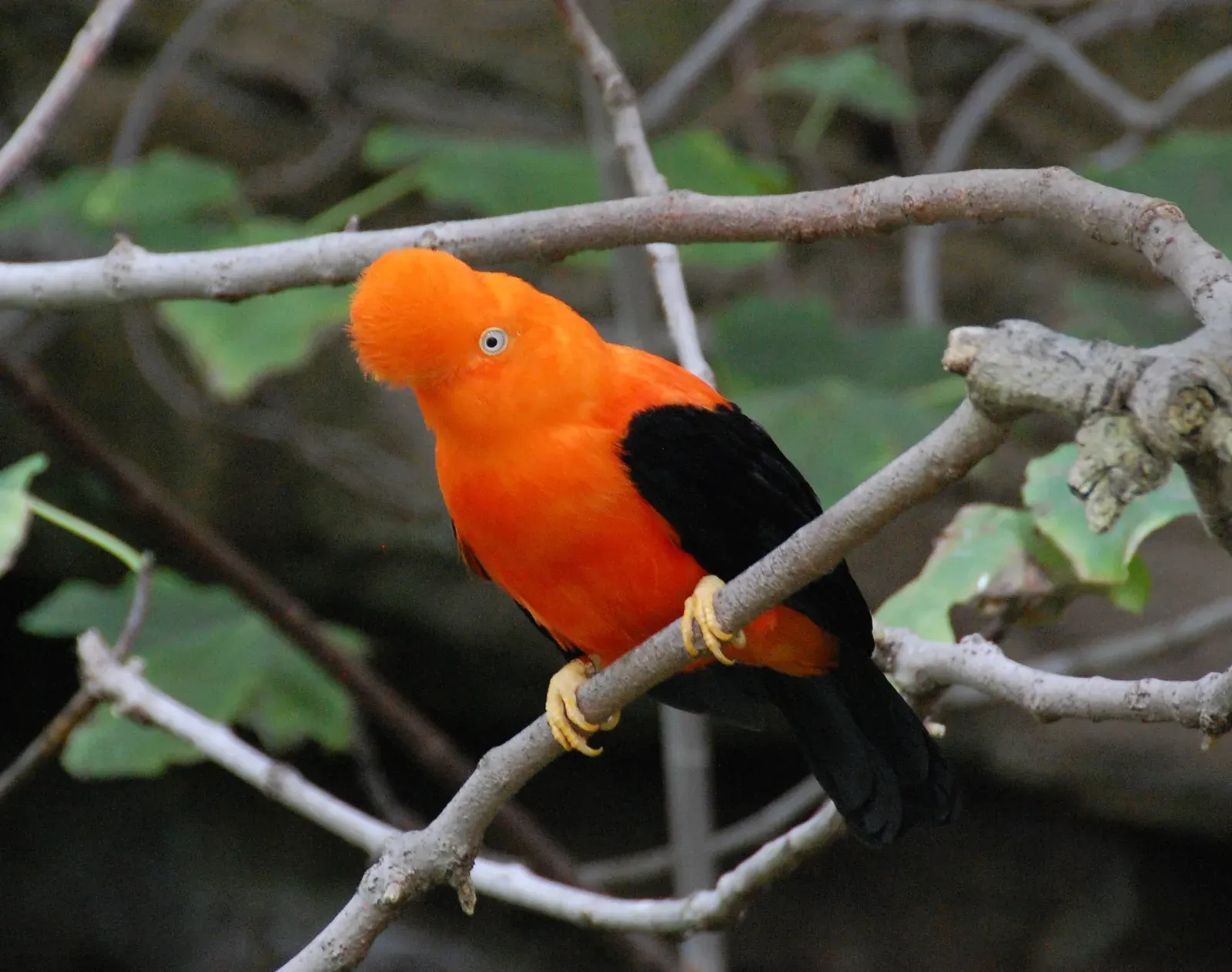
The Andean cock-of-the-rock is one of the most visually striking birds in the world. Males are adorned with vibrant orange or red plumage and an exaggerated, fan-shaped crest that covers much of their head. The large, staring yellow eyes add to their weird appearance, contrasting sharply with their colourful feathers. Think less “bird” and more “someone hot-glued a traffic cone to a crow.”
This bold display is a key part of their courtship rituals, during which males gather in leks to perform elaborate dances, flaunting their striking crests to attract females. It’s hard to say for sure, but the sheer visual audacity of this bird feels almost personal, like it’s daring you to look away. Spoiler: you won’t.
7. The Long-Wattled Umbrellabird: The Elvis of the Rainforest
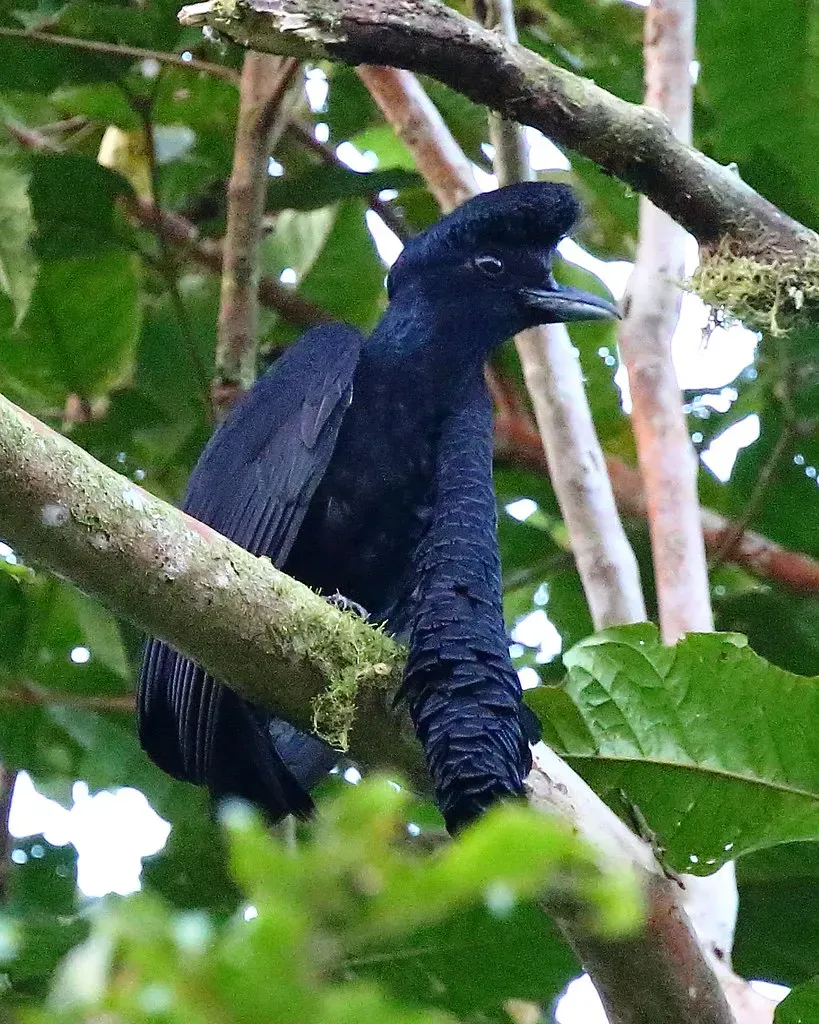
All umbrellabirds have an odd appearance, with crests on top of their heads resembling umbrellas and wattles dangling from their necks. However, none are as unusual as the long-wattled umbrellabird, which boasts an extraordinary wattle that far surpasses those of its relatives. The wattle of the long-wattled umbrellabird can grow up to 35 cm in length and is covered in short, scaly feathers.
What really makes this strange black bird stand out is the long feathered wattle that hangs down from its chest. The wattle can extend up to 17 inches in length but is retracted during flight. Feeding on nuts, insects, and lizards in the wet lowland forests of Colombia and Ecuador, this unique bird attracts a mate by putting on a male dance show in a lek where females visit to watch and pick their favorite. Honestly, that last part sounds less like bird behavior and more like a talent competition.
8. The Horned Screamer: The Bird With an Actual Horn
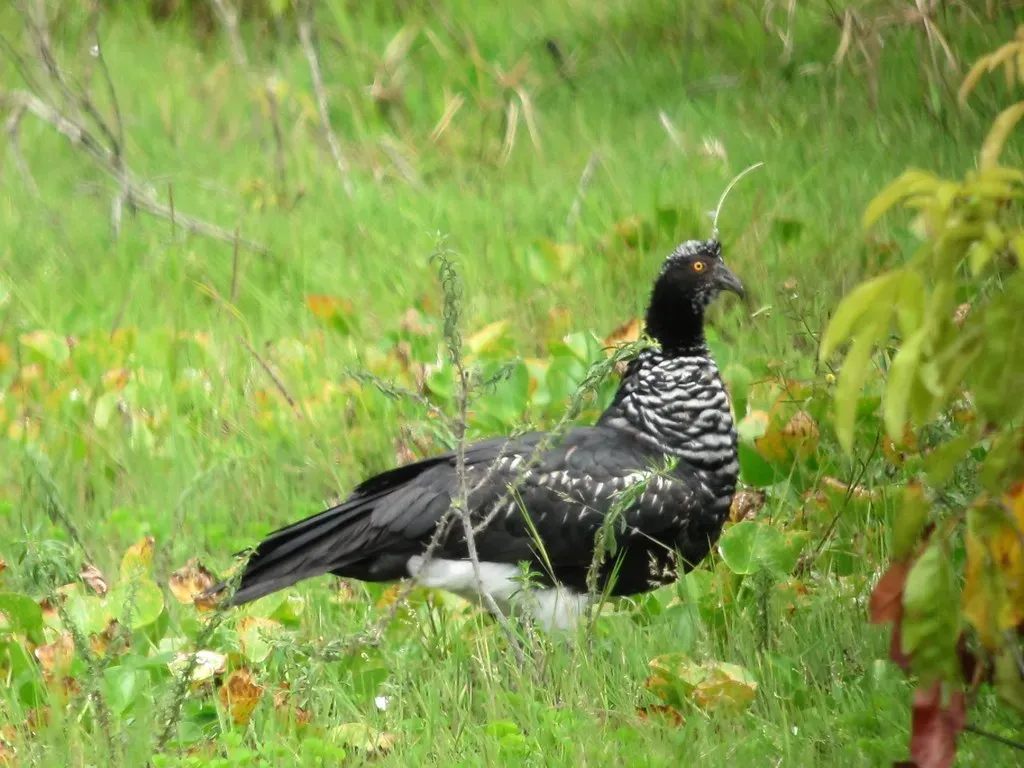
The Horned Screamer is a large waterbird native to South America’s wetlands and freshwater habitats. As its name suggests, it has a bizarre spiny structure made of keratin emerging from its forehead. No other bird has such a horn, which can reach up to 6 inches in length. When you realize there’s a bird walking around South America with a literal horn on its head, it feels like something from a forgotten mythology textbook.
The Horned Screamer has black and white plumage, and its legs are long and adapted for walking on floating vegetation. The species is known for its loud, high-pitched calls, which can be heard from long distances. So not only does it look like something out of a fantasy novel, it also announces itself with ear-splitting volume. A theatrical bird, through and through.
9. The Wilson’s Bird-of-Paradise: The Most Impossibly Beautiful Oddity
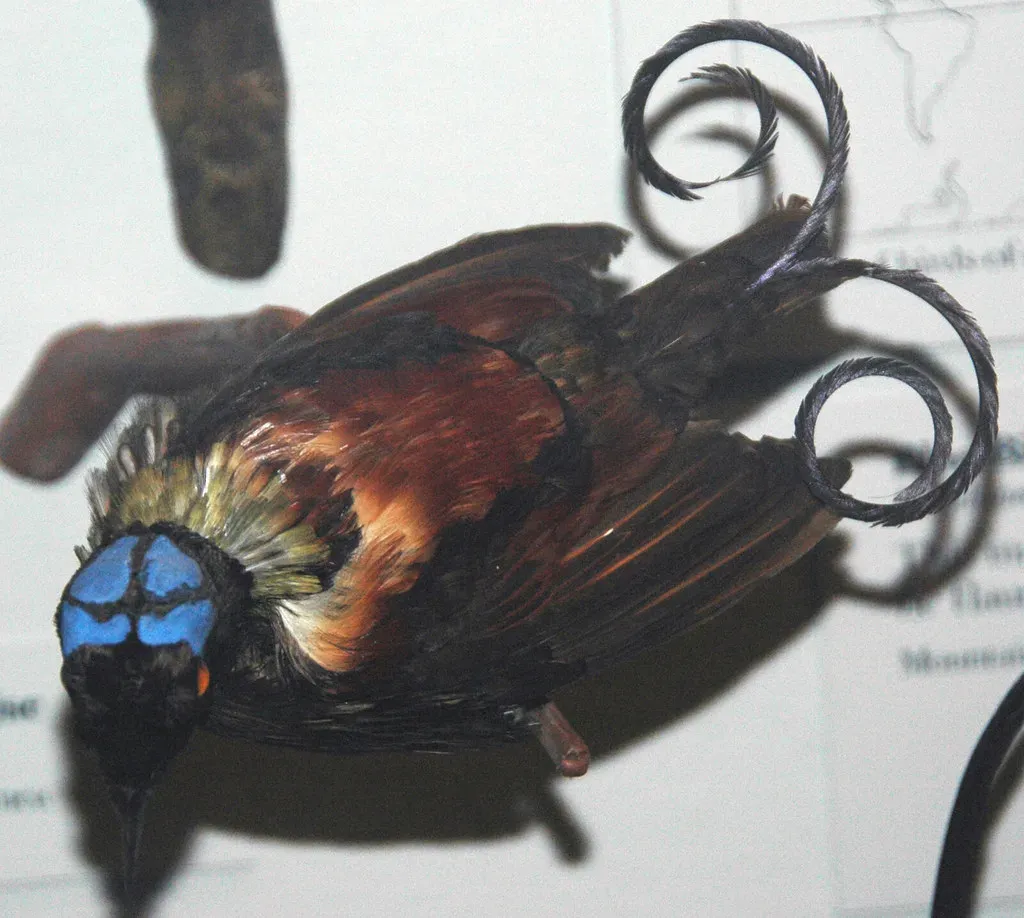
Wilson’s bird-of-paradise is renowned for its vibrant colours and handlebar-moustache-shaped tail feathers. The male’s plumage is a kaleidoscope of bright red, yellow, green, and blue, with a striking bald turquoise crown that appears almost luminous and is clearly visible by night. Adding to its unusual appearance are two long, spiral-shaped tail feathers that curve elegantly behind it like delicate wires.
These extravagant features are the result of intense sexual selection, evolved to attract females during courtship displays. From the female’s viewpoint, the male appears as a bright green disc with a glowing fluorescent mouth, a vivid demonstration of the power of female sexual selection. I know it sounds crazy, but there’s a bird out there whose entire body basically functions as a glowing neon sign. Evolution really does not mess around.
10. The Kagu: The Ghost Bird That Shouldn’t Exist
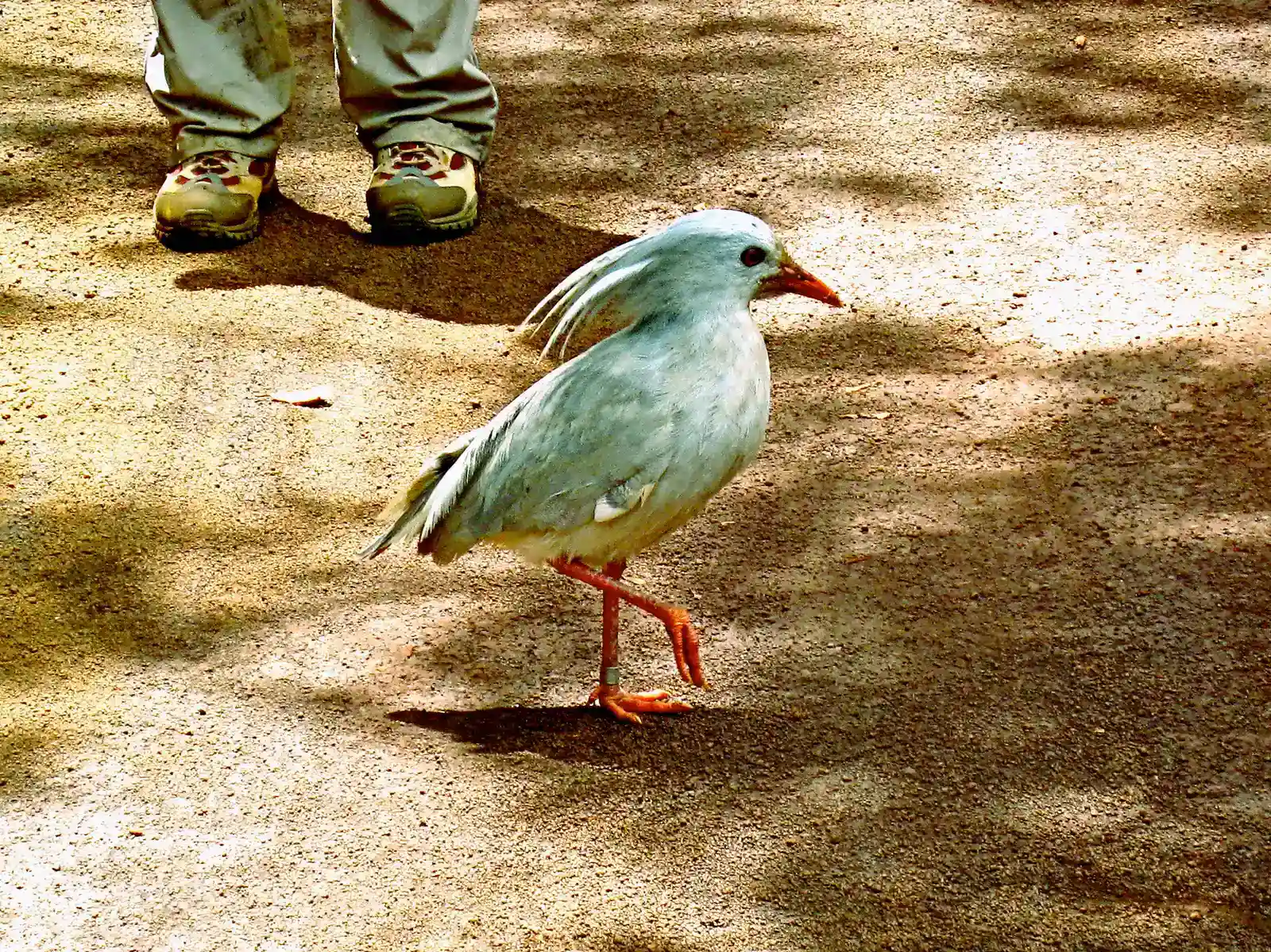
The most immediately apparent feature of the kagu is its plumage, an ashy white that’s earned it the nickname “ghost of the forest.” This unique and exotic bird is only found on the island chain of New Caledonia in the South Pacific Ocean, where it’s recognized as both a national symbol and an endangered species. It looks like something someone half-remembered from a dream and then tried to describe.
The species has a distinctive appearance, with ash-gray plumage, bright red legs, and a long, shaggy crest on its head. It is virtually flightless, using its wings for displaying and occasionally gliding. The kagu’s bill has bumps known as “nose corns” over the nostrils, features not seen on any other bird species. Unique nose bumps, ghost-white feathers, flightless but somehow still wild looking – the kagu is genuinely one of a kind. There is nothing else quite like it on this planet, and that says everything.
Conclusion: The Planet Is Full of Beautiful Weirdos
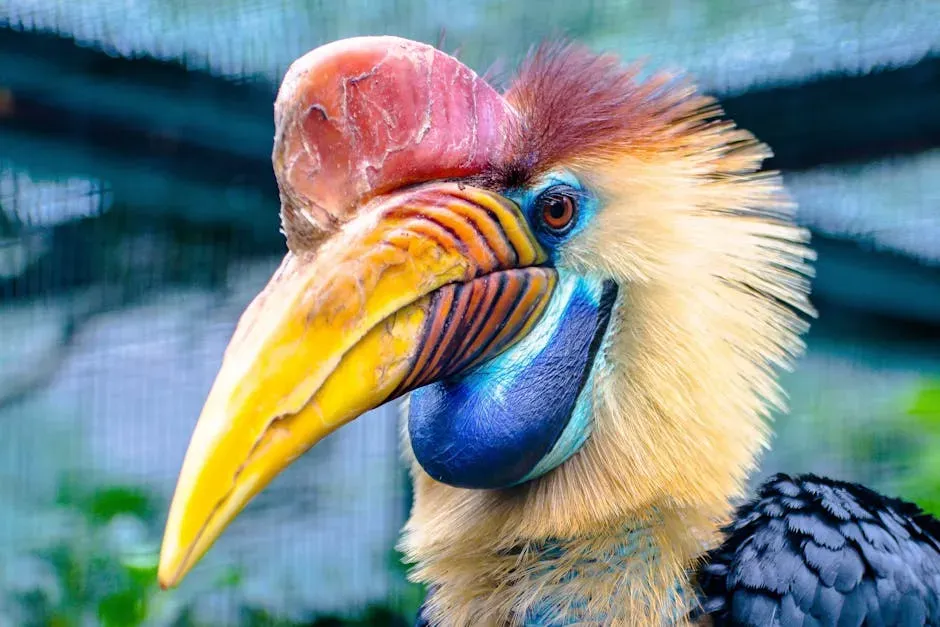
The natural world never stops surprising, and the birds on this list are proof that evolution has a truly unhinged creative range. From the shoebill’s terrifying prehistoric stare to the kakapo’s hopeless flightless wandering, each of these species is a reminder that “normal” is just a setting on a washing machine. Nature plays by its own rules.
What’s perhaps most remarkable is how each of these bizarre features serves a real purpose – whether it’s attracting a mate, surviving a hostile environment, or simply digesting leaves more efficiently than any other creature on Earth. Strange doesn’t mean broken. Sometimes strange means perfectly, gloriously adapted.
So the next time you spot a pigeon on a park bench and think “birds are boring,” just remember there’s a bird somewhere in New Caledonia with ghost-white feathers and bone horns on its nose, doing absolutely just fine without your acknowledgment. Which of these ten weird wonders surprised you the most? Drop your thoughts in the comments below.

- 10 Amazing Facts About Penguins - July 24, 2026
- 8 Ways to Create a Wildlife-Friendly Backyard Oasis for Local Critters - July 24, 2026
- How to Keep Your Pet Safe from Household Hazards - July 24, 2026