

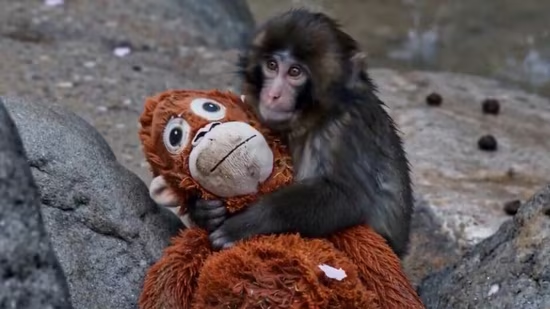
Punch’s Remarkable Journey Begins (Image Credits: X)
Ichikawa City, Japan – A tiny macaque named Punch marked his 8-month birthday amid cheers from zookeepers and fans alike. Abandoned by his mother shortly after birth, the infant found a second chance under the dedicated care of staff at Ichikawa City Zoo. Now, as he ventures beyond his cherished plush toy, Punch dives headfirst into the complex world of his Japanese macaque troop, signaling a healthy transition to independence.
Punch’s Remarkable Journey Begins
Keepers at Ichikawa City Zoo stepped in when Punch’s biological mother rejected him, a rare but challenging occurrence among primates. They bottle-fed the newborn around the clock and introduced a soft plush toy as a surrogate comfort object. This hands-on approach not only ensured his survival but also captured hearts worldwide through shared videos and photos.
Over the past months, Punch grew stronger daily. His playful antics with the toy went viral on social media, drawing millions of views. Zookeepers monitored his every milestone, from first steps to tentative interactions with other macaques.
Trading Comfort for Adventure
At 8 months, Punch showed clear signs of maturation by setting aside his plush companion more often. He now spends hours climbing, foraging, and grooming alongside troop members. This shift reflects natural developmental progress in Japanese macaques, who typically wean around this age and integrate into group dynamics.
Observers noted Punch’s growing confidence during recent play sessions. He engages in mock chases and shares food, key behaviors for social bonding. Keepers reported fewer clingy moments with the toy, replaced by bold explorations of his enclosure.
Navigating the Troop Hierarchy
Japanese macaque societies operate on strict hierarchies, with dominant individuals dictating access to resources. Punch, as a young male, learns these rules through observation and gentle corrections from elders. His smooth adaptation surprised staff, given his isolated early upbringing.
Daily routines include group grooming sessions that reinforce bonds. Punch participates actively, earning his place among peers. Zookeepers intervene minimally now, allowing natural interactions to guide his growth.
Internet Fame Fuels Zoo Revival
Punch’s online popularity triggered a visitor boom at the zoo. Families flocked to enclosures, hoping to glimpse the charismatic youngster. Ticket sales rose steadily, supporting conservation efforts for the species.
The surge highlighted social media’s power in wildlife awareness. Platforms amplified Punch’s story, connecting global audiences to local conservation. Zoo officials expressed gratitude for the support while emphasizing sustainable tourism practices.
- Millions of video views sparked worldwide interest.
- Families traveled specifically to see Punch in action.
- Increased revenue aided habitat improvements.
- Visitors learned about macaque behaviors firsthand.
- Online shares boosted species conservation talks.
Future Horizons for the Young Star
As Punch continues to thrive, zookeepers plan gradual expansions to his social circle. Long-term goals include strengthening his physical fitness and social skills for potential future transfers to larger habitats. Veterinary checks confirm excellent health, with steady weight gain and vibrant energy.
Experts view his progress as a success story in hand-rearing techniques. Lessons from Punch could benefit other orphaned primates. The zoo remains committed to his well-being amid ongoing fame.
Key Takeaways:
- Punch transitioned from toy dependency to troop integration at 8 months.
- His story drew record visitors, aiding zoo operations.
- Hand-rearing proved effective for social adaptation.
Punch’s evolution from vulnerable infant to spirited troop member underscores resilience in the animal kingdom. His journey inspires while reminding us of the vital role human care plays in wildlife rehabilitation. What are your thoughts on Punch’s progress? Share in the comments below.

- Urban Coyotes Show Remarkable Adaptability, Learning to Thrive in City Environments - July 22, 2026
- Beavers Are Nature’s Engineers, Creating Vital Habitats for Other Wildlife Species - July 21, 2026
- The Recovery of the California Condor Offers Hope for Other Critically Endangered Birds - July 21, 2026