

Most people who own a dog have had that moment. You know the one. Your pup does something so surprisingly clever, so perfectly timed, that you just stop and stare. Was that a coincidence? Or is there something genuinely sharp going on behind those adorable eyes?
Here’s the thing: dog intelligence is far more layered and fascinating than most of us realize. Canine intelligence is not just about tricks. It is about problem-solving, memory, adaptability, and how well a dog reads the humans in their life. Scientists have been digging deeper into the canine mind in recent years, and honestly, the findings are pretty mind-blowing. So before you assume your dog is just winging it through life, read on – you might be sitting with a four-legged genius right now. Let’s dive in.
Sign 1: They Crack Puzzles Without Any Help

Picture this: you place a puzzle toy in front of your dog, walk away, and come back to find it completely solved. No nudging from you. No begging for hints. That, right there, is one of the clearest windows into a dog’s raw brainpower.
The smartest dogs are able to solve problems without being taught. Smart dogs figure things out on their own, like opening a door latch or learning a new routine quickly. These dogs often test solutions, explore objects, and understand patterns more quickly than the average dog.
Such skills are more than just trickery. They are cognitive exercises that require perception, memory, and mental flexibility. Some pups are fast learners in knowing how to open doors, gates, and even containers for accessing food, highlighting their ability to understand cause and effect, manipulate objects, and make decisions based on past experiences.
Think of it like a mini escape room challenge. A clever dog doesn’t panic or give up. It methodically works through options until something clicks. If yours does that regularly, take notice.
Sign 2: They Learn New Commands Shockingly Fast
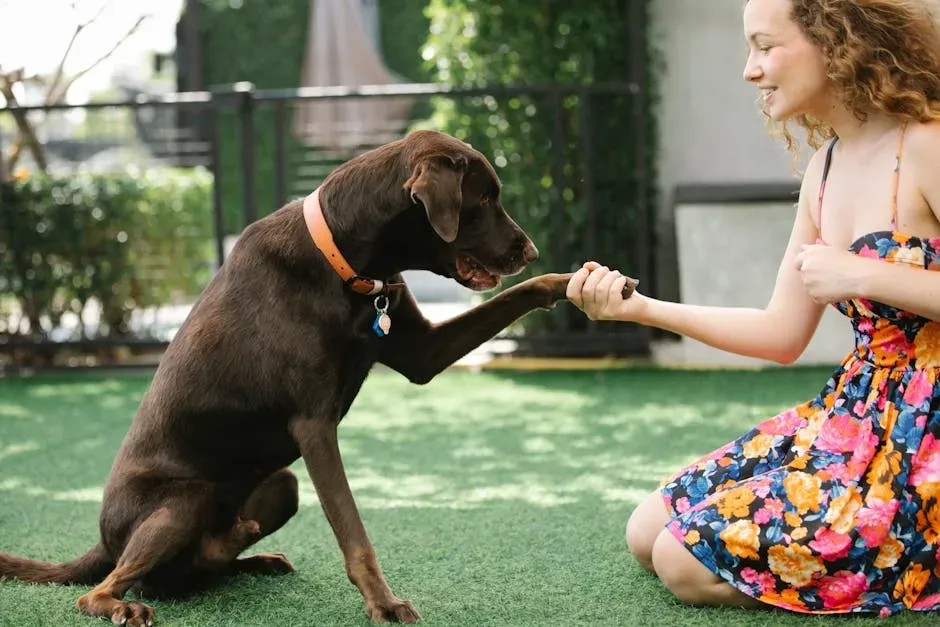
Speed of learning is probably the most well-known benchmark of canine intelligence, and for good reason. One of the main signs of exceptional intelligence in dogs is learning new commands quickly without the need for extensive training. Most dogs can pick up a command eventually, but a genuinely sharp dog gets it in just a handful of repetitions.
Studies have ranked dogs based on how quickly they learn new commands. The smartest dogs took fewer than five repetitions to learn a command, while those at the lower end needed 80 to 100 repetitions. That is the difference between a student who reads a chapter once and aces the test versus one who needs to re-read it twenty times. Both can get there – but the gap is enormous.
The average dog can learn 165 words, while some can learn up to 250 words. To put that into a human perspective, that is roughly the vocabulary of a toddler mastering early language. Honestly, that alone should make you look at your dog a little differently.
Sign 3: Their Memory Is Remarkably Long-Lasting

Here is something most dog owners don’t think to test. Does your dog remember a trick you taught them months ago, even without practicing it? Smart dogs are often able to remember people, places, and commands that they haven’t practiced in a long time. That kind of long-term recall is a serious cognitive feat.
A dog that responds to a command from over a year ago with no practice is showing skill with long-term memory. Some of the smartest dog breeds are those that pick up on things quickly and retain that information for long periods of time. When your dog recognizes a new guest after only one or two visits, it can be a sign of dog intelligence.
A friendly greeting is a sign of recognition, as is your dog bringing a toy to a guest who has previously played with them, especially if it’s the specific toy that guest used previously. That level of detail in memory recall is nothing short of impressive. It is like your dog is keeping a mental filing cabinet, quietly organized and always accessible.
Sign 4: They Read Your Emotions Like a Pro

I think this is honestly one of the most underrated signs of canine genius. We often chalk it up to sweetness or good temperament, but a dog who consistently reads your emotional state is demonstrating something far more sophisticated than just loyalty.
Intelligent dogs are very good at sensing and interpreting your emotions. Had an awful day at work? Had a fight with your spouse? A smart dog will read your sadness and double up as an emotional support dog by taking steps to comfort you, such as cuddling up with you or refusing to leave your side until your tears dry.
Highly intelligent dogs are able to learn your habits, body language, tone, and micro-signals. Think about that for a second. Micro-signals. The tiny, almost imperceptible shifts in your posture or breathing – your dog picks up on all of it. It is less like having a pet and more like having a very perceptive roommate who never misses a thing.
Sign 5: They Observe and Learn From Watching Others
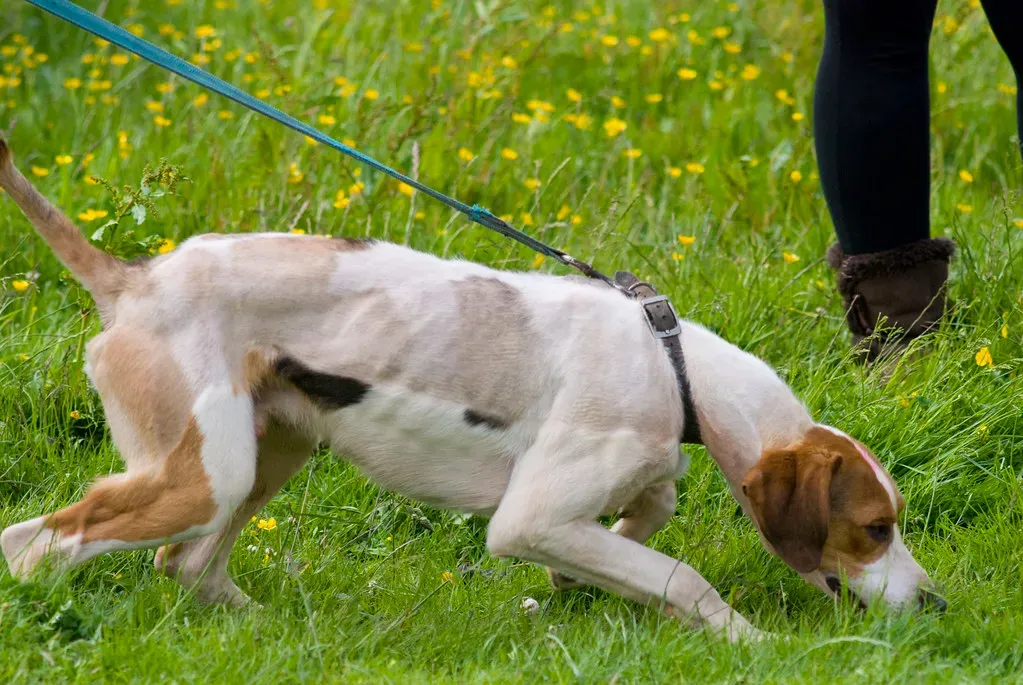
This one genuinely surprised me when I first read about it. Most of us expect dogs to learn through repetition and reward. Fewer of us expect them to simply watch, process, and replicate. Yet that is exactly what some dogs do.
Puppies learn many behaviors by following the examples set by veteran dogs. What’s even more remarkable is that dogs can learn from observing humans as well. Having spent thousands of years interacting with humans, dogs are quite adept at understanding human messages even without training.
One indicator of a dog’s intelligence is whether or not they pick up skills simply by observing. Dogs that can watch either humans or other dogs doing certain tasks, such as opening doors or gates, and learn from their example are certainly more trainable and may be smarter.
It is a bit like watching a child learn by imitation rather than instruction. The capacity to observe, internalize, and then apply a behavior is a hallmark of higher-order thinking. Some dogs are capable of observational learning and are able to figure out how to open a door or mimic human movements just by observing them.
Sign 6: They Constantly Look to You for Cues

A lot of people mistake a dog that frequently makes eye contact or watches their every move as just being overly attached. Let’s be real though – that behavior is actually a sign of remarkable social and cognitive intelligence.
How much dogs naturally look to their owners for direction can be a sign of intelligence. A smart dog will not only follow direction but will look to you for cues for what to do. It is a fundamentally cooperative instinct, and it runs deep.
Many dogs have a high degree of social intelligence. Looking to you can be a manifestation of their social skills. They might rely on you for safety or simply try to impress you and earn your approval. This social awareness is part of what makes dogs so uniquely tuned in to human life. The skills to communicate with humans show up in dog puppies but not in wolf puppies at a young age, which suggests this is a deeply evolved trait, not just a learned habit. It is genuinely built into them.
Sign 7: They Get Bored When Under-Challenged

Here is a sign that often gets misread as “bad behavior” rather than brilliance. A dog that chews furniture, barks relentlessly, or seems to manufacture its own entertainment is often not acting out from spite. It is acting out from boredom.
Some of the smartest dogs misbehave because they get bored easily. Precisely because their minds are so active, routine environments without sufficient challenge feel deeply frustrating to them. Think of it like putting a chess prodigy in a room with only checkers to play.
When a dog invents their own forms of entertainment, it’s a sign of higher cognitive ability and curiosity. When boredom and their intelligent brain meet, it produces creative ways to stay busy. Dogs need mental stimulation just like people do. If a dog is bored all day, they might seem lazy, but it’s really a lack of challenge.
The good news? It’s important to incorporate enrichment into your dog’s daily life. Think puzzle feeders, scent work, varied walks, and short training sessions. A stimulated dog is a happy dog, and a happy dog rarely causes chaos.
What Science Says About the Canine Mind

It is worth pausing to zoom out and look at what researchers have actually confirmed about how dogs think. Scientists have suggested that dogs can be as smart as a 2-year-old child, and research on dog intelligence has demonstrated that our four-legged friends can learn in more complex ways than previously known.
Researchers divide dog intelligence into three main categories: instinctive, which refers to what a dog is bred to do; adaptive, which involves problem solving and learning from the environment; and working or obedience intelligence, which refers to formal learning like training. Understanding which category your dog excels in can actually transform how you train and communicate with them.
There’s no such thing as a dog who is simply “smart” or “dumb.” Dogs, like humans, can have strengths and weaknesses in different areas. New brain imaging and genetic tools are letting researchers explore how dogs think and feel in ways that weren’t possible before. It is hard to say for sure just how deep the canine mind goes, but one thing is increasingly clear: we have been underestimating our dogs for a very long time.
Conclusion: Your Dog Might Just Be the Genius You Never Expected

The idea of a “genius dog” might have sounded a little far-fetched not long ago. Now, backed by real science and real-world observation, it is a genuinely plausible reality for many dogs across all breeds and backgrounds.
From solving puzzles independently to reading your micro-expressions, from remembering commands after months of silence to learning by simply watching, the signs of canine brilliance are hiding in plain sight. The most important shift you can make is simply to start paying closer attention.
Paying attention to how your dog is smart can help you better manage bad habits, train them, figure out new activities they’ll love, and make them happier overall. That feels like a pretty beautiful deal for both of you.
So next time your dog does something that makes you do a double take – trust that instinct. You might just be living with a four-legged genius who has been quietly waiting for you to catch up. What do you think – did any of these signs sound like your dog? Tell us in the comments.

- 10 Most Famous Ghost Towns in The USA - July 28, 2026
- Why Gardening Is an Ideal Hobby for Zodiac Earth Signs - July 28, 2026
- The 12 Deadliest Animals in Minnesota - July 28, 2026