

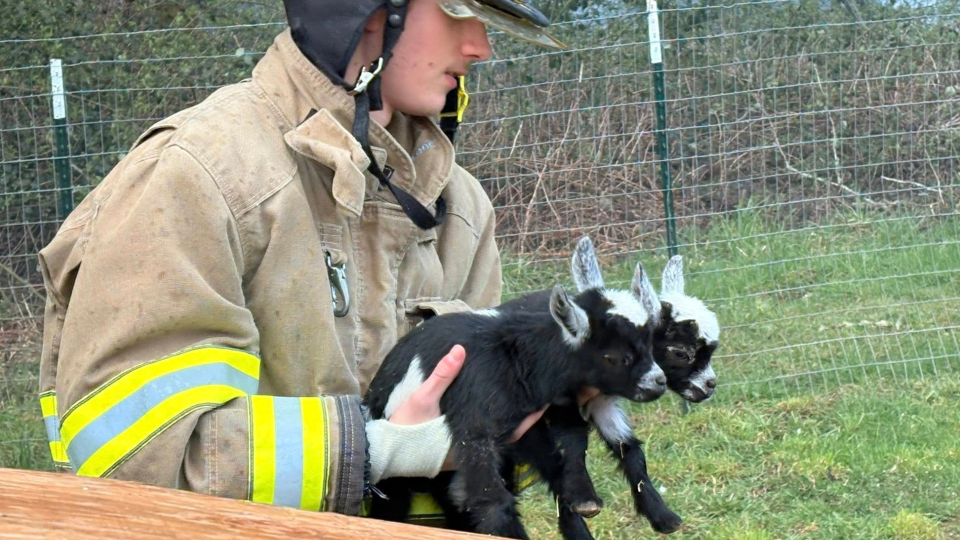
Early Morning Alarm Sparks Urgent Response (Image Credits: Cowlitz Co. Fire District 6/Facebook)
Castle Rock, Washington — Firefighters faced a dual challenge early Tuesday morning when a barn erupted in flames, threatening livestock nearby. Crews from Cowlitz County Fire District 6 arrived to find the structure fully engulfed and quickly shifted focus to protect the animals housed in the vicinity. The swift intervention ensured no lives were lost in the rural blaze.[1][2]
Early Morning Alarm Sparks Urgent Response
Just after 7:40 a.m. on March 24, dispatchers alerted Castle Rock Fire District 6 to a possible barn fire in the northwest part of Cowlitz County. First responders reached the scene within minutes and discovered a 30-by-40-foot outbuilding completely consumed by fire. The intensity forced crews to adopt a defensive strategy right away, prioritizing containment over interior attack.[3]
Smoke billowed heavily as flames spread rapidly through the wooden structure. Firefighters assessed the risks immediately, noting the proximity of animals to the burning building. Their training in rural fire scenarios proved essential from the outset.
Animal Rescue Takes Center Stage
Beyond battling the blaze, responders turned their attention to the livestock at immediate risk. Several animals, including a group of baby goats, occupied pens and areas near the outbuilding. Firefighters physically carried the young goats to safety, shielding them from the heat and smoke.[4]
Paramedics joined the effort, helping to relocate other creatures housed close by. The operation demanded quick decisions amid chaotic conditions. Witnesses later praised the calm professionalism displayed under pressure.
Efforts continued until the animals reached secure ground away from the fire’s reach. This hands-on rescue highlighted the unique demands of farm fires in Washington’s countryside.
Multi-Agency Collaboration Fuels Success
The response grew rapidly as mutual aid arrived from neighboring departments. Castle Rock Fire District 6 coordinated with Cowlitz 2 Fire & Rescue, Winlock Fire, and Vader Fire. Together, they knocked down the flames and secured the perimeter.[3]
- Castle Rock Fire District 6 led the initial attack and animal relocation.
- Cowlitz 2 Fire & Rescue provided additional manpower for containment.
- Winlock and Vader crews supported water supply and overhaul operations.
Such teamwork remains standard in Cowlitz County, where resources combine seamlessly during major incidents. The collaboration prevented the fire from spreading to nearby structures or fields.
Aftermath Leaves Community Relieved
Officials confirmed no injuries among firefighters, paramedics, or the rescued animals. The property owner expressed gratitude publicly, noting the rapid arrival of crews. Investigators have yet to determine the fire’s origin, which stays under review.[1]
The incident underscored vulnerabilities in rural outbuildings, often used for storage and livestock. Local fire districts continue to emphasize prevention through community education programs. Crews remained on scene for hours, monitoring for hot spots.
Residents in the area rallied with supportive comments, calling the saves a “goat rodeo” success story. The event drew widespread attention for its heartwarming outcome amid destruction.
Key Takeaways
- Firefighters contained a fully involved 30×40 barn without human or animal injuries.
- Baby goats received hands-on rescue, carried to safety by responding crews.
- Mutual aid from four agencies ensured a comprehensive response.
Rural fires demand versatility from first responders, blending firefighting with life-saving improvisation. This Castle Rock incident serves as a reminder of their vital role. What do you think about these rescues? Tell us in the comments.

- Urban Coyotes Show Remarkable Adaptability, Learning to Thrive in City Environments - July 22, 2026
- Beavers Are Nature’s Engineers, Creating Vital Habitats for Other Wildlife Species - July 21, 2026
- The Recovery of the California Condor Offers Hope for Other Critically Endangered Birds - July 21, 2026