

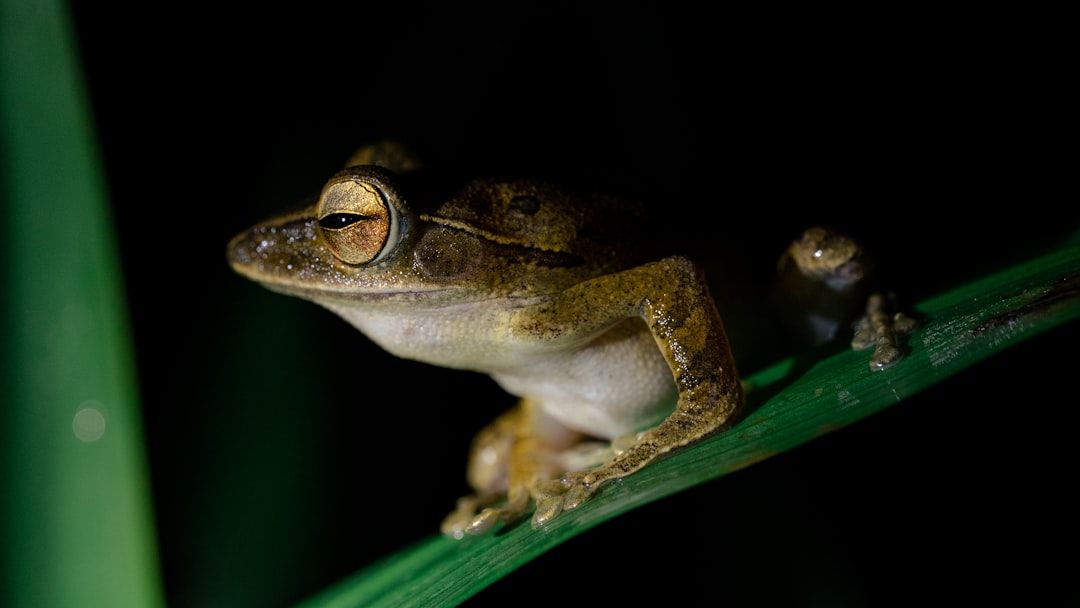
Something remarkable was pulled from the cloud forests of Peru recently, and honestly, it might just be the most fascinating amphibian story of 2026. A miniature frog, barely the size of a fingernail, was found doing something that sounds almost too strange to believe. It carries its eggs directly on its back, tucked into a special pouch like a tiny living incubator.
This discovery is the kind of thing that reminds you how little we still know about the natural world. Scientists are calling it a new species, and the details are genuinely surprising. Let’s dive in.
A Forest Full of Secrets: Where the Frog Was Found
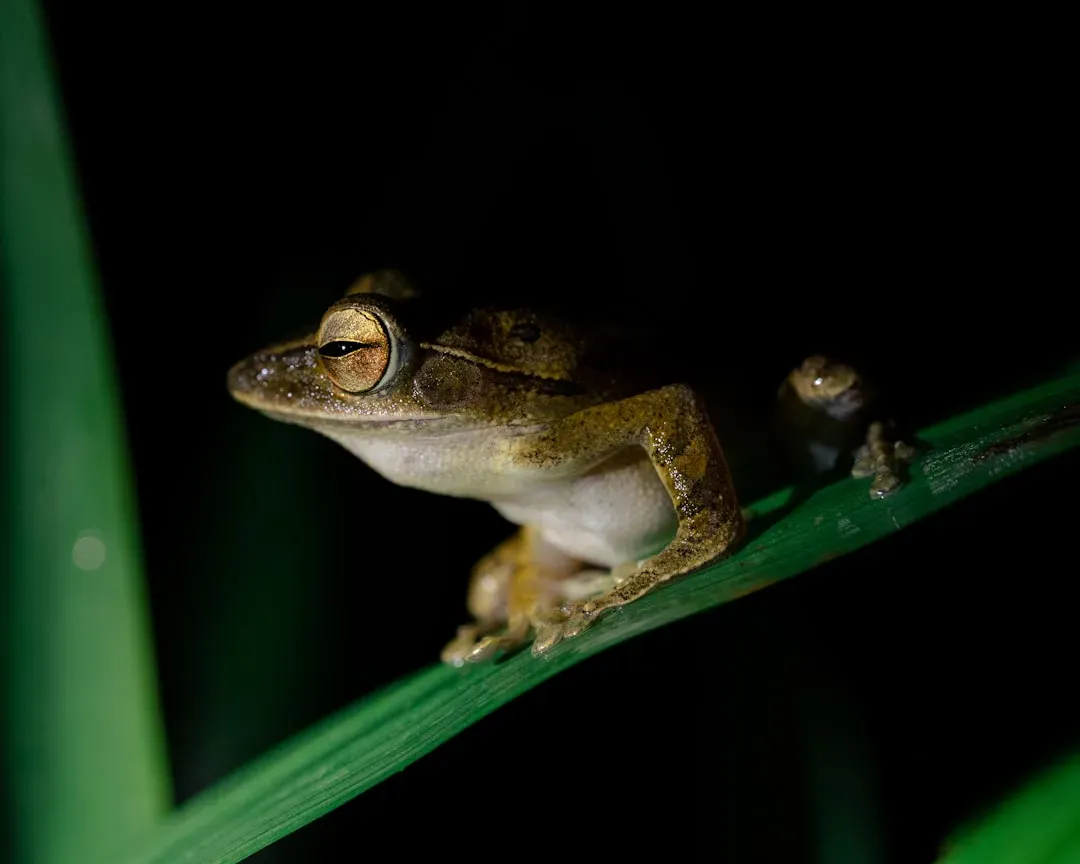
Deep in the Andean cloud forests of Peru, at elevations where the air is thick with mist and the vegetation is impossibly lush, researchers stumbled upon this extraordinary little creature. The region is known for its biodiversity, but even by Peruvian standards, this find stands out. Cloud forests at these altitudes are notoriously difficult to explore, which partly explains why species like this can remain hidden for so long.
It’s hard not to feel a little awe about that. Here’s a frog that has presumably been living its life, carrying its eggs, doing its thing, for who knows how many thousands of years, and we’re only just now finding it. The discovery was reported in April 2026, putting it squarely among the freshest scientific news of the year.
What Makes This Frog a “Marsupial” Frog
The term “marsupial frog” isn’t just a cute nickname. It refers to a real biological trait where the female frog carries fertilized eggs in a dorsal pouch on her back, much like a kangaroo carries its young. The eggs develop inside this protective structure, shielded from predators and environmental stress. It’s an evolutionary solution that is, by any measure, genuinely ingenious.
This reproductive strategy is rare among amphibians, and that’s precisely what makes marsupial frogs so scientifically compelling. Most frogs deposit eggs in water or on leaves and leave them to fend for themselves. The marsupial frog essentially said no to that strategy and evolved something far more hands-on. Or, well, back-on.
The Science Behind the Discovery
Researchers identified the new species through a combination of morphological analysis and genetic testing, the standard double-check method that modern taxonomy relies on heavily. The frog belongs to the genus Noblella, a group of miniaturized frogs already known for living in high-altitude Andean environments. What sets this species apart, beyond its egg-carrying behavior, is its remarkably small body size even within a genus that is already defined by being tiny.
The specimen collected gave scientists enough material to confirm its status as a species previously unknown to science. Genetic sequencing revealed clear differences from its closest relatives, leaving little room for doubt. This kind of rigorous confirmation process is what separates a genuine new species from a simple misidentification.
Miniature but Mighty: The Biology of Tiny Frogs
Let’s be real, when something is described as miniature, it’s easy to underestimate it. These small frogs occupy a surprisingly important ecological role in their forest habitats, acting as both predators of tiny invertebrates and prey for larger animals. Size, in the natural world, rarely correlates with ecological significance.
The miniaturization found in frogs like those in the Noblella genus is thought to be linked to specific environmental pressures at high altitudes. Smaller body sizes can offer advantages in cold, oxygen-thin environments where energy conservation matters enormously. Think of it like running a compact, fuel-efficient car rather than a gas-guzzling truck up a steep mountain road. The analogy is a bit rough, but the principle holds.
The Significance of Egg-Carrying Behavior
The egg-carrying behavior observed in this new species is more than just a biological curiosity. It represents a significant parental investment strategy that dramatically increases the survival odds of offspring. By keeping eggs on her back, the female essentially creates a mobile, protected nursery that travels with her through the forest undergrowth.
This is particularly important in cloud forest environments where conditions can change rapidly, rainfall patterns are unpredictable, and suitable water sources may be inconsistent. A frog that doesn’t depend on a stable water body to incubate its eggs has a real advantage. Honestly, it’s the kind of adaptation that makes you realize evolution is, in many ways, a much better problem-solver than anything we could dream up in a lab.
Peru’s Cloud Forests as a Hotspot for New Species
Peru has long been recognized as one of the most biodiverse countries on the planet, and its cloud forests in particular continue to yield new species at a rate that genuinely surprises even seasoned biologists. The Andes run like a long spine through the country, creating a dizzying variety of microclimates and isolated habitats. Each ridge, each valley can host species found nowhere else on Earth.
Discoveries like this marsupial frog reinforce why conservation of these ecosystems is so urgently important. When a habitat disappears, it doesn’t just lose the species we know about. It potentially wipes out species we haven’t even discovered yet. That’s a loss that’s impossible to quantify, and in my view, impossible to justify.
What This Discovery Means for Amphibian Conservation
Amphibians as a group are facing some of the steepest population declines of any class of vertebrates on Earth. Chytrid fungus, habitat destruction, climate change and pollution have collectively pushed a staggering proportion of amphibian species toward threatened or endangered status. Finding a new species in 2026 is exciting, but it also carries an immediate and uncomfortable question: how do we protect it now that we know it exists?
The newly described marsupial frog from Peru now joins a long list of species that need monitoring, habitat protection, and potentially legal safeguards to ensure their survival. Conservation organizations and Peruvian authorities will need to work together quickly. Discoveries without follow-up protection can become tragic footnotes rather than hopeful headlines. The real test of this find’s significance won’t be in the journal paper. It will be in what happens to that cloud forest over the next decade.
A Remarkable Reminder of What Remains Unknown
There’s something deeply humbling about a discovery like this. We have satellites mapping every corner of the globe, deep learning algorithms processing satellite imagery in real time, and centuries of biological fieldwork behind us. Yet a tiny frog carrying eggs on its back managed to stay off the scientific radar until 2026.
It’s a reminder that the natural world still holds enormous surprises, particularly in places like the Peruvian cloud forests where access is difficult and funding for fieldwork is chronically limited. Every expedition into these habitats carries the genuine potential to change what we know. This marsupial frog is living proof of that.
The discovery of this miniature marsupial frog in Peru is far more than a footnote in an academic journal. It’s a window into the extraordinary complexity of life that still exists, undocumented, in the world’s most biodiverse corners. What do you think we’re still missing out there? Drop your thoughts in the comments.

- Urban Coyotes Show Remarkable Adaptability, Learning to Thrive in City Environments - July 22, 2026
- Beavers Are Nature’s Engineers, Creating Vital Habitats for Other Wildlife Species - July 21, 2026
- The Recovery of the California Condor Offers Hope for Other Critically Endangered Birds - July 21, 2026