

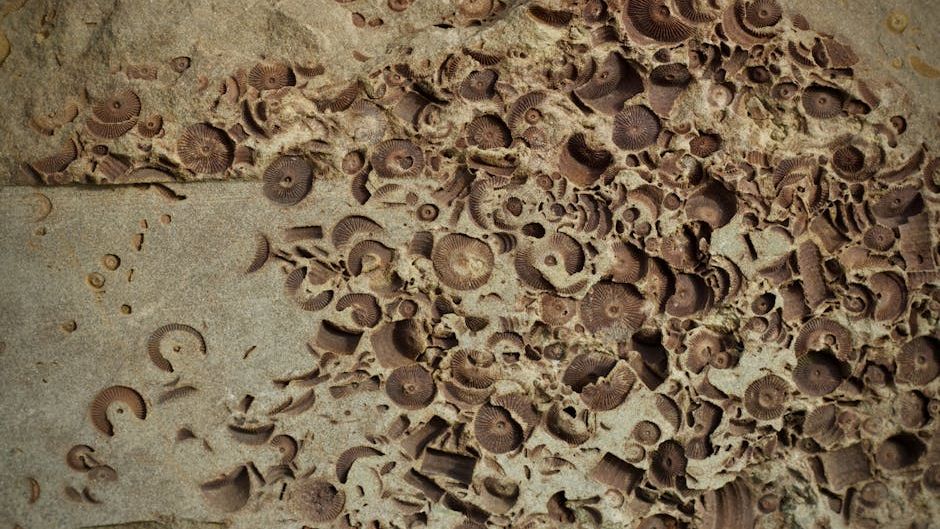
Something remarkable is quietly reshaping everything scientists thought they knew about the origins of complex life on Earth. Deep within the rocky layers of southern China, a trove of fossils has emerged that is forcing researchers to rethink a long-standing assumption: that sophisticated, multi-cellular creatures only appeared after the so-called Cambrian explosion.
The discovery is equal parts thrilling and unsettling for the scientific community. Among the finds is a creature eerily reminiscent of the sandworms from science fiction, a detail that has captured imaginations worldwide. Let’s dive in.
The Fossil Site That Changed Everything
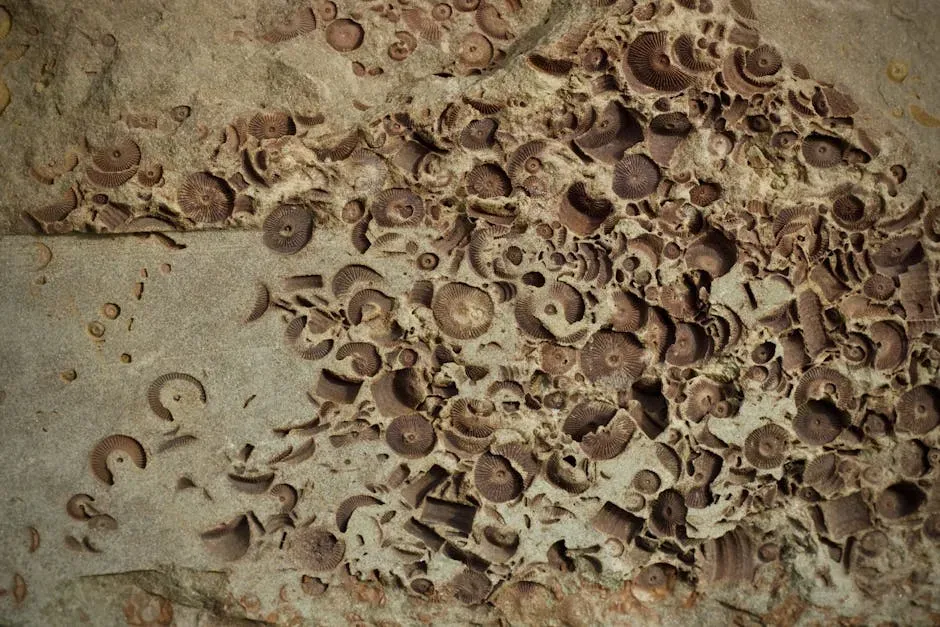
Here’s the thing about paleontology: every once in a while, the ground just gives up a secret that nobody was prepared for. The Qingjiang biota site in Hubei Province, China, has been producing extraordinary fossils for years, yet researchers continue to pull out specimens that genuinely surprise even the most seasoned experts. This latest batch of findings pushes the boundary of complex life further back in time than many previously accepted.
The fossils in question date to roughly 518 million years ago, placing them firmly in the early Cambrian period but suggesting that the evolutionary groundwork was laid even earlier. Scientists studying the site found evidence that diverse, anatomically intricate animals were already thriving before the so-called Cambrian explosion reached its peak. That is a genuinely staggering thought when you sit with it for a moment.
What Is the Cambrian Explosion and Why Does It Matter
For context, the Cambrian explosion refers to a relatively rapid period in Earth’s history, roughly 538 to 520 million years ago, when most major animal groups appear in the fossil record seemingly out of nowhere. It has long been treated as a kind of biological Big Bang, a dramatic moment when complexity arose from simplicity. Generations of scientists built careers around explaining why it happened so suddenly.
The problem with that framing, honestly, has always been nagging. Critics argued for decades that the apparent suddenness was partly a fossil preservation artifact, not a true reflection of evolutionary timing. These new findings lend serious weight to that skepticism, suggesting complex body plans were developing in the shadows long before the main event.
The Dune-Like Sandworm That Stole the Headlines
Let’s be real: nothing captures public attention quite like a prehistoric creature compared to something from a beloved sci-fi franchise. One of the most striking specimens recovered from the site is an elongated, segmented animal that researchers have described as resembling a sandworm, instantly drawing comparisons to the iconic creatures from Frank Herbert’s Dune universe.
The creature possessed a series of repeating body segments and what appear to be primitive sensory or feeding structures at its anterior end. It belonged to a group of ancient worm-like animals that would have navigated the seafloor or soft sediment of a shallow marine environment. While it obviously lacked the planet-swallowing scale of its fictional counterpart, the structural similarities in segmentation and body form are genuinely striking. Honestly, it’s the kind of detail that makes you appreciate how strange and imaginative real evolution can be, sometimes rivaling science fiction without even trying.
A Surprisingly Rich Ecosystem Frozen in Stone
The sandworm was far from the only discovery. Researchers documented a diverse assemblage of organisms at the site, including various soft-bodied creatures, early arthropods, and animals that don’t fit neatly into any modern category. It paints a picture of a complex, functioning ecosystem that was already well-established by the time the Cambrian explosion supposedly kicked off.
What makes this site particularly valuable is the exceptional quality of soft-tissue preservation. Normally, soft-bodied animals decay rapidly and leave no trace in the fossil record, which is precisely why our understanding of early life has always been so patchy. Here, even delicate internal structures and appendages have been preserved, offering a rare window into body plans that would otherwise be invisible to science.
What This Tells Us About Pre-Cambrian Life
The implications reach further than just filling in a few blank spaces on the evolutionary timeline. If complex creatures were already present and diversifying before the Cambrian explosion reached its height, then the explosion itself may need to be reframed as an acceleration of an already-rolling process rather than a spontaneous genesis. It’s more like a city that was already being quietly built before anyone switched the lights on.
Scientists are now asking harder questions about what environmental or genetic conditions enabled this early diversification. Some hypotheses point to rising oxygen levels in the oceans, others to ecological interactions like predation driving rapid evolutionary arms races. It’s hard to say for sure which factor was dominant, and in all likelihood it was a combination of many pressures acting simultaneously over millions of years.
The Role of the Qingjiang Site in Modern Paleontology
Discovered in 2019 and formally described in the journal Science, the Qingjiang biota has rapidly become one of the most important fossil localities on the planet. Its preservation quality rivals that of the famous Burgess Shale in Canada, which itself was once considered the gold standard for early Cambrian fossil records. In some respects, Qingjiang surpasses it.
The site continues to yield new specimens with each excavation season, and researchers from multiple international institutions are actively involved in studying the material. It’s one of those rare scientific resources that just keeps on giving, year after year. Given what has emerged so far, the scientific community is watching every new publication from this site with barely concealed excitement.
Conclusion: Rethinking the Dawn of Animal Life
What this fossil site ultimately reveals is that life’s story is far older, richer, and more intricate than our textbooks have traditionally suggested. The creatures preserved in those Chinese rocks were not primitive warm-up acts waiting for the Cambrian explosion to begin. They were already complex, already diverse, already doing what animals do: eating, moving, competing, and surviving.
I think the most profound takeaway here is that nature doesn’t wait for permission to get complicated. Evolution was quietly building extraordinary things long before we had any tools to detect it, and sites like Qingjiang are only now letting us see those hidden chapters. Every time scientists dig deeper, the story of life on Earth gets longer, stranger, and more wonderful than before. What else might be buried out there, waiting to upend everything we think we know?

- Urban Coyotes Show Remarkable Adaptability, Learning to Thrive in City Environments - July 22, 2026
- Beavers Are Nature’s Engineers, Creating Vital Habitats for Other Wildlife Species - July 21, 2026
- The Recovery of the California Condor Offers Hope for Other Critically Endangered Birds - July 21, 2026