
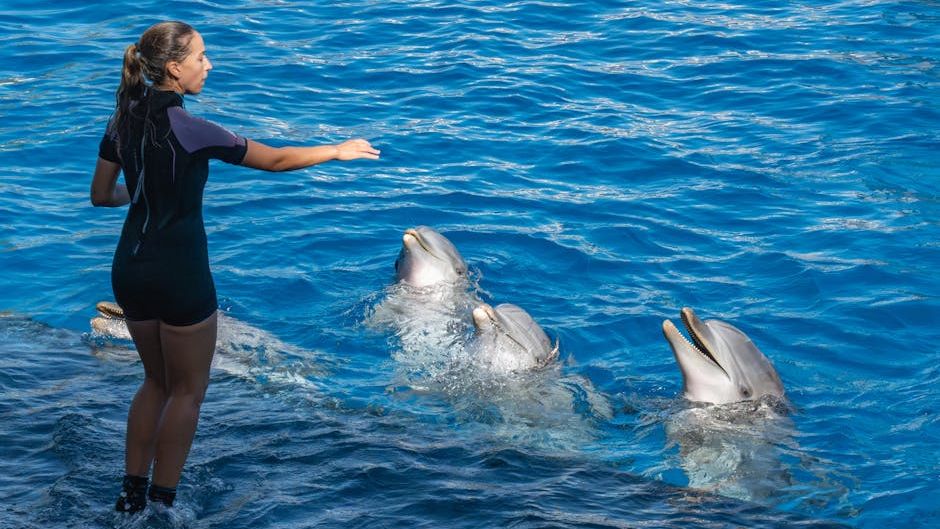
There is something about dolphins that has always stopped us in our tracks. Maybe it is that unmistakable spark in their eyes, or the way they seem to be watching us just as much as we are watching them. For centuries, sailors told stories of dolphins guiding ships through storms. Scientists today are telling a far more extraordinary story, one built on decades of underwater recordings, AI breakthroughs, and behavioral data that is rewriting what we thought we knew about non-human intelligence.
What is emerging from the world’s top marine research institutions is nothing short of astonishing. These animals do not just swim together in groups. They form friendships, hold grudges, name each other, mourn losses, and may even possess something resembling language. Let’s dive in.
The Pod Is Not Just a Group – It’s a Society
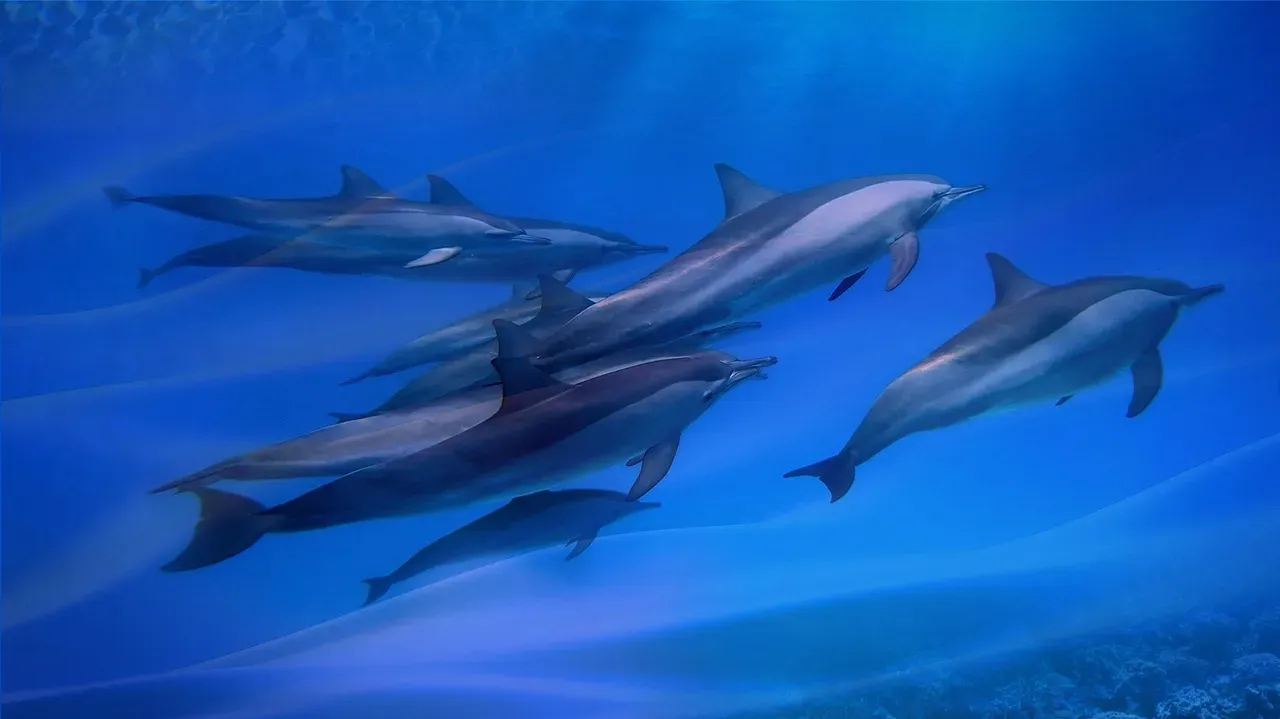
Most people picture dolphins traveling in cheerful clusters near the bow of a boat. The reality is far more layered. The social structure of a dolphin group is generally very complex. They often live in large groups known as pods, which can consist of up to several hundred individuals. Within the pod, there is a clear social hierarchy, with some dolphins leading the others.
Here is the thing though – the structure is not fixed. Studying the dynamics of social composition in pods, scientists discovered that when dolphins belong to a group, nothing binds them to it in a matter of space and time, meaning they can move freely to different pods in their vicinity, so the movement of members is continuous. This type of social network is flat and open, and scientists found no evidence of a rigid, closed or semi-closed structure.
Think of it like a city rather than a family unit. People live in neighborhoods, drift between social circles, and maintain both strong inner bonds and looser outer ones. A dolphin maintains an intricate social network that includes a few close associates such as mothers and calves or pair-bonded males, plus more casual relationships with others who come and go within a larger group. Honestly, that sounds pretty familiar.
Male Alliances That Last a Lifetime
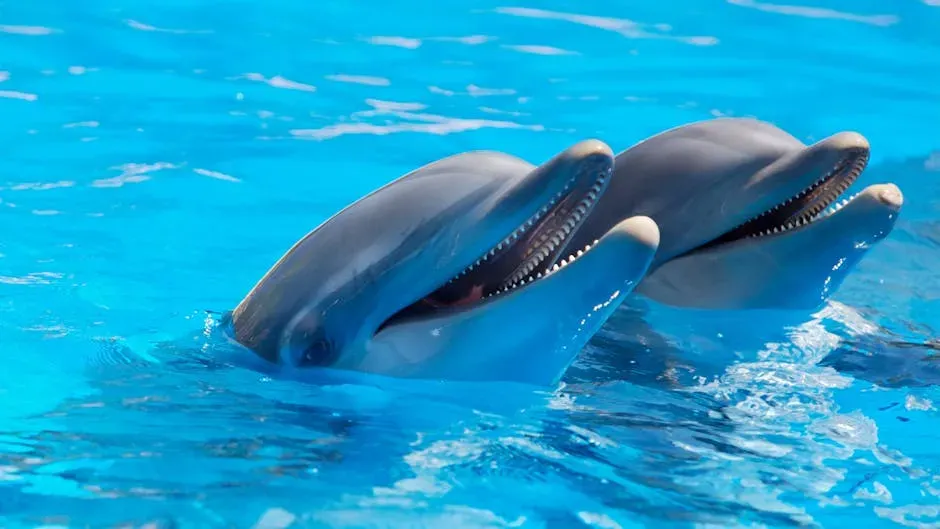
If you think human male friendships are complex, dolphin male bonds are on another level entirely. Males are often related to two or three individuals of the same gender and create partnerships for cooperation purposes. Two male dolphins can stay together for 10, 15 or even 20 consecutive years.
Some pairs of individual males have strong associations which can last a lifetime – in other words, a “best friend.” In the scientific community, this is called an alliance. Often, two or more alliances with individuals around the same age will group together, called a coalition. These coalitions are not just social comfort. They carry serious strategic weight.
These alliances can help the males survive and reproduce in different ways, such as by reducing the risk of being attacked by predators, offering protection, guarding mates, improving success in fights with rivals, and making hunting more efficient. To explore how these bonds develop, a group of researchers tracked 59 male dolphins over 14 years as they grew from adolescence to adulthood. By examining their genetic relationships and social connections, they found that most of the bonds formed during adolescence continued into adulthood. While being related influenced associations in adolescence, adult males tended to form bonds with others of similar age. This suggests that peer relationships, rather than family ties, are more important in the development of adult male alliances in dolphins.
Mothers, Calves, and the Language of Love
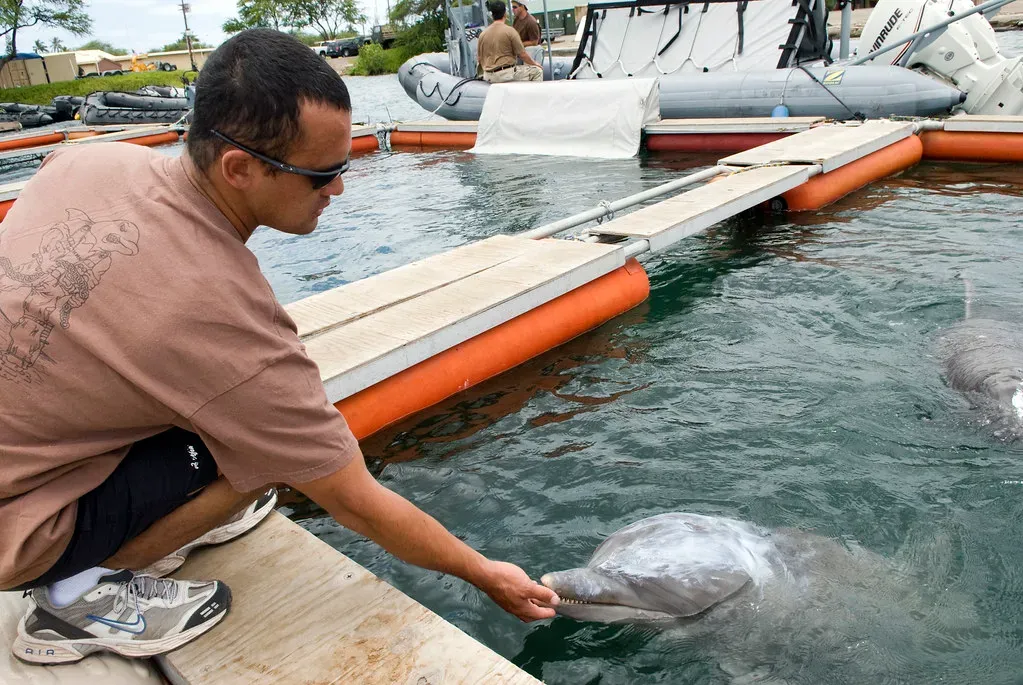
In many dolphin populations, including Atlantic spotted dolphins in the Bahamas, bottlenose dolphins in Sarasota Bay, Florida and Monkey Mia Bay in Australia, and orcas in various regions, the strongest bond is typically between a mother and her calf. This bond is not simply instinct. It involves active, nuanced communication.
Research published in the Proceedings of the National Academy of Sciences revealed something beautifully human-like. Research reveals that bottlenose dolphins “increase the maximum frequency and frequency range of the same vocalizations when in the presence or absence of offspring, paralleling similar changes in human motherese.” In plain terms, dolphin mothers use baby talk. They literally modify their voices when speaking to their young, just like we do.
Dolphins do not inherit their signature whistles genetically; rather, they learn and develop these unique identifiers, typically during infancy. Calves actively listen to their mother’s whistle and modulate their own sounds to create a distinctive pattern that differentiates them within the group. This vocal learning process is a significant aspect of dolphin communication and showcases their cognitive flexibility. I find this one of the most quietly profound facts in all of animal behavior research.
Signature Whistles – Dolphins Actually Have Names
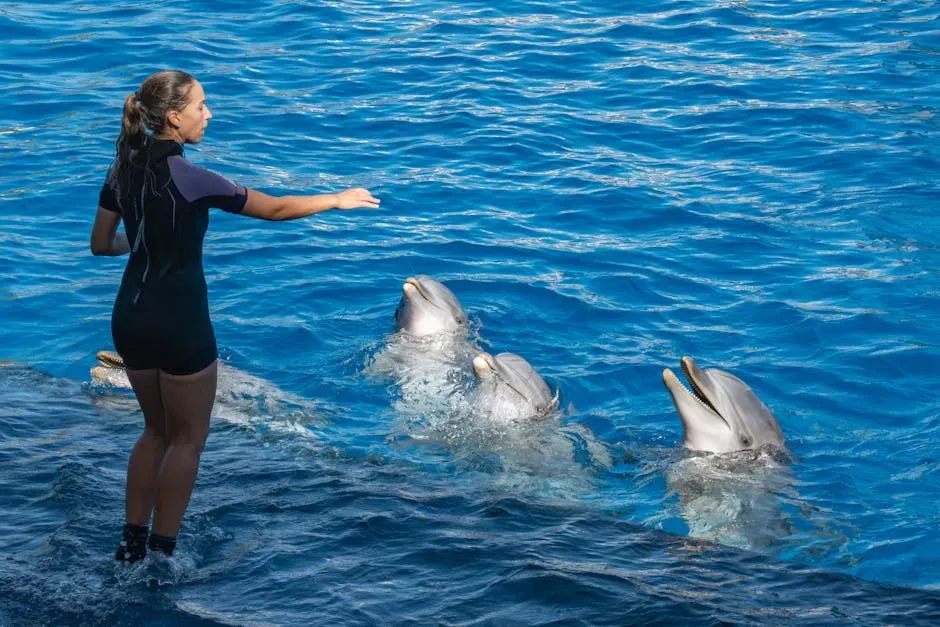
It sounds like something from a science fiction film, but it is real. Recent findings reveal that dolphins call each other by unique “names,” using distinct sounds known as signature whistles. This discovery sheds light on the depths of animal language and enriches our understanding of marine behavior.
Rather than just emitting generic calls to signal location or danger, they call out to specific members of their pod by replicating that individual’s unique whistle. This suggests that dolphins possess an advanced form of communication that involves recognition, memory, and social bonds. The name-calling is not a metaphor. It is a literal, documented behavior.
Even more remarkable, wild bottlenose dolphins can recognise and respond to the signature whistles of companions even after years of separation. This ability to remember and respond to specific calls indicates a complex understanding of social dynamics and communication. Imagine bumping into a friend after a decade apart and recognizing them purely by the sound of their voice. That is what dolphins do, routinely, in the open ocean.
Beyond Names – Is It Actually a Language?
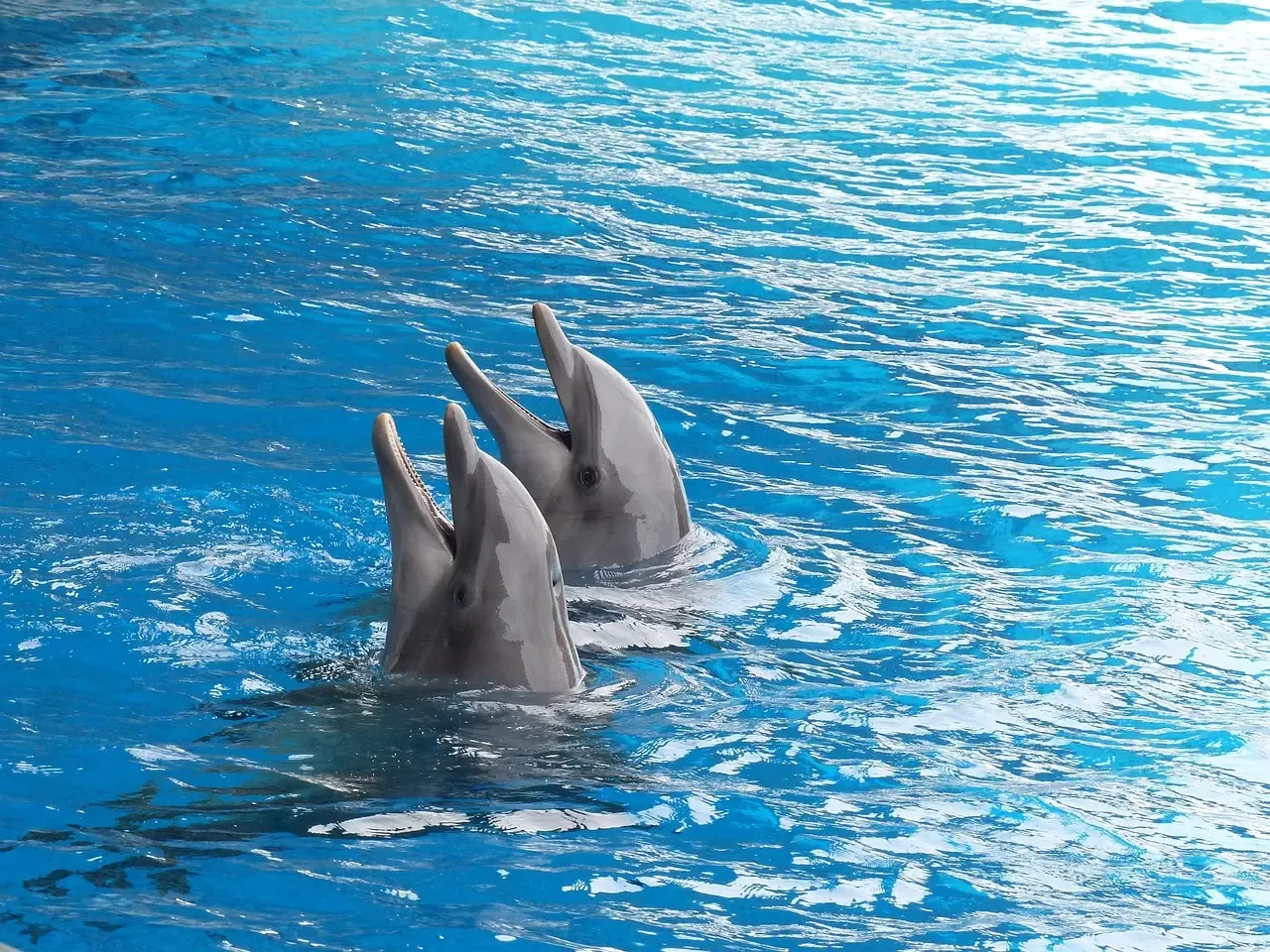
This is where the science gets both thrilling and contested. For a long time, researchers believed signature whistles were the main story. Then came a breakthrough that changed the field. Recent research by scientists with the Woods Hole Oceanographic Institution and partner institutions has identified possible language-like communication among dolphins. Their research focused on “non-signature” whistles, which the researchers found to potentially function like words in communications between multiple dolphins.
Researchers at the Woods Hole Oceanographic Institution and partner institutions, including the Brookfield Zoo Chicago’s Sarasota Dolphin Research Program, are the winners of the inaugural Coller Dolittle Challenge for their work in identifying possible language-like communication in dolphins. The prize, worth one hundred thousand dollars, reflects just how significant this discovery is considered to be.
The winning study identified distinct non-signature whistle types used by multiple dolphins for communication. Using playback experiments performed under completely natural conditions in the wild, the team elicited avoidance responses for one non-signature whistle, suggesting an alarm function. A second non-signature whistle was found to correlate to the query function, produced in response to an unexpected or unfamiliar situation. Alarm calls and questions. That is a vocabulary – a small one, but a vocabulary nonetheless.
AI Is Now Listening In – And the Results Are Staggering
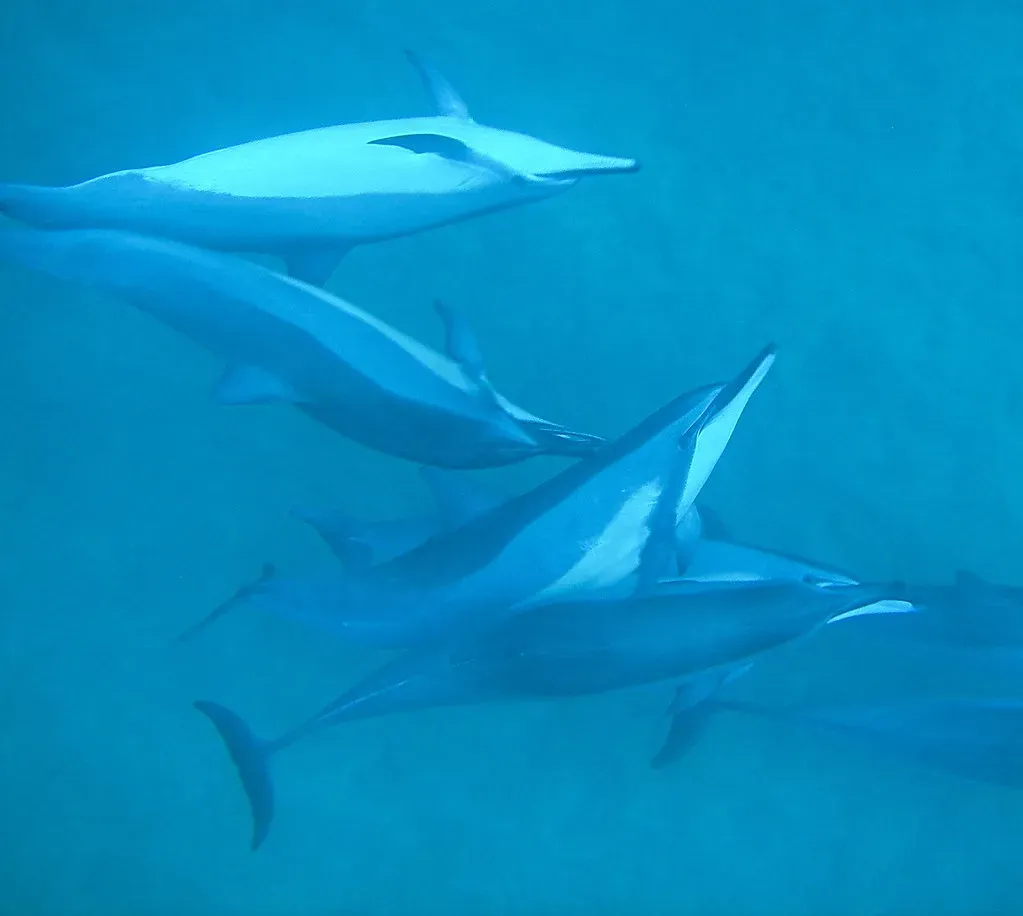
Science does not stand still. Researchers are now turning artificial intelligence loose on decades of dolphin recordings, and the findings are accelerating fast. Google, in collaboration with researchers at Georgia Tech and the field research of the Wild Dolphin Project, has announced progress on DolphinGemma: a foundational AI model trained to learn the structure of dolphin vocalizations and generate novel dolphin-like sound sequences.
Trained extensively on WDP’s acoustic database of wild Atlantic spotted dolphins, DolphinGemma functions as an audio-in, audio-out model that processes sequences of natural dolphin sounds to identify patterns, structure and ultimately predict the likely subsequent sounds in a sequence, much like how large language models for human language predict the next word or token in a sentence. That parallel is not accidental. It is exactly the point.
Pattern recognition algorithms go beyond simple vocalization matching. They identify complex communication sequences, track conversational dynamics between individuals, and detect emotional states based on acoustic features. The system has discovered previously unknown vocalization types and identified regional “dialects” among different dolphin populations. Regional dialects. In dolphins. Let that sink in for a moment.
Communication, Cooperation, and What It All Means
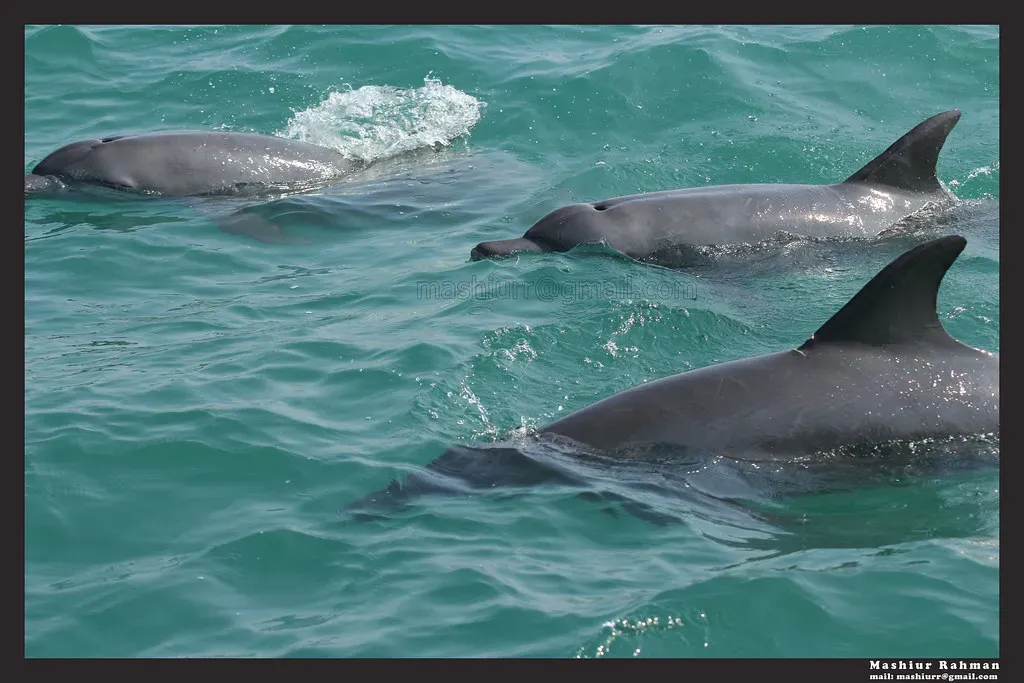
Perhaps the most compelling proof that dolphin communication is genuinely purposeful and not merely reflexive comes from cooperative research. Two dolphin dyads were significantly more likely to cooperate successfully when they used whistles prior to pressing their buttons, with whistling leading to shorter button press intervals and more successful trials. They talked to each other to solve a problem. Together. On purpose.
Some researchers argue that if dolphins possess a true language – a criterion some consider a marker of personhood – there are profound implications for their moral and possibly legal status. Questions have also emerged about the ethics of various research methodologies, with a growing consensus that non-invasive observational studies in natural settings yield not only more ethical but more authentic data than captive research.
As scientists continue to unravel the complexities of dolphin vocalizations, body language, and social signals, they are discovering a communication system with many hallmarks of true language – including referential signaling, dialectical variations, cultural transmission, and possibly even syntactic structure. The deeper science digs, the more human-like the picture becomes. Or perhaps more accurately, the more we realize that “human-like” was never the right benchmark to begin with.
Conclusion: The Ocean Has Been Talking All Along
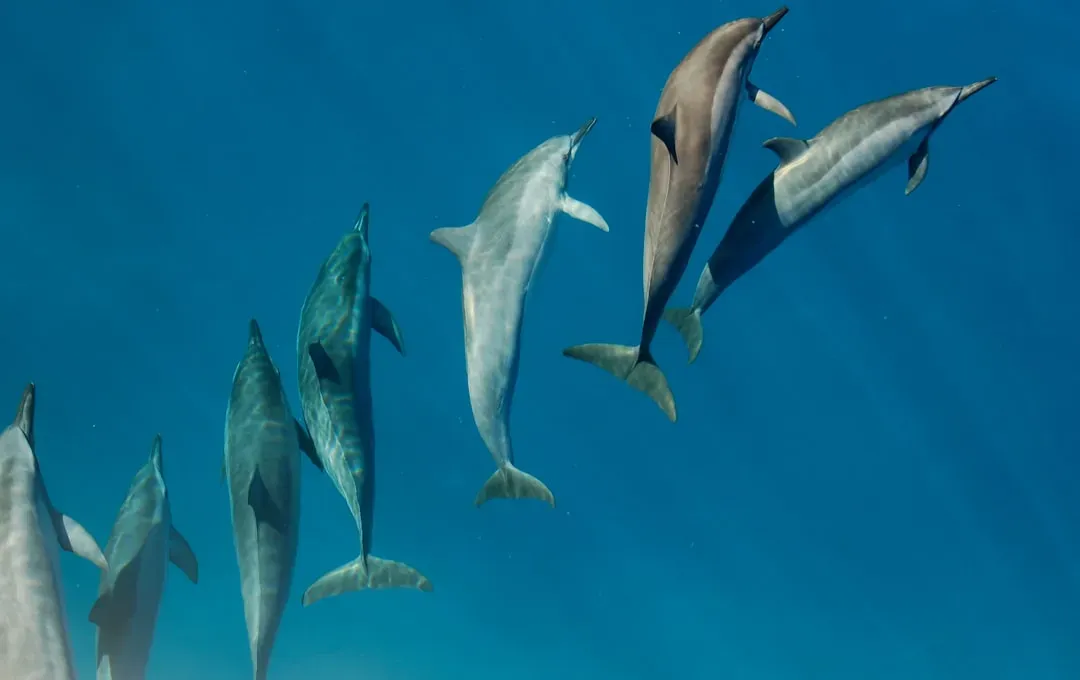
Dolphins have been holding complex conversations, forming lasting friendships, naming their companions, and potentially building something resembling language, all beneath the surface of the ocean while we were barely paying attention. The science of the past decade has fundamentally shifted how researchers, ethicists, and even legal scholars view these animals.
What is most striking is not just the complexity of what dolphins do. It is how long it took us to truly listen. With tools like DolphinGemma and decades of behavioral data finally being synthesized, we may be closer than ever to understanding what they are actually saying to each other. And perhaps to us.
The ocean has been talking all along. We are only now learning how to hear it. What does it make you feel, knowing that another species may have been calling each other by name for millions of years before we ever thought to look?

- 5 Fascinating Bird Species with Unbelievable Courtship Rituals - August 10, 2026
- 12 Amazing Ways Your Cat Shows You Love You Might Not Notice - August 10, 2026
- Why Do Geese Fly in a ‘V’ Formation? The Scientific Reason Explained - August 10, 2026