
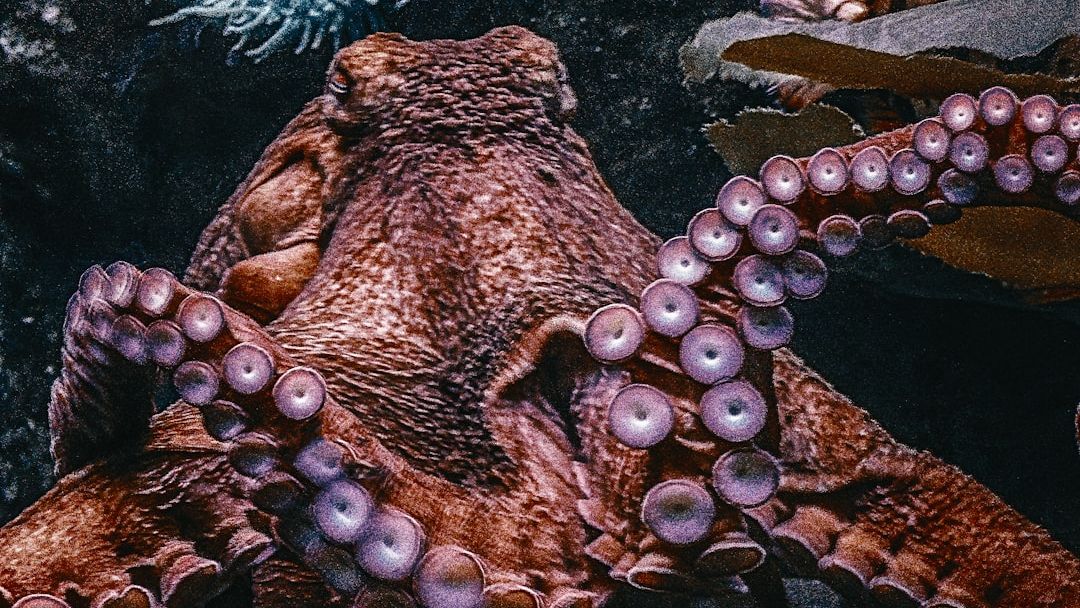
There is an animal living in our oceans right now that can outsmart a locked jar, recognize individual human faces, and sneak out of its tank at night to steal fish from a neighboring one – then quietly return and hide the evidence. No, it’s not some undiscovered primate. It’s the octopus.
These eight-armed marvels have been quietly rewriting everything we thought we knew about intelligence in the animal kingdom. They challenge the very idea that complex thinking is reserved for creatures with spines, social structures, or long evolutionary kinship with us. Science has been catching up slowly, but what researchers are uncovering is frankly astonishing. Let’s dive in.
A Brain Unlike Anything Else on Earth
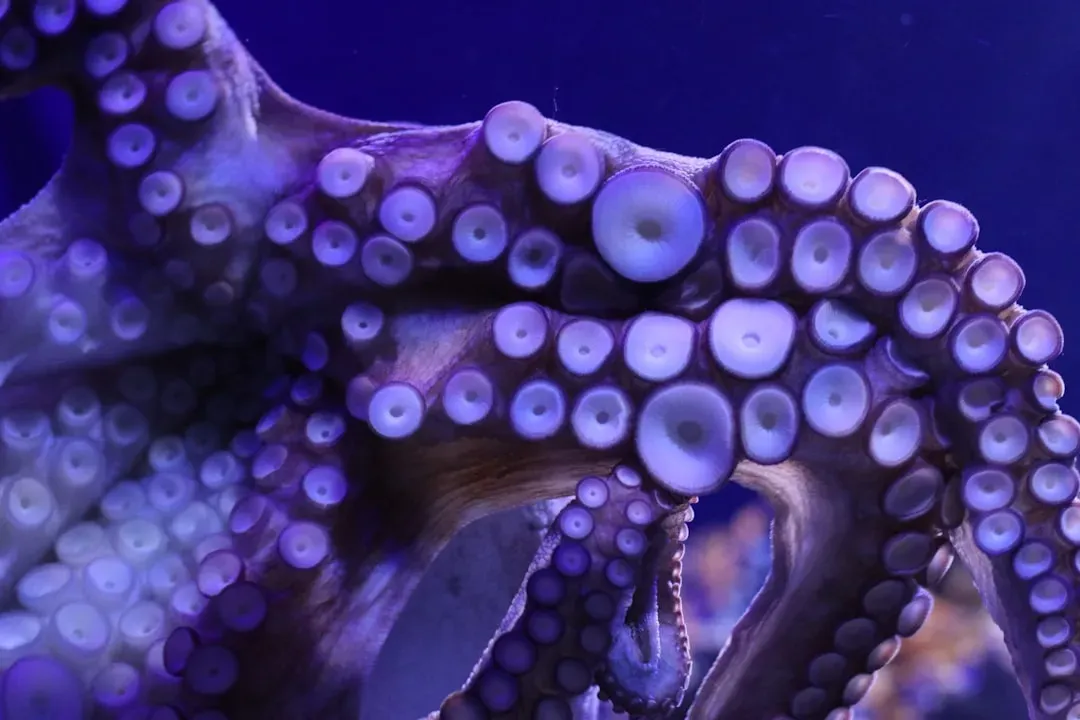
Here’s the thing about octopus intelligence – it doesn’t work the way you’d expect. Each of their eight arms has clusters of neurons that act as a mini brain, controlling movement, touch, and taste independently from the central brain. In fact, roughly two thirds of an octopus’s neurons are found outside of the central brain. Think about that for a moment. It’s less like a CEO running a corporation and more like a network of freelancers all thinking at once.
An octopus’s brain-to-body ratio is the largest of any invertebrate, and it’s also larger than many vertebrates, though not mammals. Octopuses have about as many neurons as a dog – the common octopus has around 500 million – with about two thirds of those located in its arms.
Instead of the brain acting as the sole command center, the octopus’s intelligence is embodied – spread across its body, reacting fluidly to its environment. This decentralized system represents a fundamentally different way of processing information, one that evolved independently from mammalian or avian intelligence. Honestly, it sounds less like a sea creature and more like science fiction.
Master Problem-Solvers With Real Curiosity
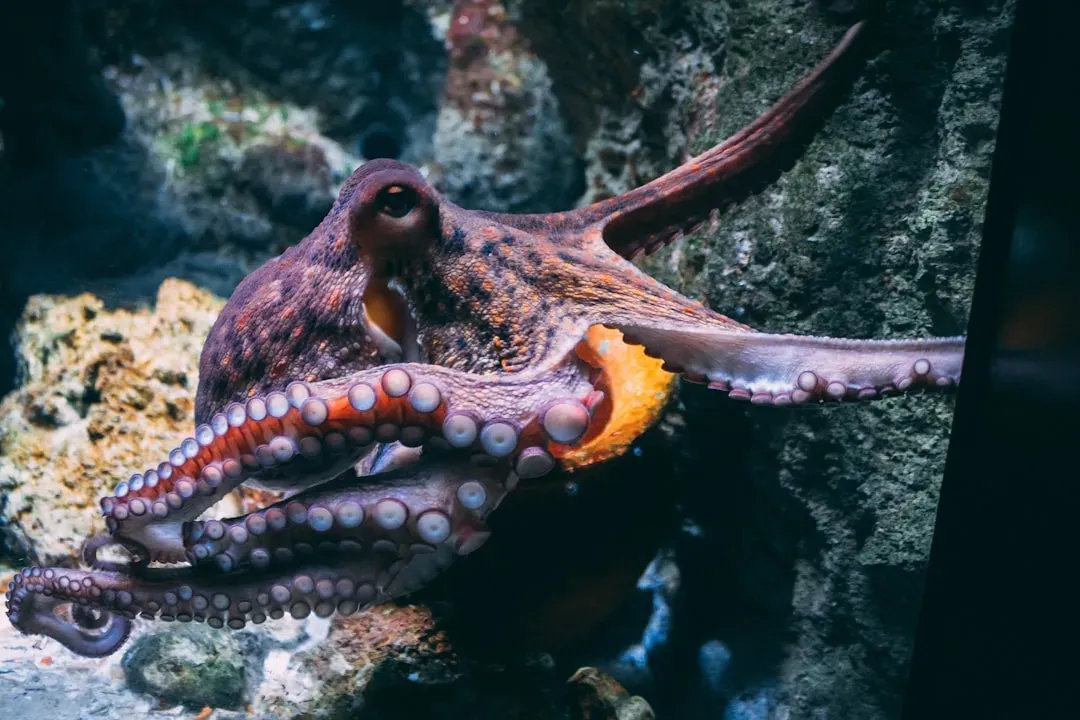
Octopuses can open jars, navigate mazes, and manipulate complex objects to obtain food. But their curiosity goes well beyond survival instinct. Octopuses are notorious for their curiosity and mechanical prowess in captivity, with public aquarium reports frequently describing these animals dismantling pumps, removing filters, or unscrewing tank fixtures.
One story in particular never gets old. Staff at a lab set up a video camera after fish kept going missing from a tank, and it turned out an octopus was getting out of its own tank, going to the other tank, opening it, eating the fish, closing the lid, going back to its own tank and hiding the evidence. That is not instinct. That is planning.
A study published in Biology investigated the behavioral responses of octopuses through an extractive foraging task, testing their problem-solving abilities in a series of eight consecutive experiments over 12 days. The experiments were used to characterize the octopuses as neophilic or neophobic based on their reaction to new objects and their tendency to approach them. The curious ones, the neophilic types, had shorter latency periods approaching the puzzle box and also had a higher probability of solving it.
Learning, Memory, and the Art of Adaptation
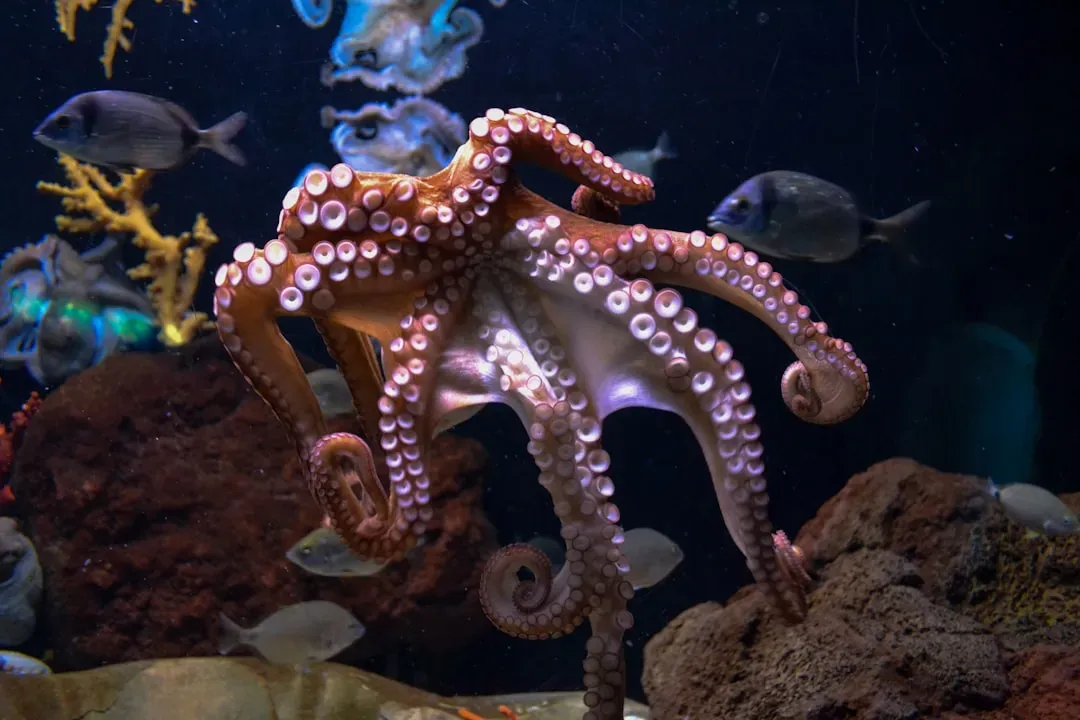
Octopuses excel in discriminative learning: confronted with two objects, they learn to attack one in exchange for a reward, basing their choice on characteristics such as colour, shape, texture or taste, and they can retain this information for several months. They can also generalise – a complex thought process in which they spontaneously apply a previously learned rule to new objects.
In one study on observational learning, common octopuses were allowed to watch other octopuses select one of two objects that differed only in color. The observers consistently selected the same object the demonstrators did, concluding that octopuses are capable of using observational learning. The ability to learn by watching other octopuses was once thought unique to vertebrates.
Octopuses meet every criteria for the definition of intelligence: they show great flexibility in obtaining information using several senses and learning socially, in processing it through discriminative and conditional learning, in storing it through long-term memory, and in applying it toward both predators and prey. That’s a pretty extraordinary résumé for a boneless invertebrate.
Personality, Play, and Recognizing Human Faces
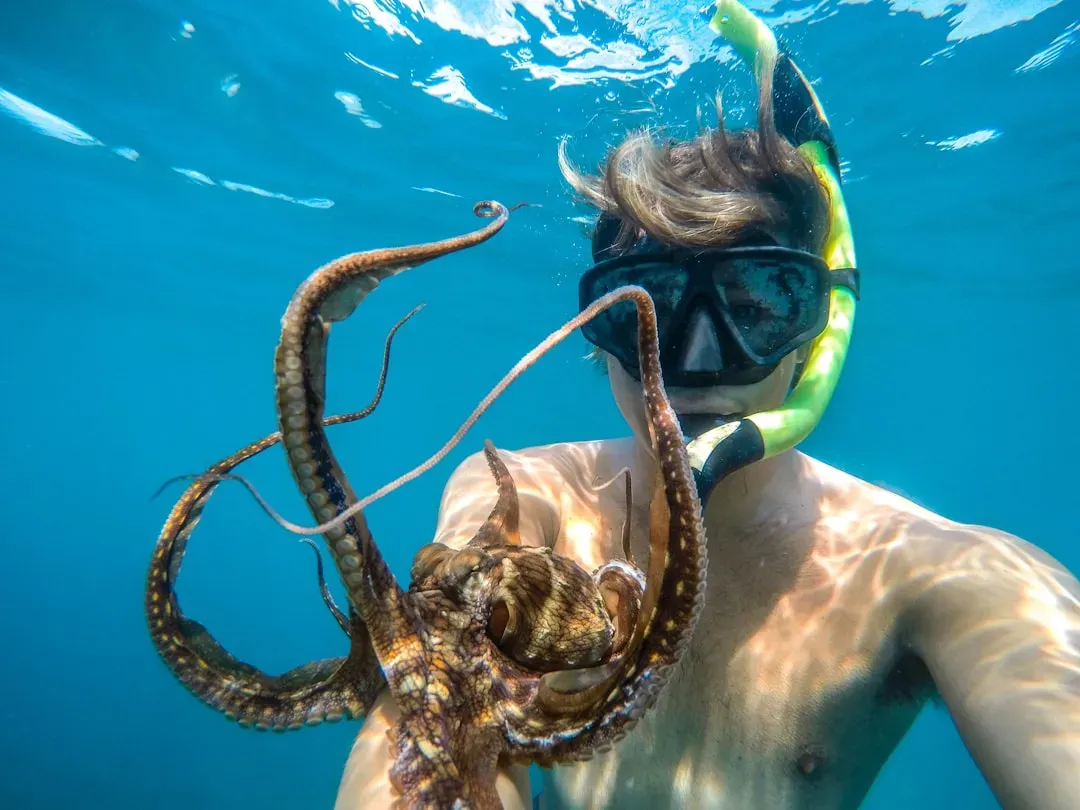
I think the most surprising thing about octopuses isn’t that they’re smart – it’s that they have personalities. Researchers have found that an octopus will explore objects through play, learn by a system of reward and punishment, track what works and what does not, and have the capacity to recognize individual people. That last part is genuinely wild to consider.
Biologists at the Seattle Aquarium designed an experiment to test the recognition abilities of the giant Pacific octopus. Over two weeks, one person fed a group of octopuses regularly while another touched them with a bristly stick. At the end of the experiment, the octopuses behaved differently toward the “nice” keeper and the “mean” one, even though both wore identical uniforms.
Studies have shown octopuses engaging in activities like shooting water jets at objects, suggesting curiosity and experimentation. Researchers have even implied a possible trade-off between problem-solving efficiency within the minds of these cephalopods. In other words, the most curious octopuses aren’t always the fastest problem-solvers. Sound familiar? It might remind you of someone you know.
What Octopus Intelligence Means for Science and Ethics
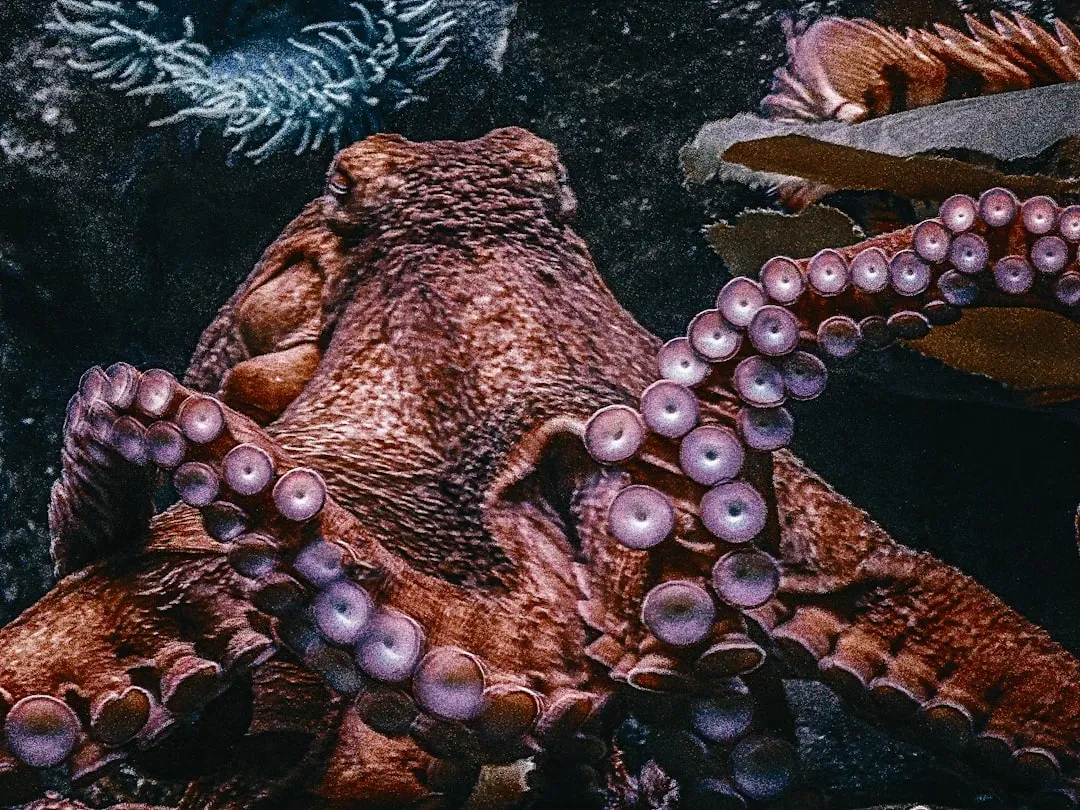
Octopus intelligence evolved independently from vertebrate intelligence, making it a fascinating example of convergent evolution. The last common ancestor of octopuses and vertebrates lived over 500 million years ago and was likely a simple worm-like creature with minimal cognitive capacity. This independent evolution of intelligence suggests that complex cognition may arise through multiple evolutionary pathways when environmental pressures favor it.
As researchers learn more about cephalopods’ cognitive skills, there are calls to treat them in ways better aligned with their level of intelligence. California and Washington state both approved bans on octopus farming in 2024, and Hawaii is considering similar action. The ethical conversation around these animals is gaining real momentum, and not without good reason.
Researchers studying octopus neural systems are also designing more flexible robotic networks inspired by them, while the field of astrobiology has taken notice too – cephalopods demonstrate that advanced cognition can evolve along drastically different biological paths. If life exists elsewhere in the universe, scientists now genuinely think it might think in ways closer to an octopus than to us.
Conclusion: The Smartest Stranger in the Sea
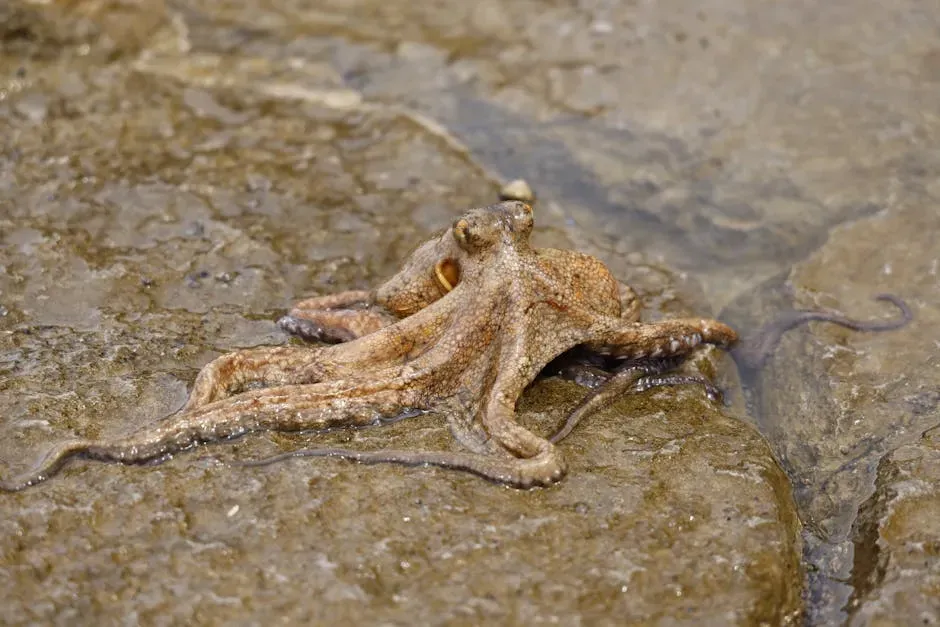
The octopus is, in the truest sense, a mind shaped by completely different forces than our own. An octopus can get bored, show preferences, solve novel problems, and perhaps experience something of the world – all with a brain architecture utterly unlike our own. That alone should give us pause.
Our most recent common ancestor with the octopus existed more than twice as far back as the first dinosaurs, meaning they represent an entirely independent experiment in the evolution of large brains and complex behavior. If we can connect with them as sentient beings, it is not because of shared history or kinship, but because evolution built minds twice over.
There is something humbling and thrilling about that idea. Intelligence, it turns out, isn’t a straight line from simple to complex. It’s a wild, branching, unpredictable experiment – and the octopus is one of its most spectacular results. Next time you see one gliding silently through the water, remember: it’s probably already figured you out. Have you figured it out yet?

- What Would Happen If Mount St. Helens Erupted at Full Force Again - August 10, 2026
- 10 Fascinating Facts About Wolves That Most People Never Learn - August 10, 2026
- Dog Breeds That Can Sense When Death Is Near - August 10, 2026