
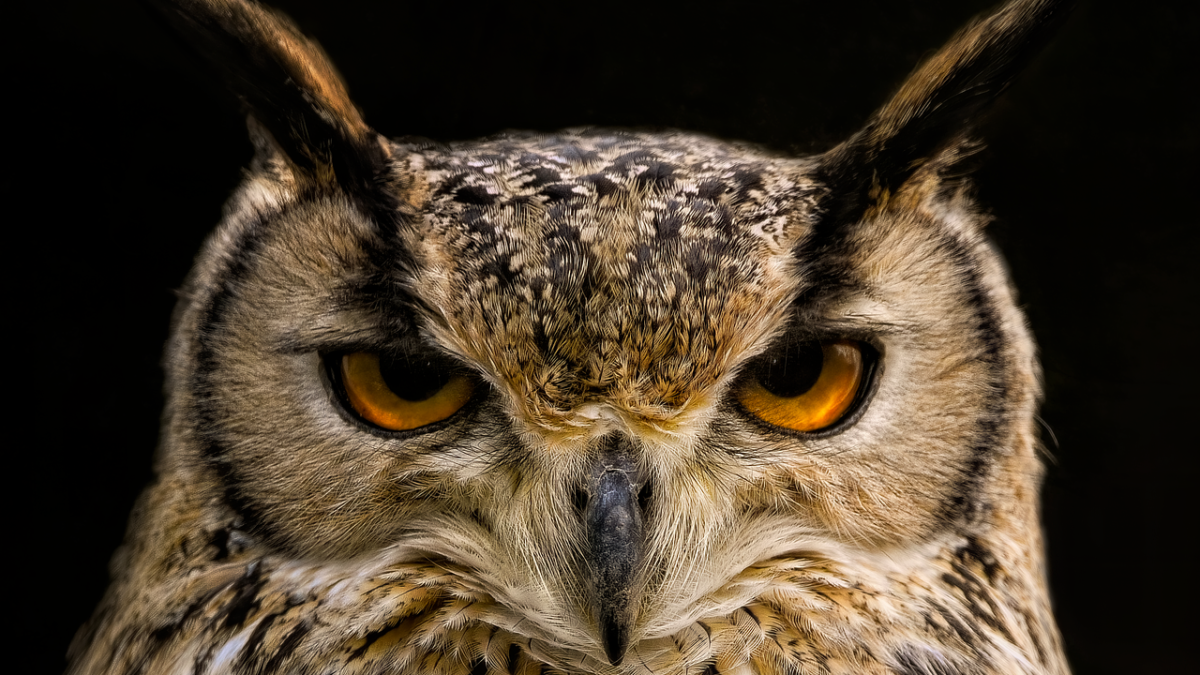
Most people have heard an owl call from somewhere in the dark and felt that small, involuntary chill. It’s one of those sounds that genuinely belongs to the night. Yet what actually happens between dusk and dawn, out beyond the reach of our windows and porch lights, is far more structured and purposeful than mythology tends to suggest.
Owls aren’t simply drifting through the darkness on instinct. Their nights are organized around hunting, communication, territory, digestion, and social bonding. Each hour serves a function. Understanding that function changes how you think about the bird entirely.
Eyes Built for the Dark
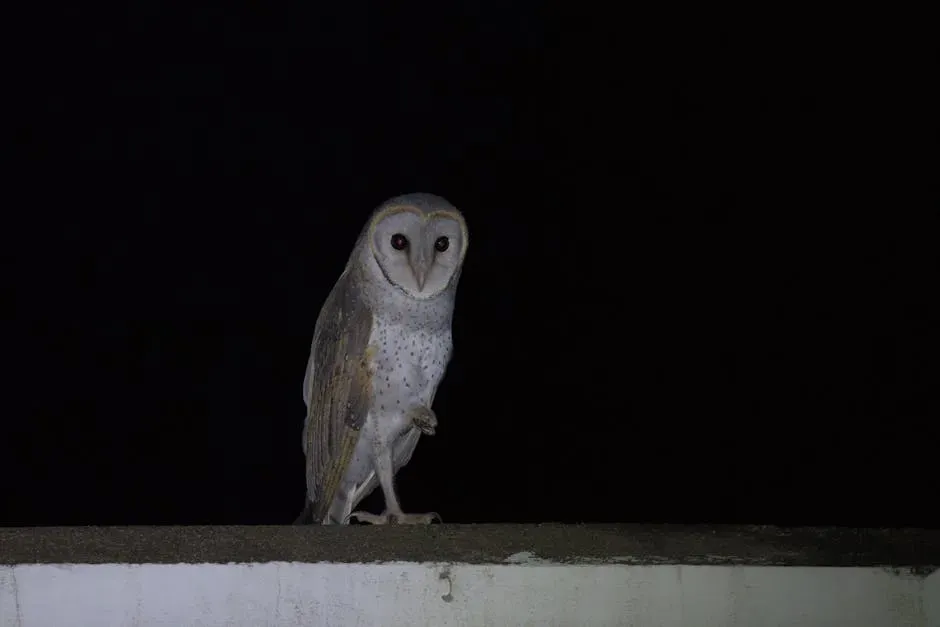
The first thing worth understanding about owls is the machinery behind their night vision. Owl retinas have roughly thirty times more rods than cones, meaning they have excellent nighttime vision but can’t see much color. That single trade-off, color for light sensitivity, tells you a great deal about how their world is constructed.
An owl’s eyes are large in order to improve their efficiency, especially under low light conditions, and in fact the eyes are so well developed that they are not eyeballs as such but elongated tubes. This design maximizes the size of the image falling on the retina, which is exactly what a predator hunting in near-darkness requires.
Behind an owl eye’s rod-packed retina is another layer called the tapetum lucidum, which catches any light that may have passed through the retina and bounces it back to those sensitive rods. All of these adaptations add up: some owl eyes may be as much as 100 times more sensitive in low light than ours.
An owl’s total field of view is about 110 degrees, with roughly 70 degrees of that being binocular vision. Since their tube-shaped eyes can’t move within the skull, they have flexible necks that allow them to turn their head up to 270 degrees left or right, and owls accomplish this due to the unique structure of their neck. It’s an engineering solution as elegant as anything in nature.
Hearing That Rivals Sight
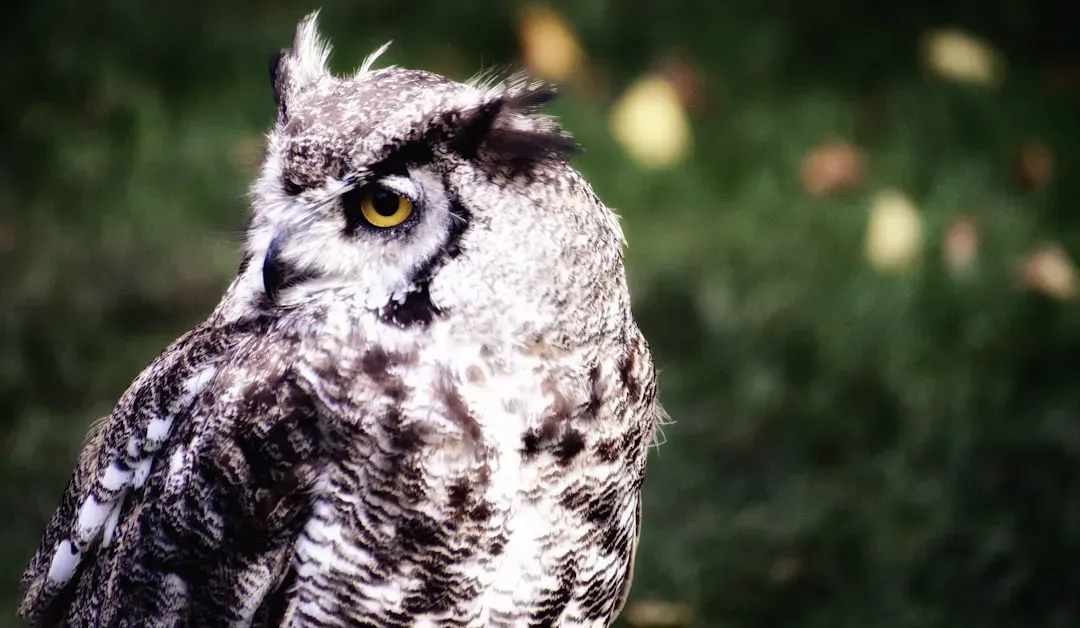
Hearing is arguably a more important sense to a hunting owl than vision, as owls have very well-developed hearing, which enables them to pinpoint the location of their favored small mammal prey. That’s a significant statement, given how extraordinary their eyes already are.
The two ears are asymmetrical in their positioning in most owl species, with the left ear positioned lower than the right. Such asymmetry generates a tiny amount of separation between when a sound hits one ear compared to the other, allowing an owl to better pinpoint the source of a sound than is the case with human hearing and our symmetrically placed ears.
All species of owl, regardless of ear symmetry, have a “facial disk,” which is a stiff ring of feathers around the face of the owl that acts like one large outer ear. The result is a remarkably accurate acoustic system. Using this ability, an owl can precisely locate prey even if the animal is hidden under leaves or snow.
Barn Owls have been shown to use sound frequencies above 8.5 kHz to direct and make an accurate strike at a prey item. A hunting owl will therefore use the calls and movements made by a mouse, vole, or shrew to direct its strike. The hunt, in other words, is as much a listening exercise as a visual one.
The Hunt Itself: Strategy in Silence
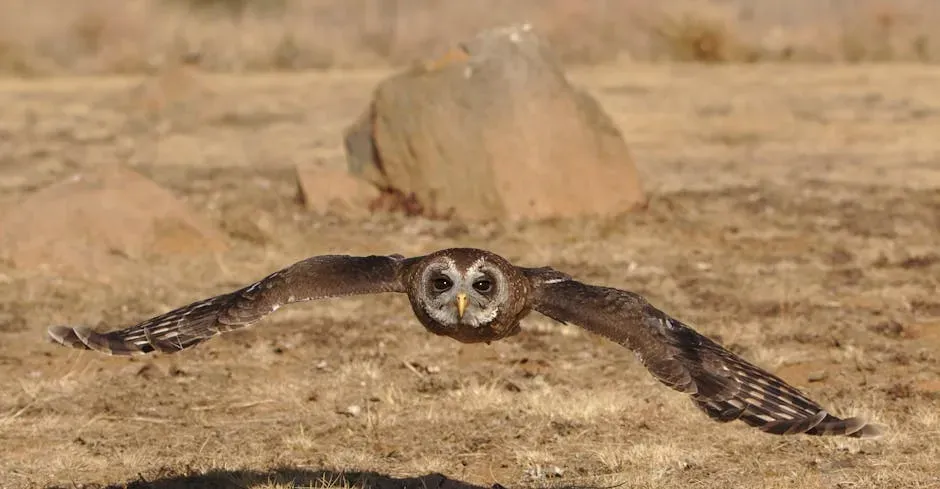
Hunting isn’t random. Owls develop an intimate knowledge of their territory and hunting ground through their methodical behavior, and will use the same trees as lookout perches to search for and ambush prey. There’s a familiarity to the landscape that makes their efficiency possible.
In order to hear and capture their prey, owls must minimize the noise they make while hunting. Not only will they refrain from vocalizing, but their wings have built-in sound mufflers. Tiny fringe feathers, which look similar to eyelashes, are located on the leading edge of owl wings to disrupt the air moving over and under the wing, thereby minimizing the noise.
The cover of darkness helps nocturnal owls avoid predators, as well as to attack prey, principally because their feathers hardly make any noise when they fly. Prey animals simply don’t hear them coming. Owls sometimes hide their food, capturing prey and using their bill to carefully stuff the food into a hiding spot, a behavior called caching. Owls might cache prey in holes in trees, in the forks of tree branches, behind rocks, or in clumps of grass.
Owls do this when the hunting is good in order to stock up and will usually go back for the prey within a day or two. It’s a practical strategy, and one that reveals a degree of planning that isn’t always associated with birds.
The Language of the Night: Calls, Territory, and Courtship
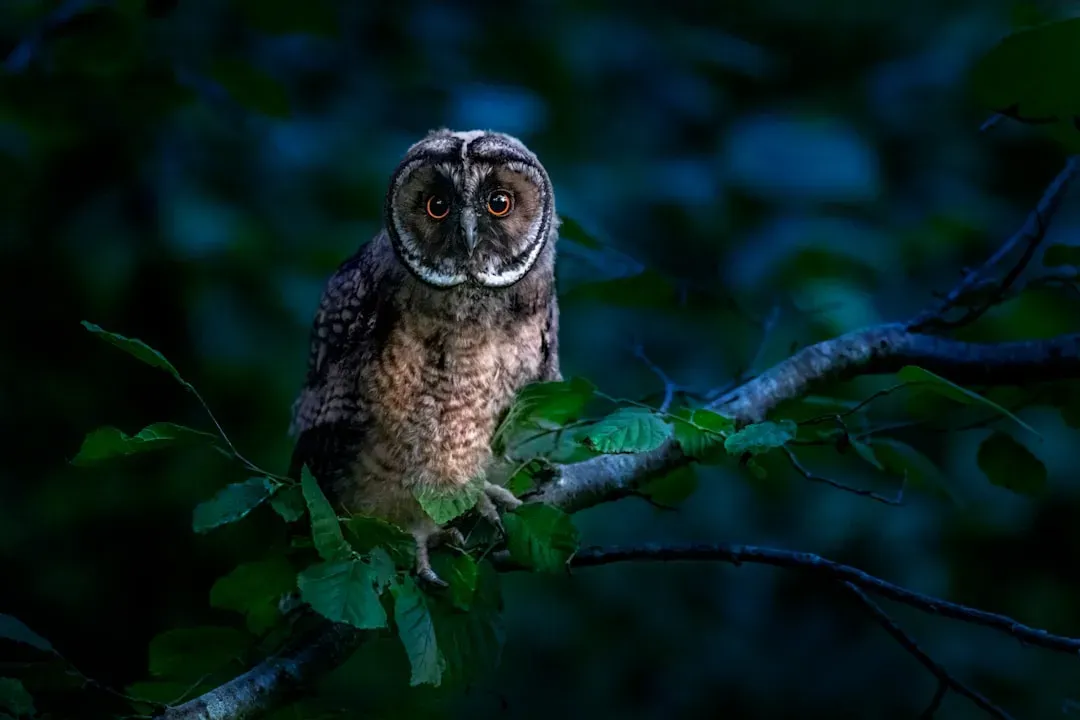
Hunting takes up part of the night, but it’s far from the only thing owls are doing out there. Owl hooting is first and foremost a territorial and courtship behavior. Male owls perch inside their territory and project rhythmic hoots into the night to alert other owls that this spot is taken. This hooting also acts as an announcement to female owls that signals health, available hunting grounds, and a nest site.
Reduced ambient noise levels allow their low-frequency hoots to travel much farther, enabling efficient territorial establishment and mate attraction. Calling during the night also minimizes the risk of attracting diurnal predators or mobbing birds, which are less active after dusk. Night, in this sense, is the ideal broadcast window.
Owls also use vocalizations to maintain contact with their mates and offspring. These calls are often softer and less intense than mating or territorial calls, but they are essential for maintaining family bonds and ensuring the survival of young owls. The full range of communication happening across a single night is genuinely varied.
Since owls nest very early in the season, courtship and territorial calls often begin in the fall and reach their peak during winter as they secure mates and prime locations before the late winter and early spring breeding period. What sounds like random hooting to a tired human in bed is, in reality, a carefully timed seasonal conversation.
After the Hunt: Digestion, Pellets, and Rest
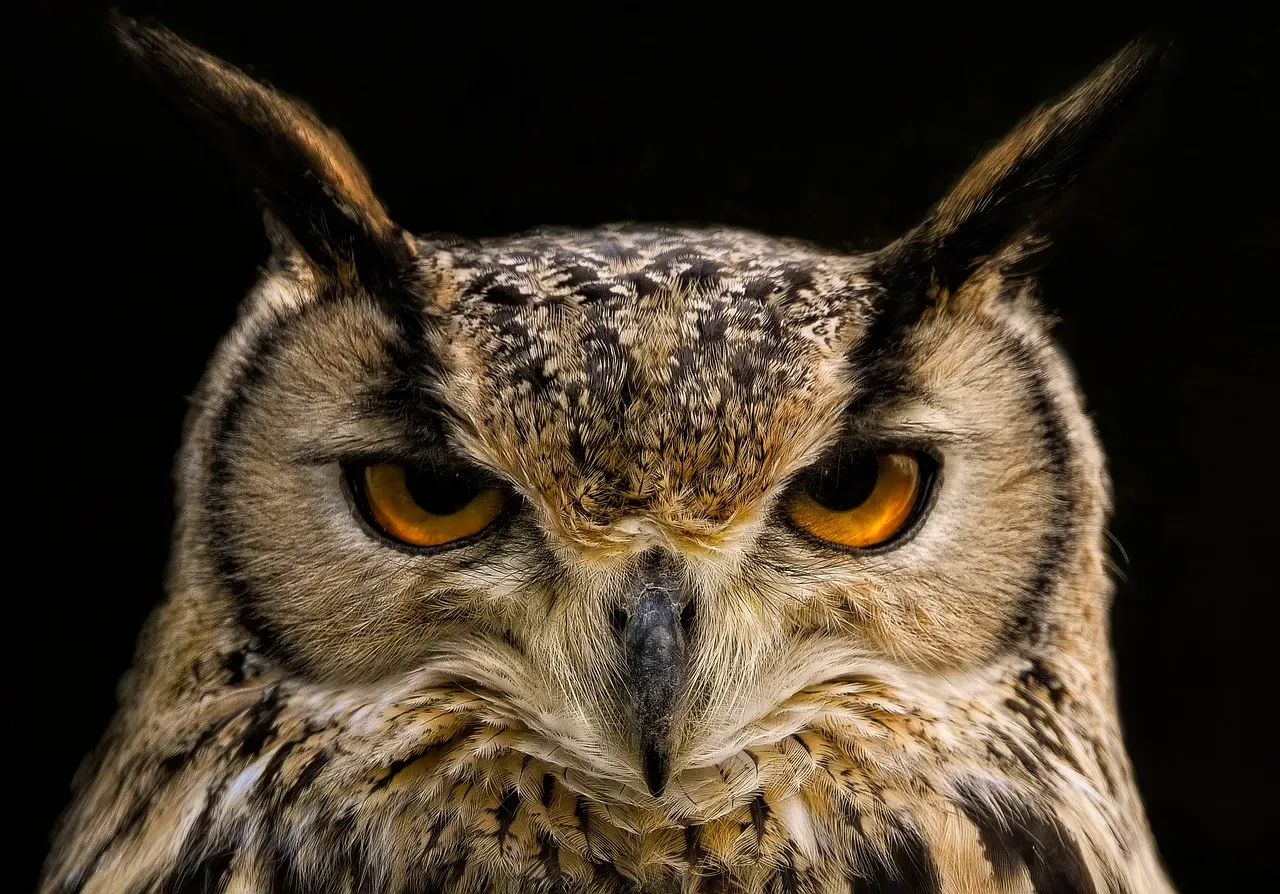
Once a successful hunt wraps up, the owl’s biology has its own remarkable closing ritual. Owls swallow their prey whole or in large pieces, but cannot digest fur, teeth, bones, or feathers. Like other birds, owls have two chambers in their stomachs. In the first chamber, all the digestible parts of an owl’s meal are liquefied. The meal then passes into the second chamber, the gizzard, which grinds down hard structures. The remaining, indigestible fur, bones, and teeth are then compacted into a pellet which the owl spits out.
The pellet returns to the proventriculus for 6 to 10 hours until the bird finishes digesting and finally regurgitates it. Owls typically form and expel one to two pellets per day. It’s a neat, built-in housekeeping system that also happens to be one of the most studied phenomena in wildlife biology.
At the end of a night spent hunting, owls return to a resting place called a roost. Most owls roost alone, or near a nest during the breeding season. However, there are a few species that roost communally, or share a roosting area with other individuals of the same species.
Owls sleep for 10 to 12 hours each day. Like most birds, owls experience REM sleep but lack rapid eye movements because their eyes cannot move within their skull. REM sleep starts after an hour of entering the sleep state, and the first period usually lasts 10 minutes. Even in rest, these birds are doing something quietly unusual.
A Night Well Spent
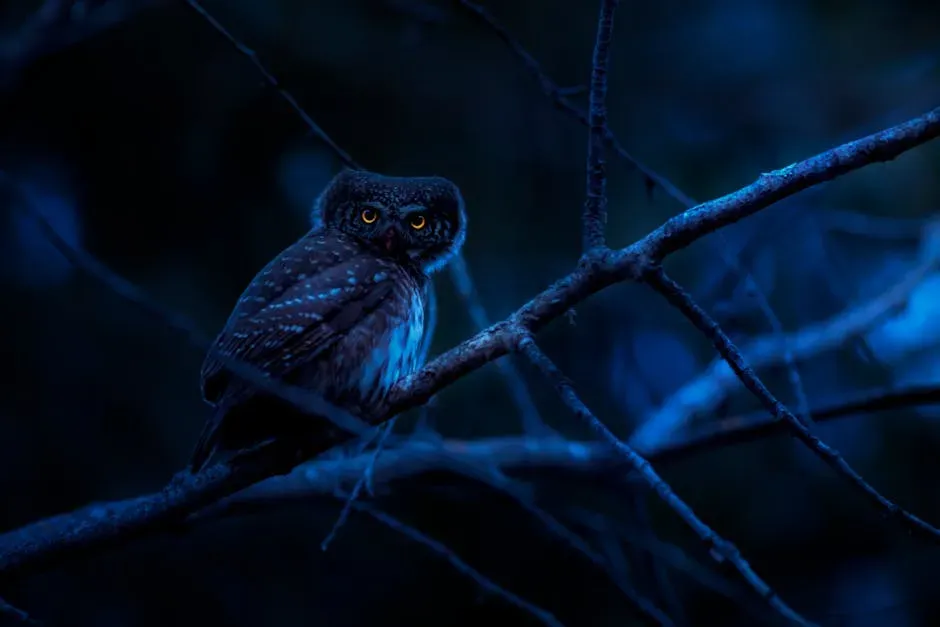
There’s a tendency to project mystery onto owls simply because they disappear into the dark. The reality is more grounded and, in many ways, more impressive than the mythology. A single night for a nocturnal owl involves precise sensory navigation, territorial communication, strategic hunting, food storage, complex digestion, and social bonding with a mate.
None of it is mystical. All of it is remarkable. The next time you hear that call cut through the quiet, it’s worth pausing to consider that the bird behind it is probably mid-shift, running a tightly organized schedule that started at dusk and won’t conclude until the first pale light touches the tree line.
Owls have been doing this for millions of years. They’re very good at it.

- Dog Breeds That Can Detect Cancer Before Your Doctor Does - August 13, 2026
- 10 Amazing Facts About Finches That Make Birdwatchers Love Them - August 13, 2026
- 10 Signs Your Dog Might Be Happier Than You Think They Are - August 13, 2026