

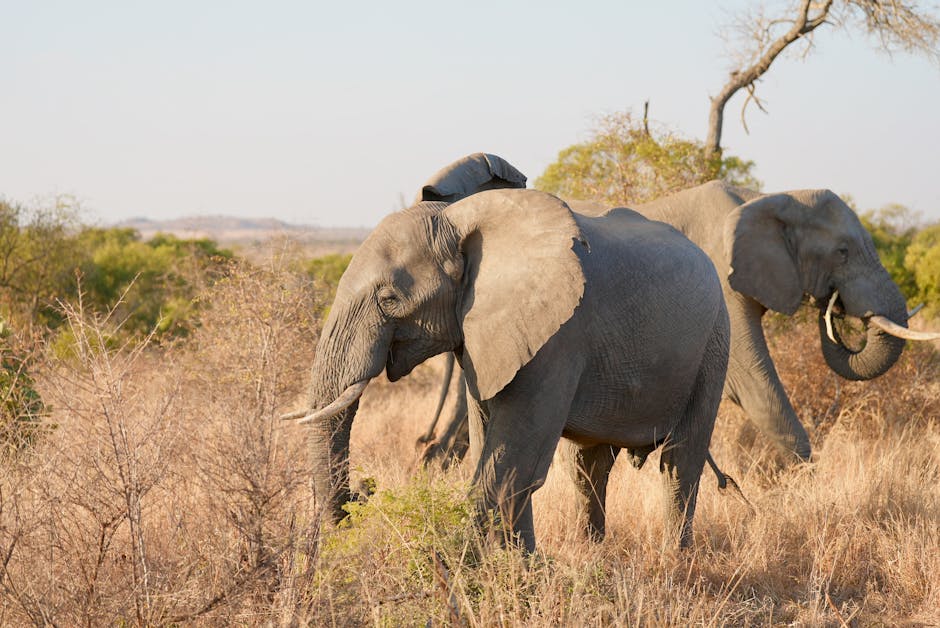
Researchers have completed the largest genetic analysis of African elephants, examining 232 complete genomes from savanna and forest populations across 17 countries. This landmark effort uncovers a history of widespread movement and interbreeding that sustained robust genetic health. Today, however, human-driven habitat loss fragments these giants’ ranges, sparking inbreeding and vulnerability in isolated groups.
Tracing Millions of Years of Movement
Genetic data painted a picture of elephants roaming freely across vast African landscapes until recent times. Populations intermingled over long distances, exchanging genes that bolstered their resilience. This connectivity persisted through dramatic shifts, including climate changes and early human pressures.
The study reconstructed population histories stretching back four million years. Savanna and forest elephants diverged early, accounting for more than 85 percent of their total genetic variation. Yet gene flow between groups maintained overall diversity, preventing sharp declines.
Samples, collected over 30 years ago and sequenced via Illumina’s iConserve program, offered a pre-poaching baseline. International teams made the genomes publicly available, enabling ongoing research and on-site monitoring tools developed with partners like Save the Elephants.
Human Impacts Sever Ancient Links
Isolation now dominates in key regions, driven by agriculture, settlements, and infrastructure. In northeastern Africa, small herds in Eritrea and Ethiopia sit over 400 kilometers from neighbors, hemmed in by human expansion. These groups show elevated inbreeding, depleted variation, and buildup of harmful mutations that heighten risks from disease and environmental stress.
West Africa faced similar fates from historical ivory trade and dense populations, yielding nuanced inbreeding signals. West-central savanna elephants endured bottlenecks but gained a genetic buffer through mixing with forest kin. Southern Africa’s Kavango-Zambezi Transfrontier Conservation Area, or KAZA, stands out positively – its 520,000 square kilometers across five countries foster ongoing exchange and diversity.
- Northeastern Africa: Extreme isolation and low variation.
- West Africa: Trade-driven depletion with variable inbreeding.
- West-central savanna: Hybridization offsets some losses.
- KAZA region: Model of sustained connectivity.
Hybridization’s Complex Role
Traces of forest elephant DNA appeared in savanna herds far from overlap zones, hinting at ancient hybrid shifts or exceptional gene dispersal. While hybridization introduced variety in some cases, experts caution against relying on it for rescues. The species split too long ago for meaningful benefits, and over four million years of separation limits adaptive gains.
Among savanna elephants, subtle regional distinctions emerged between southern, eastern, and west-central groups. Such patterns urge restraint in translocations, avoiding mixes across these divides to preserve local adaptations.
Charting a Path for Protection
The genomic atlas equips managers with data for smarter decisions on habitats, corridors, and relocations. Partnerships with San Diego Zoo Wildlife Alliance and Makerere University in Uganda extend to forensics, tracing ivory origins to curb trade. Landscapes like KAZA demonstrate how cross-border efforts sustain health.
Assistant Professor Patrícia Pečnerová of the University of Copenhagen and Lund University noted, “Our study shows that until recently, elephants have been connected across vast distances. This freedom of movement has created genetic robustness because the populations have intermingled. Today, the picture is different. Elephants are living in a world where space is more and more restricted and some populations are becoming isolated.”
Professor Alfred Roca of the University of Illinois Urbana-Champaign added that gene flow between species “is unlikely to be beneficial, and hybrid elephants should be avoided for translocations.” These insights, published in Nature Communications, stress integrating genomics into planning continent-wide.
Key Takeaways
- Historic gene flow built resilience; isolation now breeds vulnerability.
- Prioritize corridors in fragmented zones like northeastern and West Africa.
- Use genomics for forensics, translocations, and monitoring.
African elephants have adapted through flux before, but accelerating fragmentation demands urgent action on corridors and international cooperation. Protecting these pathways could avert a genetic crisis and secure their ecological roles. What steps do you believe will best safeguard these iconic animals? Share your views in the comments.

- Urban Coyotes Show Remarkable Adaptability, Learning to Thrive in City Environments - July 22, 2026
- Beavers Are Nature’s Engineers, Creating Vital Habitats for Other Wildlife Species - July 21, 2026
- The Recovery of the California Condor Offers Hope for Other Critically Endangered Birds - July 21, 2026