

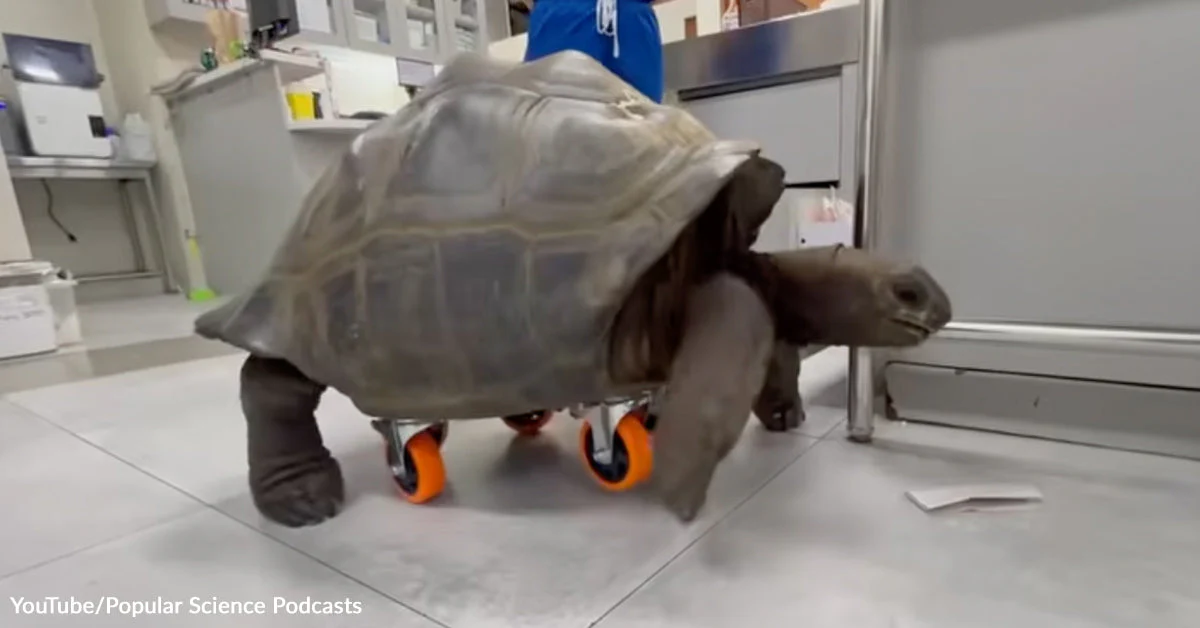
Metro Manila, Philippines – A hefty Aldabra giant tortoise faced a grim future after losing function in its hind legs, but a team of dedicated veterinarians devised a creative solution that restored its mobility. The creature, potentially weighing up to 550 pounds, arrived at a local clinic unable to support its massive body. Through a combination of laser therapy and custom wheels, the tortoise not only moved again but eventually walked independently.[1]
Sudden Paralysis Threatens a Gentle Giant
Veterinarians at Vets in Practice clinics in metro Manila received the distressed Aldabra tortoise from a private zoo. The animal had suffered what experts suspected was neurological trauma, likely caused by being mounted by companion tortoises. This injury left its hind legs useless, preventing normal movement despite the absence of fractures or dislocations confirmed by X-rays.
The Aldabra species ranks among the largest land tortoises, known for their longevity and deliberate pace. Adults can reach impressive sizes, making rehabilitation particularly challenging. The clinic’s chief surgeon, Nielsen Donato, led the effort to diagnose and treat the condition promptly.[1]
Laser Therapy Meets Mechanical Ingenuity
The treatment plan began with anti-inflammatory laser therapy aimed at reducing swelling and promoting soft tissue healing around the affected nerves. This non-invasive approach targeted the underlying neurological issues without surgery. Sessions focused on easing inflammation that had built up from the trauma.
To complement the therapy, the team crafted a unique mobility aid. They attached four bright orange wheels directly to the tortoise’s plastron, the flat underside of its shell. This setup elevated the body slightly, relieving pressure on the hind legs and allowing the animal to practice natural walking motions while the wheels bore much of the weight.[1]
The installation process drew attention on social media, where a video showed the tortoise’s initial puzzled response to its new “wheels.” Staff secured the wheels temporarily, ensuring they supported the tortoise’s substantial frame without causing further harm.
Swift Improvements Mark a Turning Point
Results appeared almost immediately after fitting the wheels. The tortoise exhibited greater range of motion, propelling itself forward more effectively as the device distributed its body weight. This progress encouraged the veterinary team and zoo owners alike.
Over subsequent weeks, the hind legs began to regain strength and stability. The wheels served as a rehabilitation tool, enabling the tortoise to rebuild muscle and coordination gradually. Regular laser sessions continued to support nerve recovery.[1]
- X-rays ruled out bone damage early in diagnostics.
- Orange wheels lifted the plastron for optimal support.
- Laser therapy targeted inflammation at the neurological level.
- Social media captured the fitting moment for public awareness.
- Temporary design allowed for eventual removal.
Full Independence Achieved
The tortoise returned to the private zoo equipped with its wheeled support, where it continued rehabilitation under supervision. As strength returned to the hind legs, veterinarians monitored progress closely. Eventually, they removed the wheels entirely, confirming the animal could walk unaided.
This success highlighted the potential of combined therapies in exotic animal care. The case drew interest from reptile enthusiasts worldwide, showcasing how simple innovations can yield profound results. For more on the story, visit The Animal Rescue Site.[1]
Broader Implications for Reptile Medicine
Cases like this one underscore the growing field of reptile rehabilitation. Neurological injuries in large tortoises pose unique challenges due to their size and slow metabolism. Yet, tools like laser therapy and custom prosthetics offer viable paths forward.
Vets in Practice demonstrated resourcefulness in a resource-limited setting. Their approach balanced immediate mobility needs with long-term recovery goals. Similar techniques have appeared in other tortoise rescues, adapting wheelchair concepts for reptiles.
| Treatment Element | Purpose | Outcome |
|---|---|---|
| Laser Therapy | Reduce inflammation | Nerve healing |
| Orange Wheels | Weight support | Improved motion |
| X-rays | Rule out fractures | Confirmed neurological issue |
Key Takeaways:
- Innovative prosthetics can bridge gaps in animal rehab.
- Early intervention prevents permanent disability.
- Combined therapies yield faster, fuller recoveries.
The Aldabra tortoise’s journey from paralysis to independence serves as a testament to veterinary creativity. It reminds us that even the largest creatures deserve second chances through human ingenuity. What innovative animal rescues have you heard about? Share in the comments.

- Urban Coyotes Show Remarkable Adaptability, Learning to Thrive in City Environments - July 22, 2026
- Beavers Are Nature’s Engineers, Creating Vital Habitats for Other Wildlife Species - July 21, 2026
- The Recovery of the California Condor Offers Hope for Other Critically Endangered Birds - July 21, 2026