

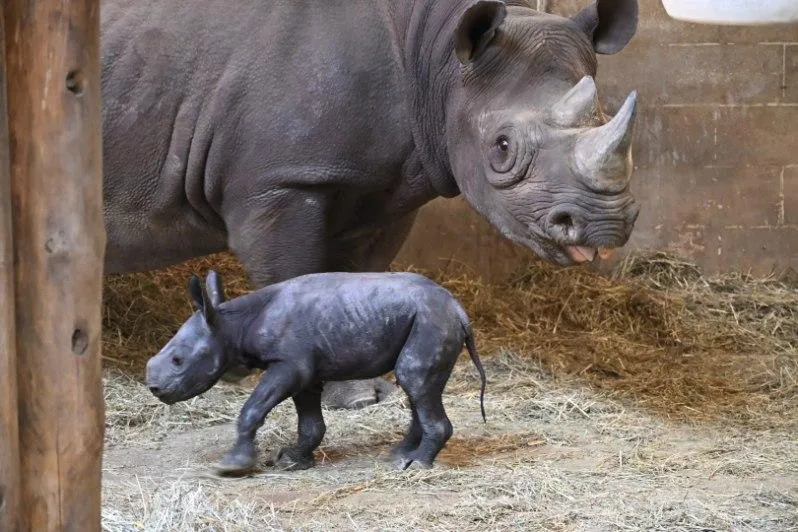
Chicago – Lincoln Park Zoo marked a triumphant moment on March 19, 2026, with the birth of a female eastern black rhinoceros calf.[1][2] This arrival carries profound weight for a species classified as critically endangered, where each new life strengthens fragile populations in the wild. The calf’s robust debut highlighted the success of targeted breeding programs designed to combat decades of decline.
Swift Milestones in the First Hours
The calf entered the world at 4:52 a.m., weighing approximately 60 pounds, and wasted no time asserting her vitality by taking her first steps at 6:30 a.m. – just 90 minutes later.[1] Such rapid progress thrilled the zoo’s animal care team, who observed these early achievements through a specialized camera system. This technology allows minimal human interference while ensuring close monitoring during the newborn’s most vulnerable phase.
Mother Kapuki, a 20-year-old resident, demonstrated exemplary maternal care from the outset. Her experience shone through as she nurtured the calf, mirroring her success with previous offspring. The pair remains behind the scenes at the Regenstein African Journey exhibit for several weeks, allowing the baby to gain strength before public debut.
A Proven Family Lineage
Kapuki’s track record as a mother sets her apart in the zoo’s rhino program. She previously gave birth to King in 2013 and Romeo in 2019, both sired by another male named Maku.[2] This latest calf marks her first with 21-year-old Utenzi, a pairing recommended by experts to enhance genetic diversity.
Curator Cassy Kutilek praised Kapuki’s instincts: “Kapuki has proven to be such a great mother with her past two calves and we’re seeing her tap right back into her maternal instinct with her new calf. Mom and calf are doing well and continue to hit their postpartum milestones, and we’re excited for when we’ll start seeing glimmers of the newborn’s personality.”[1][3]
- Kapuki’s age: 20 years
- Utenzi’s age: 21 years
- Pregnancy duration: Confirmed in September 2025 via noninvasive fecal hormone analysis
- Expected growth: Up to 100 pounds per month initially, reaching 3,000 pounds as adults
Critical Conservation Role
Eastern black rhinos faced near annihilation, with populations plummeting 98% between 1960 and 1995 due to relentless poaching fueled by myths about their horns’ medicinal value.[1] Conservation initiatives reversed this trend somewhat, lifting numbers to around 1,000 mature individuals across native habitats in Tanzania, Rwanda, and Kenya.[3] Overall black rhino counts exceed 6,700 today, though the eastern subspecies remains perilously low.
Lincoln Park Zoo contributes through the Association of Zoos and Aquariums’ Eastern Black Rhinoceros Species Survival Plan (SSP) and the Saving Animals From Extinction (SAFE) program. These efforts coordinate breeding and habitat protection among accredited institutions. The pregnancy, detected noninvasively, exemplified modern techniques in wildlife management.
Challenges and Future Prospects
Habitat loss compounds poaching threats, squeezing eastern black rhinos in their East African strongholds. Zoo births like this one provide genetic reservoirs and raise awareness, potentially aiding reintroduction efforts. The calf’s healthy start bodes well for her integration into the SSP population.
Visitors cannot yet see the duo, but the zoo encourages support through adoption packages featuring rhino plush toys or contributions to their fresh produce wishlist. Such involvement sustains daily care and broader conservation work.
Key Takeaways
- A 60-pound female calf born March 19 boosts the zoo’s rhino lineage and global efforts.
- Kapuki’s third offspring highlights successful managed breeding.
- From 98% decline to 1,000 wild individuals – progress demands continued vigilance.
This birth stands as a testament to collaborative conservation, proving that dedicated action can defy extinction’s shadow. As the calf grows, she embodies potential for her species’ revival. What are your thoughts on zoo-led wildlife preservation? Share in the comments below.

- Urban Coyotes Show Remarkable Adaptability, Learning to Thrive in City Environments - July 22, 2026
- Beavers Are Nature’s Engineers, Creating Vital Habitats for Other Wildlife Species - July 21, 2026
- The Recovery of the California Condor Offers Hope for Other Critically Endangered Birds - July 21, 2026