


Most homeowners believe the colorful visitors at their bird feeders are a permanent fixture of the American landscape, but recent data reveals a much darker reality. According to a landmark study, North America has lost nearly 3 billion birds since 1970, meaning one in four birds has vanished in just five decades. While we often focus on exotic species in the rainforest, the most dramatic declines are happening right in our own backyards among species we once considered common. The “quieting” of our morning soundscape isn’t just a localized fluke; it’s a massive ecological shift that experts warn is accelerating due to habitat loss and pesticide use. Here’s what the data actually says about our vanishing feathered neighbors.
#15 — The Evening Grosbeak

These stunning, bulky finches with their vibrant yellow plumage were once a staple of winter bird feeders across the northern United States. Most people don’t realize that the Evening Grosbeak has suffered a staggering 92% population decline since 1970, making it one of the fastest-disappearing land birds in North America.
The primary cause isn’t just climate change; it’s a complex mix of aerial spraying for spruce budworms and the loss of mature forests. While they were once considered a “pest” in some areas because of their massive numbers, they are now so rare that seeing one at your feeder is equivalent to a rare sighting. Scientists have struggled to stabilize their numbers because these birds are highly nomadic, making traditional conservation efforts difficult to track.
Many birdwatchers are still putting out sunflower seeds hoping for their return, but the reality is that their boreal forest strongholds are shifting further north every year. It’s a sobering reminder that even the most “aggressive” backyard species can be fragile. But that’s nothing compared to the iconic songster we found at #14…
#14 — The Wood Thrush
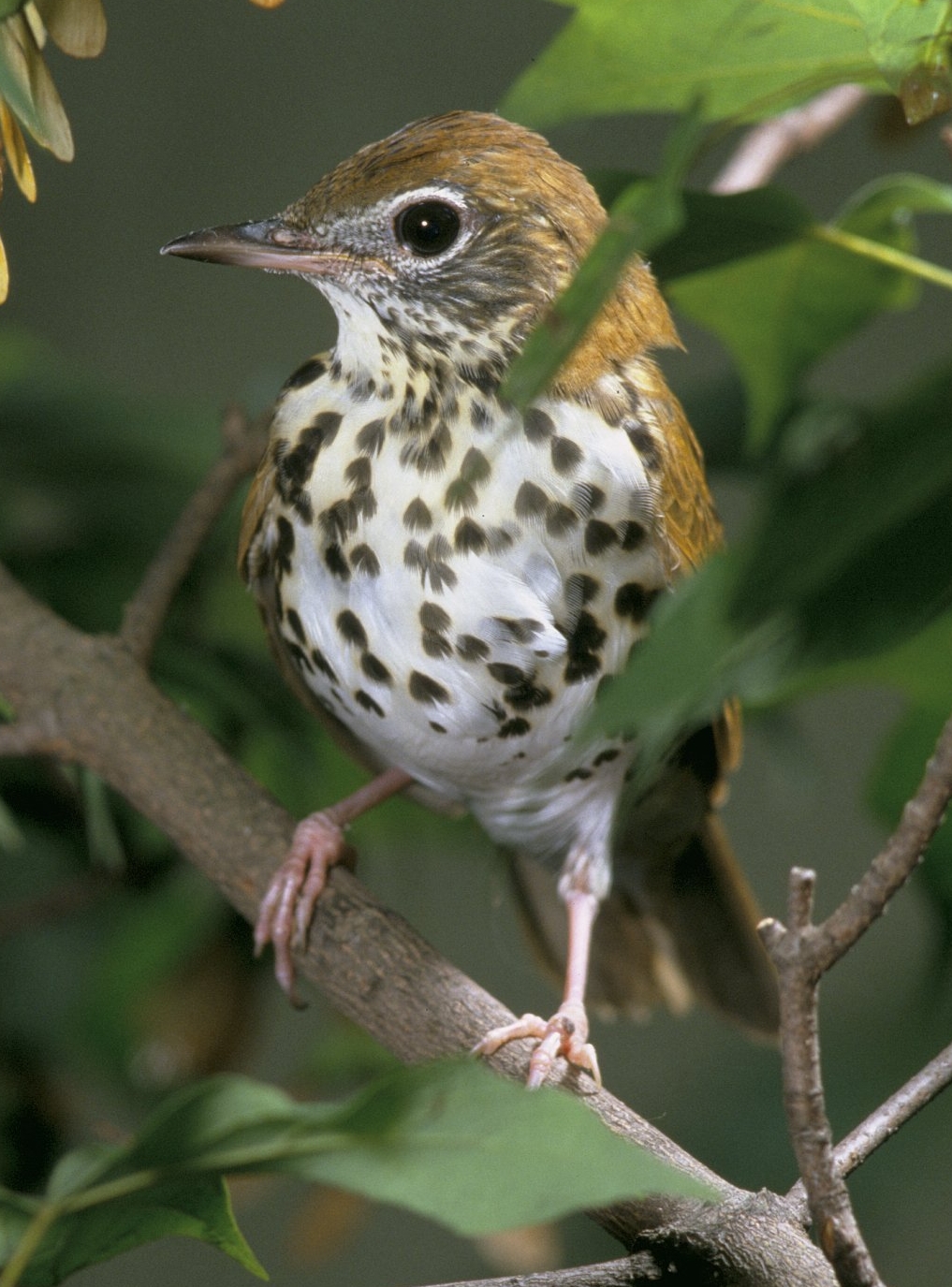
The haunting, flute-like song of the Wood Thrush is the literal “sound of summer” for the Eastern U.S., yet this master musician is quietly fading away. Research indicates that Wood Thrush populations have plummeted by 60% in the last few decades, largely due to “forest fragmentation.” When large woods are broken into smaller patches for housing developments, it exposes Wood Thrush nests to “edge predators” like raccoons and crows.
Even more disturbing is the impact of acid rain on their primary food source: forest snails. As soil acidity changes, snails disappear, leaving Wood Thrushes with a calcium deficiency that leads to thinner, more fragile eggshells that break before hatching. Many suburbanites think their wooded backyard is a haven, but without a deep, undisturbed forest interior, these birds simply cannot thrive.
Experts argue that planting a few native trees isn’t enough to save a species that requires a specific, moist micro-climate found only in old-growth areas. If the current trend continues, the famous “ee-o-lay” song may soon be a digital-only recording. But wait until you see the crisis facing the common neighbor at #13…
#13 — The Barn Swallow
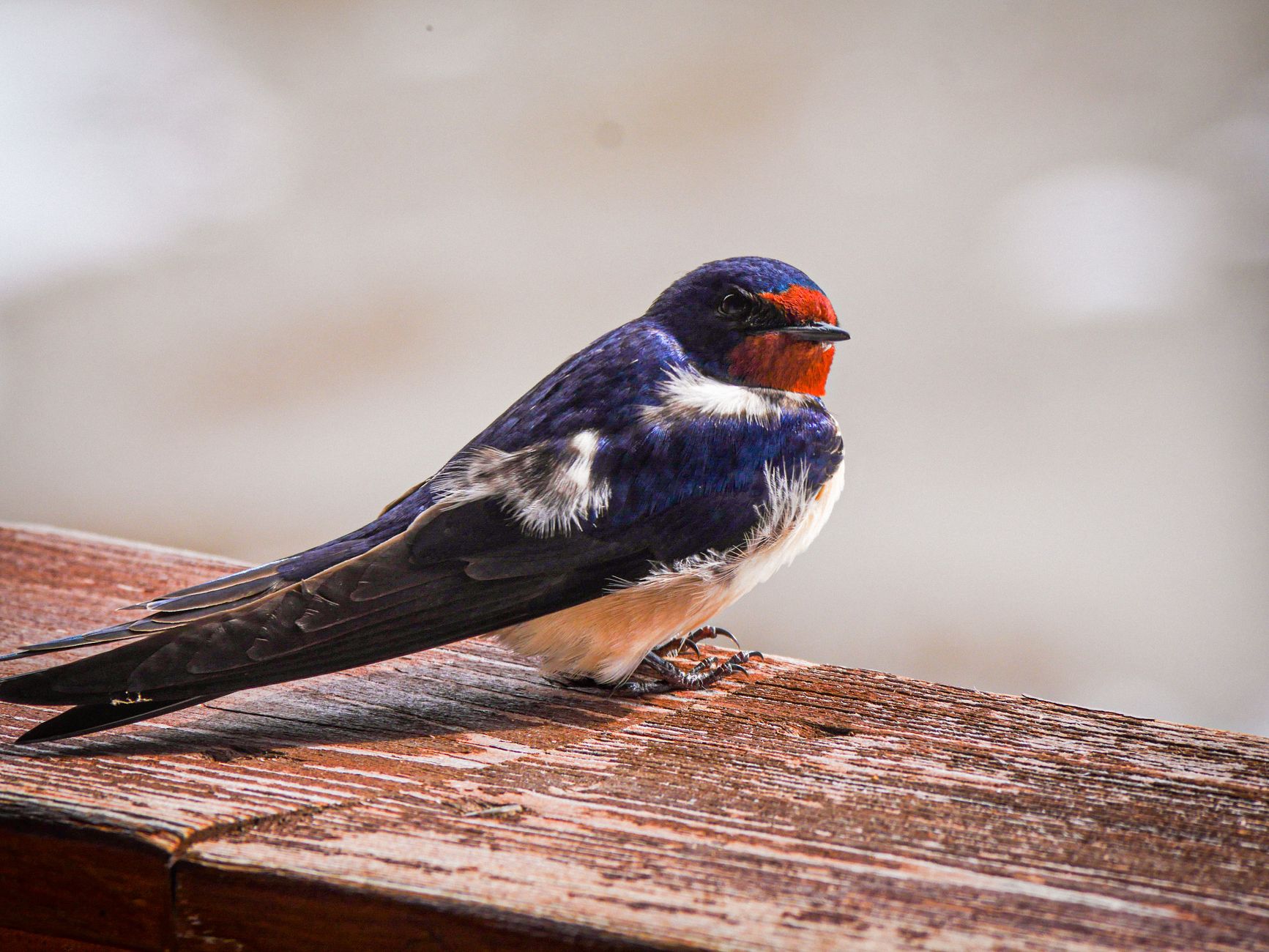
The Barn Swallow is perhaps the most widely distributed swallow in the world, yet in North America, they are in a freefall. These acrobatic flyers, known for their deeply forked tails, have seen a 38% decrease in population across the continent. While they have lived alongside humans for centuries, the modern “sanitized” farm is proving deadly for them.
The shift toward massive, sealed metal barns instead of old wooden structures has stripped away their nesting sites. Furthermore, the aggressive use of neonicotinoid pesticides has decimated the flying insect populations they rely on for food. A Barn Swallow must catch hundreds of insects an eye-blink apart to feed a single brood, and in many suburban areas, those insects simply no longer exist.
Interestingly, while they are disappearing in the U.S., they are expanding in parts of South America, suggesting our land management is the specific culprit. Most people assume they’ve just “moved to a different farm,” but the census data tells a much darker story of total population collapse. But that’s a small dip compared to the shocking loss of the desert icon at #12…
#12 — The Verdin
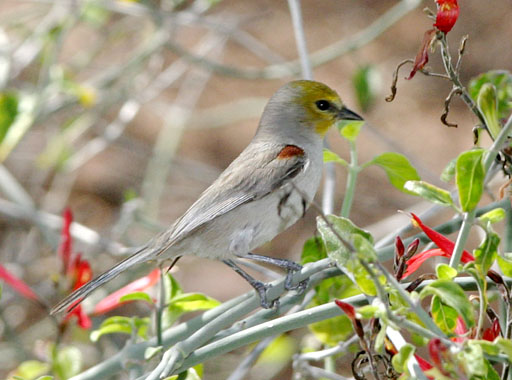
If you live in the Southwest, you know the Verdin as the tiny, yellow-headed bird that builds golf-ball-shaped nests in thorny shrubs. However, data from the North American Breeding Bird Survey shows a consistent, annual decline of nearly 2% for this species. In arid climates, the Verdin is a “sentinel species,” meaning their health reflects the health of the entire desert ecosystem.
The biggest threat to the Verdin is the “manicured desert” trend in landscaping. Homeowners often rip out the messy, thorny native brush like mesquite and palo verde—which the Verdin requires for nesting—and replace them with decorative rock and non-native palms. This removes both their shelter and their primary source of insects, forcing them into smaller and hotter territories.
While they are incredibly hardy and can survive extreme heat, they cannot survive the total removal of native scrubland. Many residents in Arizona and Nevada are witnessing a silent “desert desertion” where the birds simply stop appearing in suburban developments. This trend is mirrored by the bird at #11, which many people mistakenly think is doing just fine…
#11 — The Chimney Swift

Chimney Swifts are often called “flying cigars” because of their unique shape, and they spend almost their entire lives in the air. Unfortunately, they are vanishing at a rate of about 2.5% every single year. For a bird that used to darken the skies in massive swirling clouds during migration, their absence is becoming deafeningly loud.
The crisis here is architectural: modern homes no longer have traditional chimneys with open tops and rough brick interiors. Swifts cannot perch on branches; they must cling to vertical, textured surfaces. As old chimneys are capped or replaced with smooth metal flues, thousands of nesting sites vanish every season. This has forced them into a desperate search for suitable vertical habitat that simply doesn’t exist in modern suburbs.
Most people don’t realize that a single colony of swifts can eat thousands of mosquitoes in a single evening, acting as a natural pest control system. By capping our chimneys, we are inadvertently inviting more pests into our yards while killing off our best defense. The situation is even more dire for the beloved blue bird at #10…
#10 — The Eastern Bluebird

Decades ago, the Eastern Bluebird was on the brink of extinction. While bluebird boxes helped them stage a massive comeback, they are now facing a “Second Wave” of decline that is catching conservationists off guard. New data suggests that in certain regions, populations are starting to dip again due to competition with invasive species like House Sparrows and European Starlings.
The problem is “nest site competition.” Even if you put up a bluebird box, aggressive invasive species often kill the adult bluebirds inside or destroy their eggs to take over the spot. Starlings are known to peck the brains of nesting bluebirds to evict them from holes. Without constant human intervention and specialized “starling-proof” birdhouses, the Eastern Bluebird is losing the war for territory.
While their numbers look stable on paper in some states, the “interior” populations in suburban areas are collapsing. They are becoming “conservation reliant,” meaning if we stop actively managing their housing, they could vanish within a decade. But that’s nothing compared to the mystery of the disappearing “city bird” at #9…
#9 — The Common Nighthawk
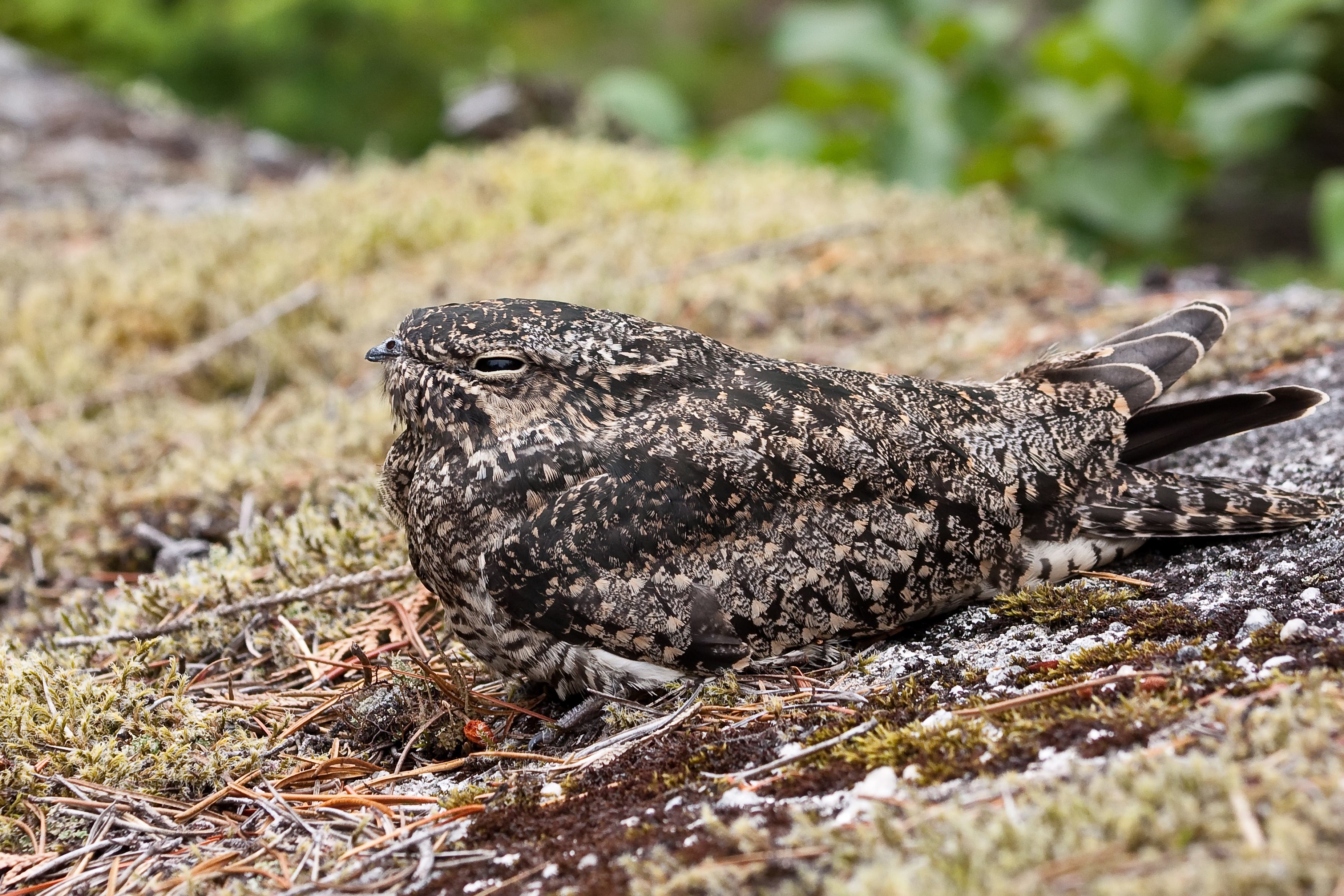
If you’ve ever sat outside at dusk and seen a bird with white wing bars diving for bugs, you’ve seen a Common Nighthawk. But these birds are no longer “common.” They have declined by 61% across their range, and in some states, they have vanished entirely from suburban areas where they were once abundant.
The reason is fascinatingly specific: roofing material. Nighthawks traditionally nested on flat, gravel-covered rooftops in cities and suburbs. However, modern building codes have shifted toward smooth rubber or heat-reflective membranes. Nighthawk eggs literally roll off these new surfaces, or the heat from the rubber membranes cooks the eggs before they can hatch.
Because they are active at night (crepuscular), most people don’t even notice they are gone until the mosquito populations in their neighborhood suddenly explode. They are a classic example of how a small change in human construction can wipe out an entire local population. But you won’t believe the “hidden” decline of the bird at #8…
#8 — The Rufous Hummingbird

The Rufous Hummingbird is famous for having the longest migration of any bird its size, traveling from Alaska to Mexico. But this “orange fireball” is in serious trouble, with a 62% population loss since the 1960s. Unlike other hummingbirds that are somewhat adaptable, the Rufous is a specialist that relies on a very specific “bloom schedule” along its migration route.
The problem is “phenological mismatch.” Because of warming temperatures, flowers are blooming earlier in the spring, but the hummingbirds are still migrating at their usual time. By the time they arrive at their traditional stopover points, the nectar sources have already dried up. They are essentially arriving at a restaurant that closed an hour ago.
Researchers are seeing Rufous Hummingbirds show up at feeders in the Eastern U.S. more frequently, which sounds like a good thing, but it’s actually a sign of desperation. They are wandering off-course looking for food because their traditional Western routes are failing. This trend is even more pronounced for the common field bird at #7…
#7 — The Eastern Meadowlark
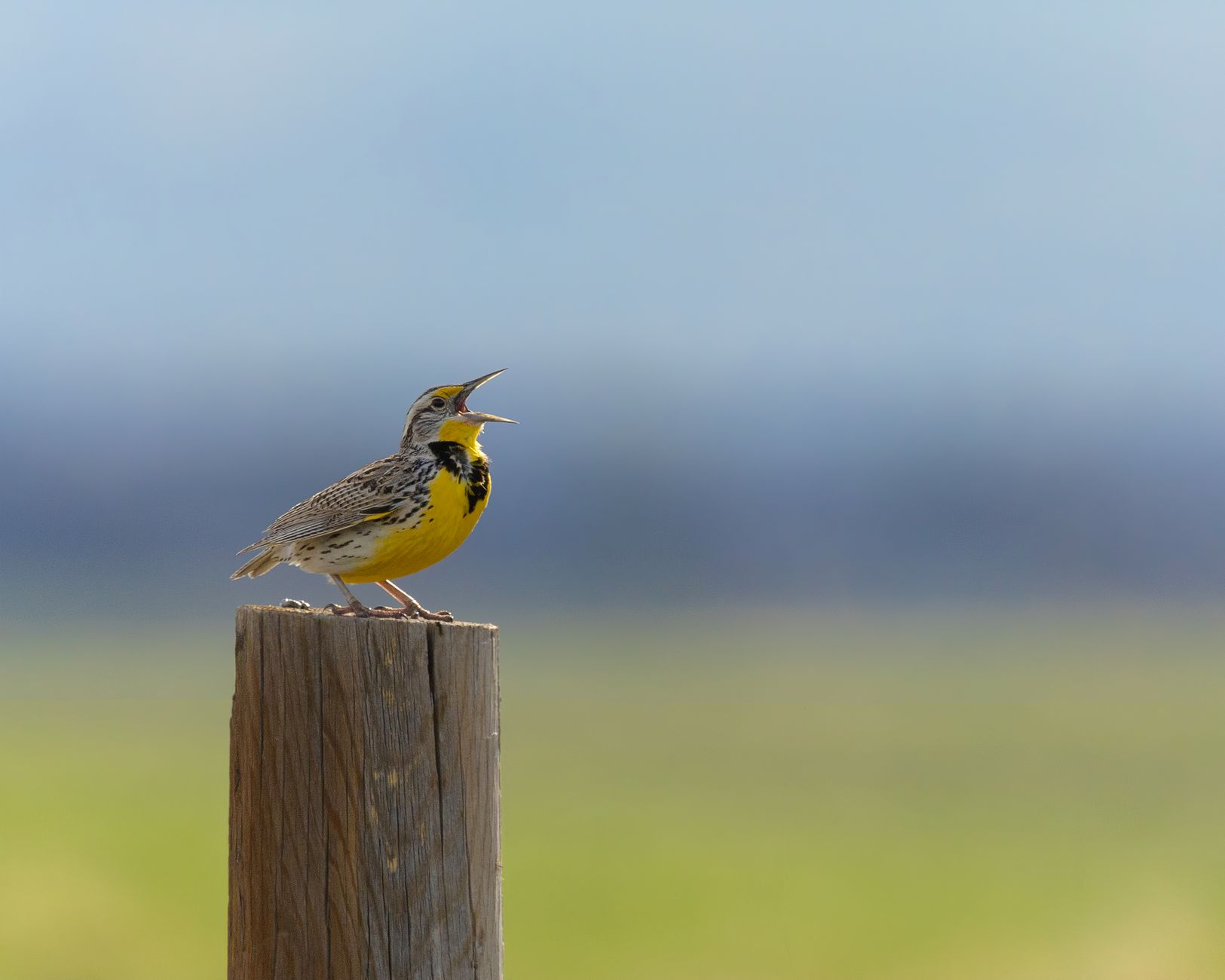
Known for its bright yellow chest and distinct black “V,” the Eastern Meadowlark is the soul of the American hayfield. But as family farms are sold off for “McMansions” and strip malls, the Meadowlark is losing ground fast. They have suffered an 89% decline, one of the most severe on this list.
Meadowlarks are “ground nesters,” which makes them incredibly vulnerable. Modern haying equipment is faster and used more frequently than in the past; farmers now often mow their fields while the birds are still on the nest, crushing entire generations of chicks in a single afternoon. When you combine this with the loss of thousands of acres of grasslands to suburban sprawl, the Meadowlark has nowhere left to go.
Many experts argue that the Eastern Meadowlark will be the first “common” bird to be moved to the Endangered Species list in our lifetime. They represent the “Silent Spring” of the American prairie. But the most shocking decline on this list might be the backyard favorite at #6…
#6 — The Purple Martin
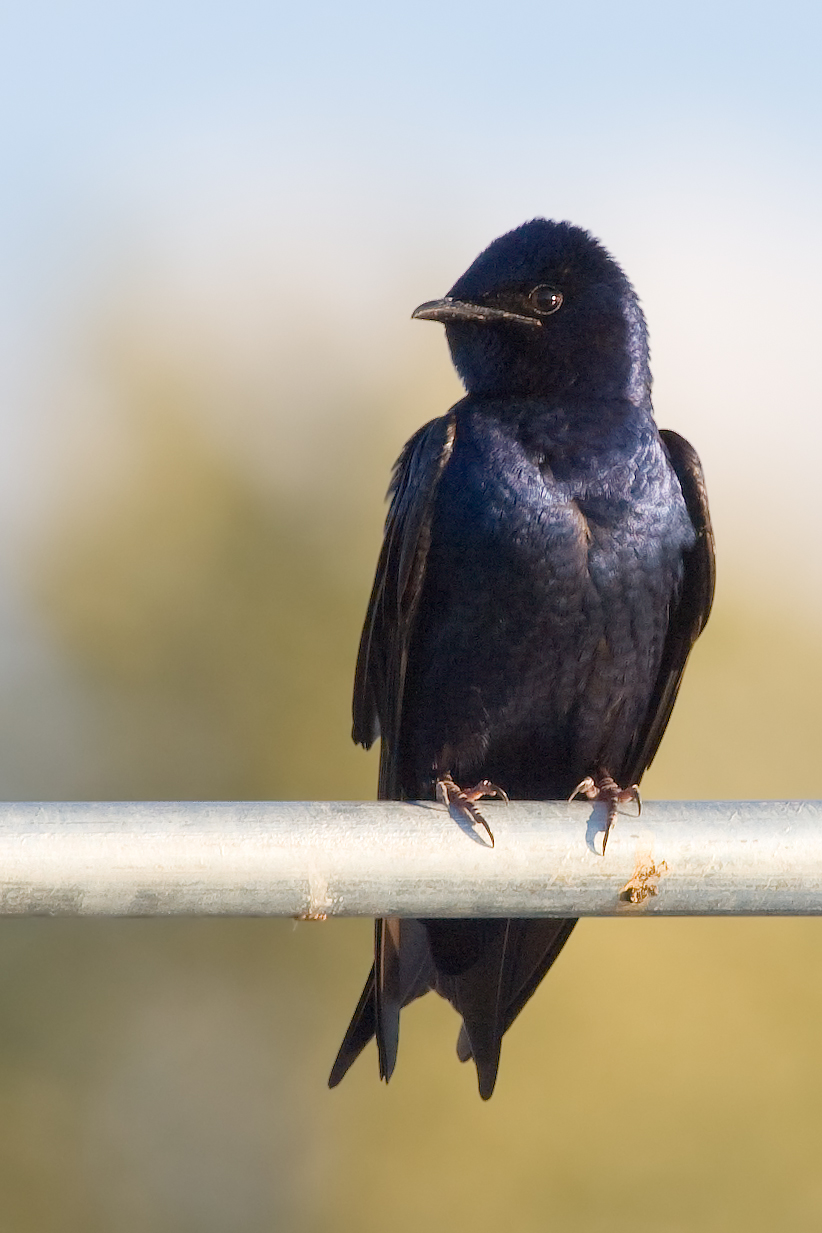
Purple Martins are the only birds in North America that are almost entirely dependent on humans for nesting in the Eastern half of the U.S. They have lived in “martin houses” provided by people for generations. Despite this close bond, their numbers have dropped by nearly 1% every year for decades.
The issue is twofold: a lack of “landlords” and extreme weather. As the older generation of birders passes away, their elaborate Purple Martin “apartment complexes” are often taken down or fall into disrepair. Younger homeowners aren’t putting them back up. Additionally, because Martins arrive very early in the spring, a single late-season cold snap can kill off an entire colony because there are no flying insects for them to eat.
We are seeing a massive “geographic contraction” where Purple Martins are disappearing from the edges of their range. If people stop puttting up those white plastic gourds and wooden houses, this species could effectively go extinct in the wild east of the Rockies. But at #5, we have a bird that’s disappearing because of our obsession with “neat” yards…
#5 — The Brown Thrasher

The Brown Thrasher is often mistaken for a Long-tailed Mockingbird, but it has striking yellow eyes and a streak-covered chest. While they are known for having one of the largest song repertoires of any bird, they are quietly vanishing from suburban landscapes. They have seen a 40% decline across the Eastern United States.
Thrashers are “shrub-land” birds. They need thick, messy, tangled hedgerows to hide their nests and forage for insects in the leaf litter. However, the modern American obsession with “clean” landscaping—where every bush is trimmed into a ball and every leaf is leaf-blown away—is destroying their habitat and food source. By removing the “mess,” we are removing the Thrasher.
If you don’t see these birds in your yard anymore, it’s likely because your yard is “too clean.” They require the decay of organic matter to survive. This pattern of human “neatness” killing off wildlife continues with the bird at #4…
#4 — The Snowy Egret
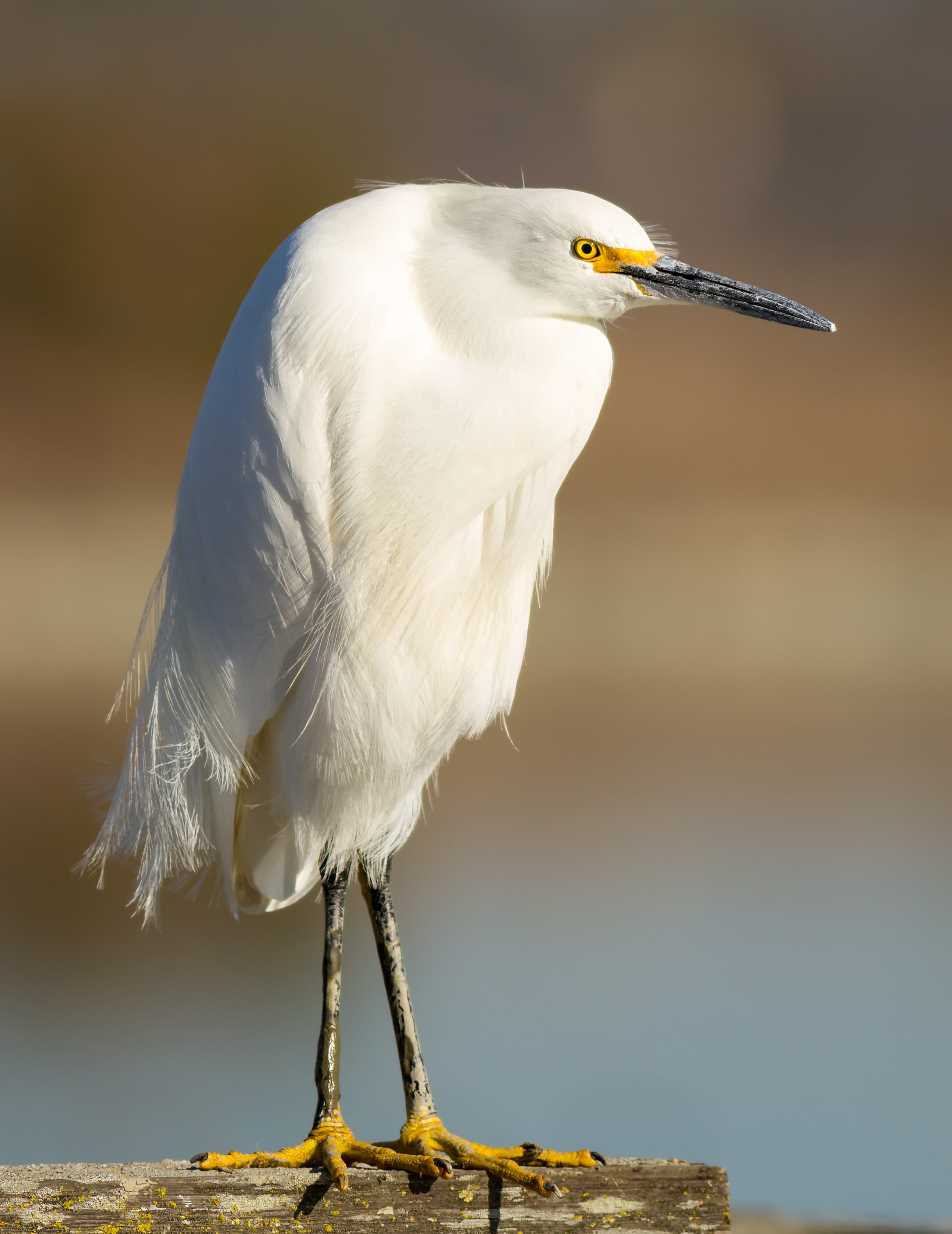
Once hunted to the brink for their feathers in the early 1900s, the Snowy Egret made a miraculous recovery. But now, they are slipping again. In states like Florida and South Carolina, sightings are becoming rarer in suburban retention ponds. The issue is no longer hunters, but the invisible “chemical soup” of suburban runoff.
Lawn fertilizers and pesticides wash into the ponds where Egrets fish. This causes “algal blooms” that deplete oxygen, killing the small fish the Egrets eat. Furthermore, the accumulation of heavy metals in the remaining fish can lead to reproductive failure in the birds. They look like they are thriving in the park, but they aren’t actually producing viable chicks.
While we see them standing majestically by the water, they are often “ghost populations”—older birds that are still alive, but with no younger generations coming up behind them to replace them. But that’s a slow decline compared to the sudden crash of #3…
#3 — The American Kestrel
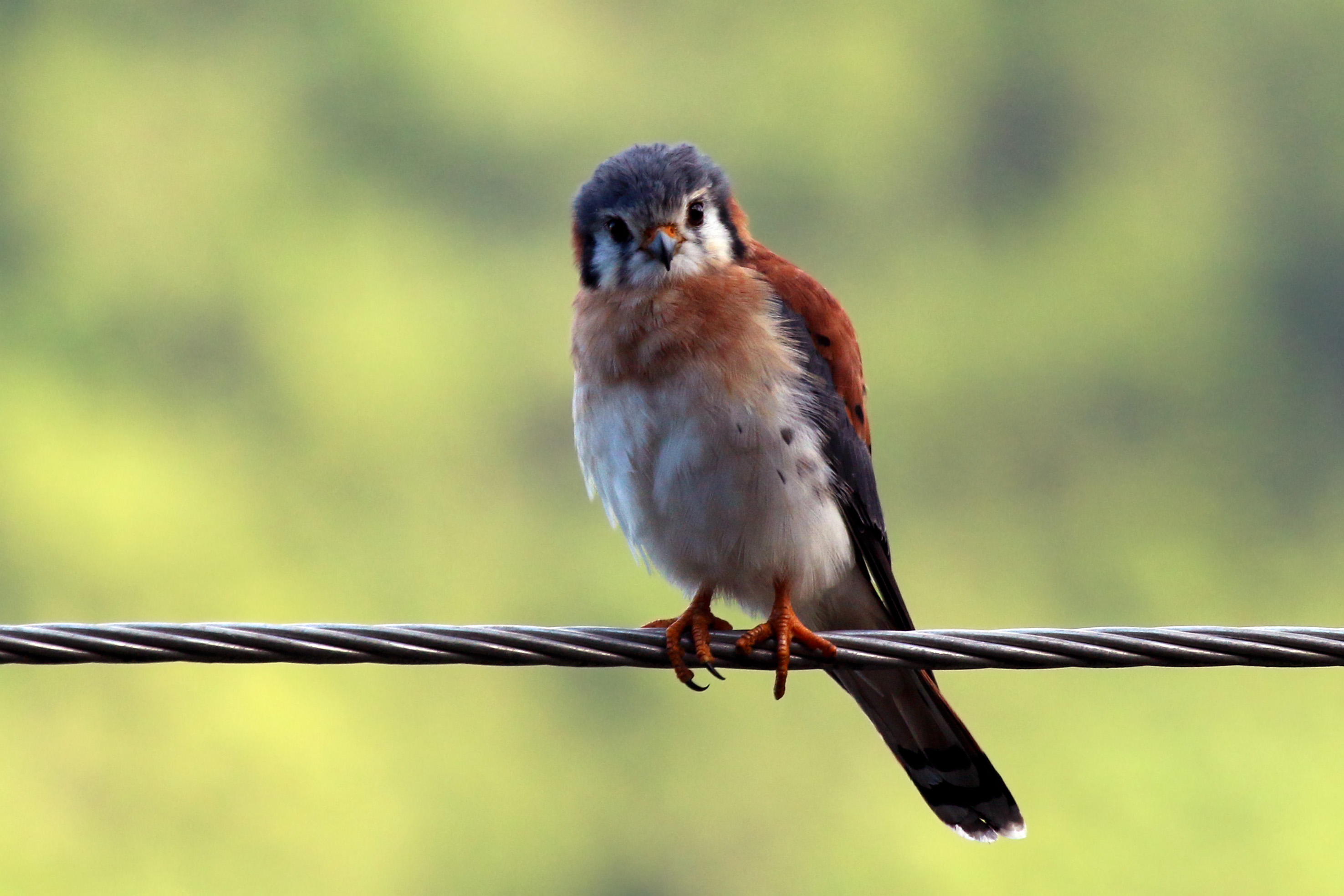
The American Kestrel is our smallest and most colorful falcon, often seen perching on telephone wires. But across the Northeast, Kestrels have declined by a staggering 88%. For years, scientists were baffled because the habitat seemed to still be there.
Wait until you hear the real culprit: The Cooper’s Hawk. Large-scale bird feeding in backyards has caused a massive boom in Cooper’s Hawkes (which eat smaller birds). These larger hawks have moved from the deep woods into the suburbs to hunt at feeders, and they are now actively preying on and out-competing the smaller Kestrels for nesting cavities.
It’s a classic example of “unintended consequences.” By trying to help birds with feeders, we’ve inadvertently created a predator-trap that is wiping out our smallest raptor. If you want to see a Kestrel today, you often have to drive far away from suburban bird feeders. But the crisis at #2 is even more widespread…
#2 — The Grasshopper Sparrow

You’ve probably never noticed the Grasshopper Sparrow, and that’s the problem. This tiny, shy bird is a specialist of “unimproved” grasslands. Because they hide in the grass rather than sitting on a branch, they are invisible to most people—and they are disappearing faster than almost any other bird in America, with a 70% loss since 1970.
The “Death of the American Meadow” is to blame. Between industrial agriculture and the “lawning” of the countryside, the quiet, dry grasslands these birds need have been paved over or turned into monoculture cornfields. They are the “canary in the coal mine” for the health of our soil and native grasses.
When a Grasshopper Sparrow disappears, it means the entire local ecosystem is losing its diversity of insects and native seeds. It is a total “system failure” on a microscopic level. But the #1 spot belongs to a bird everyone knows, making its decline the most terrifying of all…
#1 — The House Sparrow (Suburban Decline)

It sounds impossible. The House Sparrow is known as the most “invasive” and successful bird in the world. However, in a shocking turn of events, House Sparrow populations are actually crashing in major urban and suburban centers. In London, they’ve declined by 71%, and similar trends are now emerging across the United States.
Scientists are calling it the “Urban Sparrow Paradox.” Despite having plenty of human food scraps, the birds are suffering from chronic malnutrition. In suburban environments, there aren’t enough “high-protein” insects for the chicks to eat during their first few days of life. The adults can survive on bread and birdseed, but the babies are literally starving to death in the nest.
Recent studies also suggest that electromagnetic radiation (cell towers) and increased air pollution are interfering with their ability to navigate and survive in city centers. If the most “indestructible” bird in our neighborhood is starting to fail, it signals a massive shift in the habitability of our own human environments.
The Bottom Line
The disappearance of these 15 birds isn’t just a loss for nature lovers; it’s a warning sign for our entire environment. When we lose one in four birds in a single lifetime, the “web of life” that controls pests and pollinates our plants begins to unravel. From the “too-clean” yards that starve Brown Thrashers to the modern roofs that kill Nighthawks, our lifestyle is quietly silencing the morning chorus. The good news? Planting native species, reducing pesticide use, and keeping cats indoors can make an immediate difference. We have the power to bring them back before the silence becomes permanent. Did you notice fewer birds at your feeder this year? Drop your city and what you’ve seen (or haven’t seen) in the comments below.

- 25 Hummingbird-Friendly Garden Tips That Will Bring These Tiny Birds Back Again and Again - July 30, 2026
- 10 Most Powerful Native American Spirit Animals and What They Mean. - July 30, 2026
- 12 Signs of Stomach Ache in Dogs - July 30, 2026