

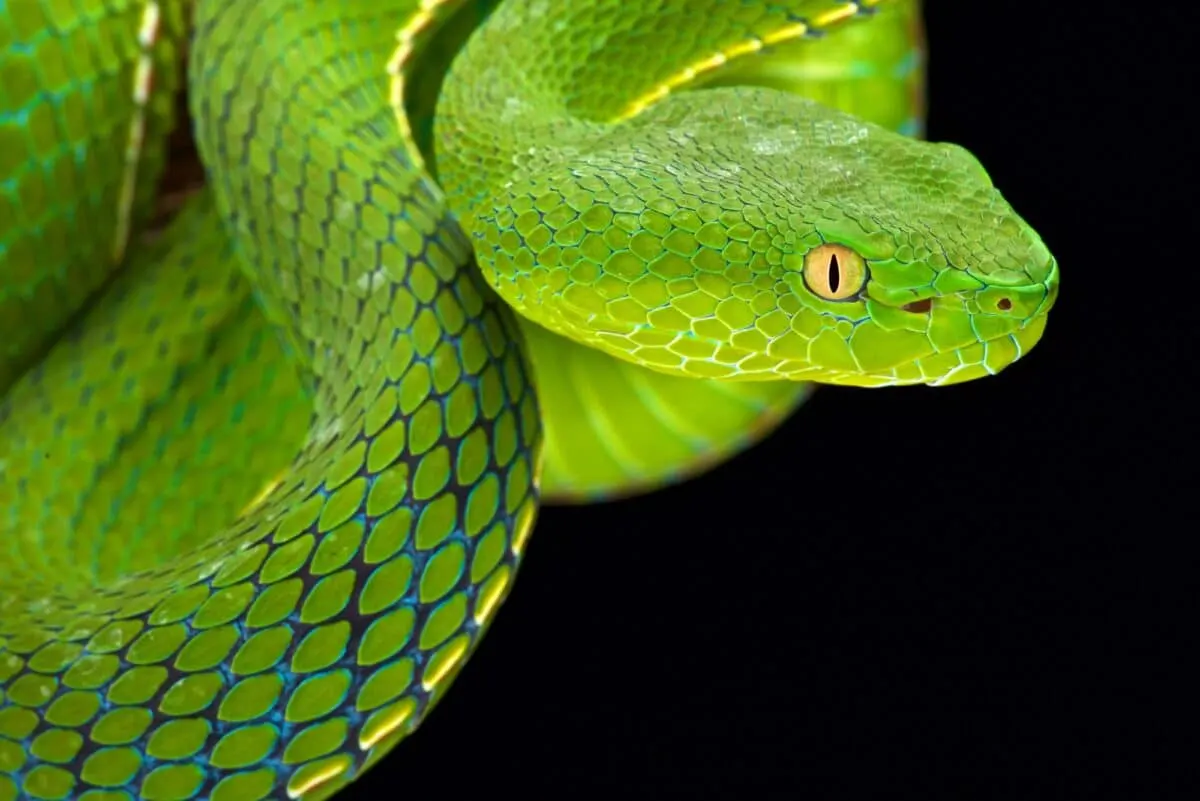
Deep within the dense, humid forests of Asia, scientists have uncovered a striking new species of green pitviper—one that is not only visually captivating but also philosophically intriguing. Nicknamed the “philosopher serpent,” this discovery is prompting researchers to rethink how we classify and understand biodiversity in one of the planet’s most complex ecosystems.
Beyond its vivid coloration and elusive behavior, the snake represents something deeper—a reminder that even in well-studied regions, nature still holds secrets that can reshape science. Its discovery blends taxonomy, evolution, and even philosophy, challenging how humans draw boundaries between species and meaning.
A Serpent That Sparked a Debate
The newly identified grass-green pitviper did not just add another name to the catalog of life—it ignited a discussion about how species are defined. Researchers noted subtle but important differences in morphology and genetics that set it apart from closely related snakes.
What makes this discovery unusual is the way scientists approached it. Rather than relying solely on physical traits, they incorporated broader conceptual frameworks, questioning how we interpret variation in nature.
In doing so, the pitviper became more than a species—it became a case study in the philosophy of biology.
Hidden in Plain Sight
Despite its vivid green coloration, the snake had gone unnoticed for years, blending seamlessly into its forest environment. Its camouflage, combined with remote habitat conditions, allowed it to evade detection.
Researchers conducting fieldwork eventually identified consistent differences in scale patterns and coloration, prompting deeper investigation. Genetic analysis confirmed that this was not just a variation of a known species, but something entirely distinct.
This highlights how even visually striking animals can remain hidden when ecosystems are complex and underexplored.
Why Naming a Species Is Not So Simple
Naming a new species might seem straightforward, but it often involves careful debate. Scientists must decide whether observed differences are enough to justify classification as a separate species.
In this case, the team grappled with competing ideas—should species be defined strictly by genetic divergence, physical traits, or ecological roles? The pitviper forced researchers to confront these questions directly.
The result was a naming process that reflects both scientific rigor and philosophical reflection, earning the snake its “philosopher” nickname.
A Window Into Evolutionary Complexity
The discovery also sheds light on how species evolve in biodiversity hotspots. Regions rich in ecological niches often produce subtle divergences that accumulate over time.
This pitviper likely evolved through gradual adaptation to its specific environment, developing traits that distinguish it from its relatives. Such processes can create a spectrum of variation, blurring the lines between species.
Understanding these nuances is crucial for mapping the tree of life with greater accuracy.
Conservation Implications of a New Discovery
Finding a new species is not just a scientific achievement—it carries urgent conservation implications. Many newly identified species inhabit fragile ecosystems already under threat from deforestation and climate change.
The grass-green pitviper’s limited range makes it particularly vulnerable. Without proper recognition and protection, such species could disappear before their ecological roles are fully understood.
This underscores the importance of continued exploration and conservation efforts in biodiversity hotspots.
Rethinking How We Understand Nature
Ultimately, this discovery challenges more than taxonomy—it challenges perspective. By blending empirical science with philosophical inquiry, researchers are beginning to see biodiversity not as a fixed catalog, but as a dynamic and evolving system.
In my view, the “philosopher serpent” is a fitting symbol for this shift. It reminds us that science is not just about collecting facts—it is about interpreting them. And as long as nature continues to surprise us, our understanding of it will remain a work in progress.

- Urban Coyotes Show Remarkable Adaptability, Learning to Thrive in City Environments - July 22, 2026
- Beavers Are Nature’s Engineers, Creating Vital Habitats for Other Wildlife Species - July 21, 2026
- The Recovery of the California Condor Offers Hope for Other Critically Endangered Birds - July 21, 2026